Upstairs Neighbors’ Bird Feeders Spark a Debate, and a Mess Below
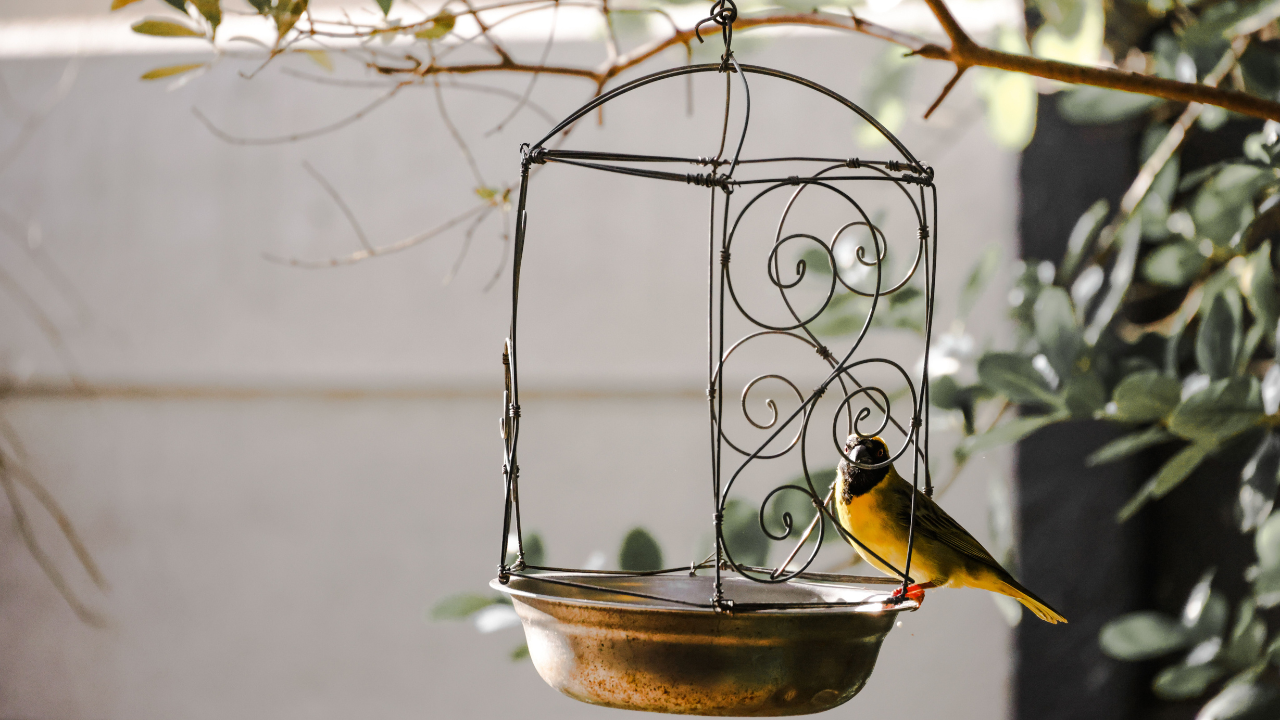
One irritated Reddit user took their frustrating bird problem to r/neighborsfromhell to seek out some simple advice. Their upstairs neighbors keep bird feeders out on the balcony to feed traveling birds. They end up attracting crows, and the leftover seed and droppings fall straight down onto the OP’s balcony below. Worse, that lower balcony is where their younger kid goes out to play. The post, which has since been deleted, racked up several replies with advice.
The primary issues are the debris left behind: seed husks and crow droppings. They slip through the gaps in the upstairs balcony and collect on everything below. That means the OP has to sweep up someone else’s bird buffet. The neighbors told the OP that feeders are allowed, maybe even cleared by the HOA. Commenters were quick to advise the OP that this shouldn’t just be taken at face value.
One warning came up more than once, though. Don’t try to scare off the crows if you can help it. Crows are smart, and they recognize faces. Anyone who feeds them can easily become their favorite. As one commenter explained, the birds see the upstairs neighbors as friends. So harassing the flock could turn the OP into an enemy, which could complicate matters even further.
Person after person offered advice, including taking the problem to the HOA and double-checking whether the feeders are really approved instead of trusting the neighbors on it. Others suggested making sure there was documentation: dated photos of the seed and droppings every day or two, for instance. They pushed for the OP to build a paper trail.
Why Bird Feeders and Balconies Are Actually a Bad Mix
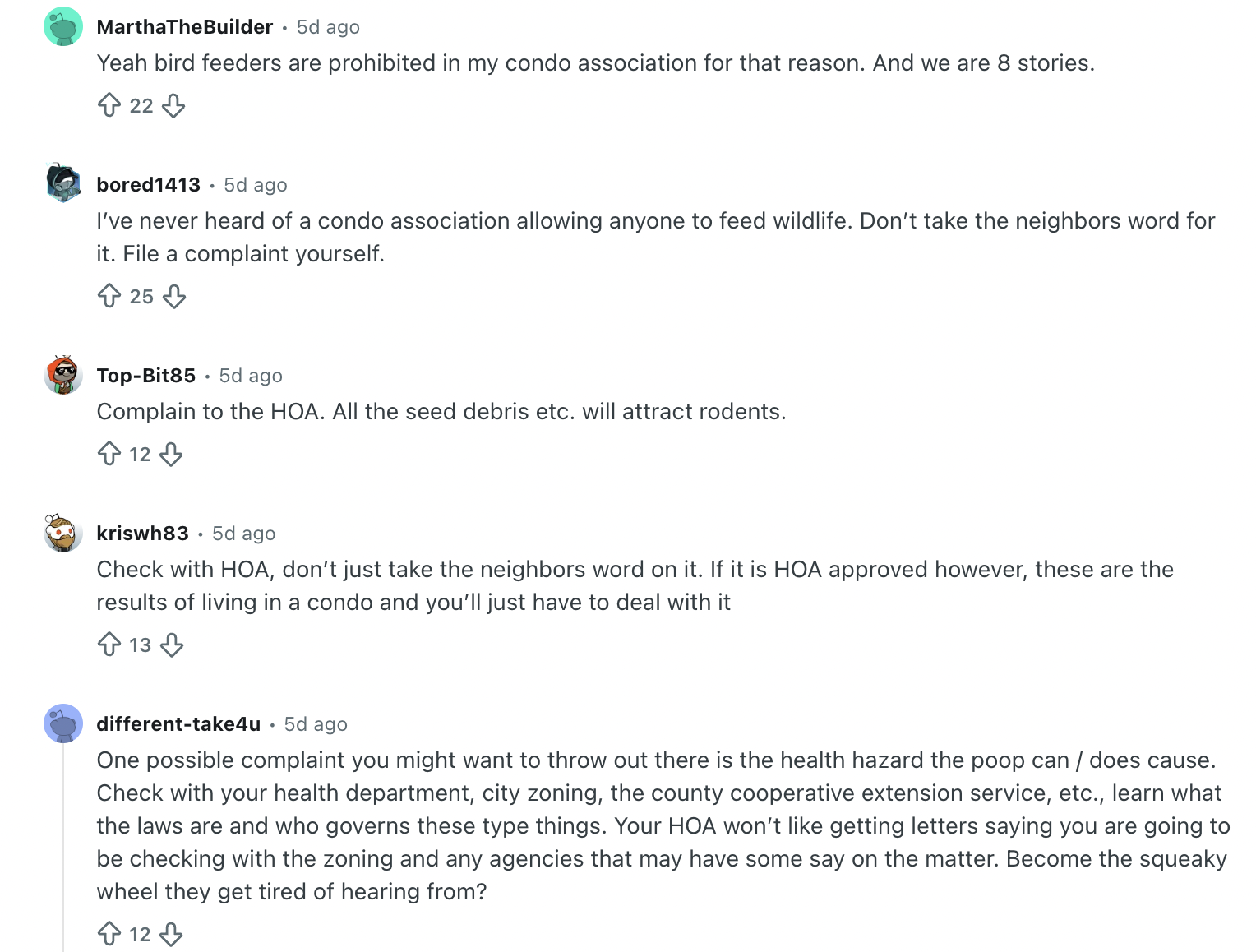
Spilled birdseed is a well-known magnet for rodents. They obviously aren’t something you want to invite to an apartment complex. Birdseed that’s scattered around can draw in rats and mice looking for an easy meal. Even seed that falls from balconies is enough to attract the rodents and cause issues, potentially.
The droppings are a big issue all their own. Bird feces can carry germs that make people sick, and the CDC says diseases like psittacosis and histoplasmosis can come from breathing in the air from dried droppings. For most people, the odds of getting sick stay low, but they’re higher for young kids or anyone with a weak immune system.
What You Can Do About a Neighbor’s Feeders
If you’re stuck under a setup like this, the thread actually has some good advice worth following. Start with the HOA or condo bylaws and find out whether feeders are actually allowed. Photograph what piles up on your balcony, with dates, and keep a written log as well. That way, you’ve got hard evidence instead of just a complaint.
From there, you’ve got a few different options. Plenty of commenters suggested looping in the local health department or raising a bylaw amendment at the next board meeting. You can’t control what happens on someone else’s balcony. It’s worth protecting your own at the same time. An awning, a mesh screen, or even a cover over the area can keep the worst of it off your space while the rest plays out. And whatever you do, don’t try to out-petty your neighbor by dirtying up their space.