A New Zealand Couple Found Two Rotting Train Cars in a Field — Now It’s a Stunning Off‑Grid Home
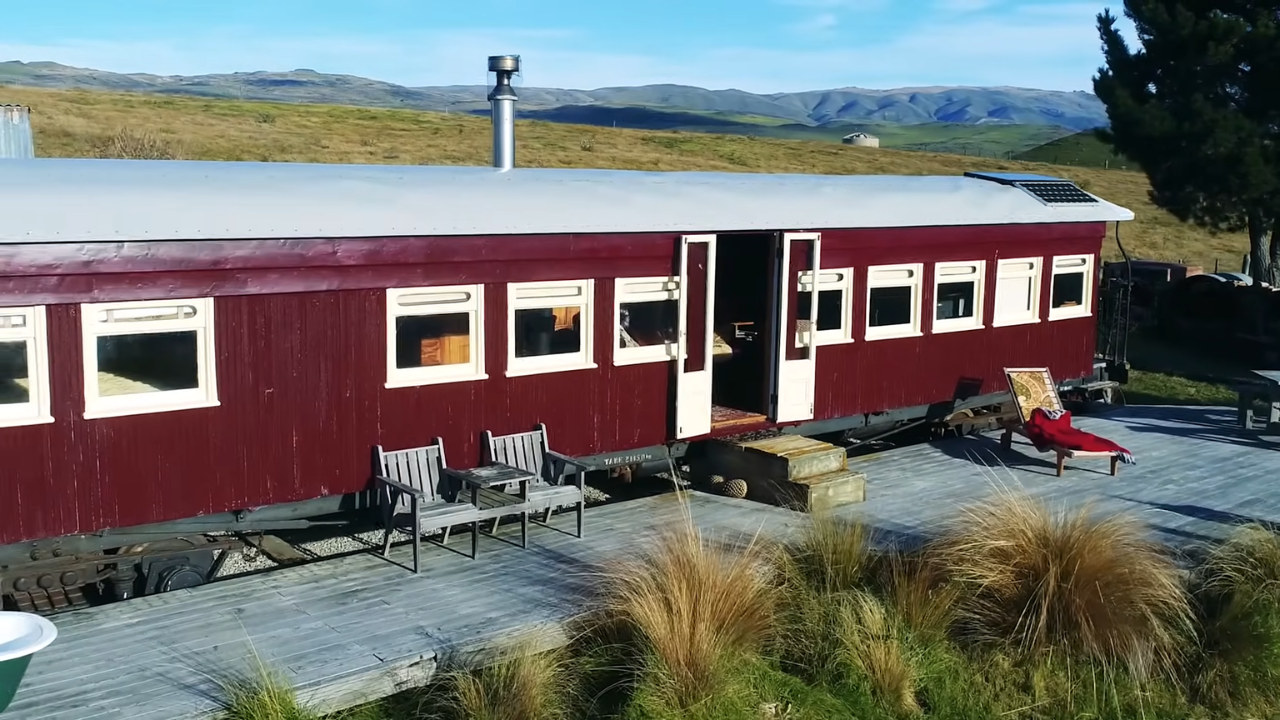
Two railway carriages that sat rotting in a field have officially been rebuilt over eight years into an off-grid home in New Zealand. Mandy and Daman Groshinski restored the carriages part-time during a project featured by Living Big in a Tiny House. The couple, who had already restored boats and yachts, took the carriages on despite their state.
Mandy spotted the carriages on a property she and Daman were considering buying near Haast. They were broken and leaking, with tattered roofs, broken windows, and mold, and full of old junk, spiders, and dead birds. She saw their potential anyway.
The couple bought the property, in part for its views of the Southern Alps, and started work. Each carriage runs about 40 feet long by 8 feet wide, so the rooms had to be arranged in sequence rather than side by side. The main carriage became a home with a kitchen, a lounge with a wood stove, and a bedroom with an en suite bathroom, while the second holds a guest room and a second lounge, which Mandy calls the library.
The property has no connection to mains power or water. They have a small solar system that supplies the electricity, and the couple collects and stores rainwater. That helps to make their home fully off-grid. Mandy estimated the total cost of the restoration at around $50,000.
How the Couple Rebuilt the Carriages
The priority was stopping the weather from doing further damage. The roofs had failed and let water in, so the couple decided to restore them before starting on the interior, and then sealed the windows, joints, and other gaps where water and wind had been getting through. Only after the carriages were dry could the internal work begin in earnest.
Much of the work was about preserving what was already there. The couple stripped old paint off the original wood paneling and restored the tin ceilings, and Mandy searched out reclaimed materials to match the carriages’ history. She kept the marks of the trains’ former life, including seat numbers, old markings, and water stains on the wood, and reused fittings like luggage racks and hooks. A wooden deck now links the two carriages, which are set at an angle to form an L and create a sheltered outdoor space.
What Off-Grid Living Requires in Similar Situations
Running a home this remote takes more than a finished interior. The solar system generates and stores a limited amount of power, so lights and appliances have to be used within what the panels produce and the batteries hold, especially during stretches of low sunlight. The wood stove in the main carriage handles heating during the cold Central Otago winters.
Water follows the same logic. With no municipal supply, the household depends on rainwater captured off the roofs and stored on site, which ties daily use to what the property can collect. Systems like these need ongoing upkeep, and the couple built the home around that reality rather than around constant access to services. The result is a permanent residence in a remote spot that two abandoned carriages couldn’t have provided without it. And the couple living there is absolutely loving it.