Thousands of Tarantulas Discovered in Airport Luggage, and Police Say There May Be Even More
Airport security officers have found some astonishing items in luggage. And yet, travelers still find ways to surprise them.
In this case, thousands of live tarantulas tucked inside socks would understandably be enough to make just about anyone do a double take.
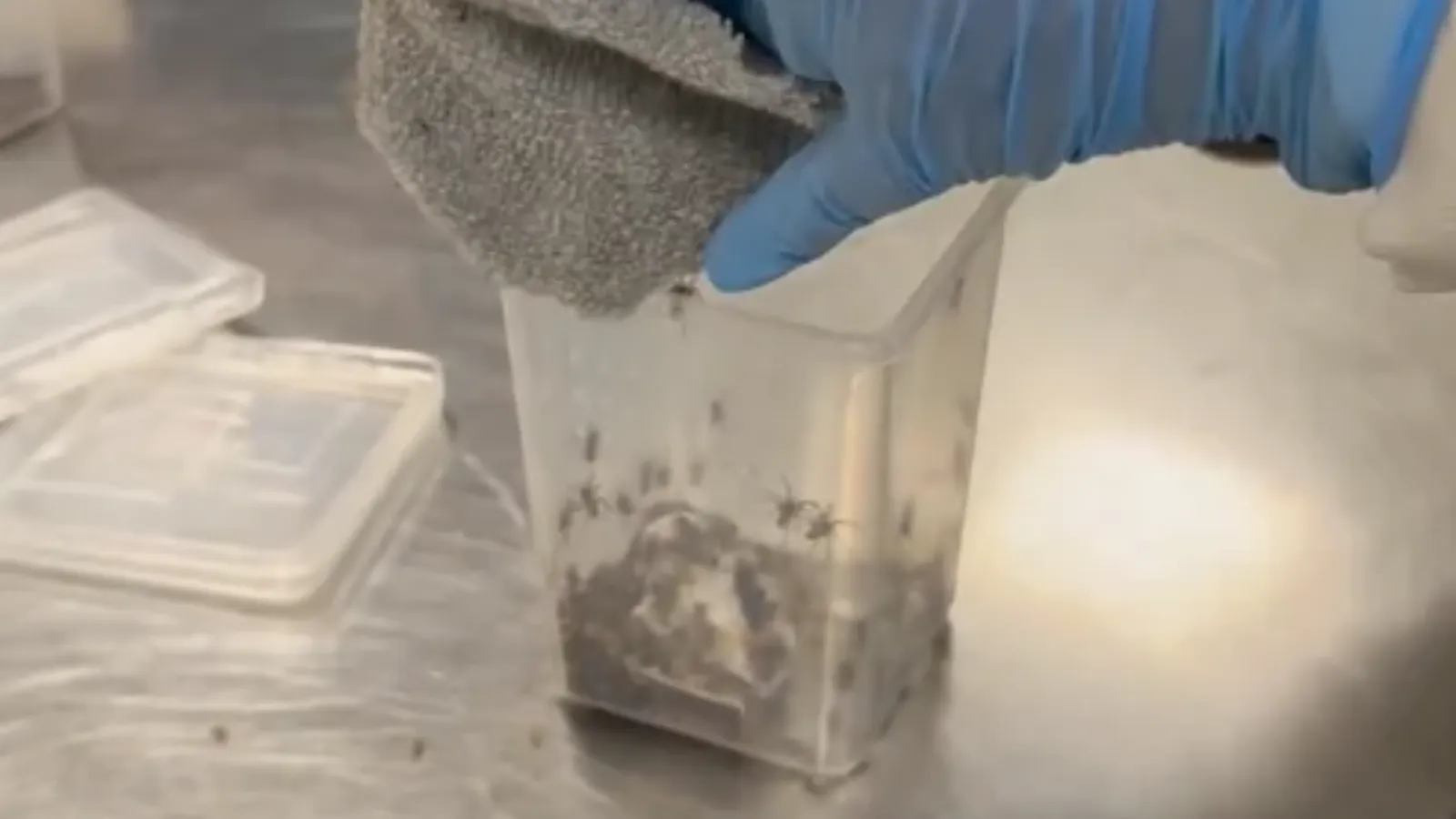
And thousands of tarantulas were exactly what was awaiting authorities at Jorge Chávez International Airport in Lima, Peru, where three travelers are reported to have tried to leave the country carrying an extraordinary collection of the critters. Their destination was Germany, though their unusual cargo never even made it onto the plane.
The spiders were packed into three suitcases belonging to two German citizens and one Polish citizen. Some were fully grown adult tarantulas. Others were tiny little hatchlings. Officials even discovered eggs among the confiscated specimens.
Peru’s National Forestry and Wildlife Service (SERFOR) announced the seizure on Nov. 4. Its original estimate put the haul at more than 3,000 tarantulas.
Suspicious Suitcases Stuffed With Spiders
Embedded media follows. Please allow a moment for it to load.
View this post on Instagram
Authorities had already received an anonymous tip through SERFOR’s wildlife-reporting service, prompting an investigation that led them to the airport. The travelers were stopped as they prepared to check in for their flight.
Cora Suárez, a SERFOR wildlife control technician, told AFP that inspectors noticed movement while handling the suspicious items.
Inside the luggage, dozens of socks concealed the critters. Some of the spiders were large enough to be unmistakable. Elsewhere in this spidery haul, however, the tarantulas were small enough to be packed together in even greater numbers.
The Peruvian National Police detained all three travelers, and the country’s specialized environmental prosecutor became involved. SERFOR also reported that one of the detained individuals appeared to be a recognized tarantula researcher, according to scientific publications, although the agency did not publicly identify that person.
If That Weren’t Enough, Police Report an Even Larger Haul
And there weren’t simply thousands of identical spiders. SERFOR identified several different groups among the confiscated animals, including Pamphobeteus and Avicularia. Some specimens may even belong to species that scientists have yet to formally describe.
The initial discovery was staggering enough at more than 3,000 tarantulas. Then came an even bigger number. According to Infobae, Peruvian police later reported a staggering 12,796 animals following a more complete count.
Investigators are trying to determine whether the travelers were connected to a wider international wildlife-trafficking operation. According to Infobae, Police General José Manuel Cruz Chamba said officers examined the suspects’ social media accounts and found listings offering tarantulas for anywhere from $25 to $400. Authorities are also examining financial transactions and looking for possible accomplices.
The tarantulas may have been intended for the exotic pet trade, where certain species can fetch high prices among collectors, particularly those prized for their striking colors or impressive size. One of the species found in the luggage, Pamphobeteus antinous, is considered vulnerable under Peruvian wildlife protections. And there’s another troubling aspect to the case: according to Mongabay, gaps in international wildlife-trade regulations can allow animals illegally taken from their native habitats to enter European markets.
The three travelers were placed under a seven-day preliminary detention order as authorities investigated possible connections to an international wildlife-trafficking network, according to Infobae. No subsequent court decision or final outcome has been publicly confirmed.
SERFOR said the confiscated animals would undergo identification and evaluation before being transferred to an authorized breeding facility.
Thousands of spiders are now off the international market, including specimens that may hold scientific secrets researchers have yet to uncover.