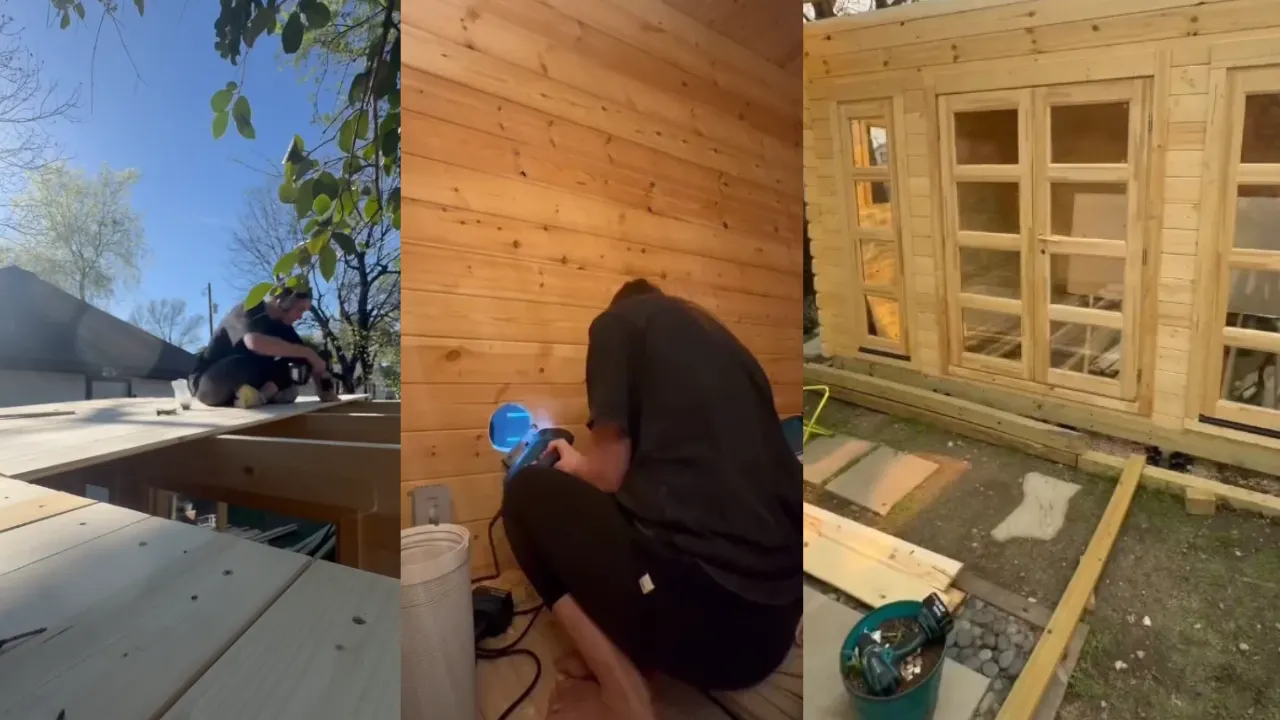
Texas Homeowner Builds $8,500 Backyard Shed to Escape Crushing Mortgage Payments
A Texas woman who once earned a comfortable living in tech now sleeps in a 100-square-foot shed behind the $400,000 home she owns. The house is still hers, but most nights, strangers get to enjoy it while she makes do in the backyard.
Lauren Patton, 36, bought the two-bedroom bungalow in 2022 after moving back to Texas from Chicago. At the time, her job as a data science manager made the roughly $4,000 monthly mortgage seem manageable. Then she lost that job in early 2023, and her plans began to fall apart.
Rather than sell the house at a loss, Patton tried renting it out on Airbnb. She also took on other jobs, drained her savings, and cashed out her retirement account. Eventually, she decided that living in her own backyard might be the only way to keep the property.
Her solution has attracted attention on Instagram, where she shared her tiny-home project with the caption, “Can’t keep me down.” The effort is impressive, although the numbers show just how difficult it has been to make the arrangement work.
A Costly Gamble
Embedded media follows; please allow a moment to load.
As Patton explained in a Business Insider interview, losing her tech job came with just two months of severance. She expected to find another position quickly, given her experience, but interview after interview went nowhere.
For a while, she rented a room across town while Airbnb guests stayed in her house. When unemployment benefits ran out, she slept on friends’ couches and drove for Lyft. A lower-paying accounting job eventually helped, but the mortgage was still a burden.
By then, her home had lost value, and selling wasn’t an attractive option. Patton estimated she was about 30% underwater on the property.
The backyard plan meant borrowing even more money. She purchased an $8,500 cabin-style shed kit that included lumber, beams, and windows, but she still needed to build the foundation, floor, and roof.
With no formal training, Patton turned to YouTube and ChatGPT for help. She admitted that ChatGPT wasn’t always reliable, particularly when it came to roofing. She also built an outhouse, added an outdoor shower, and put up fencing.
She finished the main project in March 2025, though improvements have continued ever since.
Living With Less
There is enough room inside for a bed, television, desk, and tiny refrigerator. Running water, however, is another matter. Patton relies on water jugs and uses the outdoor facilities she built.
Even keeping the place comfortable takes work. Her first portable air conditioner left the humidity inside at 80%, forcing her to run a dehumidifier around the clock.
And then there are the little things. Patton told Business Insider that she sometimes gets ready to cook, only to discover an ingredient is missing or still inside the main house. Those errands add another layer of frustration to an already difficult living arrangement.
Her Instagram posts have drawn encouragement, along with practical questions about insulation, building costs, and running water. One commenter simply asked, “How did you know how to do this girl??”
Patton hasn’t pretended the adjustment was easy. At first, the tiny space felt claustrophobic, and moving out of her own house left her feeling as though she had gone backward in life.
Still, she says her mental health has improved as she has grown used to the arrangement.
The Numbers Hurt
Perhaps the most frustrating part is that giving up her house hasn’t fully solved the money problem.
In October 2026, the Austin City Limits music festival helped push Airbnb occupancy to about 96%. Patton earned $6,516.70 before expenses, an unusually strong month.
Airbnb took $619 in fees, and seven cleanings cost roughly $700 more. That left about $5,198 before the mortgage, utilities, repairs, and other costs. Her combined utility expenses run around $550, while higher home insurance has added another $400 to her monthly mortgage payment.
Despite renting the house full-time, Patton says the Airbnb income generally doesn’t cover the mortgage. Her century-old bungalow also needs frequent repairs, which bring their own bills.
She now earns money through a data analytics project and dog walking while trying to grow her social media presence. The long-term goal is to move back inside and perhaps rent the shed to someone looking for an affordable place to live.
For now, she’s still trying to recover from the decision to buy more house than her finances could safely support. Her experience has changed how she thinks about homeownership, especially the advice to keep housing payments below 30% of income.
“If things don’t get better in the next couple of years, I’ll be comfortable letting it go,” she told Business Insider, explaining that she has already tried everything she can to keep her home.