Scientists Find Traces of Dinosaur Blood in 115-Million-Year-Old Fossil
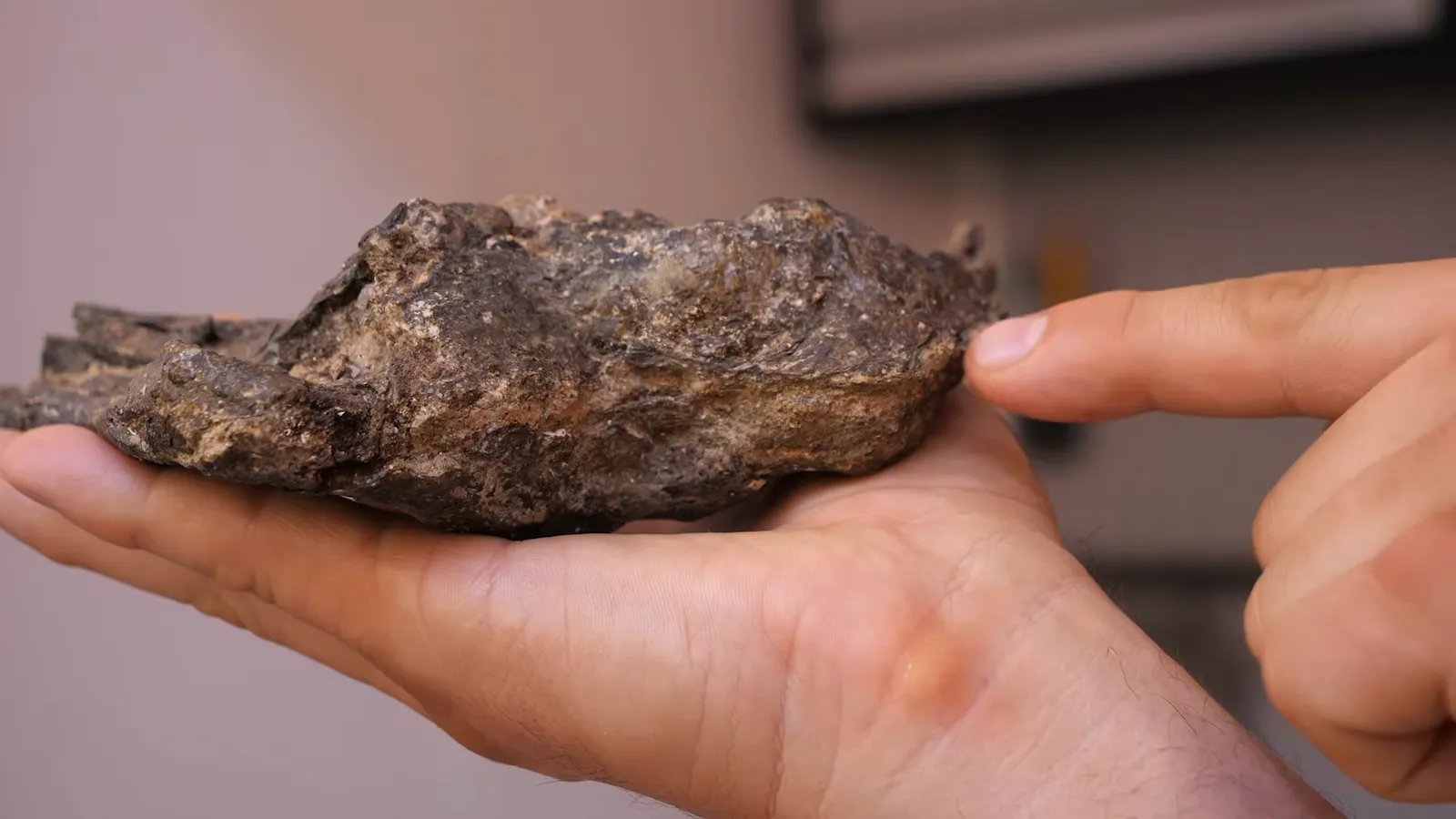
For millions upon millions of years, the remains of a dinosaur lay buried in what is now Brazil. Over time, a familiar process unfolded: its bones eventually became fossils, preserving evidence of an animal that lived long before humans appeared. Scientists have now discovered that those bones may contain something considerably more surprising, something even more remarkable: remnants of the dinosaur’s blood.
An international research team has identified microscopic structures resembling red blood cells inside the ancient bones, along with chemical traces of a substance vital to carrying oxygen through the bloodstream. Not only is this an exciting, unprecedented find—these findings also suggest that some biological material can survive far longer than scientists once believed possible.
The findings came from the fossilized leg bones of Aratasaurus museunacionali, a meat-eating dinosaur whose remains were unearthed at a mine in northeastern Brazil in 2008. The animal was approximately 10 feet long and around four years old when it died.
Nearly two decades after the fossils were discovered, scientists have now identified the possible blood-cell remnants preserved inside them. The research, led by scientists at Australia’s Curtin University, was published Nov. 2 in the journal Proceedings of the National Academy of Sciences. Researchers believe their findings could open new possibilities for studying how dinosaurs lived millions of years ago.
Scientists Discover Surprising Evidence Inside Dinosaur Bones
Embedded media follows. Please allow a moment for it to load.
Using powerful microscopes, the research team examined tiny channels within the fossils where blood vessels once ran. Inside, they found numerous structures resembling red blood cells. Further chemical testing revealed signatures of heme, which is an iron-containing molecule found in hemoglobin. Hemoglobin is the protein responsible for oxygen transport in blood.
Past studies have reported possible blood cells in dinosaur fossils, though identifying their original biological material has historically proven difficult. This recent study provides new chemical evidence further linking the microscopic structures specifically to blood-related compounds. This, in turn, strengthens the case that traces of the dinosaur’s original biology survived fossilization.
How did this remarkable preservation of material come to be? Researchers believe it’s all thanks to an unusual combination of circumstances. The dinosaur may have been buried quickly in an environment with little oxygen and abundant microbial activity. Then, a mineral called hausmannite formed around the microscopic structures; this would help preserve their shapes and associated chemical traces.
Scientists outside the research team have urged caution, however.
Speaking with Live Science, North Carolina State University Mary Schweitzer paleontologist questioned whether the structures were actually red blood cells. In particular, Schweitzer noted that their shapes differ from those expected in birds and reptiles. Even so, she praised the researchers’ chemical approach.
Discovery Could Reveal More About Prehistoric Life
For paleontologists, the ability to find blood-related molecules inside fossils opens a new avenue of research. While bones can reveal an animal’s size and anatomy, chemicals could eventually help scientists investigate aspects of dinosaur physiology and biological functions that skeletons alone cannot explain.
For example, study leader Kliti Grice, a professor at Curtin University, said the findings could help researchers explore how dinosaur blood evolved and how these ancient animals used oxygen. Understanding those processes could provide clues about their metabolism and activity levels.
The discovery could also have implications beyond Earth.
Martin Van Kranendonk, head of the School of Earth and Planetary Sciences at Curtin University, suggested that understanding how biological molecules can survive for millions of years, even under harsh conditions, could help scientists searching for traces of ancient life elsewhere in the universe.
The evidence consists of mineralized structures and chemical traces, with no intact blood or dinosaur DNA recovered. Scientists still have questions about the identity of the cell-like structures; however, the chemical findings suggest that remnants of ancient biological material may survive for astonishing lengths of time—and may still provide information long after.