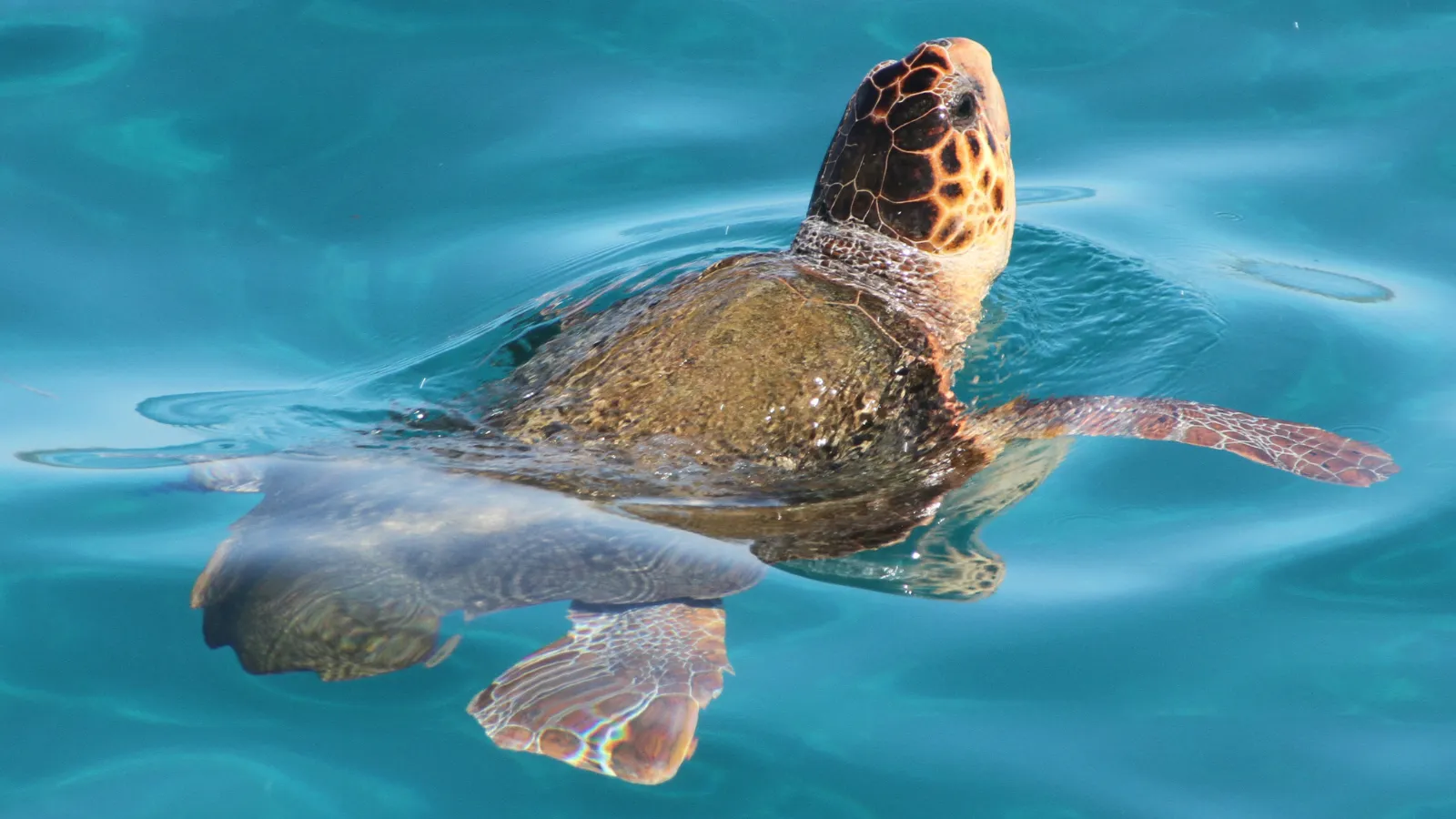
Rare ‘Pumpkin Spice’ Baby Sea Turtle Spotted on Florida Beach
Pumpkin spice season apparently arrived early and will stay all year round for one baby sea turtle in Florida. Instead of the usual brown coloring, a newly hatched loggerhead turtle sported an unusual orange hue that made it look ready for fall.
Florida resident Michael Landress spotted the little turtle in August as it hurried across the sand toward the ocean.
The unexpected coloring inspired Landress to give the hatchling a seasonal nickname: “Pumpkin Spice.” The discovery was later featured in an October 10 report by Popular Science.
Its distinctive appearance made for an adorable sight, although wildlife experts say standing out from the crowd isn’t necessarily a good thing for a baby sea turtle.
Not The Usual Color for a Loggerhead Hatchling
Embedded media follows. Please allow a moment for it to load.
“This little one, surprisingly, had an earthy tone of autumn,” Landress said in a statement provided to Popular Science.
He explained that the nickname came to mind as he watched the orange hatchling make its way toward the water, despite not being particularly fond of pumpkin spice treats himself.
Loggerhead sea turtles typically hatch with brown upper shells, dark flippers and lighter undersides. Their coloring changes as they mature, with adults generally developing reddish-brown shells.
Daniel Evans, a biologist with the Sea Turtle Conservancy, told Popular Science that dramatic differences in hatchling coloration are rare. He compared the unusual orange appearance with other uncommon variations, including albinism.
The turtle’s unusual coloring was certainly eye-catching on the beach. Its potential consequences become more significant once the hatchling enters the ocean.
Why the Orange Coloring Could Be a Problem
Young loggerheads often spend time among floating seaweed, including sargassum, where their ordinary brown coloring helps conceal them from predators.
Evans explained that unusually colored hatchlings may not receive the same camouflage benefits. He suggested that this disadvantage could help explain why such a striking color variation is seldom observed in adult loggerheads; it is not, Evans suggests, an advantageous trait for survival.
The species already faces substantial challenges. According to the National Oceanic and Atmospheric Administration, loggerheads in the Northwest Atlantic are federally classified as threatened, with accidental capture in fishing gear remaining a major danger.
Newly hatched turtles face additional hazards before they even reach the water. Artificial lighting near beaches can lead them away from the ocean, while predators threaten both nests and hatchlings.
Landress photographed the orange turtle heading toward the sea, although its journey afterward is unknown. Its autumny appearance makes it delightfully memorable to awe-inspired onlookers; however, whether that unusual coloring negatively impacts this turtle’s chances of survival remains to be seen.