Portland Homeowner Had a Homeless Camp in His Backyard That Took Weeks to Remove
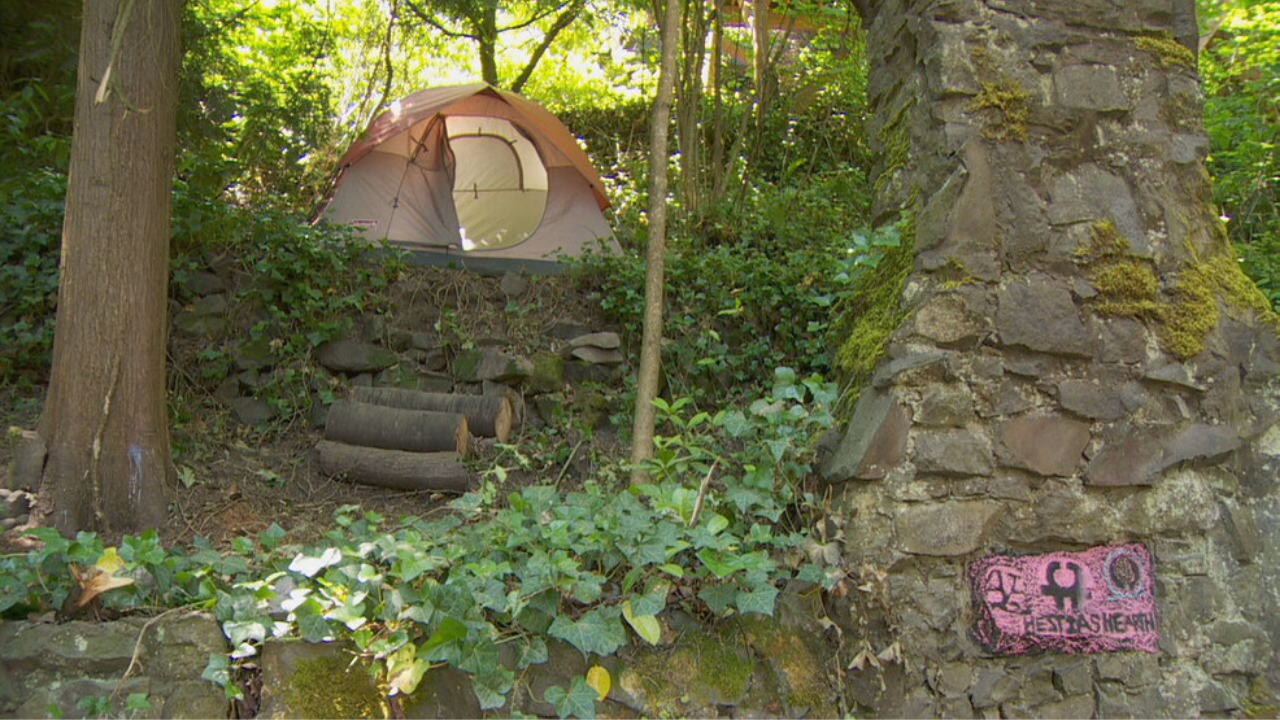
A Portland, Oregon, homeowner spent weeks attempting to remove a homeless camp from his backyard. Jim Jensvold first discovered the camp when the person who trims his trees mentioned an uninvited guest on the wooded property below his home, according to KATU. The single camper soon became a larger encampment. Cleaning everything out ended up taking far, far longer than Jensvoid expected.
He initially thought a single conversation would resolve it. He had acted by telling the camper the lot was private property, and she agreed to leave. When he and his wife returned from a trip out of town, though, the camp had expanded even further. It included a tent, tarps, and other belongings.
Jensvold called the police three times. He learned that giving the camper time to leave on the first visit had worked against him. At one point, the camper started a fire that the fire department needed to be called to put out. Neighbors were concerned that the fire might spread toward Forest Park nearby.
After the third call, the campers left, leaving behind belongings that Jensvold then had to clean up himself. He followed the steps he was told to take, calling both police and the city, but still came away feeling he had largely solved the problem on his own. He is also concerned that as Portland cracks down on public camping, more campers will end up on private property like his.
What’s Driving Camps Onto Private Property?
Jensvold’s situation isn’t unique, as there are record levels of homelessness across the country. A federal count discovered over 771,000 people experiencing homelessness on a single night in January 2024. That was the highest total since tracking began in 2007 and an 18% jump from the year before, according to the Department of Housing and Urban Development. Preliminary 2025 estimates are showing a bit of a decline, however.
In June 2024, the Supreme Court ruled in a case out of Grants Pass, Oregon, that cities can enforce bans on public camping without violating the Constitution. Within six months of the decision, more than 100 communities had passed or tightened camping bans, according to OPB. As cities clear more public spaces, some property owners have raised the worry that campers will move onto private land instead, the same concern Jensvold described.
What Can You Do If Someone Camps on Your Property?
If you find someone camping on your property, you should start by contacting law enforcement. Private property usually means you’ll have faster removal than on public land, where cities often must follow posting and waiting requirements before clearing a camp. In Portland, for example, property owners can file trespass authorizations with the police. That lets police remove campers without that waiting period, the city told KATU.
Posting clear “no trespassing” signs can also help. You should also try documenting the situation with photos and keeping records of any contact with police, which can matter if the case becomes a legal dispute. Rules can change from city to city and state to state, so owners who run into trouble may want to check their local ordinances or speak with an attorney.