
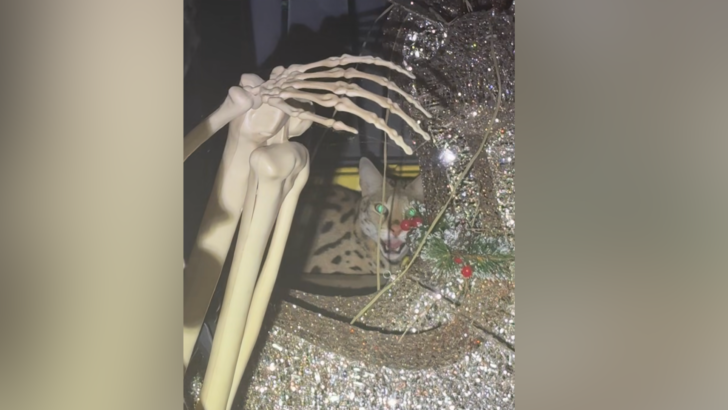
A Vancouver, British Columbia, resident found a full-grown African serval hissing under their porch on Sunday night and called the Vancouver Police Department. Police and provincial conservation officers responded, and they eventually returned the wild cat to its owners. The VPD shared photos and a video of the serval the next day.
The home was near Prince Albert Street and East 30th Avenue, in East Vancouver, according to the department. The serval had tucked itself among the holiday decorations the homeowner kept stored under the porch. It hissed at the officers and the camera the whole time.
African servals are wild cats native to sub-Saharan Africa. They usually weigh between 19 and 40 pounds, around three times the size of a typical house cat. They are not domestic animals, and they are not native to British Columbia.
British Columbia banned keeping exotic cats as pets on May 1, 2026, under an update to the province’s Controlled Alien Species Regulation. The new rules prohibit breeding, transporting, and future ownership of cats that are not domestic or native to the province. Existing owners have until May 1, 2027, to apply for a free permit that would allow them to keep their animals for the rest of their lives.
What the VPD Said About the Serval
Posts from the Vancouver Police Department on Instagram and X had a light-hearted, almost apologetic tone. They made it clear the difference in size between the serval and your average household cat was size, and also pointed out that the weights listed in the post were no typo. The VPD also stated that, in this situation, it was probably appropriate for the serval’s owners to give their neighbors a heads-up.
The department attempted to frame its social media post as a Public Service Announcement for pet owners whose animal may have escaped and entered other people’s backyards. The posts suggest you should let your neighbors know if you are missing a pet so no one gets the surprise this person did. The VPD has not indicated whether the owners of the serval will be penalized under British Columbia’s new regulations.
The Bigger Picture on Exotic Cats
The new framework covers servals, caracals, ocelots, and other wild cats that are not native to the province. Anyone applying for a permit must show proof of identification for the animal, such as a microchip or tattoo, and confirm that it has been sterilized. Applicants must also meet specific care and safety standards, including secure enclosures, and limit the public’s contact with the animal.
The Vancouver case is not the first of its kind in Canada. A serval named Loki was found wandering the streets of Halifax in 2023, and was later moved to a wildlife park in Cape Breton. Sanctuary operators in the United States have described what they call a “small exotic cat crisis,” driven by surrendered pets whose owners were not prepared to care for a wild animal.