Neighbor’s Tree Crushes Car During Storm, But an Earlier Text Could Complicate Who Pays
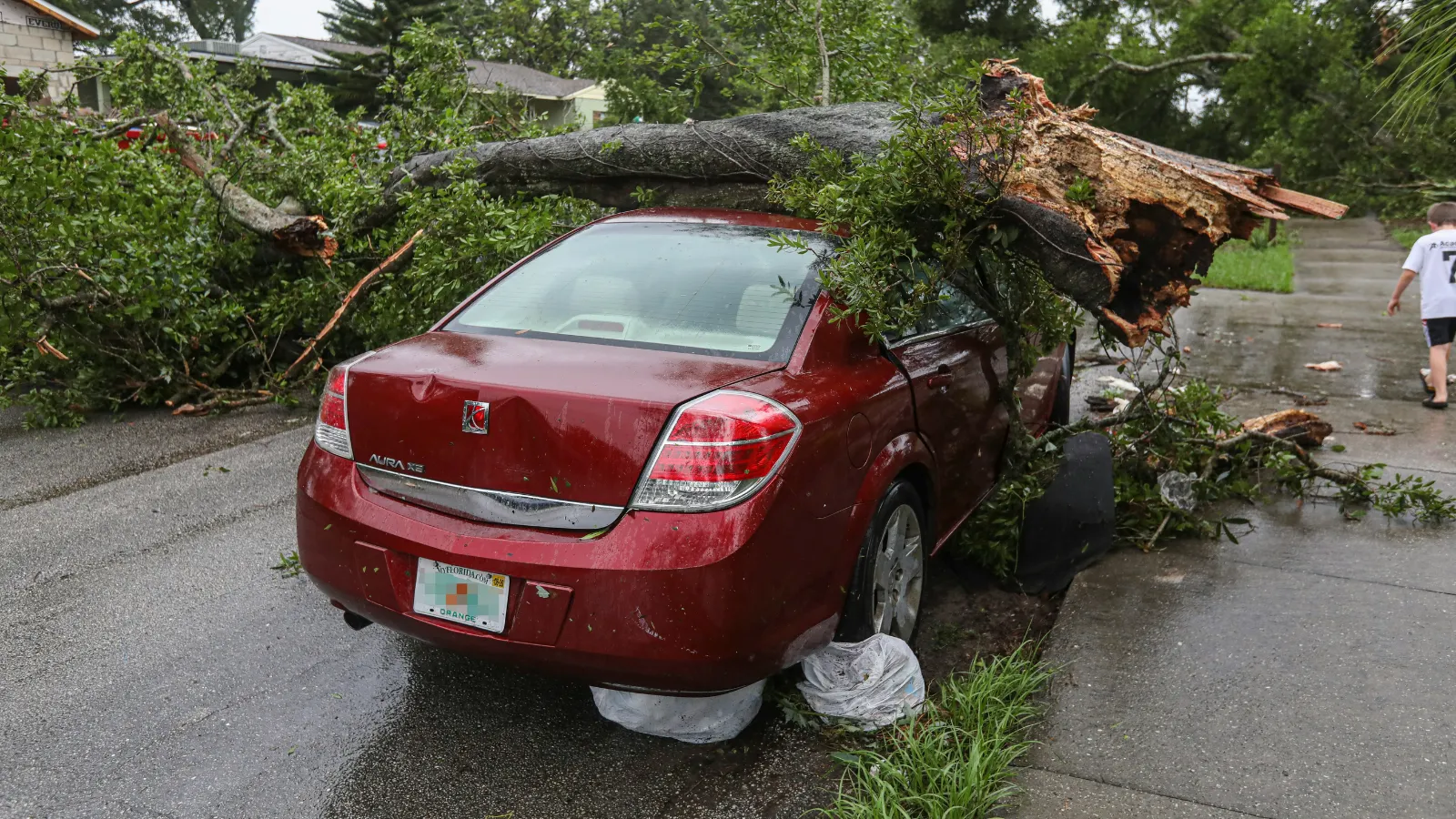
An Ohio homeowner says a neighbor’s oak tree came plummeting onto their parked car during a windstorm. When the dust settled, there was roughly $6,000 in damage done. If that weren’t enough, a considerably messier dispute over who should pay for it soon came crashing onto the scene, too.
According to the homeowner’s post in Reddit’s r/legaladvice community, the car was sitting in their own driveway when the tree fell. Their auto policy includes comprehensive coverage, but using it would leave them with a $1,000 deductible.
The neighbor, meanwhile, has allegedly refused to provide their homeowners insurance information, arguing that “it was just a storm” and therefore not their fault.
There is one complication. The poster, sharing their story under the username u/Upbeat_Net2748, says they photographed large dead branches and fungal growth on the tree two months earlier and texted the neighbor asking whether they planned to have it inspected. Going by u/Upbeat_Net2748’s account, the neighbor never responded.
What the Neighbor Knew Could Matter
Embedded media follows. Please allow a moment for it to load.
Neighbor’s tree fell on my car during a storm, insurance says the tree owner is liable but neighbor is refusing to give me their insurance info — what are my options?
by
u/Upbeat_Net2748 in
legaladvice
That message may have decided the course of this legal skirmish.
In terms of precedent, Ohio courts have, in the past, treated a tree owner’s knowledge of a dangerous condition as a vital factor in determining negligence. In Allen v. Memering, the Second District Court of Appeals said a plaintiff must show that a landowner failed to use ordinary care and should have foreseen that the tree’s condition could cause damage.
The court also said notice of the hazard—whether actual or constructive—is necessary. That case involved a tree that fell onto a parked vehicle, but the court ultimately upheld a ruling for the property owner after finding the plaintiff had not proved negligence. Testimony specified that no one had previously complained to the owner about the tree.
Another Ohio case proved the value of photographic documentation in cases of liability and negligence. In Motorists Mutual Insurance Co. v. Flynn, the Fourth District Court of Appeals found that photographs of a large tree leaning significantly toward a neighboring house created a factual question over whether a reasonable person should have recognized the danger.
This does not yet mean the Reddit poster’s documented trail establishes liability on its own. It might, however, be evidence bearing on exactly the issue Ohio courts examine: whether the tree’s condition was visibly dangerous and whether its owner knew or reasonably should have known about it.
A Storm Does Not End The Questions
In the world of insurance policies, a natural disaster involving no human intervention is called an Act of God, as written by The Hartford. It can include lightning strikes, a tornado, a hurricane, and so forth. The Hartford writes that many standard policies will cover some Act of God losses, though floods and earthquakes can be expected to fall under separate policies.
In their original post, u/Upbeat_Net2748 anticipated the incident to be classified as an Act of God, and “my own comprehensive coverage would apply.” However, u/Upbeat_Net2748 recognized that potential evidence of neglect could change the cadence of that coverage.
Calling the incident an “act of God” does not automatically eliminate the possibility of negligence. An Ohio court explained in Reed v. Ohio Department of Transportation that an act of God must be sufficiently unusual and overwhelming to cause damage through its own power, independent of negligence.