Montana Rancher’s Dinosaur Discovery Sells for $47.3 Million
Finding dinosaur bones on your own property would be quite a surprise. For Montana rancher Jodi Pierson, who made just such a discovery in 2019, the surprises kept coming. Seven years later, the skeleton fetched $47.3 million at auction, earning a place among the most expensive dinosaur fossils ever sold.
The dinosaur, affectionately nicknamed “Jodi” after its discoverer, drew six competing bidders and became the second-most expensive dinosaur fossil ever sold at auction, passed only by a T. rex named “Gus,” which fetched $50.1 million at Sotheby’s in July 2026.
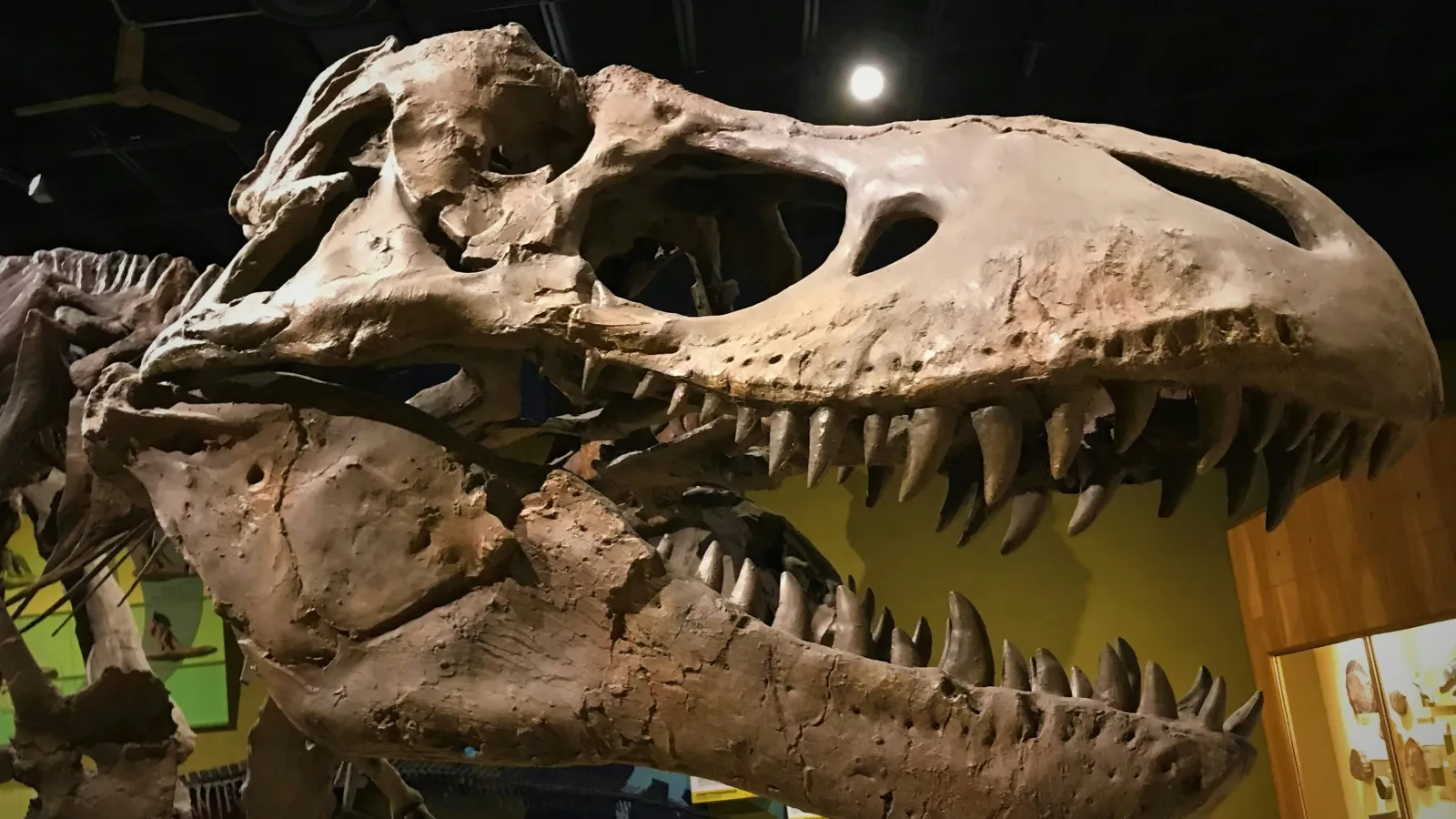
The fossil belongs to Nanotyrannus, a relatively small predator that roamed what is now North America roughly 67 million years ago. Scientists spent decades debating whether these animals were actually young Tyrannosaurus rex, a question that took an interesting turn shortly before the auction.
The Oct. 27 auction was handled by Sotheby’s, which reported that bidding lasted more than 12 minutes and drove the final price far beyond its original estimate. The winning bidder has not been publicly identified.
A Remarkable Discovery on a Montana Ranch
Embedded media follows. Please allow a moment for it to load.
The sale room at #SothebysNewYork erupted into applause today as Jodi the Nanotyrannus became the second most valuable dinosaur ever sold at auction. Six bidders battled for more than 12 minutes, with Jodi nearly octupling its pre-sale estimate.
The elusive predator was the first of its kind to come to market following the groundbreaking scientific confirmation that Nanotyrannus is its own distinct genus and not an adolescent T. Rex. Jodi is surpassed only by Gus the T. Rex, which sold this past July for a record-breaking $50.1 million.
Fittingly, specialist Jodi Pollack was on the phone with the winning bidder for Jodi. Here’s the moment the Nanotyrannus sold for a final price of $47.3 million.
— Sotheby’s (@Sothebys) October 27, 2026
Pierson discovered the dinosaur on land in Montana’s Hell Creek Formation, which just so happens to be an area famous for fossils dating to the final days of the dinosaurs. Not every location can say the same. She brought pieces of the skeleton to her cousin, Clayton Phipps, a commercial fossil hunter known as the “Dinosaur Cowboy.”
The skeleton turned out to be exceptionally well preserved. Standing approximately 9 feet, 6 inches tall and stretching nearly 20 feet long, it is estimated to be about 70% complete. Its nearly complete skull is particularly significant, and Sotheby’s identifies it as one of only three substantial Nanotyrannus skeletons known to science.
“I still remember the day that she drove into the yard with the pieces that she’d found, and how excited she was, and how excited I was to see them,” Phipps recounted in an interview shared by Sotheby’s.
Discovery Channel’s Dino Hunters also documented the excavation in 2020. The specimen later appeared at a London art fair in 2023. There, it was displayed under the name “Chomper” and identified as a juvenile T. rex.
Soon, scientists would have considerably more to say about that classification.
A Dinosaur With a New Identity and a Record Price
For decades, paleontologists debated whether Nanotyrannus was even a distinct kind of dinosaur. Some believed the fossils belonged to a smaller species of predator, while others argued they were simply the remains of young T. rex dinosaurs that had yet to reach their enormous adult size. The debate, documented in a 2025 study published in Nature, was at last settled by observing another exceptionally well-preserved skeleton.
Research published in Nature in October 2025 provided strong evidence that Nanotyrannus was indeed a separate genus. The researchers examined another remarkably preserved skeleton and found anatomical and growth characteristics that distinguished it from T. rex. The research arrived just in time for Jodi’s auction, adding a historic—or rather, prehistoric—dimension to the fossil’s unique appeal for bidders.
Indeed, Jodi’s $47.3 million sale surpassed the $44.6 million paid for a Stegosaurus nicknamed “Apex” in 2024, although, of course, it fell short of the $50.1 million record set by a T. rex named “Gus” in the summer of 2026.
Amidst the excitement of this sale, however, were renewed concerns surrounding rare fossils entering private collections, where researchers may have limited access to them. In the case of this sale, for instance, the identity of Jodi’s new owner remains undisclosed, along with any plans for public exhibition or scientific study. That leaves a lot of unanswered questions for an animal that spent roughly 67 million years buried beneath Montana, with answers it might provide researchers someday.