
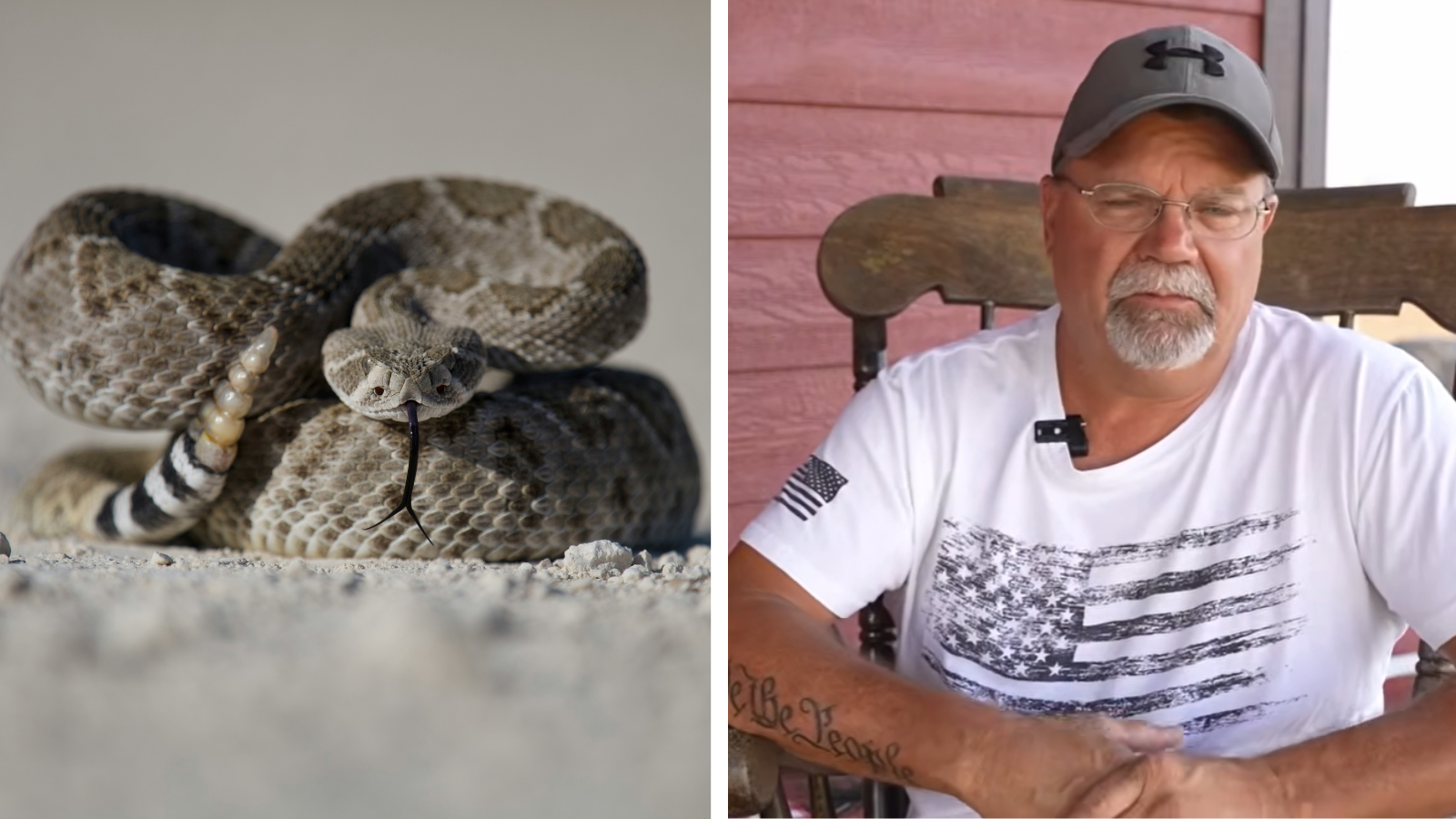
Montana Man Survives Terrifying Rattlesnake Bite After 24 Vials of Antivenom
Picture this: You’re walking through the tall grass in the area you’ve called home for decades. And as you’re strolling through the familiar field like you’ve done plenty of times before, you’re suddenly struck by the bite of a terrifying snake. And worst of all, you never saw (or heard) it coming.
Cory Barta told KTVQ News that was exactly what happened to him when his ordinary afternoon turned into a fight for life and death when he realized he had been bitten by a rattlesnake. Barta recalled how only a few minutes passed before symptoms set in, and he began to feel nauseous and tired as a result of the venom.
Despite being scared for his life, Barta had to be flown to a medical facility in Billings, where he required a two-day stay and 24 vials of antivenom.
Now, Barta says he’s happy to be able to share his rattlesnake story, educating people on what they need to know if they get bitten.
Barta Didn’t Know it was a Rattlesnake Until After the Bite
The Montana man told KTVQ News that he didn’t even know a snake was in the waist-high vegetation with him until after it bit him on the hand. He described the sensation as feeling like a punch, and recalled how he had to kick at the snake to get it away from him after the bite.
“That’s when it recoiled up again, and that’s when I seen it was an actual rattlesnake,” Barta continued. “The effects of it came on within three to four minutes after it happened. So it was very scary.”
Living in an area that is home to rattlesnakes, Barta already knew that the most important thing he could do was to stay calm and keep from panicking, but he said that is impossible when you know you’ve been bitten by a rattlesnake.
Rural Communities Struggle to Keep Antivenom on Hand
While Barta kept his cool long enough to get help in Miles City before he had to be flown to a bigger healthcare facility to get the treatment he needed, since many rural areas don’t have quick and easy access to antivenom. “It’s very expensive, and it expires very soon. So they just can’t have it on hand,” Barta told the publication, revealing that he flew to Billings here he spent two days in the hospital while his antivenom was administered.
Barta was lucky. According to the U.S. Centers for Disease Control and Prevention (CDC), between 7,000-8,000 people are bitten by a venomous snake each year in the U.S. Of those, five ultimately die. Rattlesnakes are some of the largest venomous snakes in the country.
The CDC warns that these snakes don’t always rattle before biting, which makes it important to pay attention if you are traveling in areas where they are known to frequent, which includes beaches, prairies, mountains, and deserts.


