Lost Roman Temple Emerges From Forest Floor, With Clues to a Forgotten Settlement
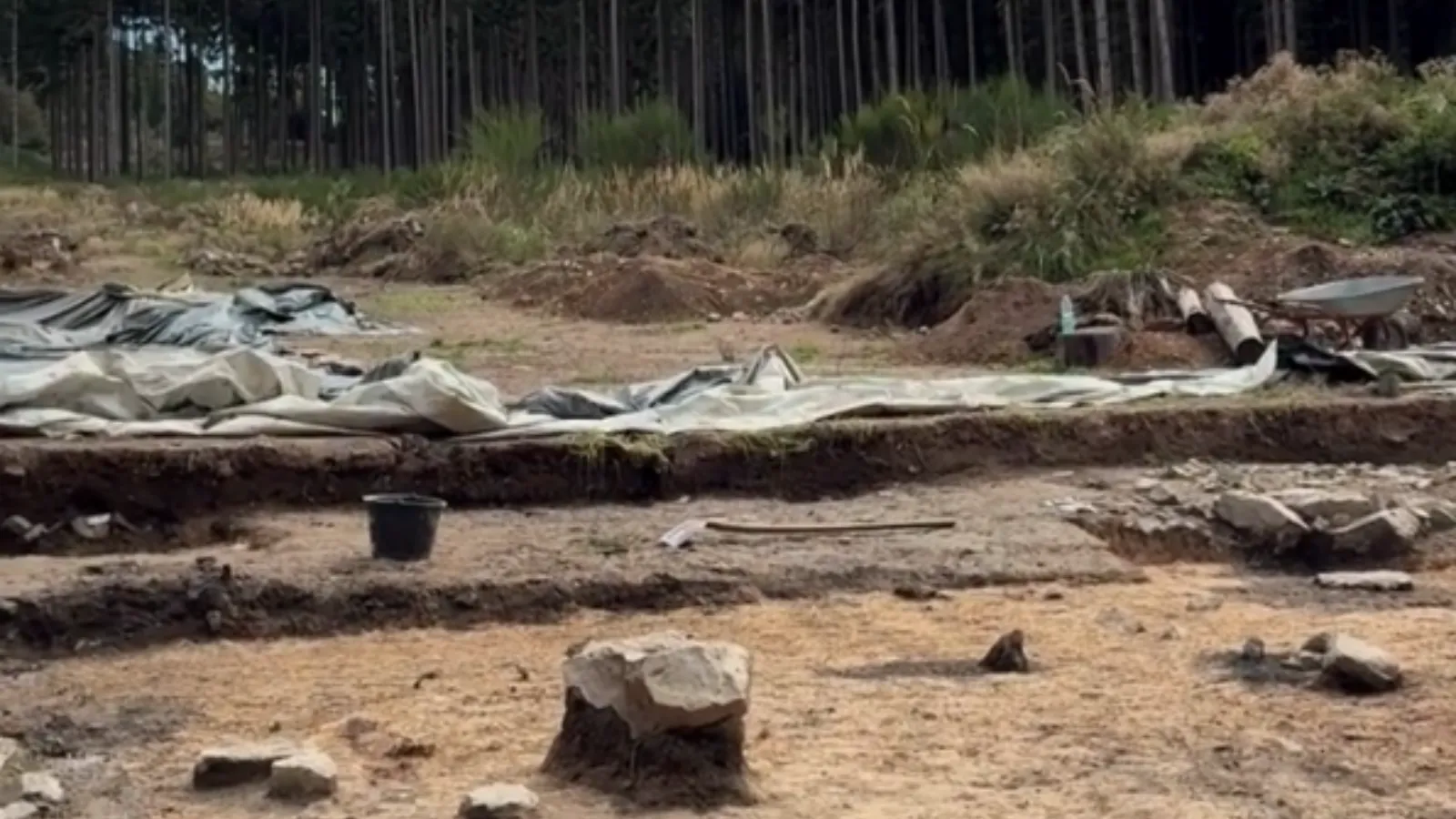
Beneath a quiet stretch of forest in Germany’s Taunus Mountains, archaeologists have uncovered the remains of an ancient Roman temple. Remarkably, the structure had been hiding just inches below the ground, largely protected from the disturbances that destroyed archaeological evidence elsewhere.
The temple is believed to have been dedicated to Mars, the Roman god of war. Excavations also revealed religious offerings, a statuette of Victoria, the goddess of victory, and fragments of another statue that may depict Mars.
On Sept. 25, Hesse’s State Office for Monument Preservation revealed the discoveries near Kapersburg, a former Roman military fort northeast of Frankfurt. Researchers have been investigating the neighboring settlement since 2024.
If this weren’t exciting enough, the temple may not be the last surprise buried in the forest. Other artifacts suggest the area could have remained inhabited even after Roman soldiers abandoned the area.
Ancient Roman Temple Found Near Historic Military Fort
Kapersburg once formed part of the Roman Empire’s extensive border defenses. For roughly 150 years, a military unit called the Numerus Nidensium was stationed at the fort before Roman forces withdrew in the third century.
Nearby stood a civilian settlement known as a vicus, where soldiers’ families and merchants likely lived. Archaeologists exploring this area uncovered the temple, which measures approximately 16 feet long, according to Hessenschau.
Among the artifacts were two votive stones, traditionally used as religious offerings. Researchers also recovered a damaged statuette of Victoria and fragments of another figure that may represent Mars.
Many of these findings were preserved relatively well, and that is thanks in large part to the forest itself. Archaeologist Kai Mückenberger explained that centuries without agricultural cultivation actually allowed layers of history “that would ordinarily have disappeared” to instead survive beneath the trees remarkably intact.
Ironically, the same forest that helped preserve the ruins for centuries quickly proved an obstacle for the archaeologists uncovering them today. With heavy equipment difficult to maneuver through the wooded site, much of the excavation has been conducted by hand.
Ancient Artifacts Could Rewrite the Settlement’s Timeline
The temple wasn’t the only discovery. Researchers identified traces of Roman roads and evidence of metalworking, suggesting the neighboring village included spaces devoted to crafts and other activities.
More unexpectedly, a brooch from late antiquity and fragments of handmade pottery were found near the temple. Archaeologists believe these could provide evidence that people continued using the area after the Roman military withdrew, possibly including the Alemanni, who later occupied parts of the region.
Kapersburg belongs to the Upper German-Raetian Limes, a section of the Roman frontier recognized as a UNESCO World Heritage Site in 2005. The historic fort’s remains are already part of the region’s archaeological heritage.
Meanwhile, researchers are examining inscriptions on the newly discovered stones, hoping to uncover more information about the temple and the settlement’s religious life.
One earlier votive stone recovered at Kapersburg is already displayed in the Wehrturm Museum in nearby Rosbach vor der Höhe. The latest discoveries could eventually provide further clues about the settlement’s history, including what happened there after the Roman soldiers left.