Historic Drought Shrinks the Danube River, Revealing Nazi Warships
A shrinking stretch of the Danube River is revealing pieces of history that have been submerged for decades. Images from Prahovo, Serbia, show a rusting German warship from World War II exposed, with people swimming nearby.
Prolonged drought and extreme heat have pushed the river to record-low levels in parts of Europe. As the water recedes, warships once used by Nazi Germany’s Black Sea fleet are becoming visible again.
The wreckage belongs to a group of nearly 200 vessels deliberately sunk during the German military’s retreat in 1944. Some may still contain ammunition and unexploded ordnance, making their recovery especially dangerous.
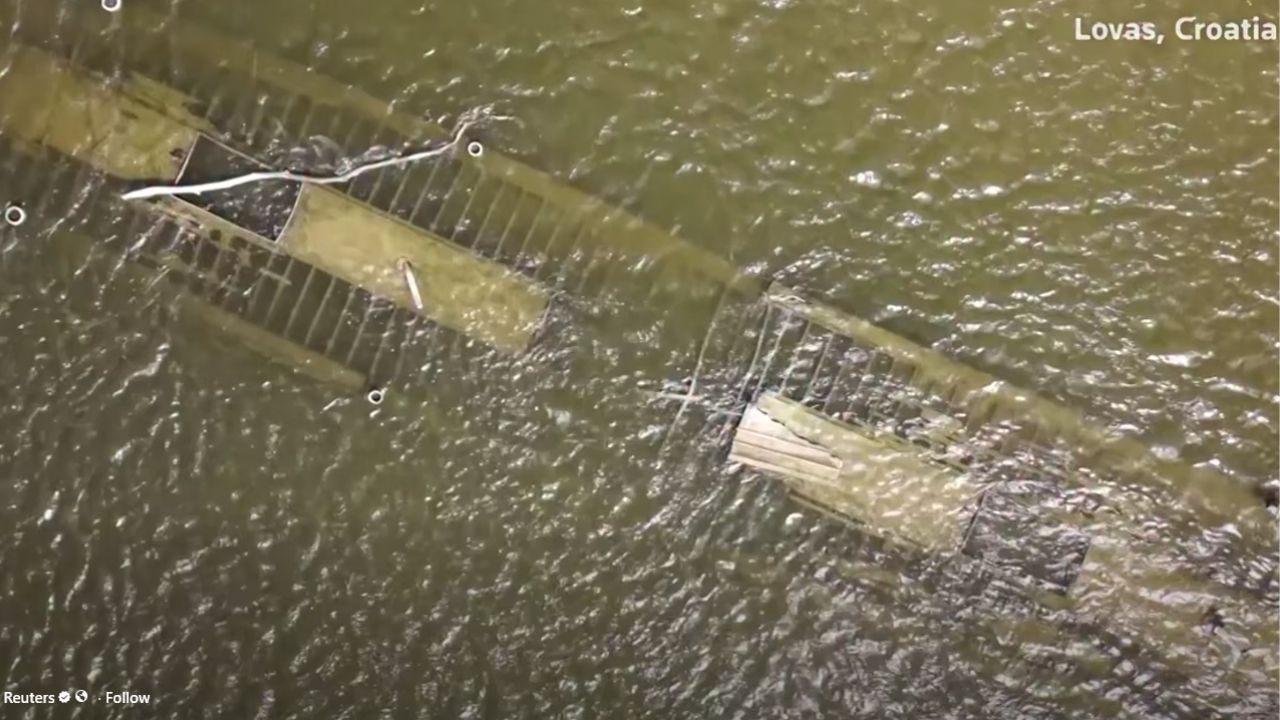
The wreck of the Hungarian cargo ship Fulton, which sank in 1937, has also resurfaced near Opatovac, Croatia. The low water is disrupting modern travel and shipping along the Danube.
The Ships Were Sunk During Germany’s Retreat
Embedded media follows. Please allow a moment for it to load.
Photos shared by Reuters show the wreck rising above the water near Prahovo. In 1944, German forces sank their own vessels as they retreated toward Kladovo, Serbia. The operation was intended to prevent the ships from falling into the hands of the advancing Red Army.
The wrecks include warships, cargo vessels, tugboats and barges. Some still have visible turrets, command bridges, broken masts and damaged hulls, while others remain buried beneath sand and mud.
The European Union is helping fund a nearly €30 million project to remove the wreckage and improve navigation. According to the European Investment Bank, earlier attempts to recover the ships were abandoned because of unexploded ammunition.
“A kilometre away from the ships is the Djerdap II navigation lock, where today’s ships pass through,” says Damir Vladić, Prahovo’s port director, according to the European Investment Bank. “When the sunken vessels are taken out, it will be much easier to steer towards the lock, both up and downstream.”
Low Water Is Disrupting Danube Cruises
The Danube travels through 10 countries between Germany and the Black Sea. Its unusually low water levels have exposed sandbars, rocks, and additional wreckage along its route.
Cruise ships that normally bring passengers into Budapest have been forced to dock farther upriver. A separate cruise ship ran aground near Vidin, Bulgaria, requiring 186 passengers to be evacuated, according to the Associated Press.
Meanwhile, freight vessels are carrying smaller loads or suspending trips because several sections of the river are too shallow to navigate safely.