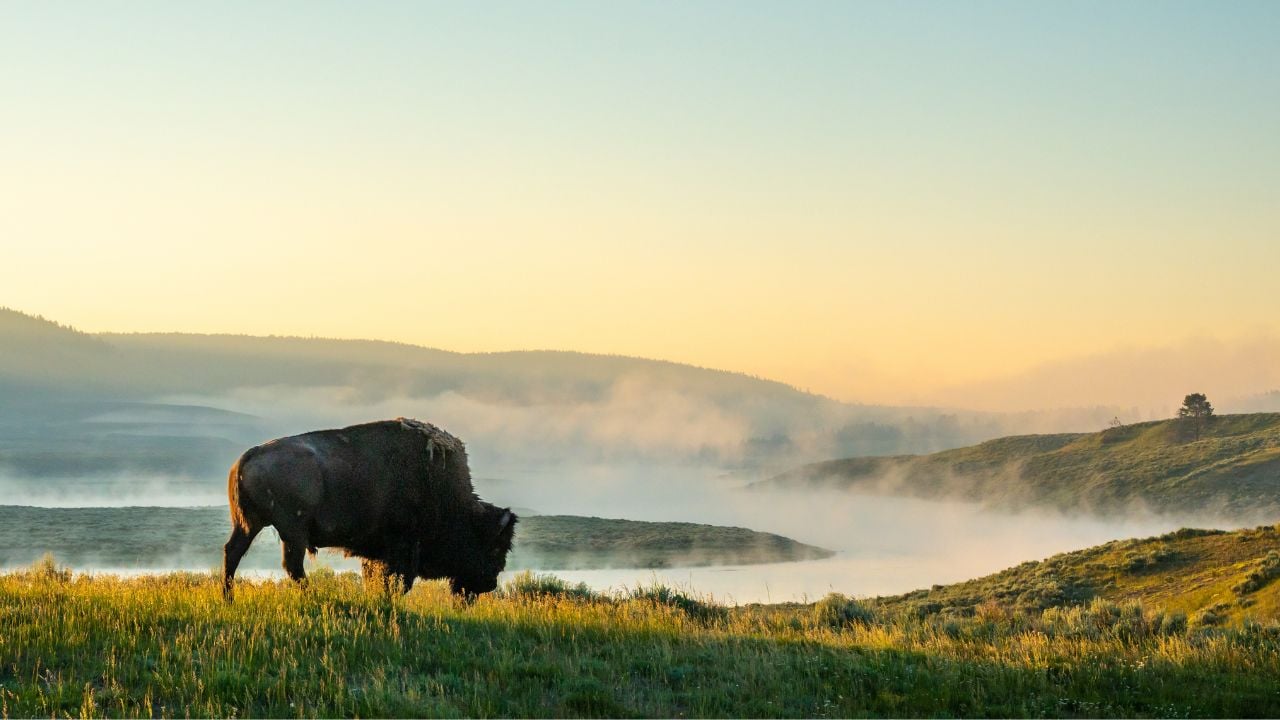
Focused Fisherman Has No Idea Bison Is Walking Up Behind Him in Yellowstone
Earlier in July, a fisherman was concentrating so hard on his next catch that he had no idea that one of Yellowstone National Park’s largest residents was walking up behind him.
Video recorded on July 19 shows the man standing near the water with his back turned as a bison quietly approaches. The animal gets close enough to alarm several people watching from nearby vehicles.
The fisherman finally notices the bison after someone begins honking a car horn. He turns around, sees the animal, and calmly walks away without making any sudden movements.
No one was injured during the encounter, but it happened as Yellowstone’s annual bison mating season was getting underway. Park officials warn that bison are unpredictable, surprisingly fast, and responsible for more visitor injuries in Yellowstone than any other animal, especially during mating season.
The Fisherman’s Wife Warned Him About the Bison
Embedded media follows. Please allow a moment for it to load.
View this post on Instagram
Park visitor Kristi Wilt recorded the video as the bison approached the fisherman from behind. Wilt told FOX Weather that she considered honking her own horn but worried the noise might startle the animal and cause it to charge.
Before she could decide what to do, someone in a truck behind her began honking. Wilt later learned that the person sounding the warning was the fisherman’s wife. The fisherman turns around and appears to acknowledge the warning before carefully leaving his fishing spot. The bison continues toward the water after he moves away.
“We were all so relieved as he walked like a boss, no eye contact, no fast movements, away from the bison,” Wilt told Storyful, according to FOX Weather. “My family cheered because we all felt so much relief in the way he handled himself.”
Yellowstone’s Bison Rut Is Underway
The encounter happened at the beginning of the bison rut, or mating season, which generally runs from late July through August in Yellowstone.
During the rut, mature bulls gather with larger herds and compete for females. They may bellow, roll in the dirt, and fight other bulls to display their strength and dominance, according to the National Park Service.
Adult male bison can weigh as much as 2,000 pounds, while females can weigh around 1,000 pounds. Despite their size, bison are actually quite agile and can run up to 35 mph. They can also jump over objects approximately five feet high.
Yellowstone estimated that nearly 5,300 bison lived in the park in 2025. The population includes northern and central breeding herds, which are frequently seen in Lamar and Hayden valleys.
Visitors Must Stay at Least 25 Yards Away
Yellowstone requires visitors to remain at least 25 yards, or 23 meters, from bison and other large animals. Visitors must stay at least 100 yards away from bears, wolves, and cougars.
If an animal moves closer, visitors are responsible for moving away to restore the required distance. The park recommends turning around and traveling in the opposite direction if a bison comes within 25 yards.
Warning signs that a bison may charge include staring and bobbing its head, pawing the ground, bellowing or raising its tail. Anyone who sees those behaviors should immediately walk or run away, seek cover behind a sturdy tree or vehicle, and prepare to use bear spray if the animal continues following.
The park’s current safety guidance also advises drivers to remain inside their vehicles when bison are on the road. Drivers should wait patiently for the animals to move instead of honking or attempting to drive around them.
A Yellowstone Visitor Was Injured in June
The fisherman’s close call came several weeks after a bison near Mud Volcano injured a 12-year-old visitor on June 26. The child was taken to a hospital, and the circumstances surrounding the encounter remained under investigation when the National Park Service announced the incident.
Following that encounter, park officials reminded visitors that bison will defend their space when they feel threatened. Even an animal that appears calm should never be approached, touched, fed or crowded.