Florida Officers Rescue Red Fox Tangled in Netting on Homeowner’s Property
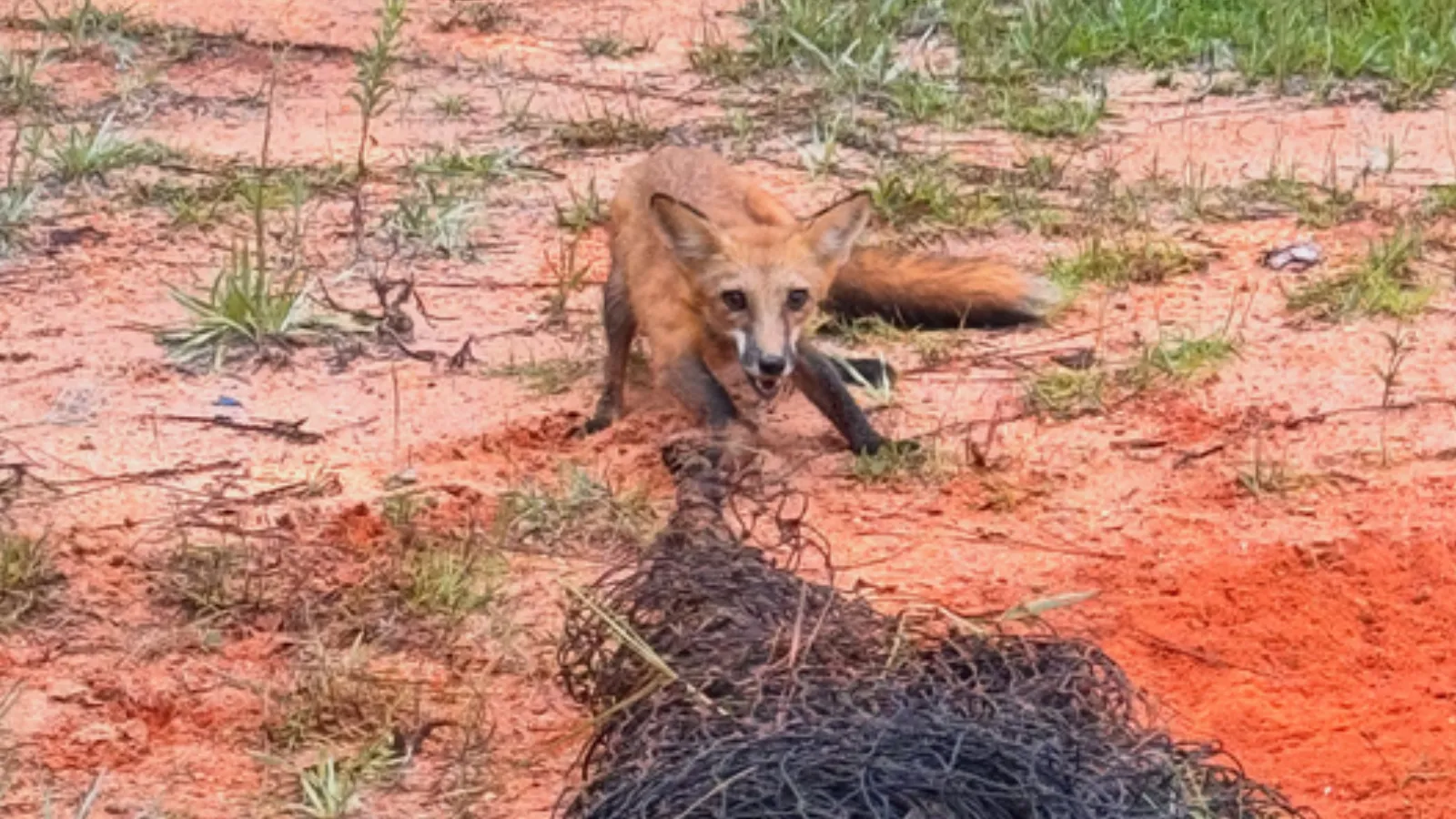
A Florida resident discovered an unexpected visitor in serious trouble after a red fox became tightly tangled in netting on the property.
The resident contacted animal welfare for help, and two officers responded to free the animal. In a social media post, Escambia County Animal Welfare said the fox had become caught in netting that was no longer being used.
“Working quickly and carefully, they were able to safely free the fox from the net and prevent further injury,” the department said in a Sept. 15 Instagram post.
The Fox Was Taken in For Rehabilitation
Embedded media follows. Please allow a moment for it to load.
View this post on Instagram
Rescue efforts were launched by Lead Animal Welfare Officers, Sgt. Roberson and Sgt. Agrecy.
The animal was loosened from its confinement, but rescue efforts were not yet over; the animal still needed attention afterward. Officers transported the fox to the Wildlife Sanctuary of Northwest Florida for further care and rehabilitation.
The Wildlife Sanctuary of Northwest Florida operates a wildlife hospital in Pensacola for injured and orphaned native animals. The sanctuary says its goal is to rehabilitate patients whenever possible and return them to the wild.
The fox rescued in Escambia County was taken there for evaluation and continued care.
Loose Netting Can Become a Wildlife Trap
Netting can be a common gardening tool to protect plants around a garden, or even control erosion. Once it’s left to the mercy of the elements, forsaken, or damaged, however, an animal passing through can easily find itself caught instead.
Even the Florida Fish and Wildlife Conservation Commission warns that some netting runs the risk of entangling wildlife. The agency recommends removing any netting from the yard when it is no longer needed. Anyone with netting is also advised to perform regular maintenance and trim loose material.
When netting is necessary, the Fish and Wildlife Conservation Commission recommends loose-weave designs with movable joints. This design gives trapped animals a better chance of escaping. Additionally, biodegradable alternatives such as jute or coir can further reduce the risk of trapping animals in places where ground-dwelling wildlife may encounter the material.
The U.S. Fish and Wildlife Service offers similar advice, recommending wildlife-safe loose-weave materials and prompt removal of temporary netting once it has served its purpose.