
Expand the Mind: 14 Transforming Books to Read This Year
You often hear the phrase “you are what you eat,” but you rarely consider that you are also what you read. In a world overflowing with surface-level tweets and 15-second videos, deep reading remains the single most effective way to upgrade your mental operating system.
Reading the right books shifts your perspective, challenges your biases, and equips you with new mental models for navigating the world.
We’ve curated a list of 14 essential reads, combining timeless classics with modern masterpieces, that are guaranteed to expand your mind this year.
1. Man’s Search For Meaning by Viktor Frankl

If you’re going to read just one book from this list, pick this one. The author was a psychiatrist and Holocaust survivor. He makes a powerful point: suffering is a part of life, but what really matters is how you find meaning in it and move forward.
Frankl introduces his idea of “logotherapy,” which is all about how our main goal in life is to find what’s meaningful to us. It’s a deep read that makes you think about how your attitude is the one thing you truly control. It flips the script from “what do I want from life?” to “what does life ask of me?” The first part is tough, but it sets the stage for some major ‘aha’ moments later on.
2. Thinking, Fast and Slow by Daniel Kahneman

Nobel laureate Daniel Kahneman breaks down the two systems that drive your brain: the fast, intuitive System 1 and the slow, logical System 2. This book reveals the mental shortcuts and biases that affect your daily decision-making.
You’ll start noticing cognitive traps, like loss aversion or over-trusting your gut. A practical takeaway is the “Pre-mortem” technique: before a big project, imagine it has failed and work backward to identify potential pitfalls, helping you avoid them.
3. Atomic Habits by James Clear
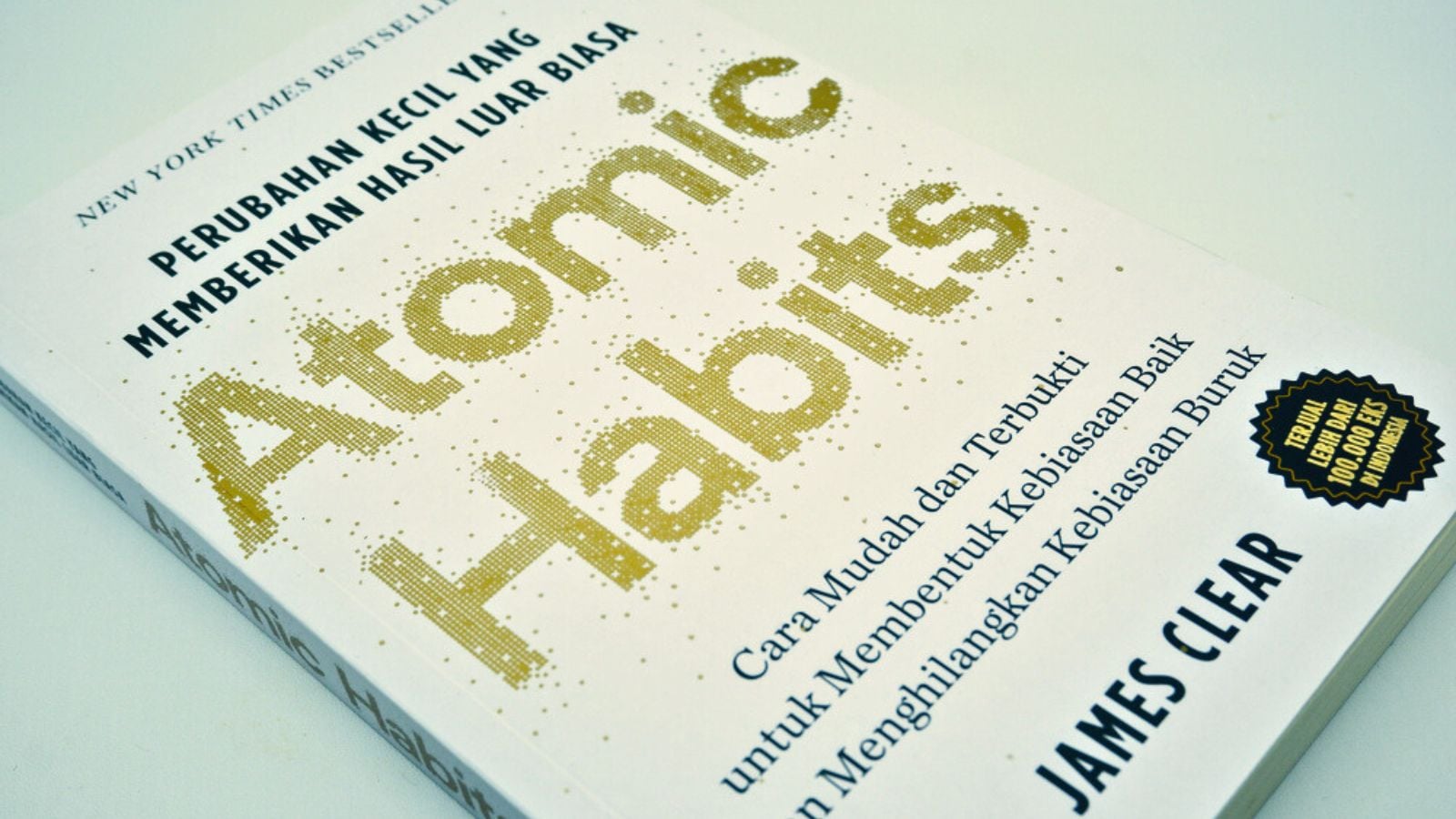
Atomic Habits is an engineering manual for habit change. James Clear argues that massive success comes from the compound interest of small, 1% improvements, not massive action. He breaks down the “Four Laws of Behavior Change” to help you build good habits and break bad ones.
The book shifts your focus from goal-setting to system-building. Instead of “I want to run a marathon,” you become “I am a runner.” To start, try “habit stacking”: identify a current habit, like brushing your teeth, and add a new, tiny habit on top of it, like flossing one tooth.
4. Sapiens: A Brief History of Humankind by Yuval Noah Harari

Harari’s book isn’t your typical history lesson. It explores how biology and history shaped humanity, focusing on key revolutions: Cognitive, Agricultural, and Scientific. He argues that humans dominate because we believe in shared fictions, such as money, nations, and human rights.
This “zoom out” perspective helps you see modern conflicts as challenges to these shared myths.
5. Deep Work by Cal Newport

In an economy that rewards distraction, Cal Newport argues for “deep work”. The ability to focus intensely on demanding tasks is a rare and valuable superpower. By challenging the myth that busyness equals productivity, this book reveals how constant interruptions like email destroy your ability to create real value.
To expand your mind, try scheduling just 60 minutes of uninterrupted focus each day, treating it as an immovable appointment to rebuild your cognitive capacity.
6. The Power of Habit by Charles Duhigg

This book popularized the “habit loop” (Cue, Routine, Reward) and explains the science behind habits and how to change them. Duhigg explores personal habits, as well as the habits of successful organizations and societies, highlighting how small changes, called Keystone Habits, can trigger a ripple effect of success.
It redefines willpower as a process you can control, helping you shift from self-blame to understanding your cues and rewards. Start by focusing on one Keystone Habit, like exercising or making your bed, and see how it improves other areas of your life.
7. Flow: The Psychology of Optimal Experience by Mihaly Csikszentmihalyi

Mihaly Csikszentmihalyi’s research explores “flow,” a state of total absorption where you become so focused on an activity that nothing else matters. This concept redefines happiness as deep engagement rather than mere relaxation, occurring when you stretch your body or mind to achieve something difficult and worthwhile.
To experience this optimal state, choose tasks that slightly exceed your current skill level to avoid both boredom and anxiety.
8. Range: Why Generalists Triumph in a Specialized World by David Epstein

Forget what you heard about picking one lane and staying in it. Epstein argues that generalists are actually the ones who win in complex fields. If you’ve ever felt behind because you’ve dabbled in a bunch of different things, this book is for you.
It shows how mixing ideas from different worlds is where real innovation happens. So, go ahead and learn a skill that has nothing to do with your job; those random insights might just be your biggest competitive edge.
9. Influence: The Psychology of Persuasion by Robert B. Cialdini

Ever wonder why you say “yes” when you really mean “no”? Dr. Robert Cialdini breaks down the six psychological triggers, like Social Proof and Scarcity, that drive human persuasion. It’s essentially the “marketing bible,” teaching you how to influence others and, more importantly, how to spot when these tactics are being used on you.
This week, try the principle of Reciprocity: do a small, unexpected favor for someone and watch how the dynamic shifts.
10. Quiet: The Power of Introverts in a World That Can’t Stop Talking by Susan Cain

Around a third of the people you know are introverts, the listeners and creators who usually dodge the spotlight. Susan Cain explores how our culture became obsessed with the “Extrovert Ideal” and why that’s a mistake.
Whether you’re quiet yourself or work with someone who is, this book is a total eye-opener. It proves that solitude actually fuels innovation. If you’re a leader, try asking for written ideas before opening the floor in your next meeting; you’ll be surprised at the genius you’ve been missing by only listening to the loudest people in the room.
11. Walden by Henry David Thoreau

In 1845, Thoreau moved to a cabin near Walden Pond to live simply and independently. This book is his story of spending two years, two months, and two days there, reflecting on simple living and self-reliance while critiquing the rat race long before the term existed.
It makes you rethink what wealth really means, with Thoreau saying a man is rich based on how much he can afford to live alone. Take your time with this one; it’s full of philosophy and nature metaphors that need a slow, thoughtful read.
12. Mastery by Robert Greene

Robert Greene analyzes historical greats like Darwin and Da Vinci to prove that mastery isn’t about talent, but a process of apprenticeship and deep learning. This is a must-read for long-term career strategy, teaching you to prioritize skill-building over instant success.
Evaluate your current path and focus on finding a mentor to guide your development.
13. Bird by Bird by Anne Lamott

This book may seem like it’s about writing, but it’s really about life. Lamott offers advice on tackling big tasks, like writing a novel, by breaking them into small, manageable chunks “bird by bird.”
She brings humor and grace to topics like perfectionism, jealousy, and the creative process. It teaches you to embrace the “shitty first draft” and helps you silence your inner critic to keep moving forward, whether you’re writing a book or starting a new career.
14. The Alchemist by Paulo Coelho

This modern classic follows Santiago, an Andalusian shepherd boy, on a quest for treasure that leads to profound spiritual discovery. A simple yet powerful fable, it teaches readers to listen to their hearts and follow their “Personal Legend.”
The story reframes obstacles as essential tests and the journey as the ultimate destination. This week, try noticing “omens” or coincidences you might find opportunities you’ve been overlooking.
Reading with Purpose in 2026

The books listed above contain lifetimes of wisdom compressed into a few hundred pages. But remember, buying a book is not the same as reading it.
Don’t feel the pressure to read all 14 at once. Choose the one title that resonated most with your current life challenge.
Read More: