Holiday Spending Is Rising in 2026, but Nearly 60% of Americans Say They Have Less Money
Americans are preparing to spend more on the holidays this year, even as many families say they have less money available. New research shows holiday budgets are climbing in 2026, but those increases are far from evenly shared.
A November 18 survey from The Conference Board estimates combined planned spending on gifts and other holiday purchases at $1,049, up 5.9% from $990 last year. Americans expect to spend more on everything from presents to food and decorations, although much of that growth is concentrated among wealthier households.
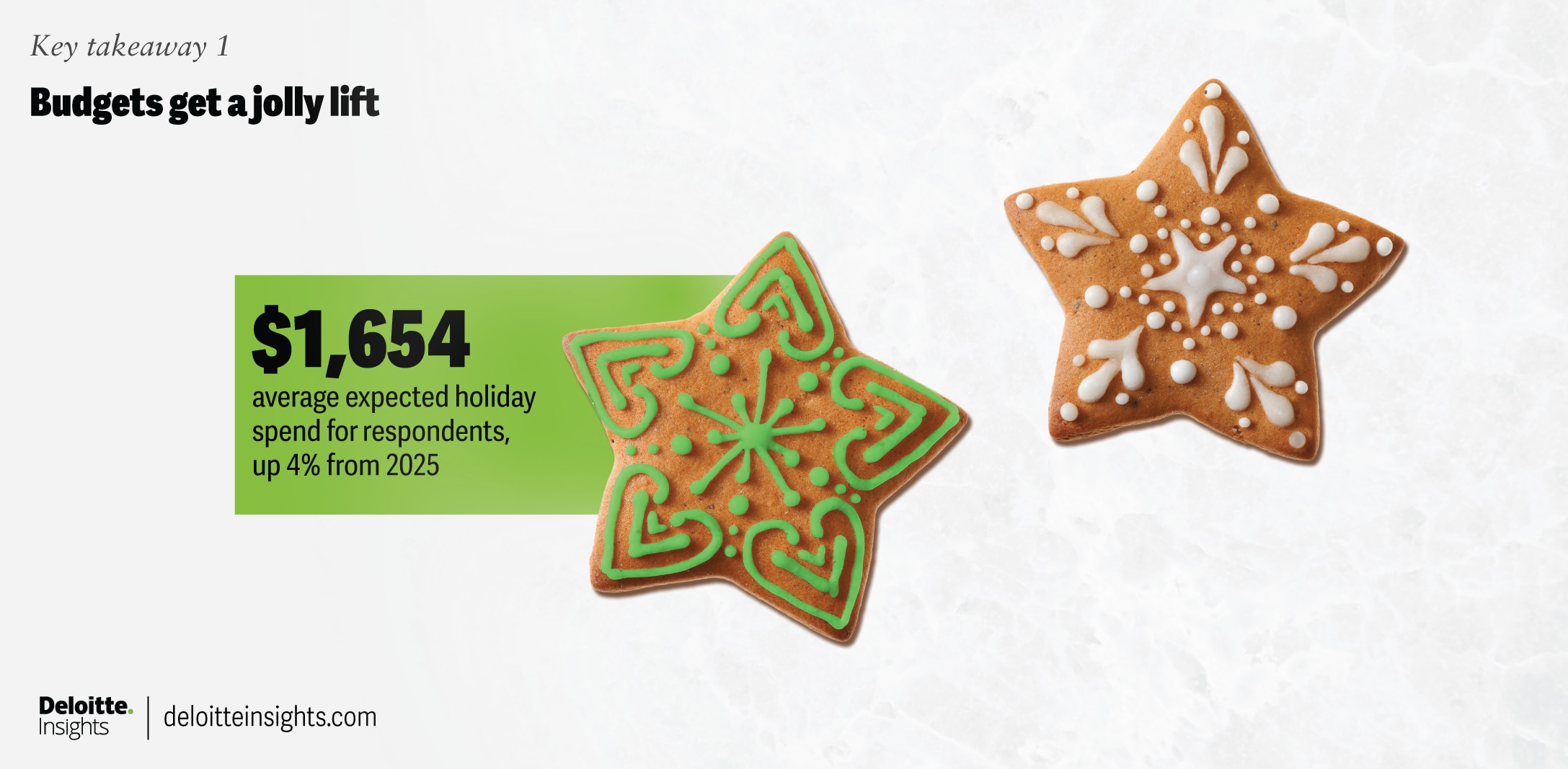
Separate research from Deloitte also points to higher spending, with shoppers planning to spend an average of $1,654 this holiday season. Yet a Gartner survey found that nearly 60% of Americans have less money available for holiday purchases than they did a year ago.
The findings reveal a holiday shopping season shaped by two competing pressures. Consumers still want to celebrate, but many are making difficult choices about what they can afford, who receives gifts, and where they can find the best prices.
A Growing Spending Divide
Source: Deloitte, 2026 Holiday Retail Survey.
The Conference Board’s survey of 3,000 U.S. consumers found that average planned gift spending increased 5% to $683, while budgets for non-gift purchases, including decorations, wrapping paper, and holiday food, climbed 7.8% to $366.
Even after adjusting for inflation, the combined spending estimate increased 3.2% from 2025. However, its purchasing power remains 6.4% below the level recorded in 2024, suggesting that higher budgets have not fully restored what consumers could afford two years ago.
Those averages also conceal a substantial income gap. Planned gift budgets declined across every broad household income group earning less than $125,000 annually. Among households earning $200,000 or more, however, average gift budgets increased 13.6%.
The differences were also apparent across age groups. Among gift buyers younger than 35, 38% expected to spend more than last year, compared with just 12% of those 55 and older. Meanwhile, 33% of older shoppers planned to reduce their gift spending.
Fergus McCormick, senior economist at The Conference Board, said spending plans increased after accounting for inflation, particularly on purchases outside gifts. Still, the improvement has not been enough to recover the buying power consumers had in 2024.
More Spending, Tighter Wallets
The 2026 Deloitte Holiday Retail Survey, which questioned 4,000 Americans, projects average household holiday spending of $1,654, a 4% increase from 2025. Its estimate includes retail purchases and holiday activities, making it broader than The Conference Board’s combined gift and non-gift figure.
Deloitte expects spending on retail goods to rise 10% to $988, while spending on holiday activities is projected to fall 4% to $666. That suggests shoppers are directing more of their budgets toward purchases rather than seasonal outings and experiences for themselves.
Still, 79% of Deloitte respondents expect higher prices, and 38% qualify as particularly active bargain hunters who use multiple strategies to save money. Interestingly, those value-focused shoppers plan to spend 12% more than other consumers, indicating that hunting for deals does not necessarily mean spending less overall.
The financial strain becomes clearer in Gartner’s October 26 findings. Its survey of 1,004 U.S. consumers found that nearly 60% have less to spend on holiday purchases than last year, while two-thirds plan to buy gifts for fewer friends and relatives.
Another 32% expect to reduce their overall winter holiday gift spending. These results help explain how average spending estimates can increase even when a large share of consumers face tighter financial limits.
The Search for Savings
With budgets under pressure, consumers are changing how they shop rather than abandoning holiday purchases altogether.
The Conference Board found that 38% plan to purchase more discounted items, making sales the most popular budgeting strategy. Another 29% expect to spend less per person, while an equal share plan to purchase fewer gifts. More than a quarter intend to use rewards points or loyalty credits to help cover costs.
Shopping earlier is another response. Gartner found that 57% planned to begin holiday shopping in October or sooner, including 30% who expected to start as early as September. Deloitte similarly reported growing interest in early-season promotions, with 22% of respondents planning to begin sooner than last year.
Payment choices could also affect how far holiday budgets stretch. The Conference Board found that 20% expect to use credit cards they will pay off over time, while 13% plan to use buy now, pay later services or installment payments. Among consumers younger than 35, that installment-payment figure rises to 21%.
Online shopping remains central to the season, with 93% of gift buyers expecting to purchase at least some presents online, the highest share in The Conference Board’s survey series dating back to 2011.
Despite the pressure on household finances, consumers have not given up on holiday traditions. Half of Deloitte’s respondents plan to give experiences as gifts, up 11 percentage points from 2024, with restaurant gift cards and meals among the most popular choices.
For many Americans, however, celebrating this year will depend on finding discounts, limiting gift lists, and making purchases over a longer period rather than paying for everything at once.