A Panicked Foal Was Stuck Under a Fence Until Arizona Firefighters Stepped In
When animals become trapped somewhere, they don’t often stay calm. That’s to be expected, except they can hurt themselves when thrashing around in their confusion. Firefighters in Eloy, Arizona, freed a young horse that had wedged itself under a pipe fence last week. Luckily, the animal walked away with only minor injuries. The Eloy Fire District got the call on Wednesday about an animal trapped under a pipe at a property near Highway 87 and Houser Road, Arizona’s Family reported.
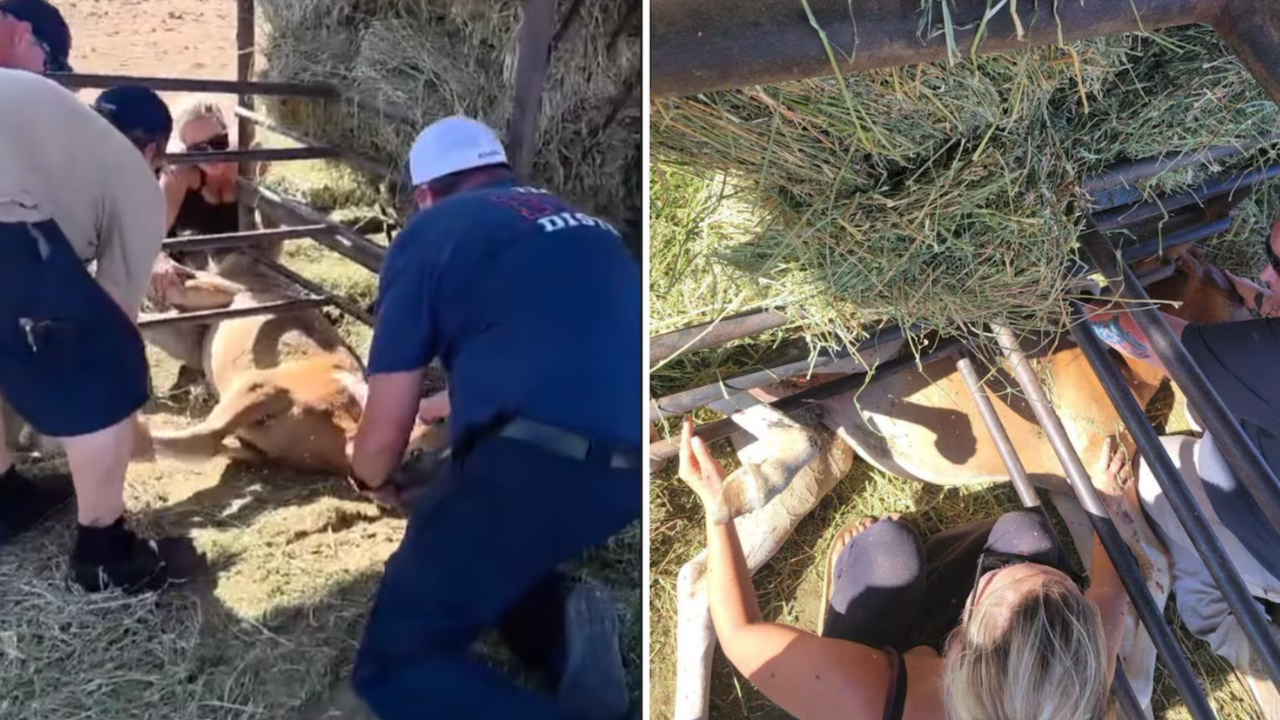
The horse had panicked before the rescue crews arrived. It was struggling to free itself from beneath the fence, and the more it fought, the more stuck in place it became. The owner and an animal control officer from a nearby town had tried their best to get hold of the foal, but couldn’t manage it on their own. That’s when they called for backup.
Eloy Battalion Chief Travis Hartman answered the call. Hartman owns horses himself, which gave him a better feel for handling a frightened one. He and several other firefighters worked the animal loose from under the fence.
The fire district credited the outcome to plain physical effort, calling it old-fashioned brute strength. The foal came out with minor injuries that it should recover fully from. It was returned to its family at the scene, and was presumably able to calm down after being freed from the tight, enclosed space.
Why a Trapped Large Animal Is Dangerous to Rescue
A panicking horse is a hazard to everyone around it, which is why a stuck foal becomes a job for the fire department rather than one person with a rope. A horse that feels trapped will thrash, kick, and throw its weight against whatever is holding it. Even a young one is heavy and strong enough to injure a handler badly.
Freeing a large animal safely usually takes several people who can control the head and body, keep clear of the legs, and move the animal in a coordinated way rather than a sudden one. Having a rescuer who understands how horses react, as Hartman did, lowers the risk of the animal hurting itself or the people helping it. That’s why the foal was able to be freed and taken to safety without major incident. Hopefully, there won’t be a next time for the accident.