A Mother Bobcat Picked a Canadian Backyard Deck to Raise Three Kittens This Summer
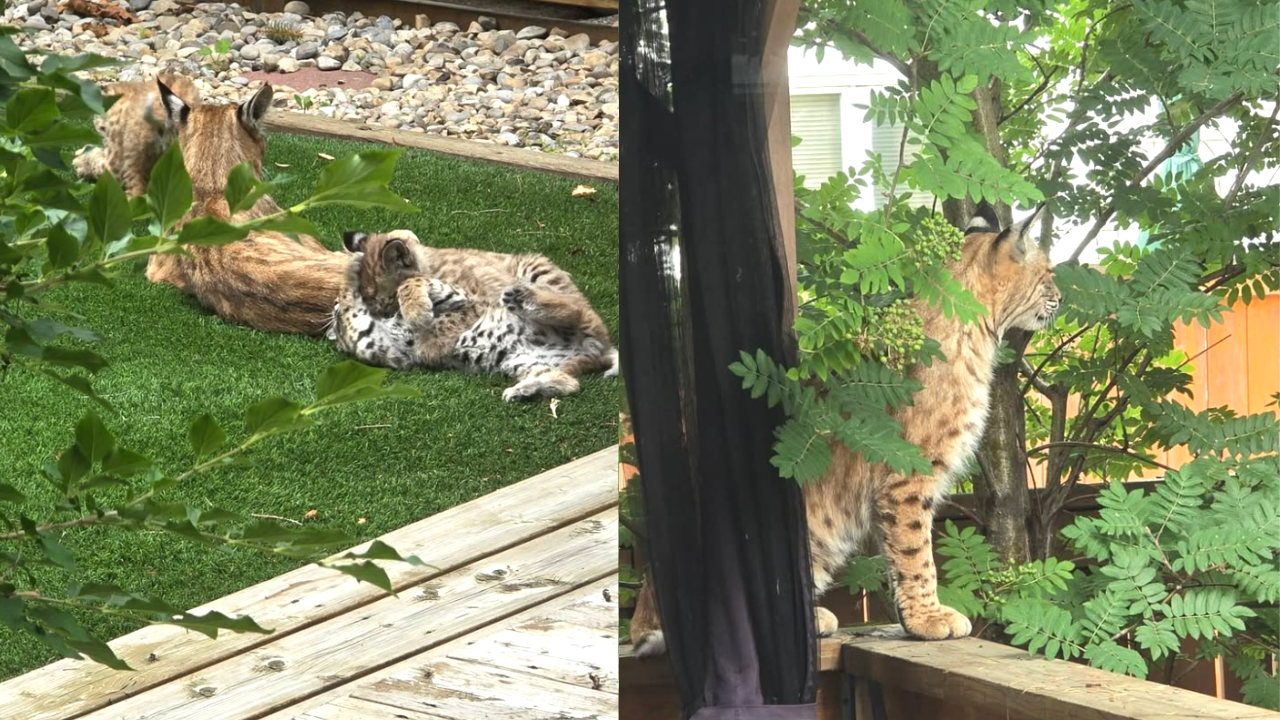
When’s the last time you had an adorable pack of bobcats in your backyard? We’re willing to bet never. One mother bobcat picked a Canadian author’s backyard as the place to raise her three kittens this summer, and the homeowner has been documenting the result. Dana Goldstein realized at the beginning of July that the family had settled in, according to PetHelpful. She has said she may not get much use of her yard this season and is fine with that.
Goldstein has shared photos and video of the animals. The kittens play, explore, and wrestle with each other, which is how young bobcats build the coordination and hunting skills they need later. The mother stays nearby and watches. The family retreats under Goldstein’s deck to cool off and stay out of sight.
The post drew a run of comments from people who wanted the same thing in their own yards, including jokes about petting the kittens and asking what sort of catnip would attract a bobcat family. Wildlife groups take a different view of contact. Their guidance on a denning bobcat comes down to keeping away from it.
The choice of a backyard is less random than it looks. Neighborhoods hold the prey bobcats hunt and offer sheltered spots to hide a litter, which is why mothers sometimes den close to houses. The tradeoff for the animals is that a den near people carries its own risks.
Why a Mother Bobcat Would Choose a Backyard
View this post on Instagram
Residential areas can draw a denning bobcat because they supply both food and cover. Project Coyote notes that neighborhoods are often full of prey such as mice and rabbits, and that they offer hiding places under decks and sheds and even on rooftops, which is exactly how Goldstein’s visitors are using her deck. The group says that may be part of why bobcats come back to the same general areas year after year. Dens under porches, decks, and sheds are still uncommon overall, according to Humane World for Animals.
The mother is doing the job alone. Urban Edge Wildlife points out that bobcat mothers are single parents who have to feed, protect, and teach their kittens survival skills without help, in an environment where the young are vulnerable. Spotted coats camouflage them well, though other resident predators can still find them. Kittens generally come out of the den at just over a month old and start accompanying their mother on hunts at around three months.
What Wildlife Groups Say to Do About a Den in Your Yard
The consistent advice is distance. Groups including In-Sync Exotics say to stay calm, keep back, and never approach or feed a bobcat, and to avoid cornering one so it always has a way out. A mother with kittens will defend them, which is what makes a den different from a passing sighting. Nobody should pick up a bobcat kitten, and a kitten alone is usually not orphaned, since mothers routinely leave their young while they hunt.
Pets and food sources are the other half of it. The recommendation is to keep pets indoors or leashed, and to never leave small pets outside unattended at dawn, dusk, or overnight, when bobcats are most active. Securing trash and pet food helps by removing what draws the rodents bobcats come for. Wildlife groups also warn against trapping or relocating the animals, because removing a mother leaves kittens to die and a vacated territory simply gets filled by another bobcat. Where a den can be tolerated, the usual advice is to leave it alone until the kittens are old enough to travel with their mother on their own.