A Flash Flood Tore Through an Indiana Yard, and a Husband Decided the Fence Was Worth Saving
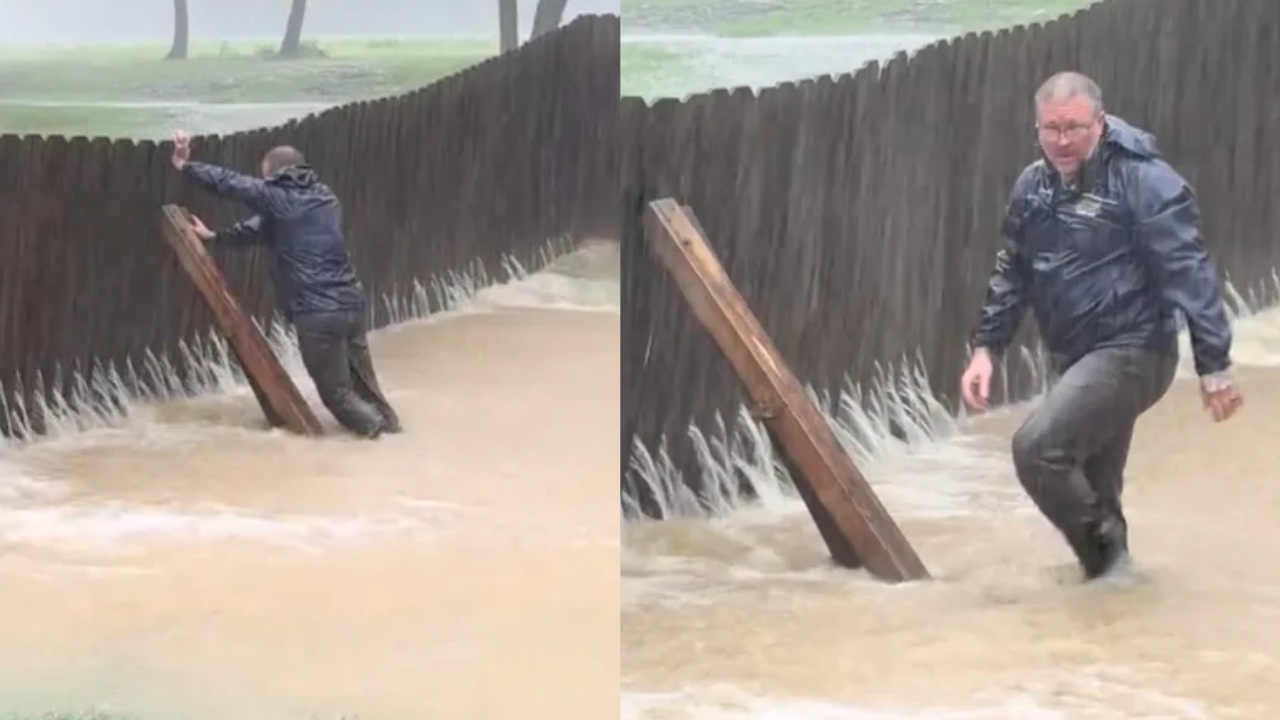
Heavy rain can cause an overwhelming amount of damage in a short amount of time. A homeowner in Linton, Indiana, now has the video to prove it. When flash flooding swept through the area on June 26, water came racing through Terrie Schaper Smith’s backyard like a small river. Her husband waded straight into it to prop up the fence before it could give way. She decided to film it to show everyone how he jumped into action to help.
You can see all the mud and water flowing with enough force to push the fence hard enough that it nearly collapses. Schaper Smith’s husband is out in it, holding the fence upright as the water climbs to his calves. As she summed it up, “My hubby saved our fence before it collapsed.”
By her account, the storm was something new. She wrote that Linton got massive amounts of rain in a very short window and that the town has dealt with heavy flooding repeatedly over the past two years. Their yard usually collects some water during a big rain. This time was different, and it was noticeably worse, too.
It’s a good thing he acted when he did. A backyard that’s flooding is usually more than just an issue with the backyard. And how knows how much or little flood damage their insurance will cover?
The trending video sets up two discussion threads: why the water moves the way it does and why that fence was smart to save.
Why a Backyard Floods Like That
@terriesmith26 June 26th, 2026 Linton Indiana experienced massive amounts of rain in a short period of time. We had so much flooding in our town that had experienced so much over the past 2 years. Our yard typically holds water when we get a lot of rain but we have never experienced anything like this before. My hubby saved our fence before it collapsed and NO he was NOT in danger. I will post Part 2 to show why! #LintonIndianaFlood #lintonindiana #backyardfloods #hubbyismyhero #savethefence @BILLYGOAT ❌
Flash floods happen when more rain falls than the ground and drains can handle, and they can develop in a matter of minutes. Once the soil is saturated, the extra water has nowhere to go, so it runs downhill across whatever is in its path, lawns and yards included. Moving water is much more powerful than it looks. Even a shallow, fast-moving stream can shove patio furniture around, scour away soil, and lean on a fence hard enough to topple it. That is the very thing Schaper Smith’s husband was fighting.
There is also a reason these floods are showing up more often. A warmer atmosphere holds more moisture, and that moisture comes down as heavier, more concentrated rain. The result is more of the sudden, intense downpours that overwhelm drainage and trigger flash floods, even in places that rarely flooded before. Schaper Smith noted that her town has been hit again and again over the past couple of years. That pattern is what scientists expect more of as the planet warms.
Why That Fence Was Smart to Save
Most people assume their homeowners’ insurance will step in after a flood. It usually won’t. Unfortunate as that is, most standard home insurance policies don’t actually include flood damage. That’s the whole reason separate policies tend to exist at all, mostly to cover floods.
Even for people who do carry flood insurance, there are still catches. Flood policies generally protect the building itself, not what surrounds it. Fences, decks, landscaping, and patios usually fall outside the coverage. So if that fence had collapsed and washed away, there is a good chance no policy would have paid to replace it.
Flooding can happen almost anywhere it rains, a flood policy takes about a month to take effect, and fast-moving water always deserves more respect than it seems to ask for. So if you’ve got anything you can do when your fence is at risk, you might want to try to fix it as long as it’s feasible.