A California Homeowner Says Construction Crews Have Been Using His Property Without Permission for Two Years
What do you do when construction crews decide to use your home and yard as they see fit? One California homeowner says construction and maintenance crews have repeatedly used part of his property without permission. In the process, they’ve been damaging his fencing and landscaping. Logan Bates told ABC7 the problems began in 2022 and have continued for more than two years. He said he’s spent that time trying to get the state agency to resolve it.
Bates said he bought the home in part for its larger lot, which he said ended up that size because of a past widening of the 5 Freeway. Living close to the freeway, he expected some construction activity in the area. He said he did not expect crews tied to a state agency to use portions of his land.
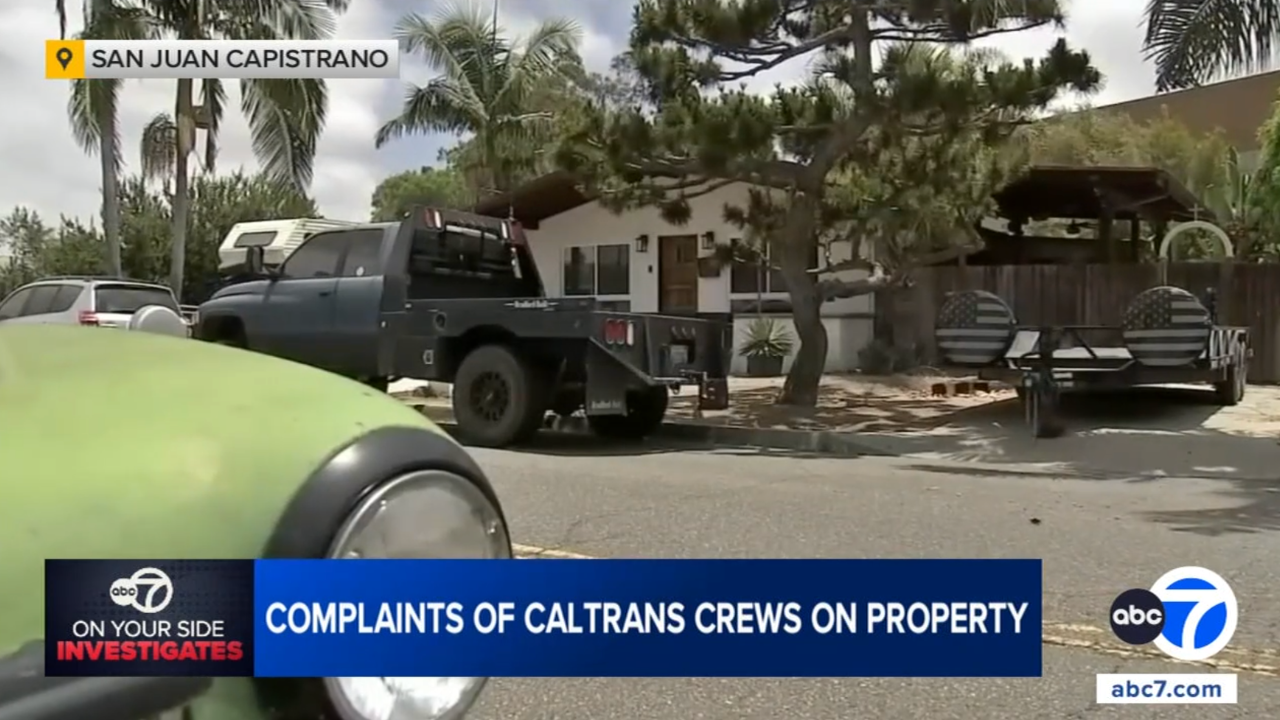
Bates offered both photos and videos that he said show parts of his property used as a construction staging area, with large equipment stored on-site and crews moving through the areas around his home. He alleges that the workers both broke and tore down his fencing and that fuel tanks were dropped onto his property. He added that he’s obtained bids of $40,000 to $50,000 to repair the fencing and landscaping.
Caltrans confirmed to ABC7 that it had previously received concerns about its work at the location. The agency said it routinely performs maintenance within the state right of way, which includes reducing fire hazards, clearing encampments, maintaining fencing, and scheduled upkeep. Caltrans also said it is confirming property map details regarding the access point at the site and is using an alternate entry point in the meantime.
The Access Point Being Checked
The dispute comes down to where the state right of way ends, and Bates’ property begins. A right of way is the land a transportation agency holds for a highway and the work needed to maintain it, and the construction company frames its activity at the site as routine maintenance inside that boundary. The agency’s own statement, that it is confirming property map details for the access point, indicates the boundary is not settled even in its records.
Bates said he tried for years to sort it out directly. He met with company representatives in early 2025 and believed he had reached an understanding that he would be treated as the street representative for Avenida Los Amigos and would be consulted before any future work in the area. He said crews returned at the beginning of June without that coordination. Since then, he has installed a light and a camera, posted private property and no trespassing signs, and marked his boundaries with rope, saying of the agency, “They can’t just bully people.”
How Do You File a Damage Claim?
View this post on Instagram
California usually requires a written claim before anyone can sue. Claims of $12,500 or less can be filed directly with the Caltrans district claims office covering the county where the incident happened. Larger claims go to the state’s Government Claims Program, administered by the Department of General Services. The deadlines are strict. Under Government Code section 911.2, claims involving personal injury or damage to personal property must be presented within six months, while claims for damage to real property and most others run one year from the incident.
Whenever a public agency damages or takes private property for public use without paying for it, that means there’s a path to sue as well. It’s related to Article I, Section 19 of the California Constitution: owners can sue for compensation with inverse condemnation action. Government Code section 905.1 exempts those claims from the usual administrative claim requirement. Bates said he’s already filed multiple complaints and damage claims and has contacted local lawmakers.