A 30-Foot Sinkhole Drove Families From Their Homes. South Dakota’s Supreme Court Says the State Doesn’t Owe Them
Talk about frustrating: the South Dakota Supreme Court ruled in July that the state is not liable for a 2020 sinkhole that drove families out of a Black Hawk neighborhood. The decision leaves homeowners in the Hideaway Hills development with no path to damages from the state. Roughly a dozen of their houses were condemned and still sit vacant today.
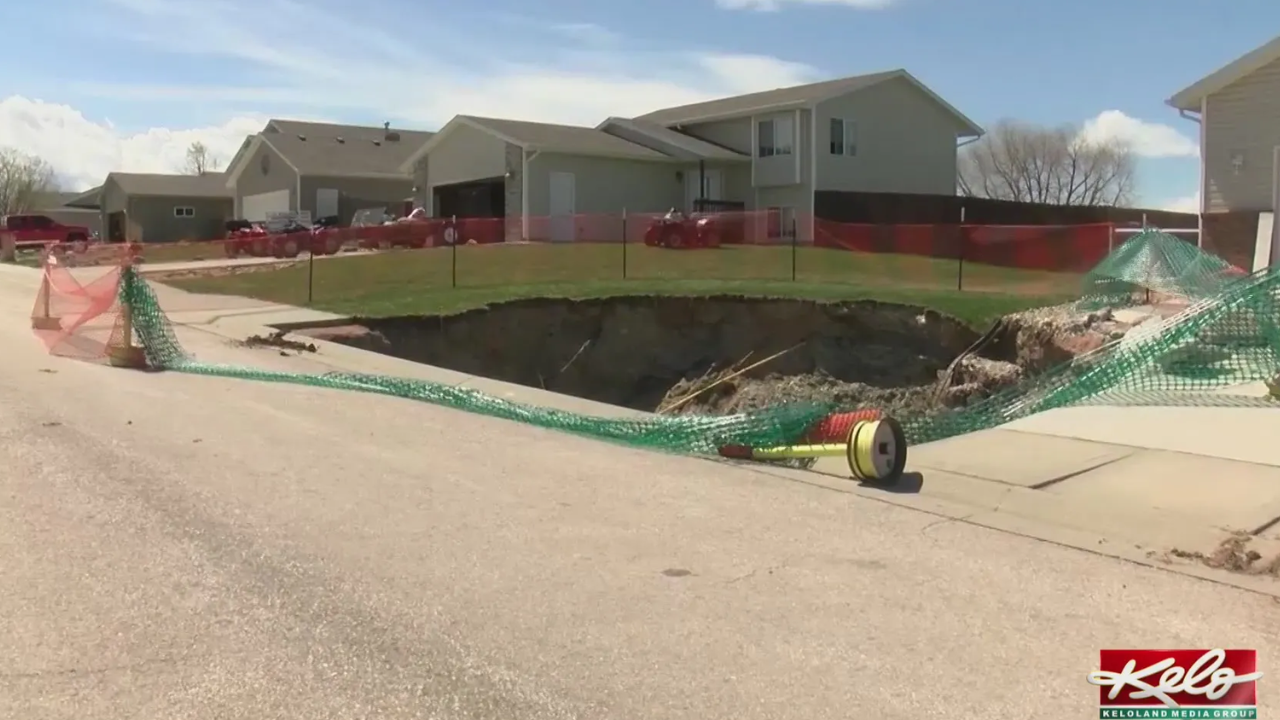
The sinkhole opened in April 2020, about 30 feet deep, in the front yard of a home in the Meade County subdivision just west of Rapid City. Thirteen homes were evacuated. Residents then learned their neighborhood had been built on top of an old gypsum mine.
Those property owners were joined by roughly 150 other Hideaway Hills homeowners, representing 164 properties, in a $60 million class-action suit against the state. They argued the state improperly backfilled the mine with soft material that wore away over the decades, and that by keeping the underground mineral rights it retained an ongoing duty to the land above. A circuit judge dismissed the case on sovereign immunity grounds, and the homeowners appealed.
Retired Justice Janine Kern wrote the court’s opinion. The justices held there was no taking of private property, because the state’s mining and reclamation work happened while the state still owned the land, which means the homeowners cannot satisfy the private property element of an inverse condemnation claim. Kern acknowledged the “devastating and sympathetic circumstances” the plaintiffs find themselves in, then wrote that they had not presented a viable claim against the state.
Why the Homeowners Have Run Out of Options
The sinkhole wasn’t the first warning that residents had to deal with. Homeowners began reporting cracking in their foundations in 2008, about three years after the first residents moved into Hideaway Hills. The people who bought those houses were never told the ground had been mined, even though the 1994 buyer and the developer disclosed the mining history to the homebuilders, according to the court’s ruling.
Every other avenue has already closed. Lawsuits against Meade County, the land’s developers, and the realtor who represented the homebuilders were dismissed. At oral argument last October, homeowners’ attorney Matthew Leerberg told the justices he hoped to reach a jury and show that his clients “can’t live in their homes anymore,” according to South Dakota Searchlight. The ruling means that never happens. An attorney for the state said the decision resolves the legal issues in the case.
How Did Homes Get Built on Top of a Mine?
The mining goes back more than a century. A company called Dakota Plaster dug underground shafts in the early 1900s in search of gypsum, which slows the hardening of concrete. When South Dakota opened a cement plant in Rapid City in 1925, it began mining gypsum in the area, including on the land that would become the subdivision. The mine later went dormant, and in the mid-1980s the state bought it and mined the surface, though lawyers for the state maintain it never mined underground.
The state reclaimed about 16 acres, reseeded the land as rangeland, and sold it in 1994 for about $50,000 less than it had paid. The buyer later sold it to developers, who turned it into Hideaway Hills in the early 2000s. The state kept the land’s subsurface mineral rights, which homeowners argued that the retained rights left the state on the hook for what happened above them.
The court found that holding the mining rights did not amount to a public use under the damaging clause of the South Dakota Constitution, according to South Dakota News Watch. As far as the final verdict, that has yet to be determined — but it’s looking like the residents aren’t going to get what they want out of this situation.