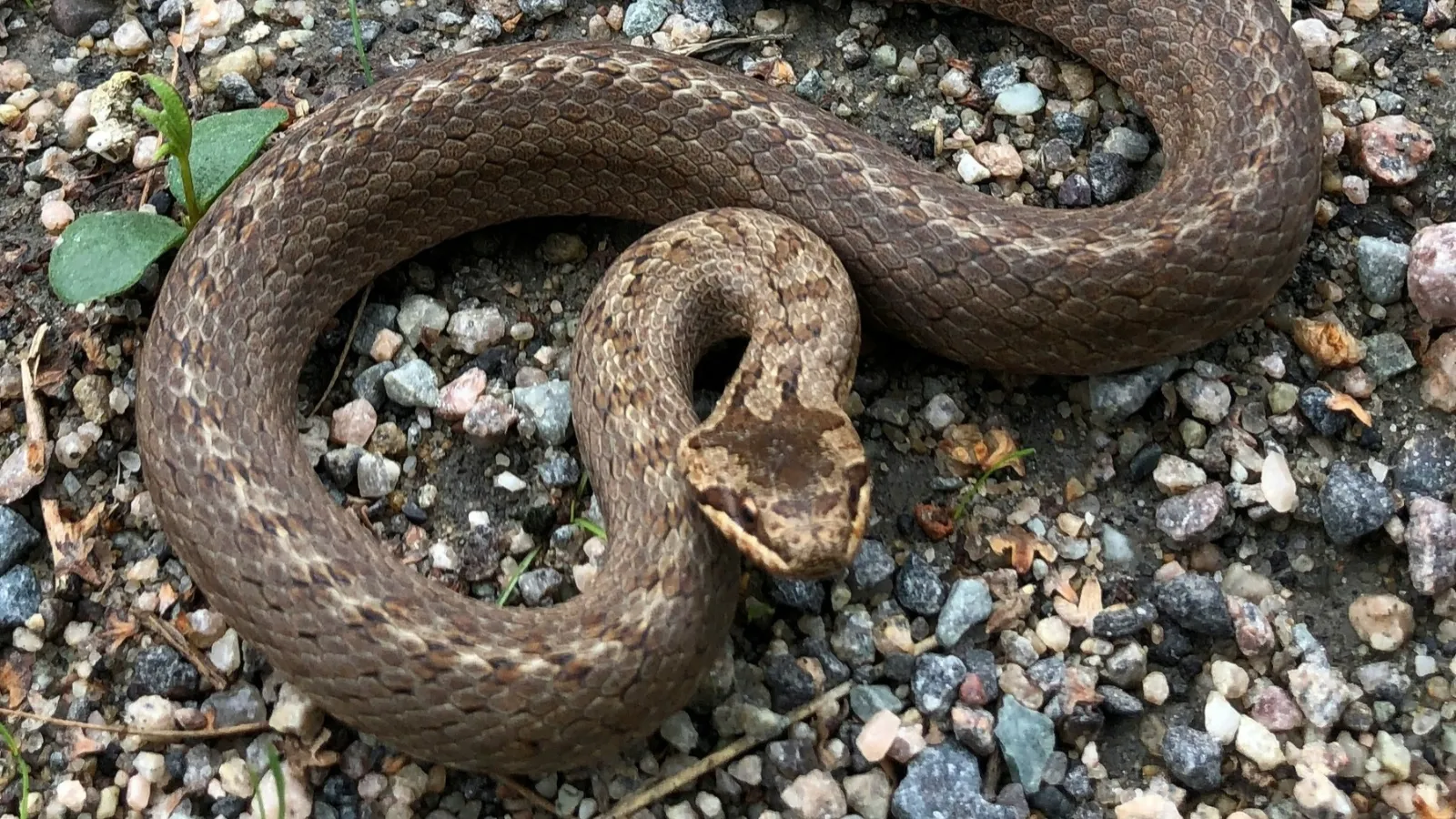
Illinois Road Closes for Thousands of Migrating Snakes, and This Year They Got Extra Time
Most roads close for construction, repairs, nasty weather, maybe a fallen tree or downed power lines. One road in southern Illinois has a wildly different reason for shutting down twice a year: thousands of snakes need to get across, and they’re being given the right of way.
Deep inside Shawnee National Forest, a roughly 2.5-mile stretch of gravel road separates a sprawling swamp from towering limestone cliffs. Every spring and fall, snakes emerge from one side and make their way toward the other, crossing the road as part of a migration that has been happening long before cars entered the picture.
And yes, some of those travelers are venomous. Timber rattlesnakes, copperheads, and cottonmouths are among the species found in the area. For anyone who prefers their road trips with fewer reptiles, this particular detour might come as welcome news.
This fall, the snakes even received a little extra time. The U.S. Forest Service extended the road’s seasonal vehicle closure through Nov. 5 because unusually warm weather had prolonged the migration, according to KBSI.
Thousands of Snakes Cross the Same Road
Embedded media follows. Please allow a moment for it to load.
The aptly named Snake Road, officially Forest Service Road 345, passes through the LaRue-Pine Hills/Otter Pond Research Natural Area. On one side lies LaRue Swamp, where reptiles spend the warmer months feeding and reproducing. On the other rise limestone bluffs reaching roughly 150 feet, their rocky crevices offering shelter during the colder part of the year.
Spring sends the snakes down toward the swamp. Autumn brings them back toward the cliffs, where they can escape the worst of winter. Unfortunately, the road sits directly between these two important habitats, meaning the animals must cross it to complete their seasonal travels.
To keep those crossings from turning deadly, the Forest Service normally closes Snake Road to vehicles from March 15 through May 15 and again from Sept. 1 through Oct. 30. Hikers are still welcome to explore on foot, although anyone hoping to collect a souvenir snake is out of luck. Handling, collecting, or harassing the wildlife is prohibited.
The Forest Service first began closing Snake Road in 1972, after years of passing vehicles killing snakes and other animals attempting to cross. Initially, the road closed for just three weeks each spring and fall. Research conducted in the 1990s showed that the migration lasted much longer, prompting officials to extend the closures to two months per season. U.S. Forest Service officer Anderson Harris told CBS News in October that, to his knowledge, it’s the only road in the country closed specifically to protect migrating reptiles and amphibians.
A Snake-Watcher’s Paradise, Plus a Few Bonus Surprises
The road has become something of a pilgrimage destination for reptile enthusiasts. Visitors travel from far beyond Illinois to catch a glimpse of species they might rarely encounter elsewhere, sometimes spending hours searching the gravel and surrounding vegetation for movement.
However, anyone imagining thousands of snakes slithering across the road in one enormous procession may be disappointed. Herpetologist Scott Ballard, who studied the area for his master’s thesis, told CBS News that seeing 20 snakes during an outing would already qualify as a good day. The animals cross at different times rather than moving together in a giant group.
There’s serious scientific work happening here, too. Through the University of Illinois Extension, trained volunteers known as Snake Road Sentinels document the reptiles they encounter and track visitor activity. The program began as a pilot in 2022 and continued through the fall 2026 migration, giving researchers information about the animals and the people who come to see them.
Mixed Reception Among Locals
A Sept. 1 alert shared to Facebook by U.S. Forest Service – Shawnee National Forest provided residents with an overview of what to respect concerning this closure. It also linked to a webpage with additional information on Snake Road. “The gravel road is temporarily closed to vehicles, but it is open to people traveling on foot,” the announcement noted, prompting one Facebook user to reply, ” Can’t drive, but can walk? Say we want you to get bitten, without saying we want you to get bitten.” Other readers responded to this individual, noting that caution and respect for wildlife were key ways to avoid confrontations with the snakes.
Some commenters were awed by the spectacle of it all, while others planned on giving the area a wide berth. One Facebook user even wrote, “The answer to the question: ‘where will I NOT be between now and October 30.'”
This year’s unusually warm autumn kept the snakes on the move past their usual deadline, prompting the Forest Service to extend the vehicle closure into November.
The reptiles have since had their additional days to cross, and Snake Road’s regular schedule will return with the next spring migration. Until then, it’s hard to think of many other places where drivers are asked to yield the entire road to a few thousand cold-blooded commuters.