Stop Storing Potatoes on the Counter: 7 Mistakes That Turn Them Green, Bitter, and Toxic
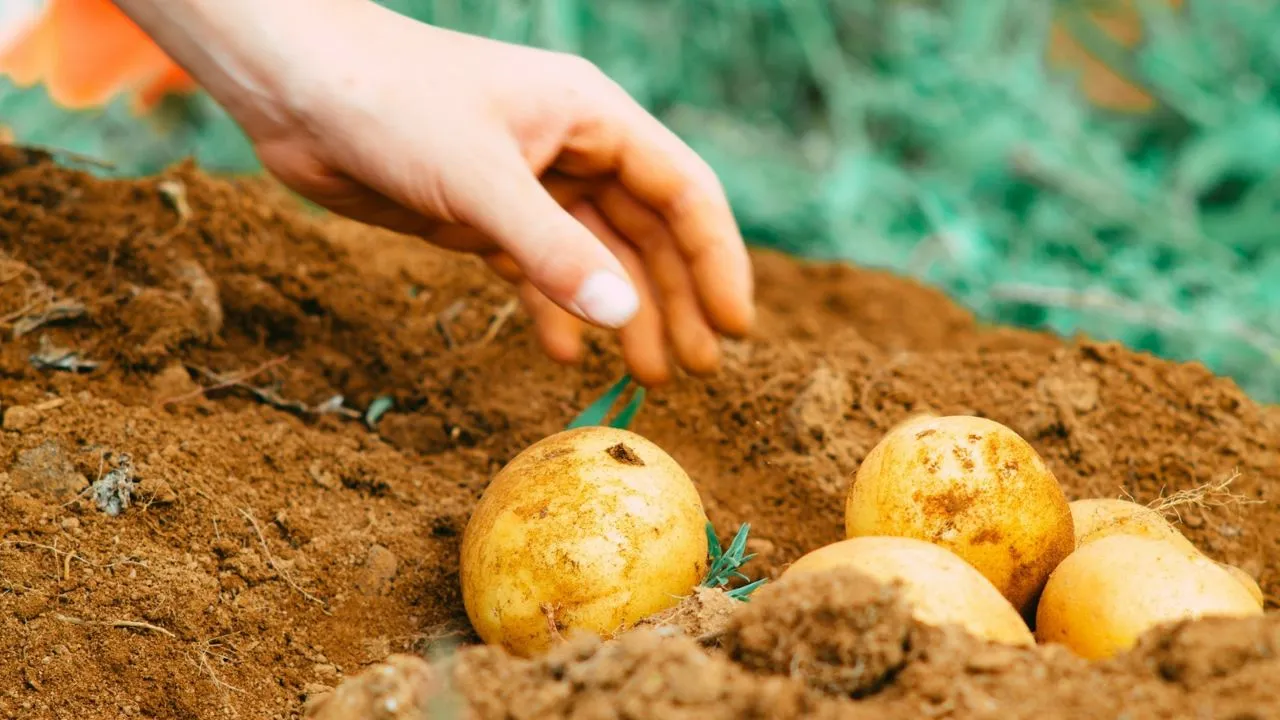
Your potatoes do not belong on the counter, in a sealed bag, or in that charming wire basket, and the storage method that beats all three costs exactly nothing.
That sounds like an overstatement until you see the evidence. When food writer Ann Taylor Pittman tested seven storage methods side by side for two months for The Kitchn, the potatoes kept in a simple bowl scored worst of all; the russets grew shoots two to three inches long, and the whole batch went straight to the compost. In a national survey of 2,000 shoppers reported by Potato Business, Americans said they throw away about 20.7% of the potatoes they buy. That is roughly one potato in every five, from a vegetable that is supposed to keep for months.
The timing makes this worth fixing right now in November. Garden potatoes are already in storage, and Thanksgiving on November 26 sends millions of us home with ten-pound bags. At the January 2026 national average of about 87 cents a pound tracked by the U.S. Bureau of Labor Statistics, a ten-pound bag runs around $8.70. Toss one potato in five and you lose about $1.80 per bag; buy two bags a month, and that is roughly $43 a year landing in the trash. There is a safety cost, too, because a potato that has turned green is not one you want on the table or within reach of the dog.
The good news is that fixing it requires no root cellar, no special bin, and no gadget. It only requires dropping seven habits, starting with the one that is probably sitting in your kitchen right now.
1. Stop Leaving Potatoes Out on the Counter
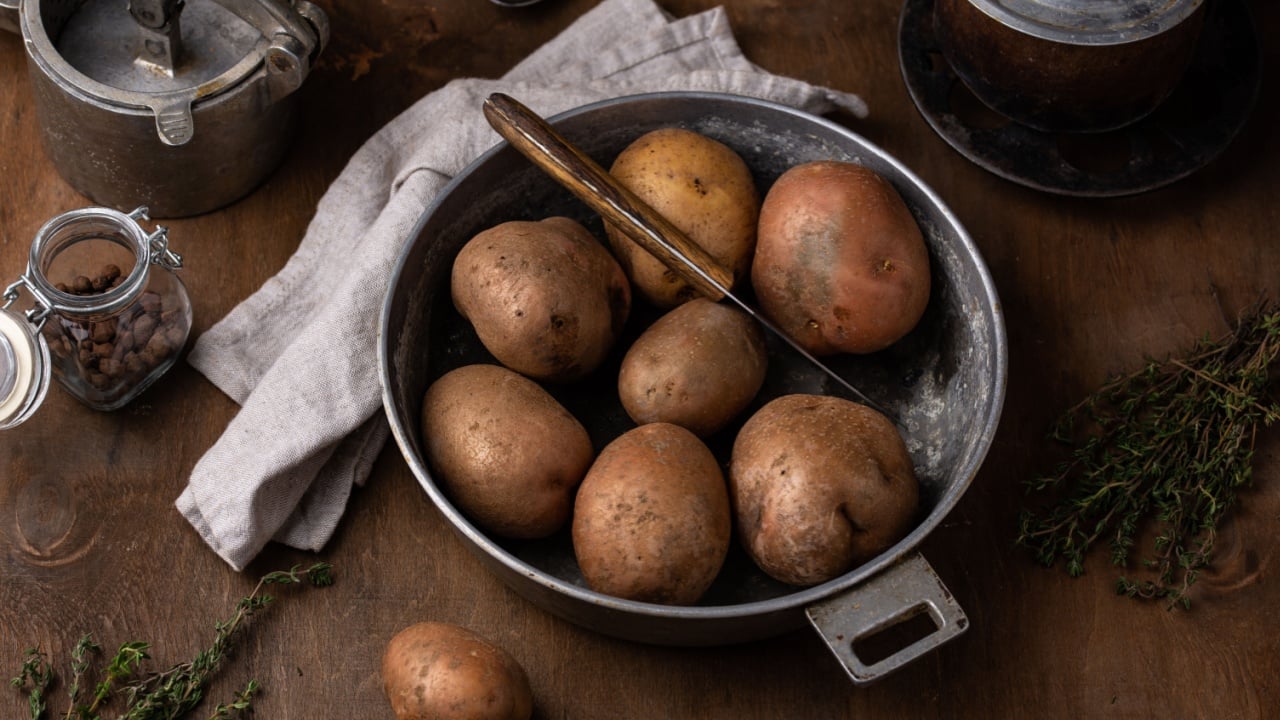
Light is the villain here. Potatoes are living plants, and when sunlight or bright kitchen light hits them, they begin making chlorophyll. According to Southern Living, countertop potatoes can “turn green after just a few days,” and at room temperature they wrinkle, soften, and sprout within a week or two. The open basket fared barely better than the bowl in The Kitchn’s test; one russet rotted into mush beneath its skin. The prettiest spot in your kitchen is almost always the worst place for a potato.
2. Stop Sealing Them in Plastic or Piling Them Deep
A harvested potato keeps breathing, releasing moisture as it goes. The Idaho Potato Commission warns against lidded bowls and produce bags without holes because “trapped moisture makes the potatoes break down quicker.” Its advice is a perforated bag in a cool, covered spot. Depth matters, too. Gardener Jill McSheehy found that potatoes stacked on top of one another soften under the weight and rot faster, so she keeps hers one layer deep.
3. Stop Storing Them Next to Onions
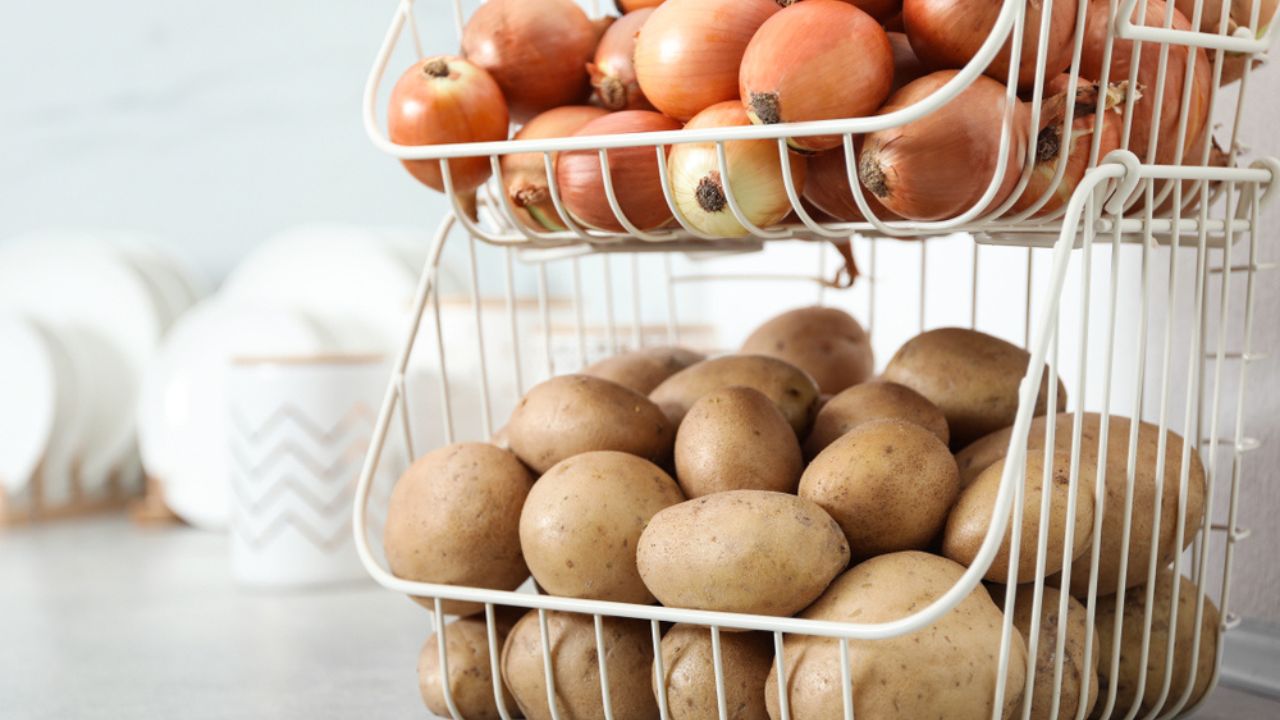
It is the most natural pairing in the pantry and one of the most costly. Chef Ann Ziata told Martha Stewart that onions give off ethylene gas, which encourages potatoes to sprout. Chef Traci Weintraub added a second problem: storing the two together “can cause your potatoes to take on the flavors of onions.” Southern Living flags apples as another ethylene producer, so give your potatoes their own shelf or cupboard.
4. Stop Washing Them Before They Go Into Storage
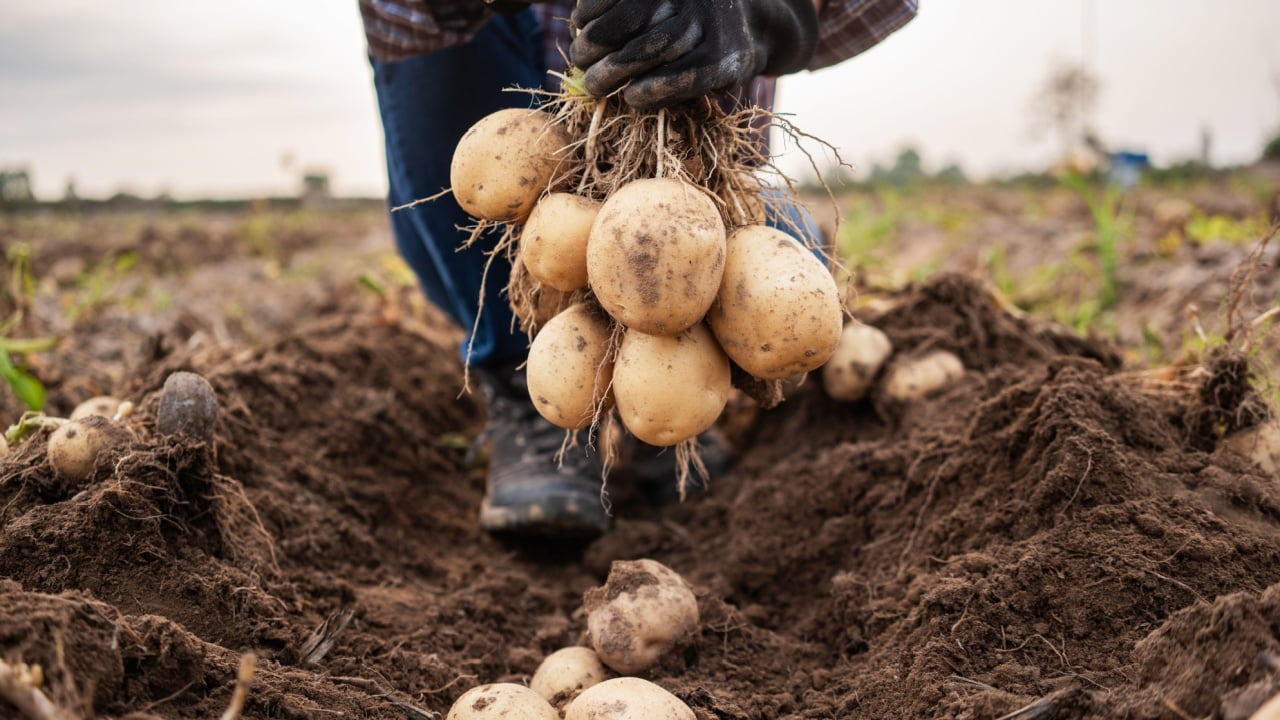
Rinsing feels tidy, but moisture is an open invitation to rot. Weintraub notes that washing before storage raises the risk of fungal and bacterial growth. Oregon State University Extension recommends simply brushing off sandy soil, rinsing only potatoes caked in sticky clay, and making sure to “ensure potatoes are completely dry before storing.” If you grow your own, OSU also advises curing freshly dug potatoes for 7 to 10 days in a dark, well-ventilated spot first, a step that meaningfully extends storage life.
5. Stop Tucking Them Near Heat or Under the Sink
Most gardeners never hear this, but the spots that feel convenient are often the warmest in the house. Southern Living specifically warns against storing potatoes on top of the refrigerator or beside the stove, and notes that the dark, damp cabinet under the sink practically tells them to start growing. Idaho Potato Commission president Jamey Higham told Martha Stewart that potatoes keep best between 45 and 50°F and begin dehydrating and sprouting above 55°F. In steamy Arkansas, McSheehy keeps her harvest in shallow bins on her pantry’s concrete floor, where it lasts three to four months. Her rule is simple: “The cooler the better.”
6. Stop Eating the Green Ones, and Keep Peels Away From the Dog
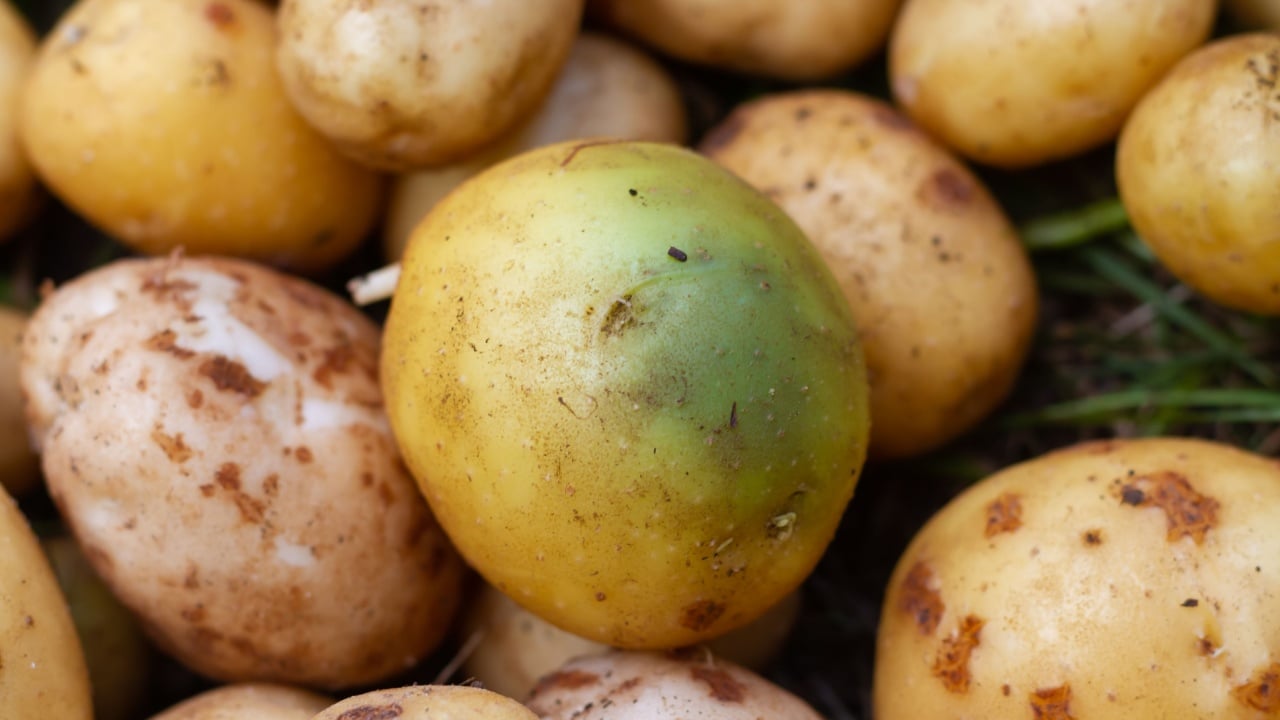
This is the safety stake most cooks underestimate. Greening itself is harmless chlorophyll, but it signals solanine, a natural toxin. The National Library of Medicine’s MedlinePlus puts it plainly: “Never eat potatoes that are spoiled or green below the skin.” Some chefs trim away a small, shallow green spot, but Michigan State University Extension recommends discarding green-skinned and sprouted potatoes altogether; when in doubt, compost it. Pets deserve the same caution. The American Kennel Club says dogs should never be fed raw potato and that green skins should be avoided, so do not leave the Thanksgiving peel pile where a hopeful nose can reach it.
7. Stop Assuming the Fridge Rule Is Settled
Here is the twist few people know: two major food safety agencies disagree. The U.S. Food and Drug Administration still advises keeping potatoes out of the refrigerator, because cold storage can raise acrylamide levels when they are later fried or roasted. Yet in 2022, Britain’s Food Standards Agency reversed its old warning after a review found that home fridge storage “doesn’t materially increase acrylamide forming potential.” Even OSU Extension lists a refrigerator set at 40 to 46°F as acceptable. Taste is another matter; the chilled potatoes in The Kitchn’s test stayed sprout-free but cooked up noticeably bland.
The Best Way to Store Potatoes Costs Nothing
Fish a cardboard box out of the recycling. In The Kitchn’s two-month test, potatoes in an open-topped cardboard box, arranged in a single layer, earned a perfect 10 out of 10. They kept taut skins, the russets never sprouted, and once boiled, they tasted “like a slightly concentrated baked potato.” Set the box in the coolest dark corner you have: a pantry floor, a closet, or an unheated basement that does not freeze.
If you are over 50, you may remember a grandparent’s root cellar, and it turns out they had it exactly right. The homesteader behind My Boreal Homestead Life cites ideal cellar conditions of 43 to 50°F with about 95% humidity. OSU Extension says mature, late-season potatoes kept that way can stay in good condition for seven to eight months, while storage above 46°F cuts that to two or three. Sort before storing, use any cut or bruised potatoes within the first month, and check the box weekly for anything soft. If your homegrown supply starts sprouting come spring, the Boreal homesteader cans or blanches and freezes the rest rather than composting it.
The Bottom Line
The bowl on the counter is not a storage plan; it is a countdown. Swap it for a free cardboard box in a cool, dark spot, keep onions on another shelf, and leave the dirt on until cooking day. Those few small changes mean firmer, better-tasting potatoes on the Thanksgiving table and far fewer dollars tossed in the trash before spring.
Read More
Stop Making These 8 Watering Mistakes Before Your First Hard Frost
How to Transition Plants Indoors for Winter: 9 Mistakes to Stop Making This Fall