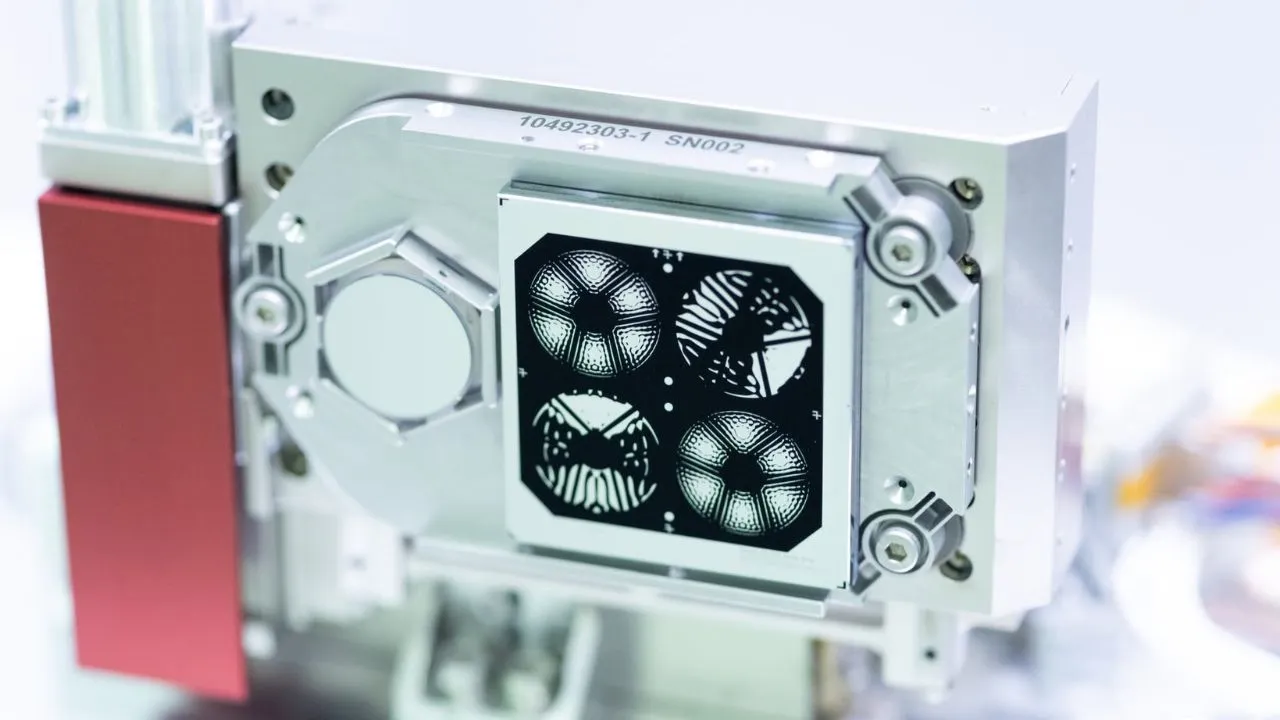
NASA’s New Space Telescope Takes Its First Test Image
NASA just shared the first test image from its new Nancy Grace Roman Space Telescope. It doesn’t look like something you’d expect to see from a telescope, but NASA said that it is normal.
Instead of a typical picture of stars, the image is covered in large green circles. Some of them almost look like glowing donuts, but that doesn’t mean anything is wrong with the telescope.
NASA says Roman wasn’t focused yet when the image was taken, which caused each star to spread across thousands of pixels.
Roman launched from Kennedy Space Center on Aug. 30 aboard a SpaceX Falcon Heavy rocket. It is now traveling toward L2, a spot about 1 million miles from Earth where it will eventually begin its science work.
The Weird-Looking Stars Were Expected
Embedded media follows. Please allow a moment for it to load.
The image came from Roman’s Wide Field Instrument, a 300-megapixel camera with 18 infrared detectors.
When NASA took the test photo, the detector array was still in the position it had been kept in during launch. The telescope also hadn’t yet gone through the work needed to line everything up and focus it, which is what engineers are working on now.
NASA explains that all 18 detectors have been turned on, and the team has also checked the instrument’s filters, calibration system, and focus mechanism. So far, those checks have gone the way the team hoped. “There is much to do, but we are on our way to groundbreaking science,” NASA scientist Josh Schlieder said.
We Have to Wait a Little Longer for Better Photos
This first picture was really just a test to make sure Roman could see starlight. NASA plans to spend the next several months getting the telescope ready, with the first science images expected in early 2027.
Once Roman is working normally, it will be able to photograph a much bigger section of the sky at once than Hubble. NASA explains that one image from the Wide Field Instrument can cover an area larger than the apparent size of a full moon. Scientists plan to use Roman to search for planets outside our solar system and study dark matter and dark energy.
Roman Could Be Working for over 20 Years
NASA also recently learned that Roman could last much longer than originally planned. The telescope was designed for a five-year primary mission, with enough fuel for another five years if the mission was extended.
Now, NASA says it may have enough fuel for at least 22 years of science. Its first course correction used much less fuel than expected, and Roman also had extra fuel before launch because the finished telescope weighed less than engineers had planned.