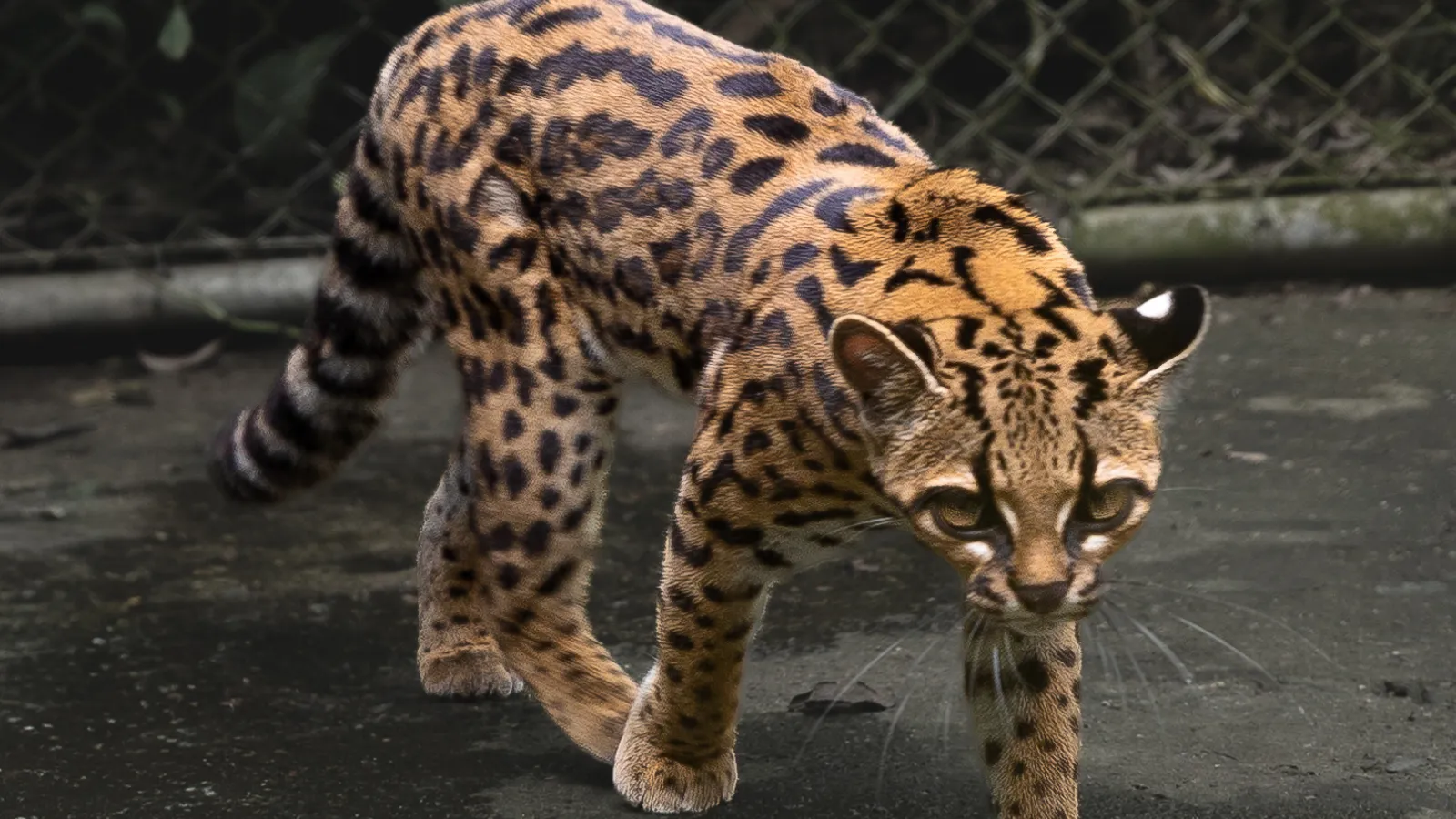
Scientists Identify First New Wild Cat Species in More Than A Century
A tiny spotted cat found near a Bolivian forest spent about a year mistakenly identified as an odd but typical house pet. Nearly a decade later, that same animal has helped scientists do something that may not have happened in more than a century: identify an entirely new wild cat species.
The species is called Leopardus tilcayo, or simply the tilcayo. At roughly 18 inches long and around 3 pounds, the wild cat is smaller than an average domestic cat, according to National Geographic.
Researchers described the species Sept. 17 in Current Biology after analyzing complete genomes from 38 members of the Leopardus genus across South America. Their analysis found that tiger cats comprise five distinct species, including the newly identified tilcayo.
Science may only now be giving the tilcayo its own place on the feline family tree, but people in Bolivia’s Yungas region were already well acquainted with the little spotted cat. Universidad Mayor de San Andrés (UMSA) says local communities have long known the animal as ‘tilcayo,’ a name researchers deliberately kept when formally describing the species, thanks to its deep history with the local community.
The Cat Did Not Match the Guidebooks
Embedded media follows. Please allow a moment for it to load.
View this post on Instagram
The story began in 2016, when a resident of Bolivia’s Nor Yungas region found the male cat as a cub. The Pontifical Catholic University of Rio Grande do Sul, or PUCRS, says the animal was later taken to the La Senda Verde sanctuary, where it remained. At the time, researchers believed the cat belonged to the already known species Leopardus tigrinus.
There, the cat became known as Tigrino. Soon, it became evident that the peculiarities went much deeper than appearance. It reached a genetic level.
PUCRS says Tigrino became the holotype of Leopardus tilcayo—the individual specimen that officially represents the species in its formal scientific description.
The genetic divide is not a recent one, either. Bolivian biologist and study co-author Paola Nogales-Ascarrunz told UMSA that the tilcayo lineage split from the other tiger cats a staggering 1.4 million years ago. From that point on, it followed its own evolutionary path.
Scientists Still Know Very Little About The Tilcayo
Some major questions remain even after formally giving the tilcayo its own scientific name.
Researchers still do not know how far its range extends or how many tilcayos live in the wild. UMSA says the research team’s next steps include determining its distribution, estimating its population, studying its reproduction, and learning what habitat it needs.
The name itself preserves knowledge that existed long before scientists untangled the cat’s genetics. UMSA says communities in Bolivia’s Yungas have traditionally known the little wild cat as “tilcayo.” Researchers deliberately kept that name in recognition of the local knowledge surrounding the animal.
Understanding the species more fully will also matter for conservation. PUCRS says South America’s tiger cats face threats ranging from habitat loss and fragmentation to hunting and diseases transmitted by domestic animals.
The genomic research also found low genetic diversity in some tiger cat populations, which could leave them less able to adapt to rapid environmental changes.
Researchers now have the job of figuring out where tilcayos live, how many remain, and what they need to survive. UMSA researcher Enzo Aliaga-Rossel compared formally describing the species to giving it a scientific “birth certificate.” The tilcayo was there all along, but science can now begin the work of understanding and protecting it.