
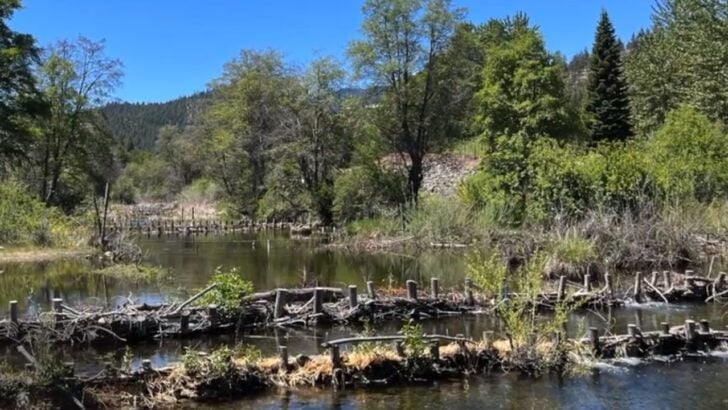
Conservation workers in Northern California have been building dams that look and work much like the ones made by beavers. The structures are helping bring back the cool, slow-moving water that young coho salmon need to survive.
The Scott River Watershed Council built two artificial dams in Sugar Creek in 2015. The group expanded its work to French Creek in 2018, adding a pond and more dams. Both creeks feed into the Scott River.
A study published July 8 found that estimated juvenile coho survival in French Creek averaged 8% before restoration and 60% afterward.
The Scott River valley once had so many beavers that trappers called it Beaver Valley. Sadly, thousands were killed during the fur trade beginning in the 1830s, and much of the wetland habitat their dams helped maintain was eventually lost.
Workers Used Branches, Mud and Gravel
Embedded media follows. Please allow a moment for it to load.
The artificial dams are called beaver dam analogues. To build them, workers drove wooden posts into the streambed and wove branches between them. Gravel, straw and mud helped fill the gaps.
The watershed council explains that the structures allow water, sediment and fish to pass while slowing the flow and creating pools. Like natural beaver dams, they change over time and need monitoring and maintenance.
The Restored Areas Stayed Cooler
The researchers estimated that the projects created nearly 9,000 square meters of habitat, or about 2.2 acres. Together, those areas could support more than 8,500 young coho salmon.
During monitoring in 2017, the restored Sugar Creek habitats stayed cooler than nearby unrestored areas. Their temperatures did not reach levels known to stress the young fish or reduce their growth.
Real Beavers Have Helped With the Work
Some beavers still live in the watershed, and they have repaired, changed, and sometimes expanded the human-built dams.
Charnna Gilmore of the Scott River Watershed Council explained the benefit in Discover Wildlife‘s report: “When beavers do adopt a structure, their work is far superior to what we can accomplish.”