Are They Finally Here? Florida’s Flying Taxi Tests Could Begin This Year
The future that many people dreamed about might be coming soon. Florida drivers may eventually have another way to escape the state’s traffic: flying taxis.
State officials expect electric vertical takeoff and landing aircraft, often called air taxis by the Federal Aviation Administration (FAA), to begin testing in Florida before the end of 2026.
The testing will involve aircraft that take off from compact facilities called vertiports before transitioning to forward flight. Florida has constructed two of those facilities at its SunTrax transportation testing center in Auburndale.
That does not mean passengers will be able to summon an aircraft anytime soon. Federal certification, operating approvals and local infrastructure decisions still stand between the upcoming tests and a commercial flying taxi service.
Florida Built Two Vertiports for Aircraft Testing
Embedded media follows. Please allow a moment for it to load.
The official FOX 13 Tampa Bay video documents Gov. Ron DeSantis and Florida Department of Transportation Secretary Jared Perdue discussing the project at SunTrax on Aug. 10. SunTrax was originally created to test road technology, including autonomous and connected vehicles. FDOT is now expanding the state-owned facility to include research on advanced air mobility.
The property has two vertiports that officials describe as the first dedicated aerial test tracks of their kind. Unlike a traditional airport runway, a vertiport provides a relatively compact area where compatible aircraft can take off and land vertically.
The controlled environment will allow companies and regulators to evaluate aircraft, communication systems and operating procedures without immediately placing paying passengers aboard. Officials expect eVTOL testing to begin in Florida’s aerospace region by the end of 2026. They have not announced which aircraft will conduct the first flight or provided a specific test date.
Flying Taxis Are Not Cars With Wings
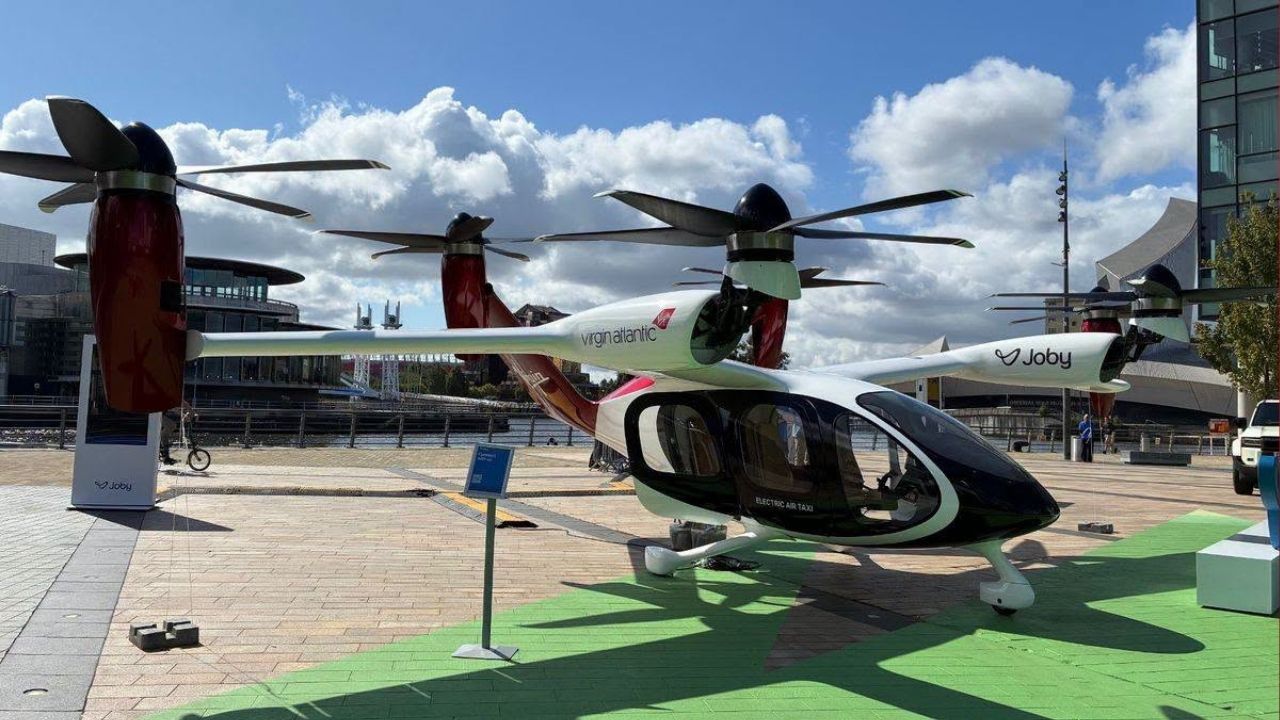
Despite the nickname, these vehicles are not expected to drive through neighborhoods before unfolding their wings. The FAA classifies many air taxis as powered-lift aircraft. They combine characteristics of helicopters and airplanes.
Their design reduces the need for a conventional runway. It could eventually allow aircraft to operate from vertiports positioned closer to cities, hospitals or transportation centers.
The FAA expects the earliest advanced air mobility operations to resemble existing helicopter services. Aircraft may initially use established helipads, air traffic control systems and flight routes where possible.
Developers are designing many eVTOLs to produce less noise than conventional helicopters, although noise levels will depend on the individual aircraft and how it is operated. Each model must still complete federal testing before it can carry passengers commercially.
Florida Joined a Federal Air Mobility Pilot Program
Florida’s effort is part of the federal eVTOL Integration Pilot Program. In March, the U.S. Department of Transportation selected eight proposals covering projects in 26 states. The pilot program is intended to test potential uses, including passenger transportation, cargo delivery, emergency response and autonomous flight. Florida’s Department of Transportation is overseeing the state’s participation.
FDOT has also formed a partnership with Eve Air Mobility to evaluate infrastructure, passenger experience, airspace procedures and other requirements at SunTrax. Companies including Archer Aviation, Joby Aviation and BETA Technologies have also been associated with Florida’s pilot proposal, according to FOX 13.
Test Flights Do Not Guarantee Public Rides
An aircraft conducting tests over a controlled site is very different from one carrying paying passengers between Florida cities. Before commercial service can begin, an aircraft must receive FAA certification. Its operator must also obtain the appropriate approvals, and the flights must be safely integrated with other aircraft using the same airspace.
Florida will need to determine where additional vertiports can be constructed, how they will be financed, and how aircraft will interact with airports and surrounding communities. Officials have identified Tampa and Orlando as areas that could eventually benefit from the technology. Local planners in St. Petersburg have also studied possible vertiport locations and a potential connection across Tampa Bay.
No fares, public launch date or booking system have been announced. Florida could therefore have flying taxis in its skies before the end of 2026, but only for testing. Other places around the world are testing flying taxis as well, including the UK.