A Year After Raw Sewage Killed Hundreds of Fish, a Denton HOA and Landlord Are Heading to Court
Almost a year after raw sewage poured into two retention ponds in a Denton neighborhood and killed hundreds of fish, no one knows who’s left with the bill. The Wind River Estates Homeowners Association and the landlord of a nearby shopping center both blame the apartment developer next door, and both now say they’re headed to court. According to the Denton Record-Chronicle, the fight reached that point after a settlement offer the HOA saw as far too low.
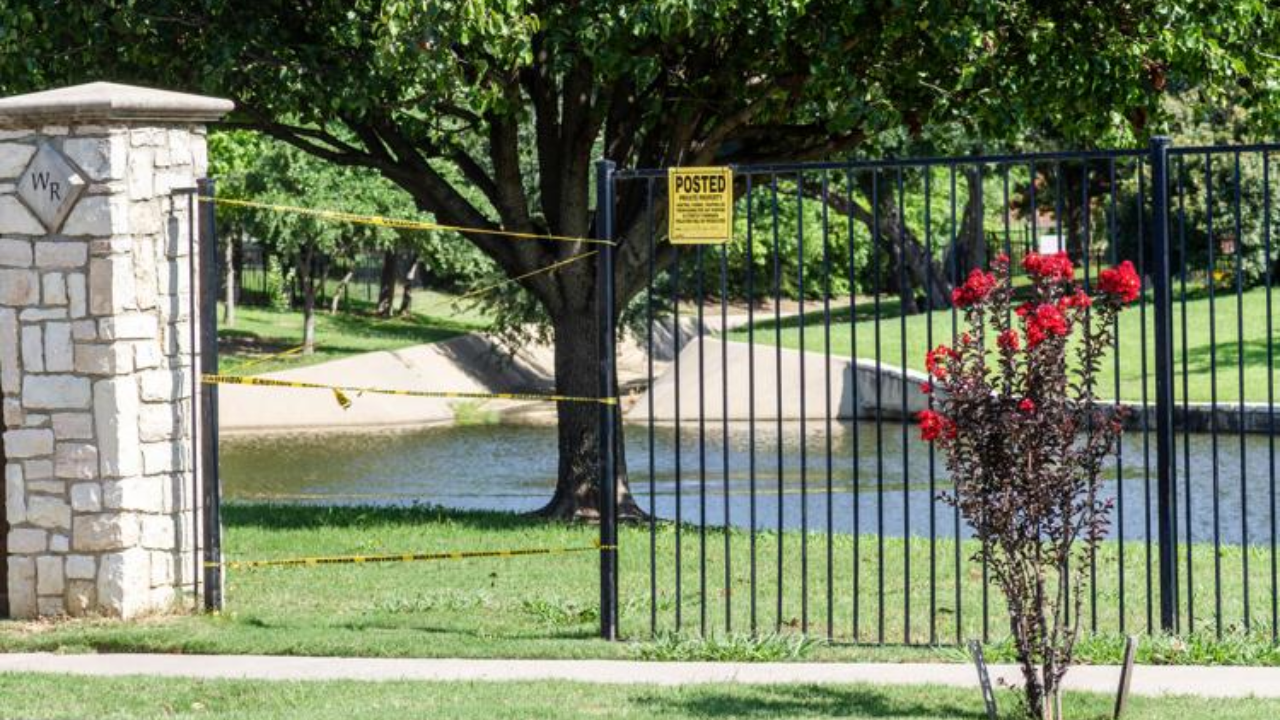
It started in July 2025, when a sewage line ruptured at an apartment construction site behind a shopping center on Interstate 35E. A worker there dumped the raw sewage into a storm drain he thought ran to a treatment plant. It actually drained into the two ponds at Wind River Estates, where the sewage killed hundreds of fish and sent Mike McCormick and his neighbors wading in to rescue the ones still alive.
McCormick, now president of the Wind River Estates HOA, plans to sue the developer: Jordan Foster Construction. He says the company offered only $15,000 at a mediation in late March, about a fifth of the $75,000 he estimates it’ll take to pay for the damage. And that’s only if the HOA agrees to drop every claim against it. McCormick says the developer brought three attorneys to that meeting, and the whole thing left him feeling bullied — and forced into taking less than what he thinks the entire neighborhood is owed.
The HOA isn’t the only one going head to head with Jordan Foster. Ed Wolski, who owns the Southridge Village shopping center near the ponds, is also tangled up in the kerfuffle. He’s also ready to take it all to court. Both McCormick and Wolski are fighting the same similar fight: a seemingly uphill battle between property owners and companies with deep pockets.
The Cleanup That Left Doubts Behind
By McCormick’s count, roughly 60,000 gallons of raw sewage ended up in the ponds. The city stepped in with stop-work orders on the construction site, and crews drained the contaminated water and treated what was left with microorganisms. After the last order was lifted in October, though, McCormick says a new problem showed up: construction sediment washing downstream every time it rained hard.
The city says the water is fine, at least according to city spokesperson Kayla Herrod. She told the Record-Chronicle that the bacteria readings came back in the range you’d expect for an urban retention pond, and that heavy spring rains can churn up sediment on their own. The residents aren’t convinced, however. One in particular named Patricia Lang, who lives next to the worst-hit pond, says she still can’t get a straight answer on what was tested or how anyone decided the water was clean.
Why It’s Headed to Court
Jordan Foster Construction hasn’t said much about this situation in public. The Record-Chronicle reported that the developer’s project manager and its corporate counsel both could not be reached for comment. Wolski, for his part, has floated a theory that a homeless encampment on the property before construction was the real source of the contamination. The city has pushed back, saying it has no record of an encampment anywhere near that size.
For now, both sides are digging in. McCormick says the HOA is finishing up its evidence and getting ready to file. Wolski says his attorney asked Jordan Foster to cover the costs and got nowhere, and that he’s ready to pursue every legal option he has. A year after the spill, the neighbors say what they really want is to be made whole: the pond repaired, the fish restocked, and a little compensation for everything they lost.