A Horse Overheated Inside a Trailer. Firefighters Had To Pull Over and Cool It Down
A Florida horse is recovering after firefighters helped rescue it from an overheated trailer along County Road 223.
Bradford County firefighters pulled over Wednesday to help after the horse became distressed inside the trailer, according to WCJB.
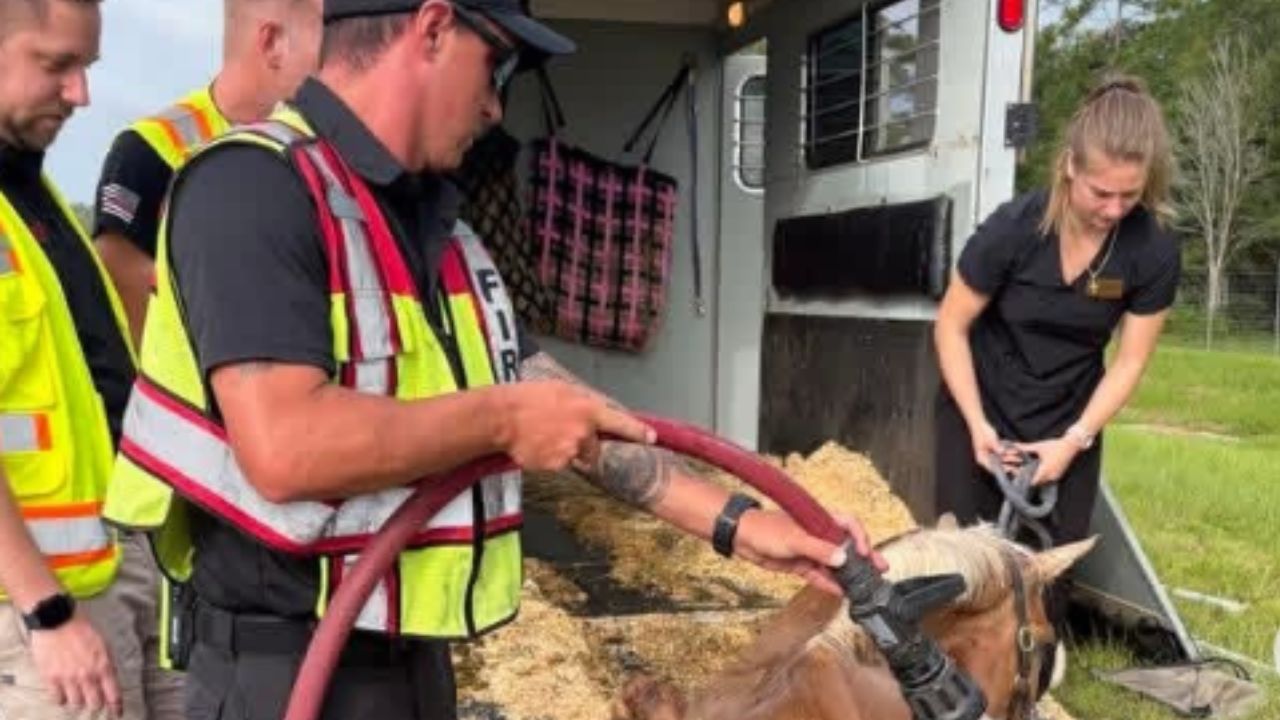
Crews helped safely get the horse out and sprayed it with water so it could cool down. A veterinarian was also called to check on the animal.
For horse owners, the rescue is a summer warning about trailers, road delays, ventilation, and water. A horse can overheat quickly when airflow drops, temperatures climb, or a trailer sits too long in the sun.
Firefighters Used Water To Help Cool the Horse
Прикажи ову објаву у апликацији Instagram
KKTV, carrying the Gray News report, said Bradford County Fire Rescue immediately helped the owner care for the horse as more resources were called to the scene. Veterinarian Dr. Mike Ricker responded and provided emergency care and first aid.
The fire rescue photos showed crews spraying the horse with a hose. Firefighters worked with the owner and Dr. Ricker to reduce the horse’s distress and improve its condition.
Hot Trailers Can Become Dangerous Fast
UC Davis warns owners not to leave horses in parked trailers, especially without shade, because trailer temperatures can rise rapidly and horses can develop heat stroke. The school also recommends hauling in the early morning or late evening when conditions are cooler and keeping vents and windows open for safe airflow.
The University of Minnesota Extension lists transportation as one factor that can contribute to overheating. It advises horse owners to provide clean water, shade, and airflow in hot weather, and to use cool water or a hose to help cool an overheated horse.
Water and Airflow Matter Before the Trip Starts
Horse owners should plan for heat before loading. UC Davis says continuous hosing or pouring water over a horse is one of the most effective ways to lower body temperature, and owners should contact a veterinarian immediately if they suspect dehydration, exhaustion, or heat stroke.
For summer hauling, that means checking vents and windows, carrying water, avoiding long stops in direct sun, and watching for heavy breathing, weakness, poor coordination, distress, or a horse that stops sweating. If a horse appears overheated, fast cooling and veterinary help should come before trying to continue the trip.