How a Company in India is Tackling Plastic Pollution by Feeding the Hungry
Every year, millions of plastic bottles end up on streets, in rivers, and across open fields in communities that never had a recycling system to begin with. The waste builds up, the environment suffers, and the people living nearby often don’t have the resources to fix either problem.
A quietly radical program has been changing that, one bottle at a time. Plastic pollution and food insecurity tend to exist in the same places. Low-income communities generate packaging waste just like everywhere else, but without waste management infrastructure, that plastic has nowhere to go. At the same time, hunger is a daily reality for many of the same families.
The idea that people could trade plastic waste for a nutritious meal sounds simple, but the thinking behind it runs deeper. When you give communities a real, immediate reward for collecting waste, the act becomes part of daily life rather than a distant civic duty (that they don’t have the energy to worry about). Add local recycling and job creation into that loop, and the whole system starts feeding itself.
A Facebook reel by Sam Bentley recently spotlighted an initiative called Buy Food With Plastic, which is doing exactly that in Ghana, India, and Nicaragua. This is how the program works.
The Simple Swap That Starts It All
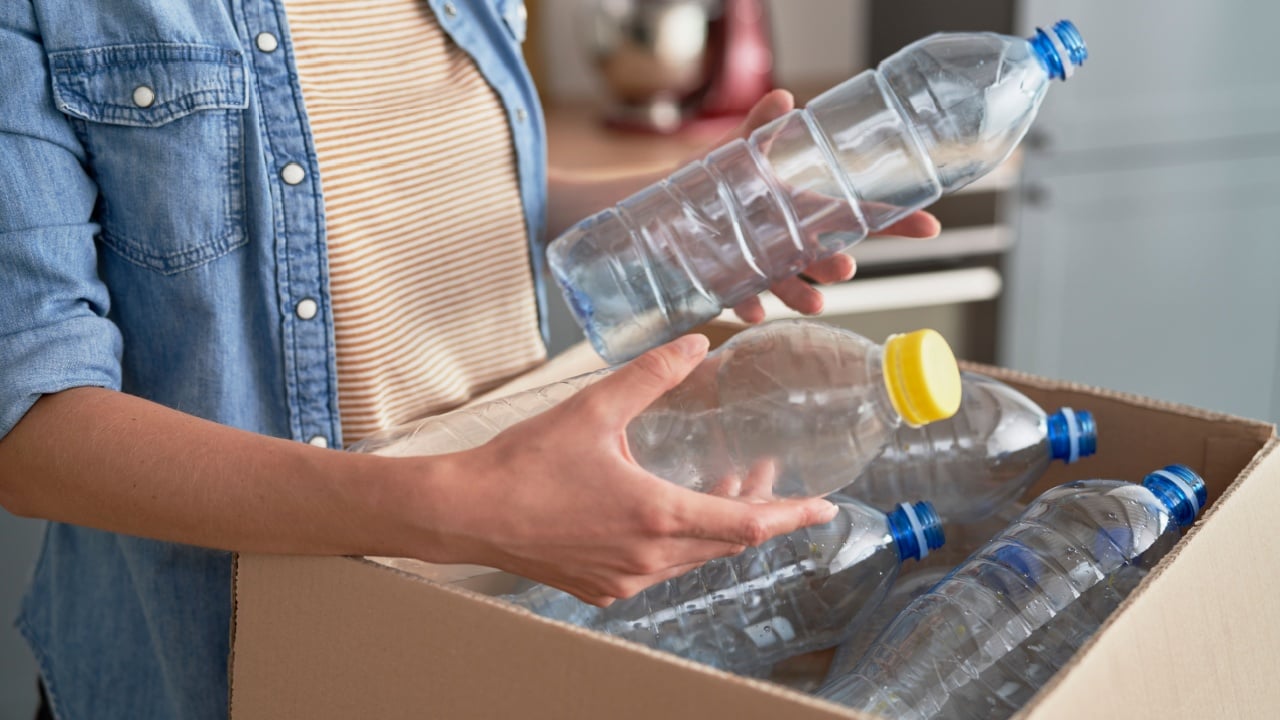
The premise is easy to follow. A person collects 20 plastic bottles from their street, their home, or the surrounding area, then brings them to a local collection point. In return, they receive a balanced, nutritious meal prepared by the local team.
That simplicity is deliberate. One of the core principles of community development is community participation and ownership. When a program is easy to access, more people use it.
The exchange also reframes how people see waste. A bottle on the ground stops being litter and starts being currency, which shifts behavior in a way that lasts far longer than a one-off cleanup campaign.
Where the Program Is Running
Buy Food With Plastic currently operates in Ghana, India, and Nicaragua. These countries represent different continents, different cultures, and different environmental conditions.
This means the model has already proven it can adapt across varied contexts without losing its effectiveness.
Running the program across multiple countries also builds a body of evidence that circular solutions aren’t just a local fix. When the same approach works simultaneously in West Africa, South Asia, and Central America, it signals that the model has real potential to scale.
Each location also refines the approach, feeding lessons back into how the program is run elsewhere.
What Happens to The Bottles
One of the most important parts of this initiative is what happens after the bottles are collected. The plastic is processed locally and turned into practical products, from combs and blankets to cosmetic bags.
These are items with real everyday demand, which means the recycled material has a market and a purpose beyond just being removed from the street.
When recycling happens in the same community that generated the waste, the environmental cost of transportation drops considerably.
The value created from that plastic also stays in the community rather than flowing outward to external processors. That makes the whole operation more efficient and equitable.
Jobs Created Along the Way
Turning plastic bottles into combs and blankets requires labor, and that labor comes from within the community. Buy Food With Plastic creates sustainable jobs by building recycling and production work into the same local loop as the meal exchange.
People are employed to manage collection points, run recycling operations, and produce the finished goods that come out of the process.
Because the recycled products are sold, the jobs are connected to a real revenue stream. That financial sustainability matters greatly for any community program trying to last beyond its initial funding.
It also provides participants with a pathway from receiving meals to earning income, a significant shift in long-term outcomes for the people involved.
The Numbers Behind the Impact
Since launching, Buy Food With Plastic has provided over 86,000 meals and recycled more than one million plastic bottles. For a program still in its earlier stages, that scale of impact is significant.
The meals funded by the initiative are nutritious and balanced, not simply caloric. That distinction matters because food insecurity often comes with nutritional deficiency, not just hunger.
When a program provides a complete, well-composed meal rather than a basic one, it addresses health alongside hunger, which produces longer-term effects for the communities it serves.
Why This Model Deserves Wider Attention
Most environmental programs ask communities to sacrifice something, time, convenience, or money, for a benefit that feels distant or abstract. Buy Food With Plastic flips that dynamic entirely.
The reward is immediate, the effort is accessible, and the impact is visible in the same neighborhood where the work happens. That alignment between effort and outcome is rare in environmental programming.
The model also challenges the assumption that poverty and environmental responsibility are naturally at odds. It shows that when programs are designed with communities rather than simply for them, participation follows naturally.
As more cities and organizations search for practical ways to address plastic waste, the Buy Food With Plastic approach offers a clear and well-tested direction forward.
A Problem Meets Its Match
Plastic pollution and food insecurity are two of the most visible problems in low-income communities around the world, and for a long time, they were treated as entirely separate fights.
Buy Food With Plastic has shown that they don’t have to be. By linking waste collection directly to feeding people, the program creates a loop that benefits everyone involved.
Sam Bentley’s reel introduced a huge audience to this idea, and the response was immediate. People are drawn to solutions that are human, practical, and work at the community level without requiring top-down systems to be in place first.
Read More:
How to Swap a Water-Greedy Lawn for a Wildflower Meadow You Can Cut Flowers From
Why the “We Turned Out Okay” Mentality Doesn’t Work Anymore Our Kids’ Diets