10 Raised Garden Bed Layouts That Will Transform Your Backyard
Most gardeners choose their seeds before they choose their layout, and then spend years rearranging beds, regretting pathways, and wishing they’d thought it through first. This time, start with the design.
The layout you choose for your raised beds determines how much you grow, how often you actually get out there, and whether your garden becomes a genuine outdoor retreat or just a chore you avoid. According to research from Ramsey County Master Gardeners in Minnesota, the average home garden produces roughly $325 in fresh produce on a $100 seasonal investment — and gardeners who use dense, intentional planting strategies (the kind that raised bed layouts are built around) significantly outperform those who don’t. Raised beds already produce up to twice the yield per square foot of traditional in-ground gardens. A well-planned layout is what makes that possible.
Whether you’re working with a narrow side yard or a generous backyard, there’s a raised bed layout designed for exactly your space.
Why Your Layout Is the Most Important Decision You’ll Make

Before you buy a single board, nail down your layout. The placement and arrangement of your beds determines your sun exposure, your watering efficiency, and how often you’ll actually use the garden.
According to Gardenary founder Nicole Burke, author of Kitchen Garden Revival, raised beds should be located as close to the kitchen as possible: “Look for sunny locations near a back door, front door, or even next to your driveway so that you can pop outside with scissors to snip some herbs for dinner.” It sounds simple, but it’s the single most important proximity decision you’ll make. A garden at the far end of the yard gets visited on weekends, while a garden near the back door gets visited every evening.
The physical design matters just as much. The Old Farmer’s Almanac notes that narrow beds, no wider than four feet, allow gardeners to reach the center without ever stepping inside and compacting the soil, which is exactly what makes raised beds more productive than in-ground alternatives.
With those foundations in place, here are ten layouts worth considering.
1. The Border Garden
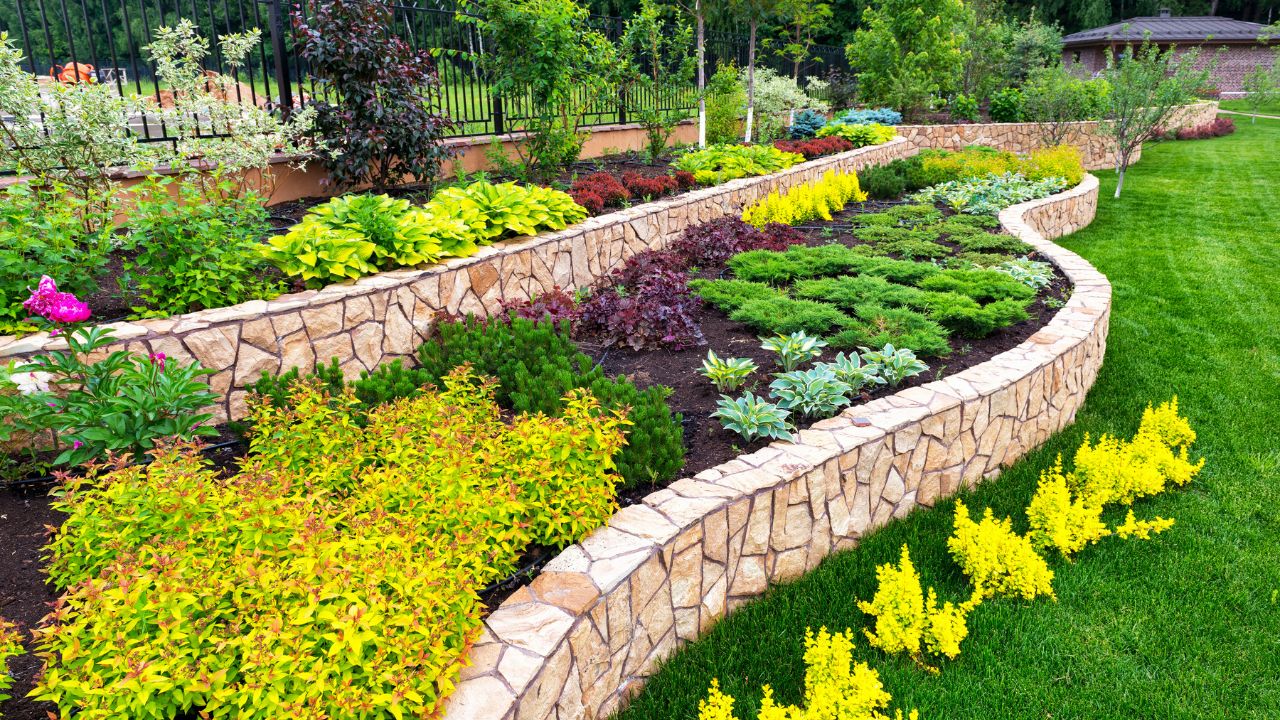
If your outdoor space is limited, the border garden is your best friend. This layout runs beds along an existing edge of your property: a fence line, the side of your house, a driveway border, or a low wall. It’s the most popular layout at the Gardenary‘s garden design company, precisely because it works in yards of almost any size.
The key measurements: beds should be no wider than 2.5 to 3 feet when only accessible from one side, and no longer than 10 feet to prevent the wood from bowing under soil weight. Add a panel trellis along the back to grow vertically and double your effective growing space without taking up an extra inch of ground.
2. The Twin Garden
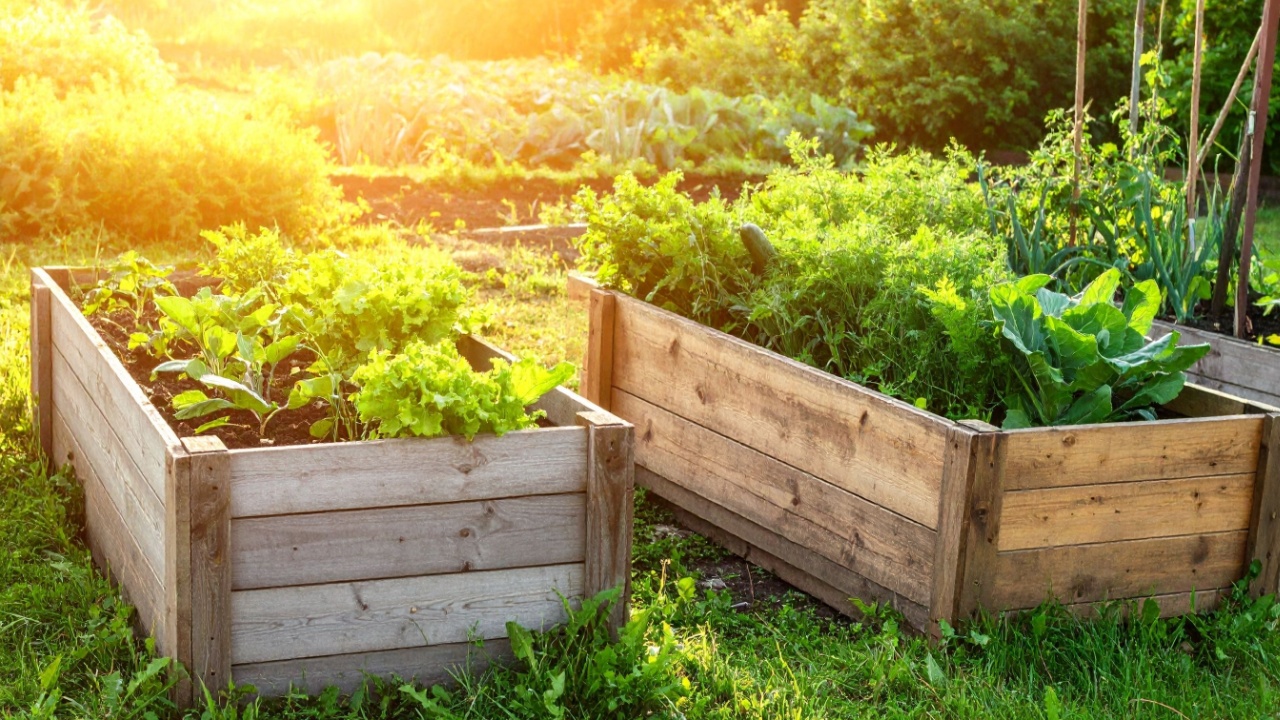
Two beds placed side by side or end to end in a rectangular space give you the flexibility to rotate crops year to year without overhauling your entire garden. This layout fits in a space as small as 6 by 12 feet. Nicole Burke at the Gardenary recommends connecting twin beds with a pair of arch trellises — one at the front and one at the back — to create a “grand entrance” effect that looks professionally designed from the first season.
Keep each bed three to four feet wide (accessible from all sides now) and leave two to three feet of clear pathway between them.
3. The Four-Garden Classic
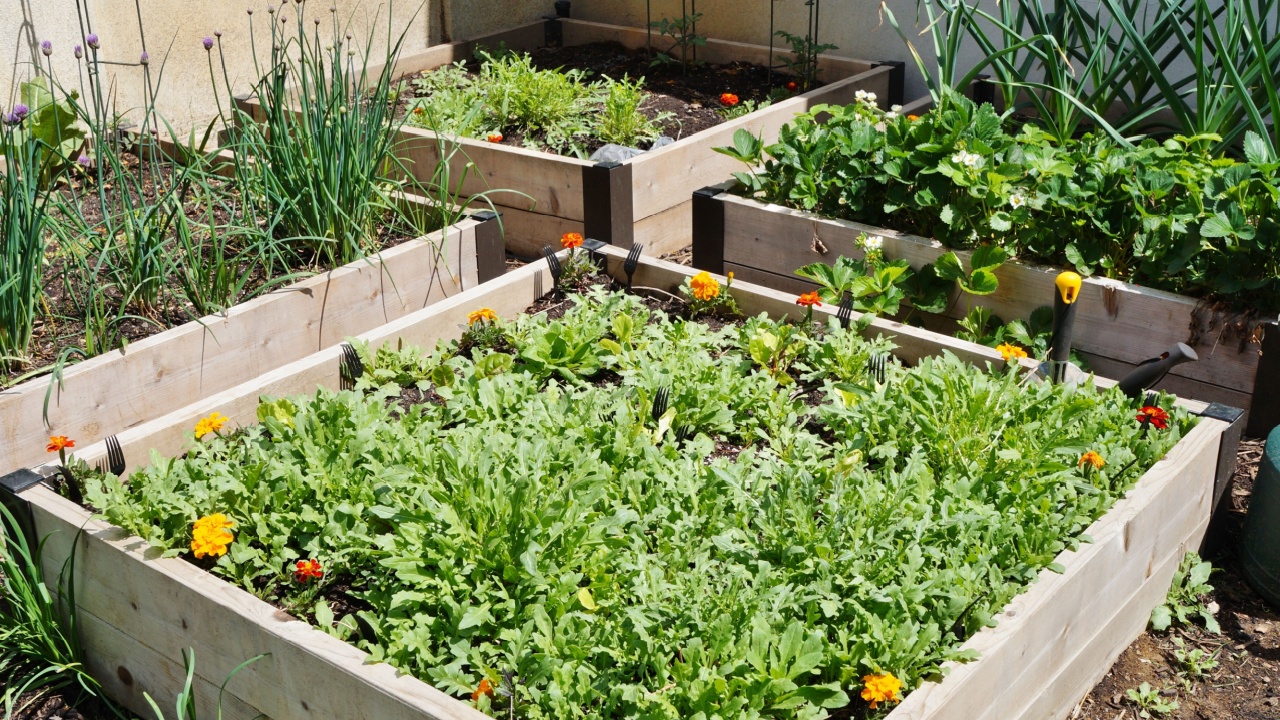
This is the layout that garden designers return to again and again, and for good reason. Four raised beds arranged in a symmetrical grid, with clear pathways between them, draws directly from the French potager and Victorian kitchen garden tradition — centuries-old wisdom that turns out to be exactly right. The symmetry creates what Burke calls “kitchen garden design perfection,” with the four beds functioning like walls to make the space feel like a private outdoor room.
This layout requires a roughly square space of at least 15 feet in width. Each bed can be four to eight feet long. Place an obelisk trellis in the center of each bed to add height and allow vining crops like peas or cucumbers to grow upward rather than outward.
4. The Garden Trio
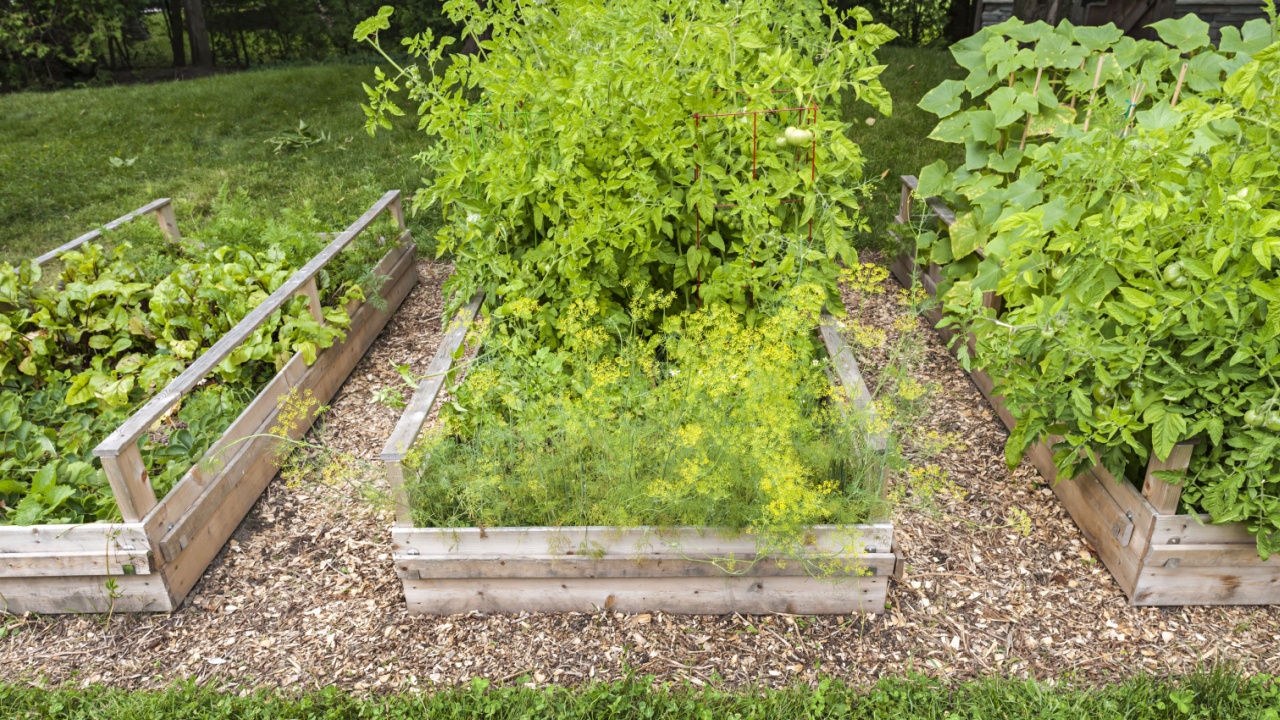
Three beds arranged in a circle with two-foot-wide pathways between them create a dramatic, almost sculptural effect in a round or square space. Groupings of three are inherently satisfying to the eye. The main consideration to keep in mind is that the beds typically need to be custom-cut to fit the curved layout, so this one requires slightly more planning than a rectangular arrangement.
5. The Square Foot Grid

Developed by engineer-turned-gardener Mel Bartholomew in the 1970s and popularized through his book Square Foot Gardening, this method divides a 4-by-4-foot bed into 16 individual squares, each planted according to crop size: 16 carrots per square foot, one cabbage per square foot. The Old Farmer’s Almanac calls it ideal for beginners because it makes plant spacing visual and concrete rather than abstract.
The appeal is maximum density in minimum space. A single 4×4 bed managed this way can supply fresh herbs, salad greens, and root vegetables for a household throughout the growing season.
6. The Long Focal Bed

When you’re working with a small or awkward backyard, a single long raised bed can function as a bold focal piece rather than a limitation. Southern Living garden expert Resh Gala of Hundred Tomatoes recommends outlining a long bed in brick, which provides structural strength, holds warmth at the soil edges, and comes in enough colors and washes to complement almost any home exterior.
Plant tall crops toward the center-back and let lower herbs or greens cascade toward the front for a layered, lush effect even in a compact footprint.
7. The Keyhole Garden
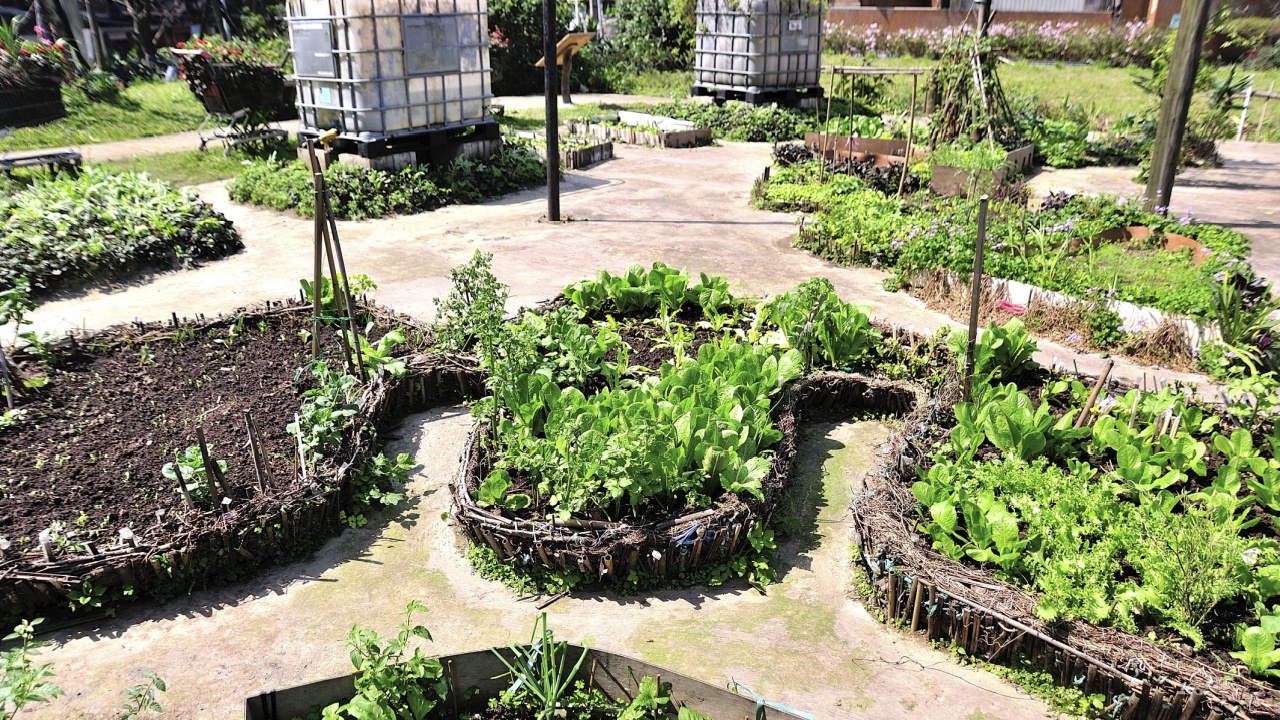
The keyhole layout is a circular or semi-circular bed with a narrow inward-facing path that lets you reach the center without stretching or stepping inside. It’s especially elegant in a small space, where a standard rectangular bed would feel utilitarian. A central compost basket is traditional in keyhole gardens, fed from the inside path and distributing nutrients directly into the surrounding soil.
8. The L-Shaped Layout
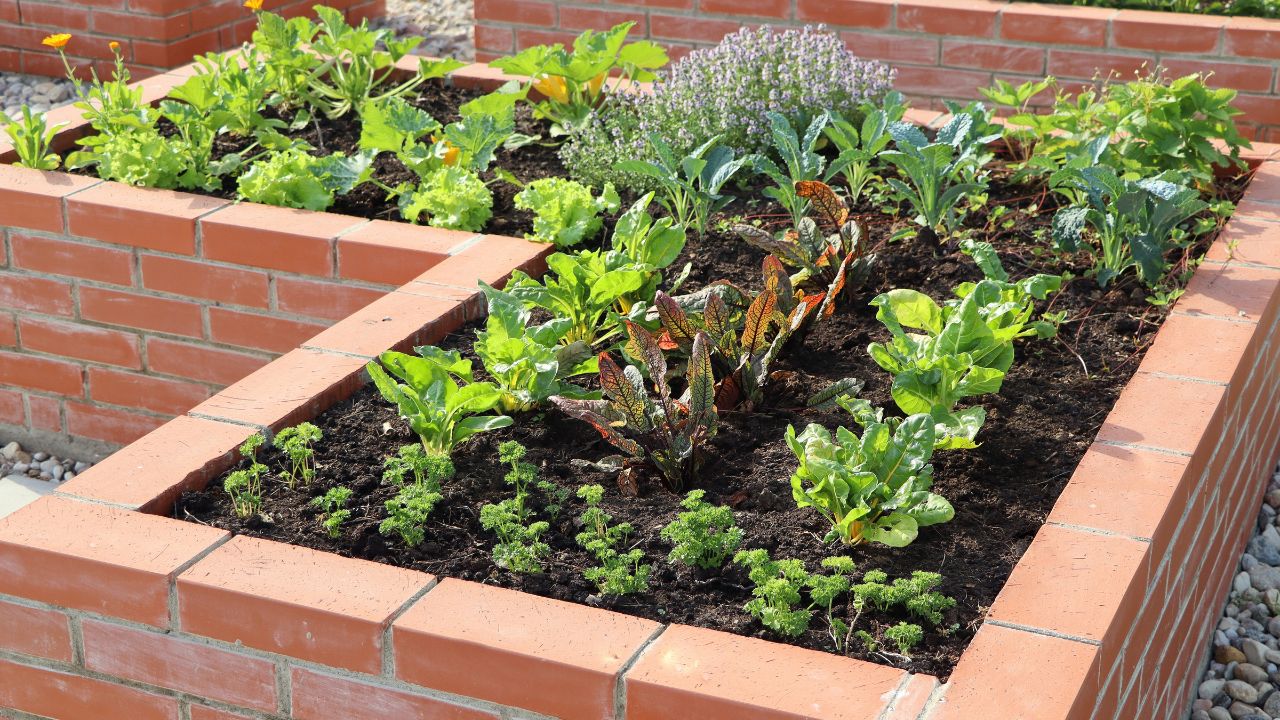
For corner spaces, an L-shaped bed configuration is one of the most underused and most satisfying options available. The L wraps the corner naturally, making use of space that would otherwise go to lawn or bare soil, and it feels custom and intentional at first glance. Southern Living has featured L-shaped raised beds as a way to play with length and shapes while maximizing a garden area without dominating it.
9. The Potager
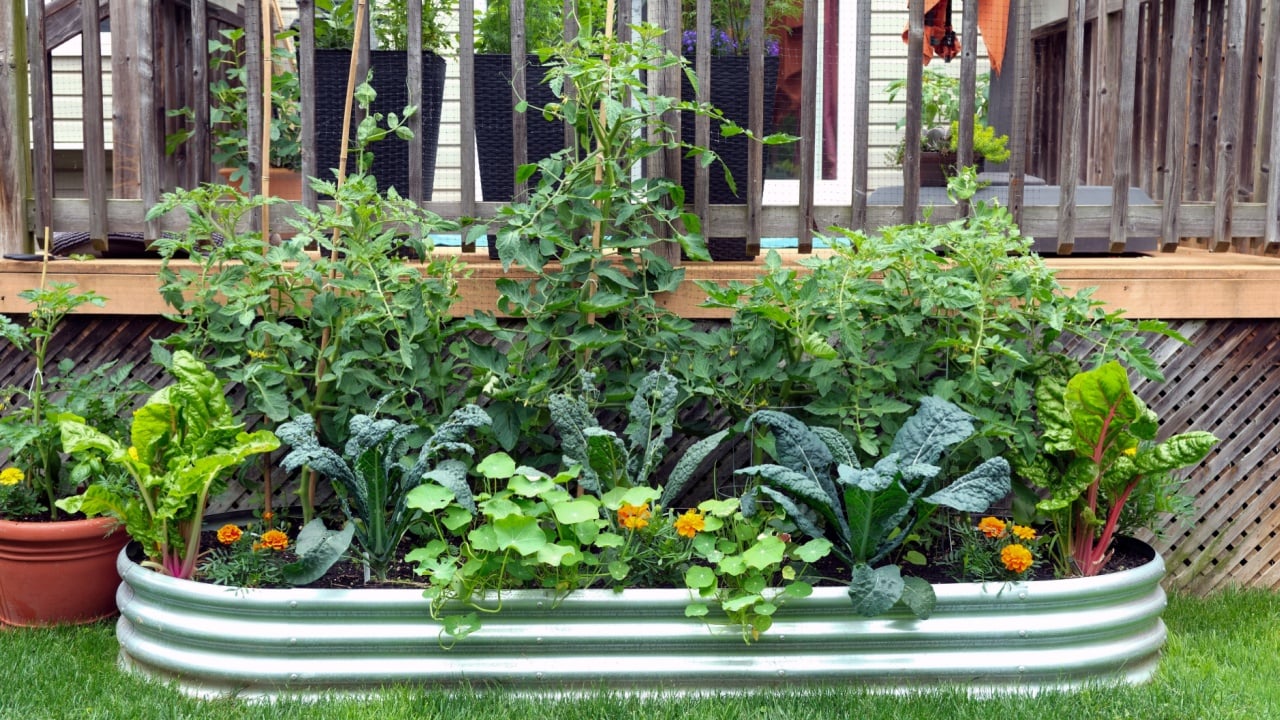
The potager is the formal French kitchen garden style, and it brings something that most vegetable gardens lack entirely: year-round beauty. In a potager, edibles and ornamentals grow together with intention — marigolds alongside tomatoes, lavender edging a bed of greens, climbing roses sharing a trellis with pole beans. The layout is typically symmetrical, often with a central feature such as a sundial, stone urn, or topiary.
Southern Living notes that perennials enjoy raised beds just as much as vegetables do, thriving in the elevated, well-drained environment while adding color and structure beyond the harvest season.
10. The Layered Backyard Room

This is the full vision: multiple beds in a coordinated layout, connected by gravel or paver pathways wide enough for a wheelbarrow, framed by arch trellises, anchored by a central focal point, and lit for evening. It is less a single layout than a design philosophy. You can build toward it incrementally, starting with two beds and a single arch trellis and adding elements over seasons.
Resh Gala puts it plainly in Southern Living: “If there’s one thing that will make your garden look luxe and enhance it to the next level, it’s lighting.” Under-bed LED strips, solar corner lights, or even simple string lights transform a productive garden into an outdoor room you’ll want to spend time in long after the last harvest.
The Design Details That Make Any Layout Look Polished
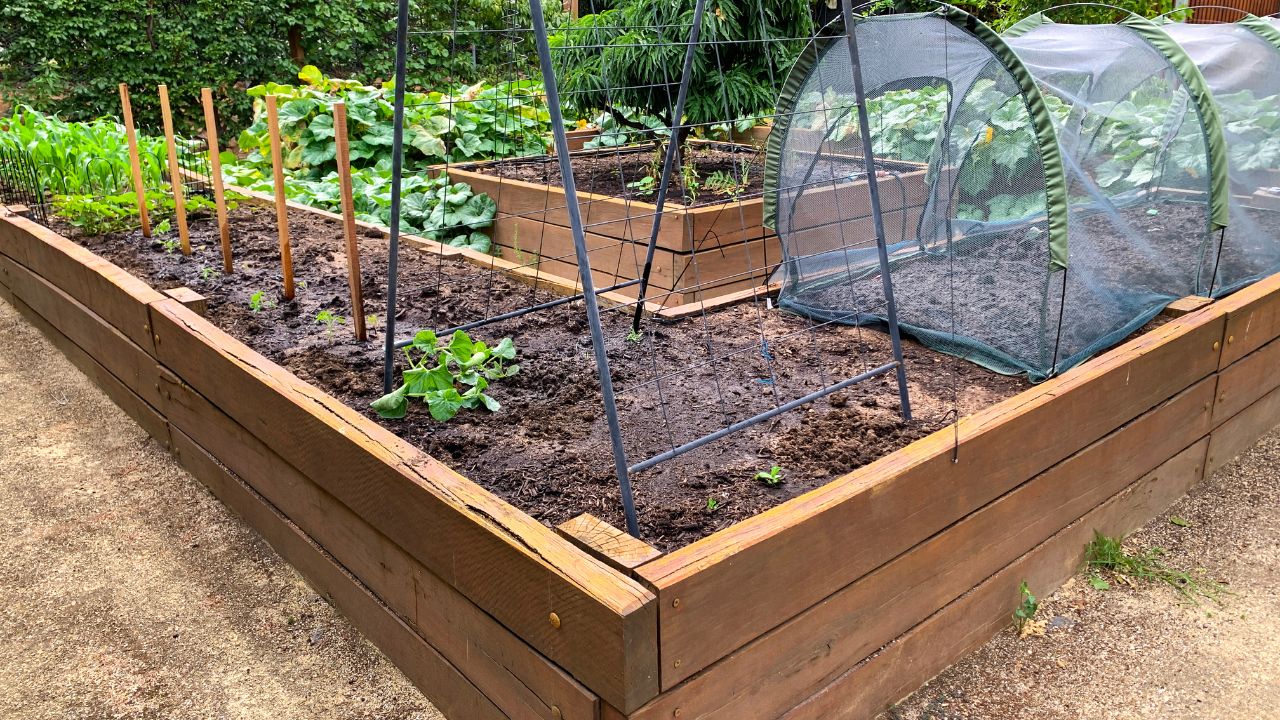
Once you’ve chosen your layout, the finishing details separate a beautiful garden from a functional-but-forgettable one.
Frame It All‘s design guidance recommends main pathways of at least three feet wide to accommodate a wheelbarrow with compost in the fall and spring. Two feet is the minimum for comfortable daily walking and weeding. Gravel and pavers are consistently rated as more satisfying long-term than wood chip paths, which require annual refreshing and can become muddy.
Resh Gala at Hundred Tomatoes recommends in Southern Living using untreated cedar for wooden beds: it lasts seven to ten years without treatment, naturally repels certain pests, and takes a stain beautifully. Coating the outside with juniper oil or a clear water-proofer extends that lifespan further. Brick is the durable alternative, especially for permanent focal beds. Galvanized metal offers a sleek, modern look and is built to last decades; just be aware it heats up more than wood in full sun, which can affect soil temperature in July and August.
Nicole Burke at the Gardenary considers a trellis non-negotiable: no raised bed is complete without one. Even a single obelisk adds vertical growing space and gives the bed a finished, designed look through all four seasons.
Before You Build: The Four Placement Rules Every Layout Depends On
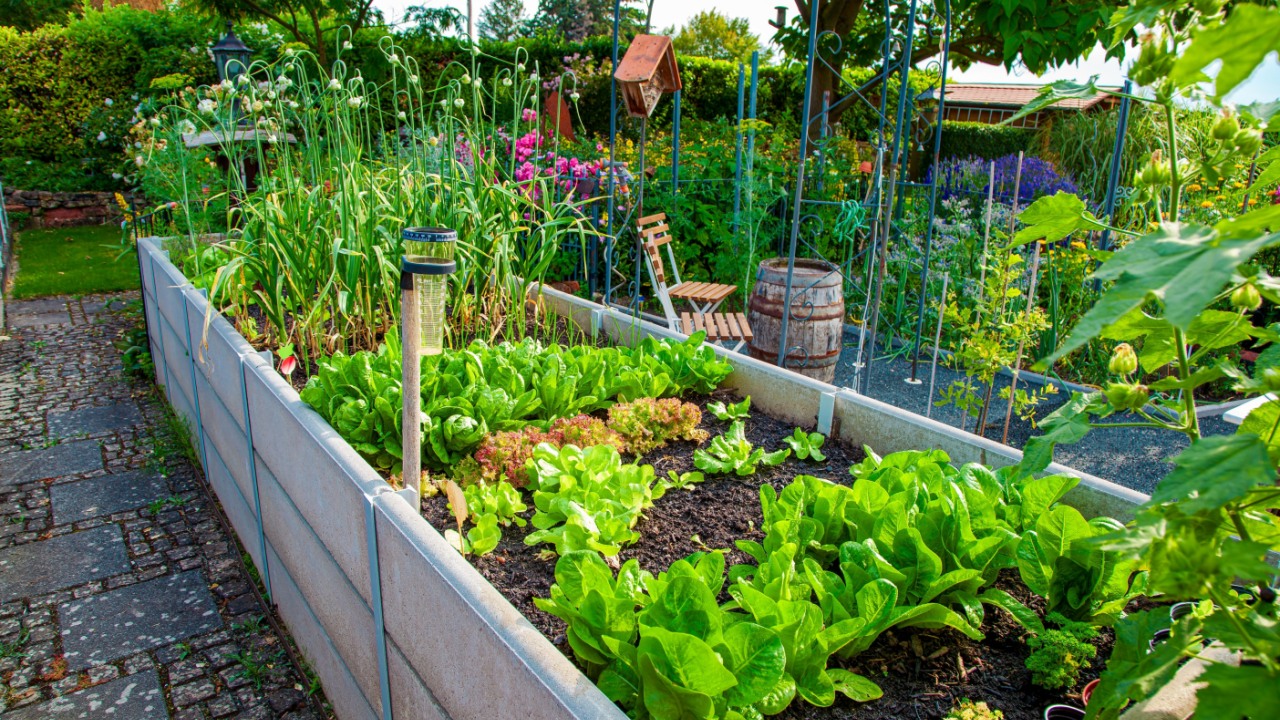
Every layout succeeds or fails based on four placement decisions, which should be resolved before construction begins.
- Six or more hours of direct sun per day is the non-negotiable minimum for vegetable crops. Ideally, place beds on the south side of any tall structure so they receive maximum winter sun when the angle is low. Gardening Know How recommends orienting beds north-to-south so taller crops can be positioned at the north end without shading their shorter neighbors.
- Proximity to a spigot, rain barrel, or irrigation hookup dramatically affects how consistently plants get watered. The Beginner’s Garden strongly advises planning drip irrigation placement before installing any beds — threading tubing around established plants mid-season is both tedious and disruptive.
- The closer the garden is to where you cook, the more often you’ll harvest. Even 30 extra feet of distance becomes a psychological barrier on busy evenings.
- The best raised bed gardens feel like they’ve always belonged in the yard. The Gardenary advises aligning beds with existing structural lines: a fence, a deck edge, a driveway border, a patio wall. When beds echo the geometry already present in the yard, the whole space reads as designed rather than assembled.
The best layout is the one that fits your actual yard, not the most ambitious one you can imagine. Start with the design that matches your space and build from there. Your backyard is ready.
Read more:
Is Your House A Wildfire Target? 7 Things That Increase Your Risk At Home
Is The Heat To Blame for Your Struggling Vegetable Garden This Summer? Stop Making These 7 Mistakes