13 Countries Where Tourist Make These Offensive Mistakes
Travel is supposed to open doors, not quietly close them because of a cultural misstep you didn’t even realize you made. The tricky part? Many etiquette rules aren’t written on signs: they live in habits, expectations, and unspoken social contracts locals follow every day.
Of course, many travelers make the effort to gain some cultural advice before visiting a new place. Yet, even the most studious tourist can make an honest mistake.
Not every country is the same — an indiscretion in one place might be perfectly acceptable in another. Some of these displays are things the average American tourist does regularly at home, so one must be careful.
1. Talking Loudly on Public Transport in Japan

If you’ve ever been on a packed train after a long day, you know how precious a quiet commute can feel. In Japan, that sense of shared calm is woven into the national conscience. Locals consider trains as almost temple-like, where even phone calls are frowned upon. A loud conversation disrupts a collective agreement to keep things peaceful.
“If you carry a phone, keep it on silent mode and avoid speaking on it. If in doubt, just follow the locals.,” notes the official Japanese state etiquette guide. It is from the Japan National Tourism Organization, so they really mean it. Lose the phone and be present: you might just enjoy it even more.
2. Expecting Early Dinners in Spain

Spanish resident here: I offer you the most important rule for your first visit to Spain. If you’ve ever wandered into an empty restaurant at 6pm here, you’ve already learned this lesson the hard way. To newcomers, most restaurants will either be closed to customers then, or open but serving only blank stares and a shrug.
Instead, you must shift your body clock and eating patterns together. In Spain, a 2pm or even 3pm lunch is the main event, usually followed by a period of sleepiness or sleep. The usual evening’s hunger pangs are quashed with a merienda: an evening snack of pastries or toast and coffee. Supper comes from 9pm, even after a stomach-growling 11pm during the summertime.
3. Skipping “Bonjour” in France

It’s a small word with big weight: walk into a French shop without greeting the staff, and the atmosphere can cool instantly. For locals, a simple “bonjour” acknowledges shared space and basic respect. Put simply, you’re being dismissive without it.
“In France, saying bonjour in French is a sign of respect and a cultural norm,” states local blog Oui In France. “It’s not optional to forgo the greeting if you want people to know that you understand French manners.” Therefore, this one word can transform your entire interaction. Unfortunately, forgetting it can ensure proceedings will head south with near certainty.
4. Public Displays of Affection in the UAE

What feels like harmless gestures in one place can carry very different meanings elsewhere. In the United Arab Emirates (UAE), public displays of affection aren’t just frowned upon but can lead to fines or legal trouble. Visitors often underestimate how seriously this is taken, and it applies to most of the region.
There are countless examples of people getting into trouble for what we consider mere affection in the West. Perhaps a case from 2010 shows how even the gentlest contact can have consequences. British couple Ayman Najafi and Charlotte Adams were imprisoned for one month after a public peck on the cheek. The couple was also deported.
5. Touching Someone’s Head in Thailand

What might feel like a friendly, affectionate gesture, not least toward children, can be considered woefully disrespectful in Thailand. That’s because the head is viewed as the most sacred part of the body, tied to spiritual beliefs and personal dignity.
“In Thailand, the head is considered to be sacred. It is also believed to be the cleanest body part and thus should never be touched,” Thailand Insider explains. While you might see relatives or close friends touching each other’s heads, even reaching near a stranger might require an apology.
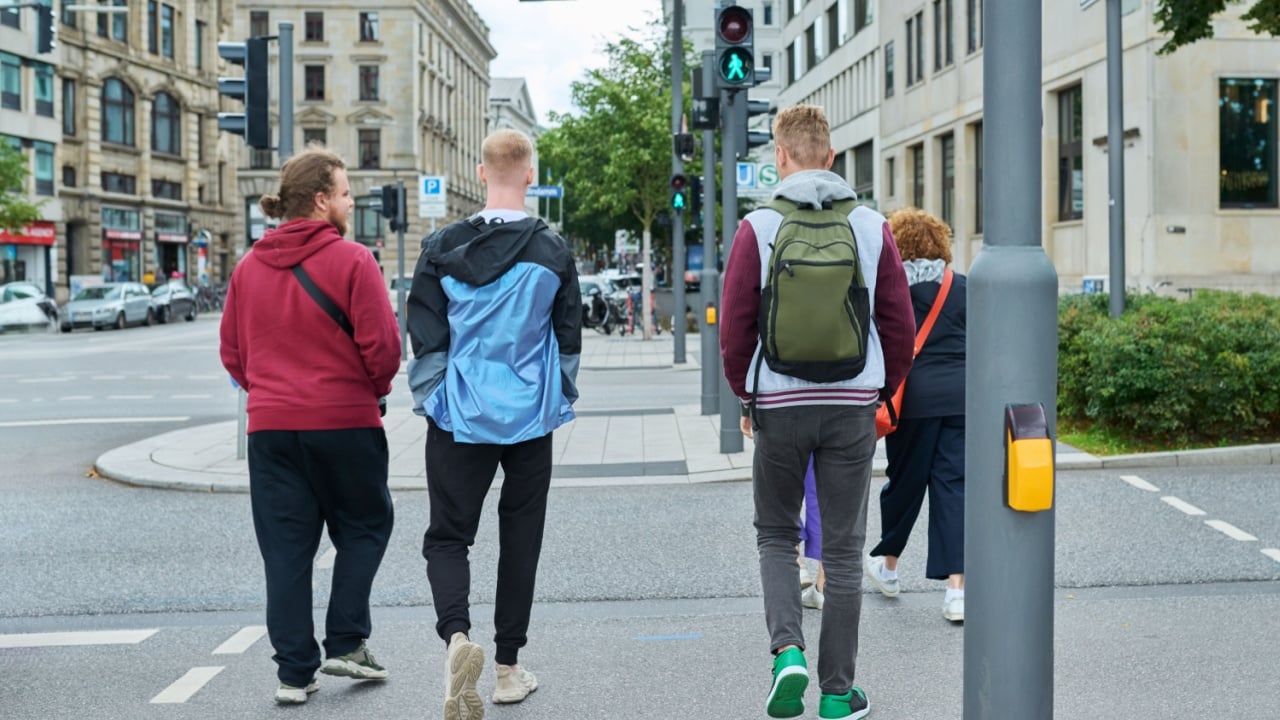
6. Crossing on Red in Germany

You might have found yourself standing at an empty intersection in Germany with no cars and no danger. Crossing would take two seconds, so why were locals still waiting? In Germany, rules are part of a broader social contract. Crossing on red isn’t just unsafe; it’s seen as setting a bad example, especially for children.
“Thou shall not cross the red light [lest ye shall be banished to hell for all eternity],” notes I Am Expat’s Fadi Gaziri. “That’s how serious this is.” Patience in Germany signals respect, which goes a long way in this part of Northern Europe.
7. Wearing Heels at Greek Ruins

Imagine walking across a 2,000-year-old marble floor in stilettos: it’s not just impractical but potentially damaging. Comfort aside, who walks on marble floors in high heels when not modeling for a photo shoot? In any event, Greece introduced rules a while ago to protect its ancient sites from exactly this kind of wear and tear.
“In ancient Greek sites like the Acropolis and Parthenon, visitors wearing high heels can be arrested and fined up to €900,” writes Gia Marcos for The Travel. “Narrow, sharp heels or stilettos can cause micro-fractures and scratches on fragile surfaces.” Plato and Socrates would have been furrowing their brows had they seen such a display.
8. Eating on Public Transport in Singapore

Singapore’s journey from struggling fishing peninsula to a futuristic, economic powerhouse comes with many rules. The little city nation’s spotless public spaces are an emblem of the nation’s longstanding dedication to cleanliness and public service. Eating on public transport might seem harmless, but it’s banned to keep trains clean and pest-free. It is all in the public’s interest, according to the state transport authority’s Facebook post.
“Consumption of food and drinks is not allowed on public transport to promote a cleaner commute for all,” it reads. “It is also to minimise spillages, which could cause slipping, falling, or the soiling of seats, and other commuters’ belongings.”
9. Ordering a Cappuccino After Lunch in Italy

Picture a waiter in Rome raising an eyebrow: not out of hostility, but mild confusion. The times for food and drink in Italy have many years of refined thinking behind them. For all good purposes, Cappuccino’s milk-heavy profile is a morning comfort, not a post-meal drink. That just makes sense, right? Ordering one after lunch signals you’re out of sync with local habits.
“It’s not written anywhere, but everyone knows it,” writes Margo Schächter of Italy Segrata. “A cappuccino should only be drunk in the morning–not with a meal, nor with a snack, and certainly never after dinner. She adds that “there are no ifs, ands, or buts. In Italy, espresso is your new post-meal caffeine fix; this is the way.
10. Using Your Left Hand in India

Small gestures like passing food or offering money carry deeper meaning in India and should be conducted with one’s right hand. Indians associate the left with hygiene practices, making it inappropriate for social exchanges.
Holding a utensil or even ripping some naan bread is acceptable, according to a Rough Guides entry. Yet, “you should not eat, pass food or wipe your mouth with your left hand.” It’s a subtle adjustment that signals cultural awareness; presumably, it’s also an awkward adjustment for left-handed people.
11. Showing the Sole of Your Shoe in Egypt

I spent a year in Egypt, my first adventure living away from the comforts of home, and one of my biggest culture shocks. There are numerous things a visitor to this country can do to irk the hosts: one of these is showing one’s sole.
While folding one’s leg over the knee is a common sitting practice in the West, it means displaying the bottom of one’s foot. This action shows disrespect, and don’t be surprised if somebody offers kind advice for change. It is recommended that you follow it, lest you fall foul of that warm Egyptian hospitality.
12. Recycling Incorrectly in Switzerland

In Switzerland, even throwing something away comes with expectations. Waste is carefully sorted, and getting it wrong isn’t just frowned upon: it can attract fines or complaints from neighbors. The Swiss are quite serious about this matter: a friend who moved there once revealed plastic trash bags were priced in the high double figures.
“A number of ‘garbage criminals’ have been nabbed in Switzerland in recent years,” writes Helena Bachmann for Swiss platform The Local. “Fines imposed on them vary from one community to another.”
13. Pointing with Your Finger in Malaysia

In Malaysia, pointing with your index finger can be seen as rude or confrontational. “Pointing, especially with one’s right hand, is considered to be poor manners,” reads a Cultural Atlas post. “If you need to point to someone or something, use your right thumb with your four fingers folded underneath.”
This transition can be a tricky maneuver to navigate with young children, especially when trying to teach them. While young children are exempt from this practice, adults will need to make the transition to their thumbs.
Read More
These 12 U.S. States Are Drowning in Debt
12 Reasons You’re Still Living Paycheck‑to‑Paycheck, According to Suze Orman