
12 Things Your Shopping Cart Habits Say About Your Personality
The shopping cart question divides opinion: do you return it, or is there simply no time? At times, you just need to get somewhere, leaving the cart to whatever comes. Some even point to the idea of a “shopping cart theory,” whereby your actions define your character traits.
Regardless of where you fall on this opinion, the shopping cart debate rages on. It’s become so contested to the point that entire livelihoods exist based on people’s willingness to return their shopping carts. We’re looking at you, Cart Narcs.
Yet, few of us ponder exactly what our cart habits say about us. Are those who return their carts obviously different from those who don’t? Most importantly, what does your shopping cart mindset tell the world about you?
1. You Care About Doing the Right Thing

Putting your cart back often signals a strong internal moral compass. People who take the extra minute usually feel responsible for shared spaces and other people’s convenience.
Social psychology writer David Wong describes the famous “shopping cart test” as a simple measure of civic responsibility, noting that “the shopping cart is the ultimate litmus test for whether a person will do what is right without being forced to do it.”
Returning it doesn’t earn praise or avoid punishment; it’s purely voluntary, which makes the behavior revealing. People who pass this tiny test tend to value fairness, order, and cooperation in everyday situations.
2. You Respect Other People’s Time and Safety

Runaway carts damage cars and create hazards in crowded parking lots. People who return them often think about those ripple effects.
Shopping carts left loose in parking lots can roll into vehicles, block spaces, and create unnecessary hazards. People who recognize this risk display what Mike Orzen and David Verble of the Lean Enterprise Institute call “discretionary effort.”
Putting the cart back signals awareness of the shared environment and a willingness to prevent problems for strangers.
3. You Tend to Be More Conscientious

Psychologists describe conscientious people as organized, reliable, and mindful of responsibilities; even the small ones. We can all agree that the world would be nicer for all if everyone were more conscientious.
Nicholas A. Turiano writes for the Encyclopedia of Personality and Individual Differences note the traits behind this behavior. “Broadly, individuals scoring higher on measures of conscientiousness have a strong impulse control that enables them to engage in more goal-directed and responsible behaviors,” he writes. Returning a cart fits neatly into that pattern. It’s a small act that shows a person naturally follows through and tidies up after themselves.
4. You Believe Shared Spaces Should Stay Orderly

For many people, returning the cart simply feels like restoring order, a quality we can all admire. It may even be a selfish act, similar to the HOA member who knocks on doors to complain about clothesline uniformity.
Urban design researchers Rachel Kaplan and Stephen Kaplan explain that people are more comfortable in environments that feel structured and cared for. Crucially, they note that “people prefer environments that convey order and coherence.”
A neatly organized cart return area signals that a space is maintained, and people who value that order are more likely to participate in keeping it that way.
5. You Follow Social Norms

Who hasn’t been in that limbo between emptying one’s cart, while bystanders observe your next move? Quite often, everyday behaviors happen because we’ve learned what society expects.
Social norms exert a powerful influence on human behavior, leading to positive bias over an outcome. When shoppers return carts, they’re often responding to that quiet expectation that parking lots should remain tidy and safe.
A study from The Decision Lab labels two types of social norms: “injunctive norms” are like societal peer pressure to perform an act. Moreover, “subjective norms” address the intrinsic motivation we feel to fall into line.
6. You Show Consideration for Workers

Retail employees are often responsible for gathering stray carts across large parking lots, and they have their work cut out for them in some areas.
Workplace researcher Zeynep Ton notes that front-line retail work often includes many hidden tasks. She adds how small increases in the level of duties employees must complete can have a negative impact on their long-term happiness at work.
Returning a cart removes one of those small burdens and signals respect for the workers who keep stores running. It might be that empathy wins the day, because you were once in that employee’s position, and so it should.
7. You Think About Long-Term Consequences

Many of us have seen the “marshmallow test” to see how children can delay a reward. This experiment was designed to gauge how people act with future outcomes in mind, even when the effect seems minor.
Psychologist Walter Mischel’s research on self-control and decision-making explained that individuals who delay gratification tend to consider long-term outcomes of small actions.
Putting a cart away prevents damage, clutter, and inconvenience later, reflecting that forward-thinking mindset.
8. You’re Comfortable With Small Acts of Cooperation

There is a famous expression people who love quotes use: “It takes a village…” We know this refers to community values being important to a child’s ethical development, and shopping cart returners align with this. After all, communities run smoothly when people voluntarily contribute to shared systems.
Political scientist Elinor Ostrom, who studied cooperative behavior, found that communities succeed when individuals share resources, values, and rules. The shopping cart is a great indicator: the idea that small, dutiful contributions amount to a positive shared environment. Sometimes, it takes a village; other times, it takes a shopping cart.
9. You Value Personal Responsibility

Some shoppers simply feel accountable for the things they use. The idea of personal accountability lies in tandem with goal setting and a growth mindset, according to The Mindful Spark. Clearly, those who return the cart are showing this.
Quoting famous psychologist C. S. Dweck, Mindful Spark explores the many reasons for showing personal responsibility. “Viewing personal growth as a dynamic and ongoing process can motivate individuals to remain accountable for their long-term development,” it reads.
Returning a cart shows a growth mindset in action. Acknowledging the small responsibilities that come with everyday conveniences helps us to grow while we make the world a better place.
10. You Favor Convenience Over Courtesy
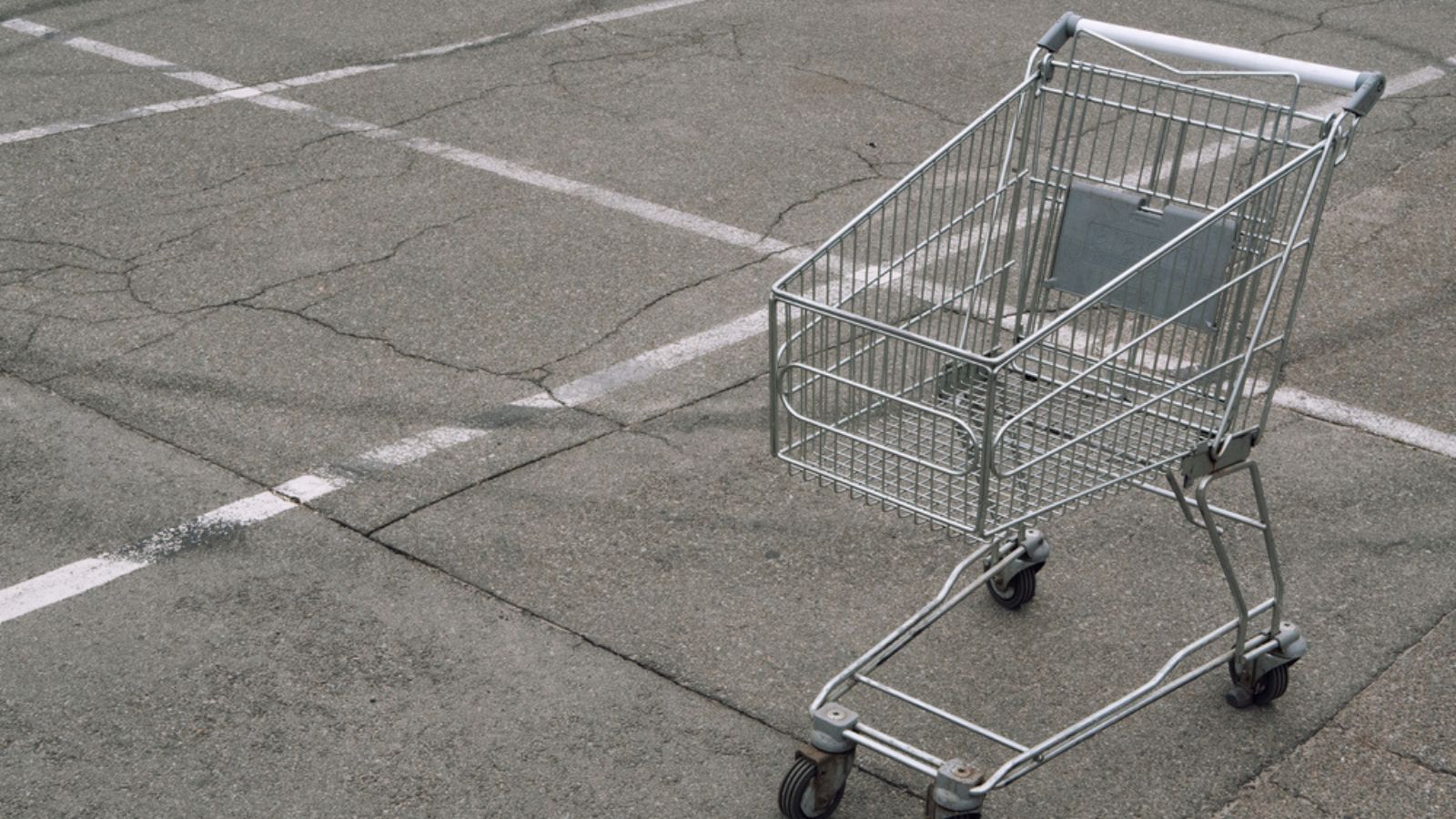
Some shoppers abandon carts simply because it feels easier in the moment, and they don’t want to interrupt progress. Sadly, choosing convenience over courtesy signals to the world that you put yourself first.
Leaving a cart behind may not signal bad character, but it often reflects prioritizing convenience over community. Many experts discuss the “psychology of convenience” that ignores the environment for personal preservation.
It is this kind of thinking that makes some supermarkets in Europe require a coin for each cart, forcing people to return the cart.
11. It Might Reflect a Diffusion of Responsibility

When many people share a space, individuals sometimes assume someone else will handle the problem. It is known as the “bystander effect.” This concept extends to the parking lot, where some may assume that a store clerk will put the cart back. Yet, does anyone really think about that cart causing a problem later on?
Social psychologists Bibb Latané and John Darley, who studied the bystander effect, found that the presence of others can diffuse responsibility so that no one feels personally accountable. What’s more, the chances of leaving a cart in the parking lot increase the higher the number of people standing nearby.
12. Sometimes It’s Just Stress or Distraction

Not every abandoned cart is a moral failure. Modern life often pulls people in multiple directions. Psychologists studying cognitive load explain that when people are overwhelmed, it affects their ability to do their community duty.
“Cognitive load theory may be particularly valuable for individuals with diminished working memory due to high levels of mental load and stress,” reads the study. In those moments, returning a cart might simply fall off the mental checklist.
The next time you see someone in the parking lot leaving their cart behind, consider what strain they may be under. Some may just be carrying an unfair mental load.
Read More
Stop Pouring These 10 Things Down the Drain — Plumbers Say It’s a Costly Mistake