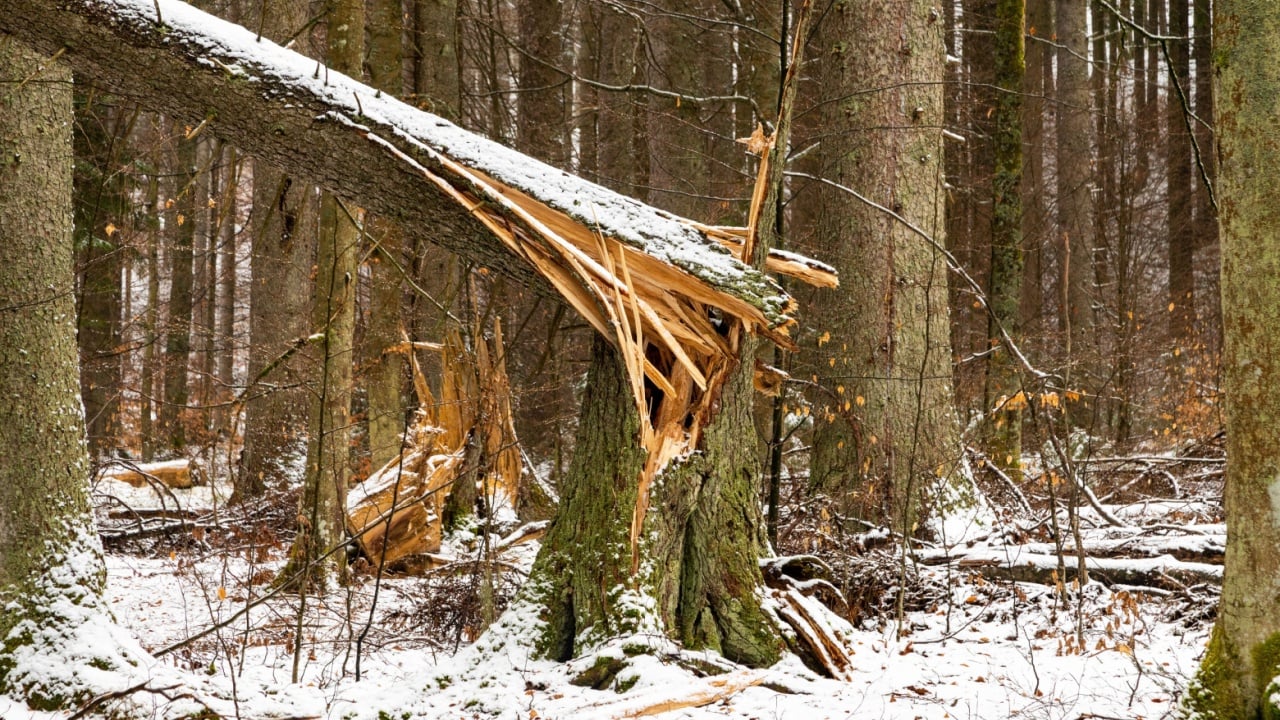
Are Winter Tree Explosions a Myth or Mystery?
Much online discussion has been hovering around the subject of frozen exploding trees this winter, following multiple videos and reports. A Facebook update from the page, Ethereal Earth, went viral in late January, showing as such. The channel posted video evidence of what appears to be frozen trees exploding in a snow-covered forest.
It garnered 7.2 million views at the time of writing, showing what appears to be explosive pine trees. What makes this video remarkable is that the trees seem to be synchronized, each one popping off within a few seconds of the last. In total, four trees erupt, shedding pine needles and snow with a loud gunshot roar.
A Terrifying Experience
When trees start exploding around you, it might be unnerving, which is the emotion shared by the video operator. He concludes after the third violent tree explosion, “We need to leave: it’s not safe here.” Even hearing such a noise while out hiking might cause an involuntary step backward.
Some netizens may just take this as factual, in light of all the other viral content finding both fame and infamy in recent years. Yet, an insightful post came from Family Handyman’s Casey Clark, clarifying what is happening. In short, trees don’t actually explode; however, while it looks convincing on camera, there is a plausible explanation.
To Explode or Not to Explode
Clark spoke about this process with professional arborist Ryan Torcicollo, who works with Swedish landscape consultancy group Husqvarna’s NA H-Team. “While extreme cold can cause visible damage to trees, there is no true explosive event occurring,” he explained. “The term is informal and misleading, and it exaggerates what is actually a physical stress response within the tree.”
A recent Farm and Dairy article from Liz Partsch sheds further light on the issue. She spoke to the Information and Education Manager for the Ohio Department of Natural Resources Division of Forestry, Alistair Reynolds. The ranger discussed how stored energy is key to the menacing sound the event makes.
Cold Weather and Frost Damage
Effectively, the cold winter temperatures cause trees to “harden off” their exterior in preparation for the oncoming winter. Subsequently, all freezable water from living tree cells accumulates within these cells. It means ice crystals can form outside those cells, leading to what is called a “frost crack.”
It is changing, fluctuating temperatures that can cause the freezable water to thaw, then suddenly freeze again, weakening the fibres of the trunk. It is during this phase that the tree is most vulnerable, with sudden drops making the frost crack more likely.
A Contracting Tree Trunk
“Interestingly, frost cracks are not caused by frost, but due to the tree’s wood drying and shrinking,” explains a Kramer Tree Specialists post. “Unfortunately, this also makes the tree more susceptible to cankers and fungus issues.”
Such knowledge is pertinent for those with certain types of trees on their property, which can be prepared accordingly. The post lists “crabapple, ash, beech, horsechestnut, sycamore, and linden trees” as ones to monitor for damage.
At least there may be one silver lining for some. That gunshot you just heard in your nearby woods is nothing to fear: it’s just a frozen tree not exploding.