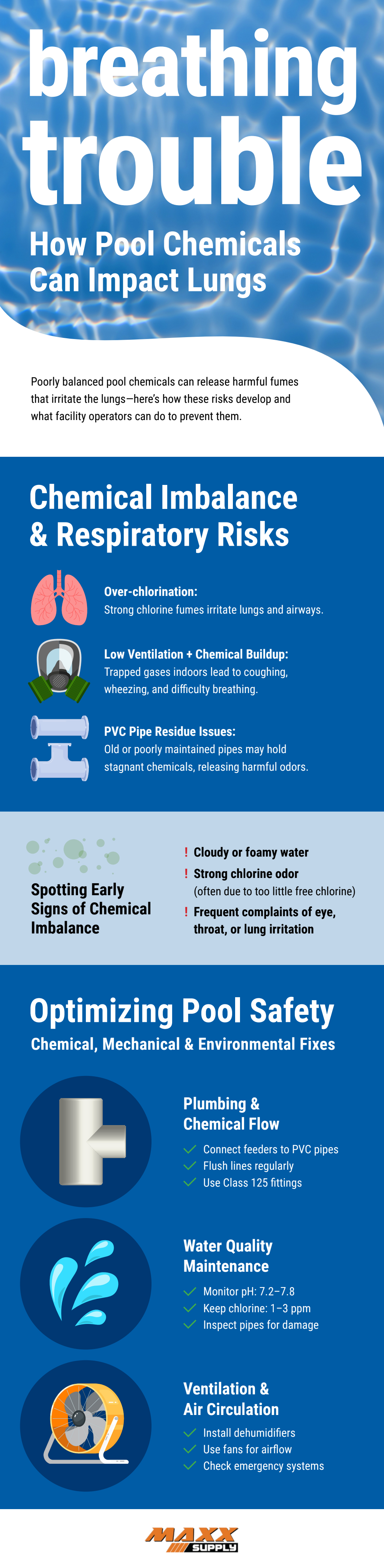
Breathing Around The Pool: How Water Chemistry Can Affect Lung Comfort At Home
A backyard pool often represents relaxation, family time, and outdoor enjoyment. While water clarity and cleanliness usually take priority, air quality around the pool deserves attention as well. Pool chemicals play an important role in keeping water safe, but they can also influence respiratory comfort, especially in enclosed or poorly ventilated spaces.
For homeowners, understanding this connection supports healthier pool use and better maintenance decisions.
Why Pools Rely on Chemical Treatments
Pools require disinfectants to control bacteria, viruses, and algae. Chlorine is the most common option because it works quickly and consistently. As chlorine interacts with organic material such as sweat, sunscreen, or debris, it forms byproducts called chloramines.
These chloramines are responsible for the sharp smell often associated with pools. While they signal active sanitation, they can also affect the air just above the water surface.
How Pool Air Can Affect Lungs
Chloramines easily rise into the air, especially when water is disturbed by swimming or splashing. When inhaled, they may irritate the respiratory system. Some people experience coughing, throat irritation, or chest tightness after prolonged exposure.
Children, older adults, and individuals with asthma or allergies may notice these effects more quickly. Even healthy swimmers can feel discomfort if exposure is frequent or ventilation is limited.
Indoor Versus Outdoor Pool Differences
Outdoor pools allow chemical vapors to disperse naturally. Wind and open space reduce the concentration of airborne irritants, making outdoor swimming generally easier on the lungs.
Indoor pools require mechanical ventilation to manage air quality. Without sufficient airflow, chloramines can linger near the water surface. Proper ventilation helps remove irritants and replace them with fresh air, reducing respiratory strain.
The Role of Pool Plumbing and Equipment
Water circulation and chemical delivery systems affect how evenly disinfectants distribute. Poor circulation allows contaminants to build up, increasing chloramine formation. Reliable plumbing components help maintain consistent flow and treatment levels.
Durable fittings such as Schedule 80 PVC elbows support stable chemical transport within pool systems. Well-maintained equipment reduces leaks, prevents uneven dosing, and supports overall water balance, which indirectly influences air quality.
Simple Steps That Support Lung Comfort
Homeowners can take practical steps to limit respiratory irritation. Showering before swimming reduces organic matter in the water. Maintaining proper chemical balance prevents excessive chloramine buildup. Running pool covers only when appropriate and ensuring adequate airflow around enclosed pools also helps.
Regular water testing and equipment checks keep systems functioning as intended. These habits protect both water quality and the surrounding air.
Pool chemicals are essential for safety, but their impact extends beyond the water. Awareness of how pool chemistry affects air and lungs helps homeowners create healthier swimming environments. With proper maintenance, ventilation, and system care, pools can remain enjoyable spaces that support comfort as well as cleanliness. Check out the infographic below to learn more.