
How To Grow Onions – A Step By Step Guide To An Abundant Harvest
Onions are a very easy crop and one of the most useful vegetables to grow. Onions store well, make great use of space, and are used in most dishes in the kitchen. Let’s see how to grow onions for salads and cooking.
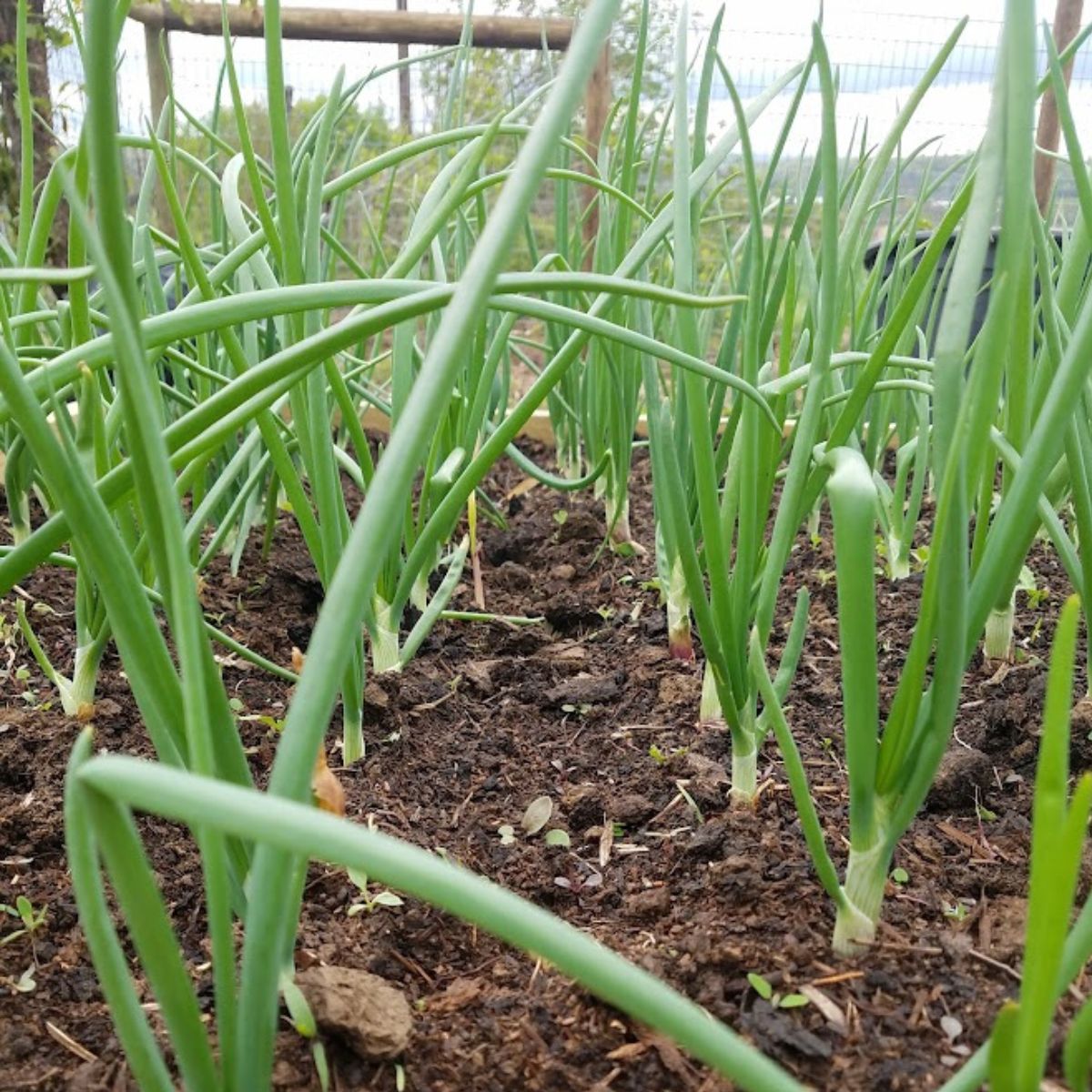
Do you use onions a lot? Our family uses LOTS of onions! I wish we could grow enough for all our needs, but we’d need a lot more garden space. So we only grow green onions and use them in salads and as a garnish for soups.
So how many onions should you plat? If you eat a lot of sauce-based dishes such as pasta dishes, stews, and curries, you’d probably get through 2 or 3 onions per week, so plant about 150 onions. But if you use up lots of them in chutney, relish, soups, and ketchup, you’ll need a lot more. For a good number to use in your kitchen, grow 200 overwintering (storage) onions, 300 white onions, and 200 red onions.
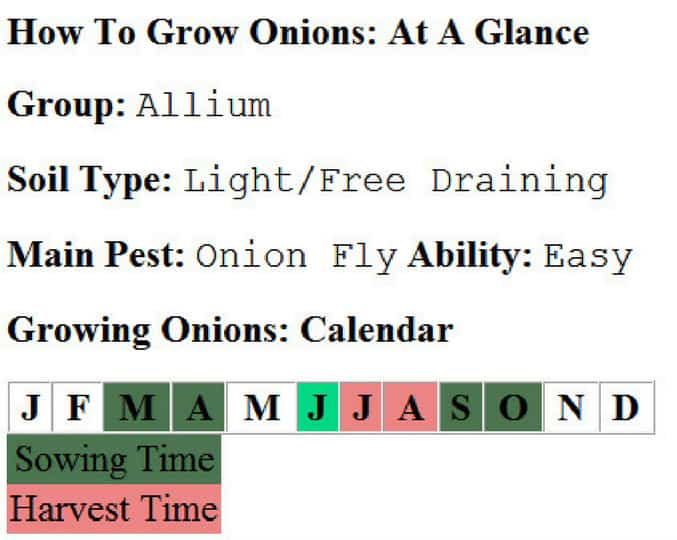
How To Prepare the Soil for Growing Onions
Preparing the soil for onions is relatively straightforward. Onions are easy to grow and don’t require much. Make sure the soil has good drainage, and the onion spot is in full sun. Incorporate some garden compost, and a week or so before planting, dress the soil with a dusting of Fish, Blood, and Bone fertilizer.
How To Grow Onions
You can grow onions from seed or sets (immature bulbs). Each method has its different advantages. Onion seeds offer a wider selection of varieties, are cheaper, and possibly store better. Onion sets are much easier to grow, offer more resistance to diseases, and have a better success rate.
If you are new to growing onions, you may choose to sow by sets, but if you would like to give onion seeds a go, here is a quick guideline.
How to grow onions from seeds
To grow onions from seed, start around two months before the last frost, usually in March. Sow onion seeds in small pots or trays: scatter seeds thinly and cover lightly with a general-purpose compost. Keep indoors until the seeds have germinated. Move them to a cool greenhouse or cold frame before hardening them off—plant outside in mid-May when they are pencil-sized.
Keep the young seedlings under 15 degrees before they move outside, and space out in the same way as onion sets (see below).
How to grow onions from sets
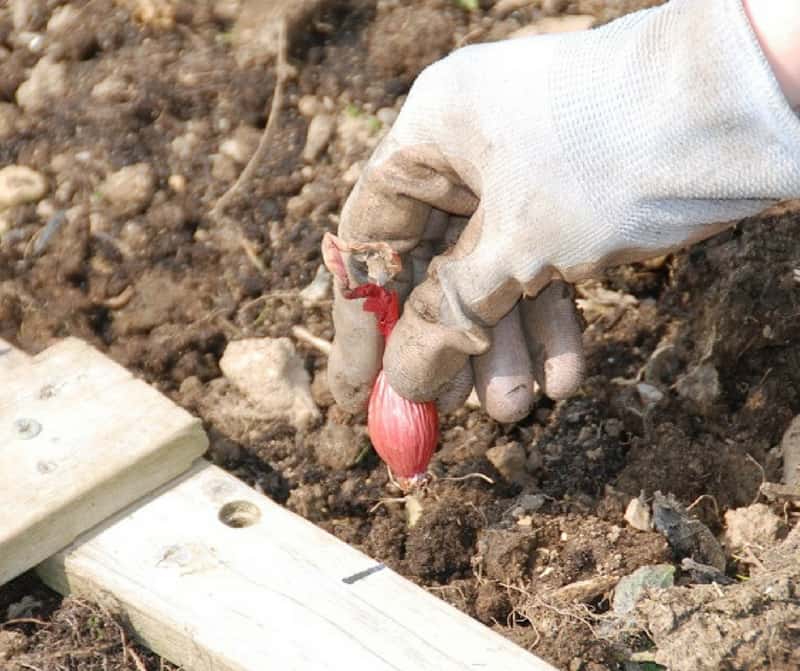
Growing onions from sets is much easier, although buying the onion sets can be a lot more expensive.
Plant sets in March or April: poke a small hole for the onion bulb to sit in (my husband uses his finger to make the hole), place the bulb fat end down and cover lightly with soil. Space the bulbs 4 to 6 inches from each other in rows with spaces 8-12 inches apart. Remember that the smaller the gap between rows, the smaller the onion will be.
We like to plant several sets at a weekly interval so we can have green onions for our salads. We plant the onion sets around the edge of our raised beds in our veggie garden.
Do keep an eye on newly planted sets, as birds find pulling out the bulbs great entertainment, and a bored bird could turn out the whole bed. If you have any cheeky birds, it may be worth netting them until they have rooted in.
How to care for your growing onions
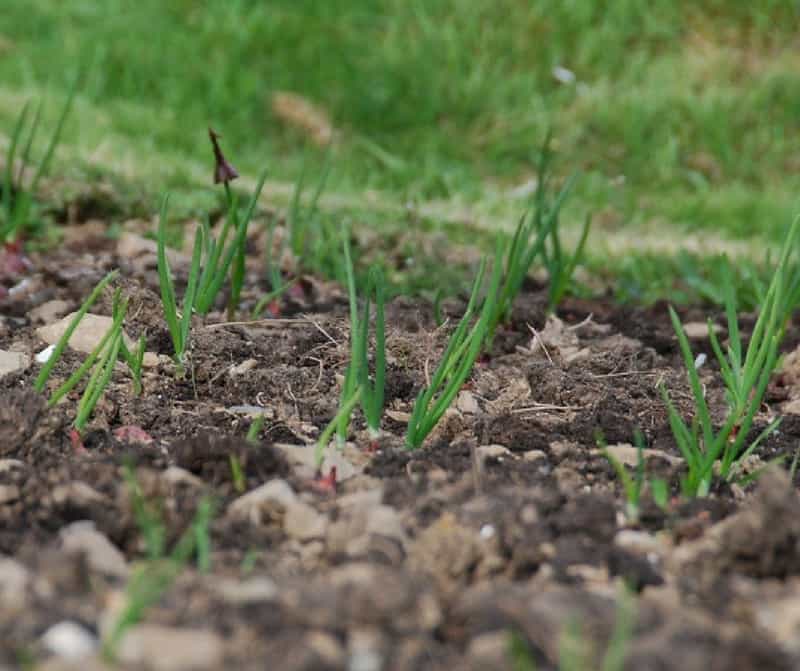
Bolting onions can be a problem, particularly if they are planted too close together or even if the weather warms up quickly. The solution is quick and easy: simply cut off the flowers before they form.
Throughout the growing season, simply keep weed-free and water in dry spells.
To extend the onion season, you can also plant overwintering onions, also known as Japanese onions. We LOVE doing this: it gives us a nice fresh crop of onions very early in the spring. Overwintering onions will need to be planted in September or October and will be ready a month or two before the true summer crop.
Onion Pests And Diseases
- Onion fly is probably the most troublesome problem, but if you grow from sets, you should avoid these grubs. If you do get any problems, you could cover the bulbs until they develop a little more, and by hoeing regularly, you’ll expose the grubs for the birds to snack on.
- Onion eel-worm can distort the developing bulb, but a good crop rotation should control this. If the problem is bad grow brassicas or lettuce on the bed for several years.
- White rot is evident by a moldy growth near the neck of stored onions, it turns them soft and eventually rotten. This rotting can often be caused by forcing onion leaves over to induce maturing, so avoid letting the leaves bend over naturally before harvest. Other bacterial and fungal diseases can attack stored onions; simply discard rotten onions to protect other bulbs.
- Neck rot is a disease that kills the plant in the ground. When affected, the onion will turn yellow before dying. You cannot do much about this: just remove the affected plants and keep to a good crop rotation plan. Do not allow any allium group to be planted in the same part of the garden for at least two years.
When to harvest onions
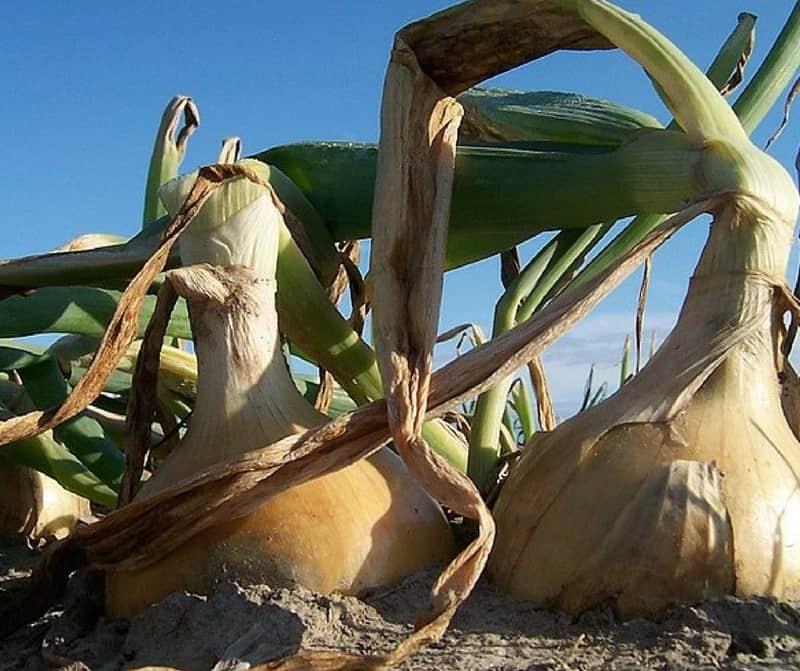
Harvesting onions can be done just weeks after planting if you want to use fresh, green onions (also known as scallions) in your salads. If you intend to harvest green onions, plant the bulbs closer (2 to 4 inches as opposed to 4 to 6 inches), harvest every other onion to use in spring salads, and leave the rest.
If you want to harvest full-grown onions, do it in mid to late summer. You’ll know it’s time when the leaves will start to turn brown and bend over.
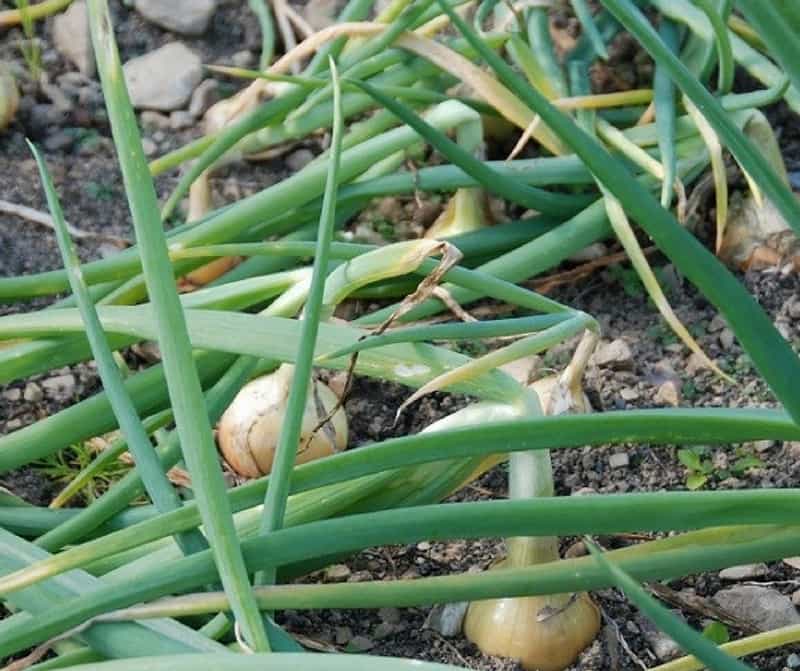
How to harvest onions
Harvesting onions is really easy. Simply lift the onions from the ground, shake the dirt off, and leave them outside on a drying rack or even on the ground.
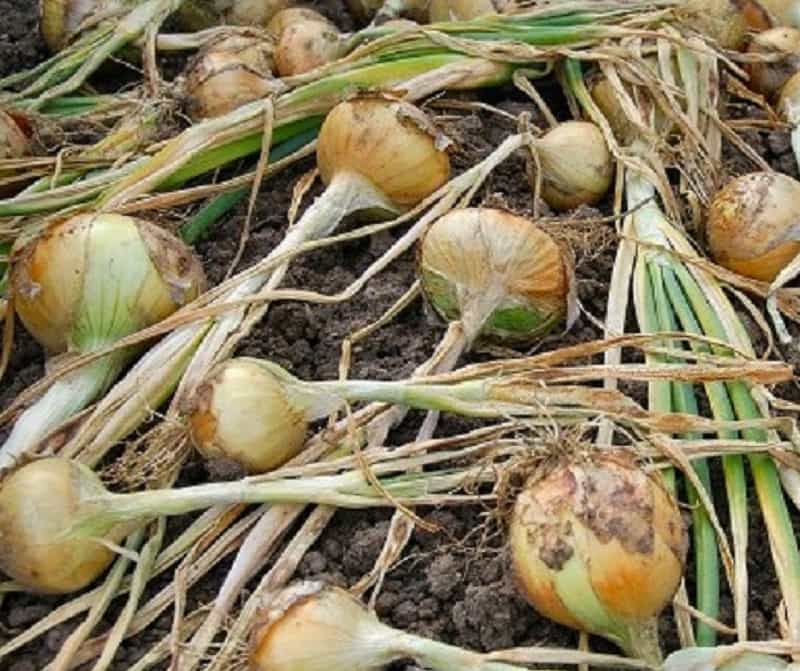
You can either remove the leaves and store them in a net bag or leave the leaves on to braid and hang.
Some gardeners will tell you to bend the leaves over to help them mature, but this can cause damage to the neck. And don’t be tempted to dry your onions in the greenhouse; if it is warm, the onions will start to cook and not keep long term.
Cooking with Onions
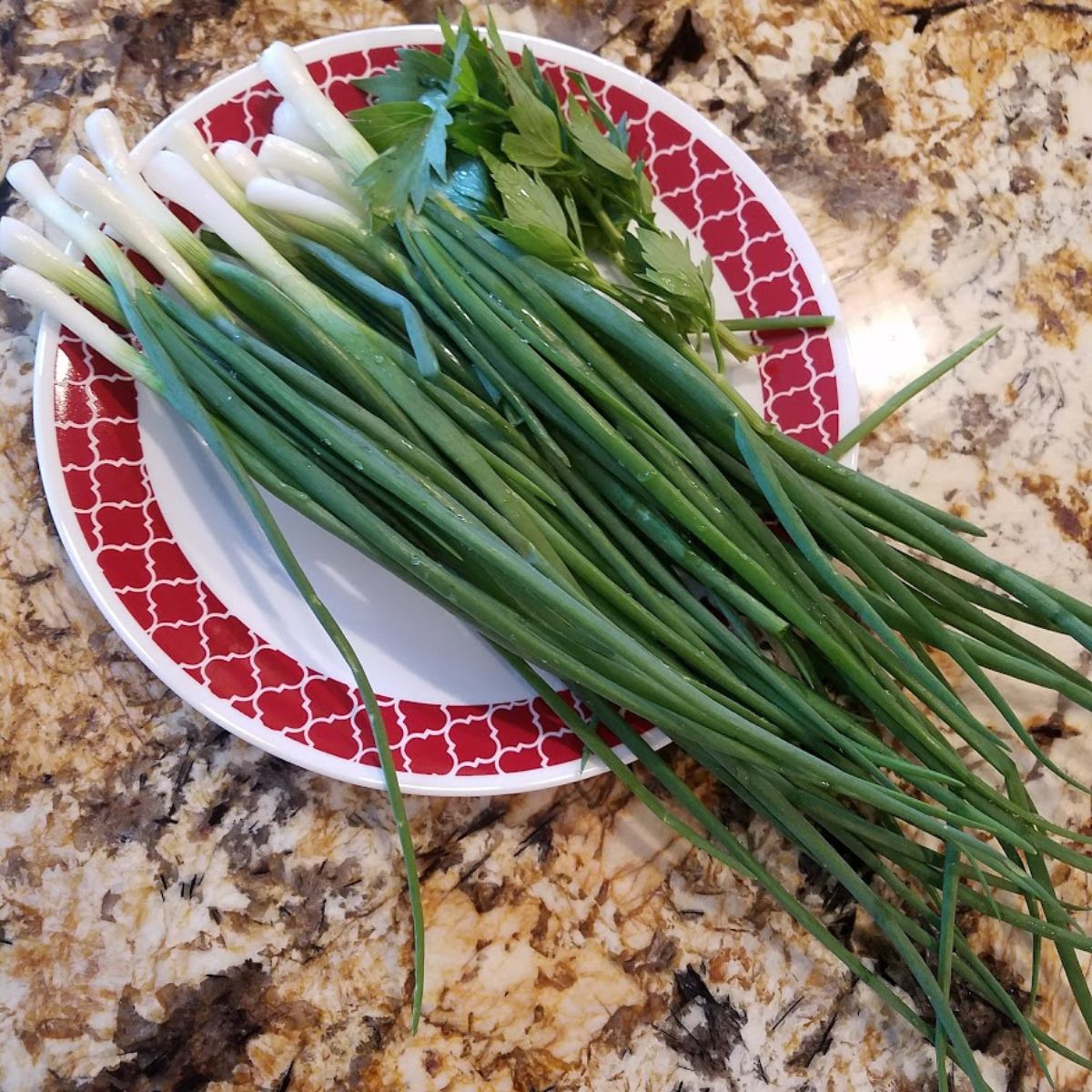
Onions are one of the staples in our home. They give great taste to many dishes, so we use them a lot!
Soups (this butternut squash soup is to die for!) and chutneys will use up a lot of onions along with another crop like tomatoes, but if you have more onions compared to other crops to use up, there are a few dishes that are purely onion based.
The classic French onion soup comes to mind right away, as does a great onion and thyme tart.
Generally, onions don’t freeze well raw. Cook them first to the transparent stage, then freeze them in small amounts in Ziploc bags.
They’re the ultimate convenience food.


Onions are a great vegetable to grow, both because they are healthy but because they give so much flavor to almost every savory dish.
Thanks for these gardening guides!
I can never get my onins to grow into a large bulb. They mainly grow as bunching onions. What am I doing wrong?
Anita, are you planting the onion sets? If so, they might be too close. Or do you grow them from seeds? If so, plant them at bigger intervals. You can also thin them out, and use them in salads. The remaining ones will grow into bulbs if they have enough room.
Thanks for the info
I cant wait
One quick question: Can onion bulb rot be prevent by sprinkling wood ashes on the soil prior to planting the onion bulb? My onions are up but now they are dying and I have no idea why. Any help would be very much appreciated.
Yvonne
Unfortunately, I don’t think you can save them. The onions were probably infected before you ever planted them. The best course of action is to remove them from your garden (including the soil around them), and burn them. Don’t use that soil in your garden anymore: dispose of it. You may want to search “onion bulb rot” online to learn more about it . I don’t have a page about it yet.