10 Thoughtful Fall Bulb Combinations for Spring Beauty
As the cooler autumn air settles in and leaves begin their colorful descent, a gardener’s mind turns not to endings, but to new beginnings. Fall is the secret season for spring success, the perfect time to plant the bulbs that will burst forth in a symphony of color after winter’s quiet slumber. Planning your spring garden now allows you to design a landscape that’s not just beautiful, but thoughtfully layered with color, texture, and successive blooms. With a little effort this autumn, you can ensure your backyard is the first to welcome spring with a spectacular floral show.
Pairing different types of bulbs is an art that transforms a simple flower bed into a dynamic, season-long display. By considering bloom times, heights, and color palettes, you can create a truly stunning garden. Let’s explore ten thoughtful combinations you can plant this fall for a beautiful spring.
1. Classic Yellow Daffodils and Purple Grape Hyacinth
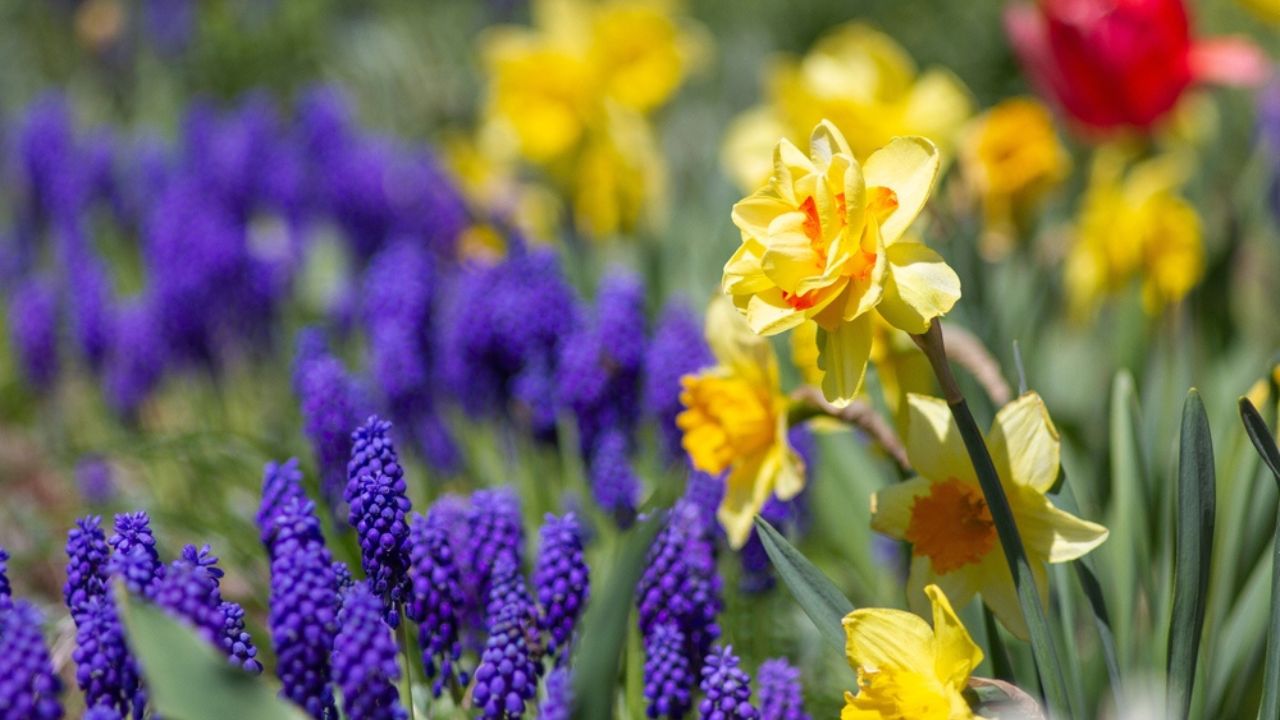
This is a timeless pairing that brings a vibrant and cheerful energy to the early spring garden. The sunny, bright faces of daffodils stand tall above a dense carpet of deep purple Grape Hyacinth (Muscari), creating a stunning visual contrast that is both simple and powerful.
This combination is a fantastic choice for gardeners of all levels because it’s incredibly reliable and low-maintenance. Both daffodils and muscari are hardy perennials that naturalize easily, meaning they will multiply and return year after year with minimal effort. They bloom around mid-spring, ensuring they create a beautiful display together. Furthermore, both are resistant to deer and rabbits, a huge plus for many backyard gardeners.
Quick Guide:
- Bloom Time: Mid-spring.
- Light: Full sun to partial shade.
- Planting: Plant daffodil bulbs about 6 inches deep and muscari bulbs about 3 inches deep. You can interplant them in the same area for a woven, natural look.
- Next Steps: After they bloom, allow the foliage to die back naturally. This process feeds the bulb for next year’s flowers. Once the leaves have turned yellow and withered, you can cut them back.
2. Elegant Dark Tulips and Crisp White Daffodils
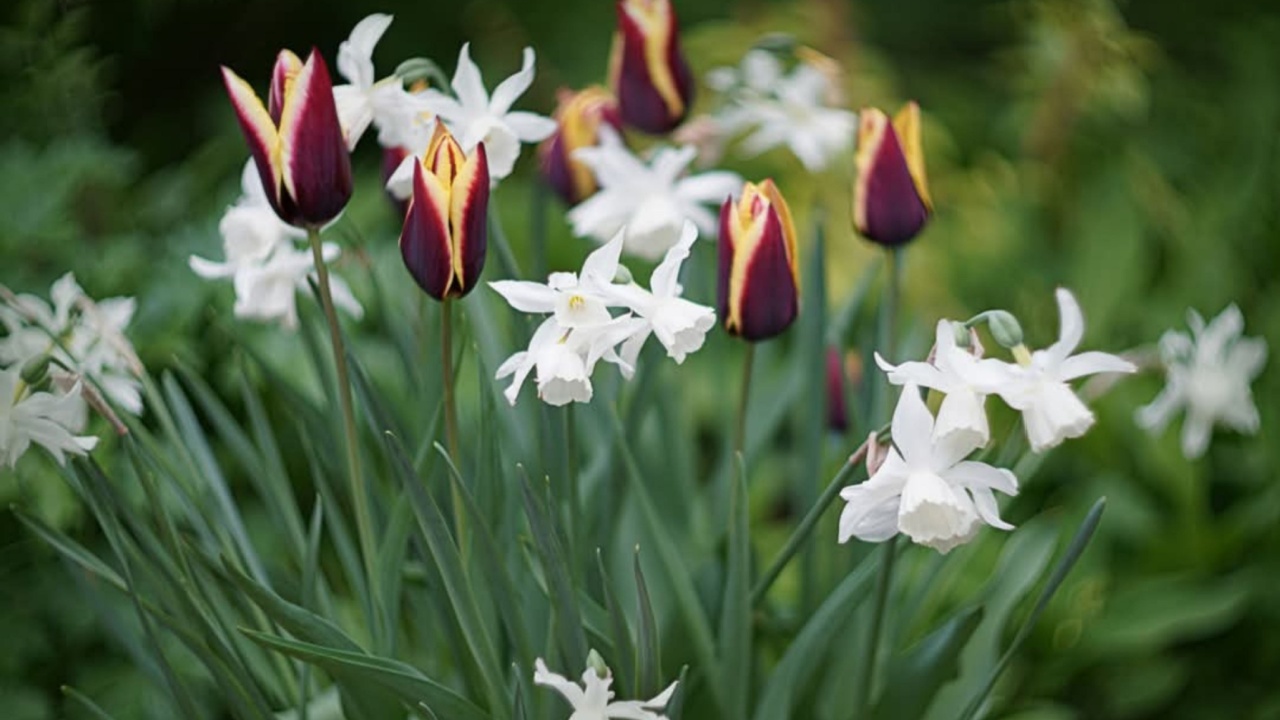
For a more refined and dramatic look, pair the deep, velvety petals of dark tulips like ‘Queen of Night’ with the bright, ruffled elegance of white daffodils. This high-contrast combination creates a sophisticated display that is both modern and timeless. The dark tulips provide a moody backdrop that makes the white daffodils appear even more luminous.
The beauty of this pairing lies in its elegant simplicity and the opportunity to play with bloom times. Daffodils typically bloom in mid-spring. By choosing a late-blooming tulip variety, you can extend your garden’s interest. The daffodils will provide early color, and as they begin to fade, the tulips will take center stage, with a beautiful overlap of blooms.
Quick Guide:
- Bloom Time: Mid to late spring.
- Light: Full sun.
- Planting: Plant both tulips and daffodils about 6-8 inches deep. Consider planting in drifts or clusters for a more natural appearance.
- Next Steps: Tulips are not always as reliably perennial as daffodils. For the best chance of them returning, plant them deep and choose varieties known for perennializing, such as Darwin Hybrids.
3. Romantic Peony-Flowered Tulips and Hyacinths
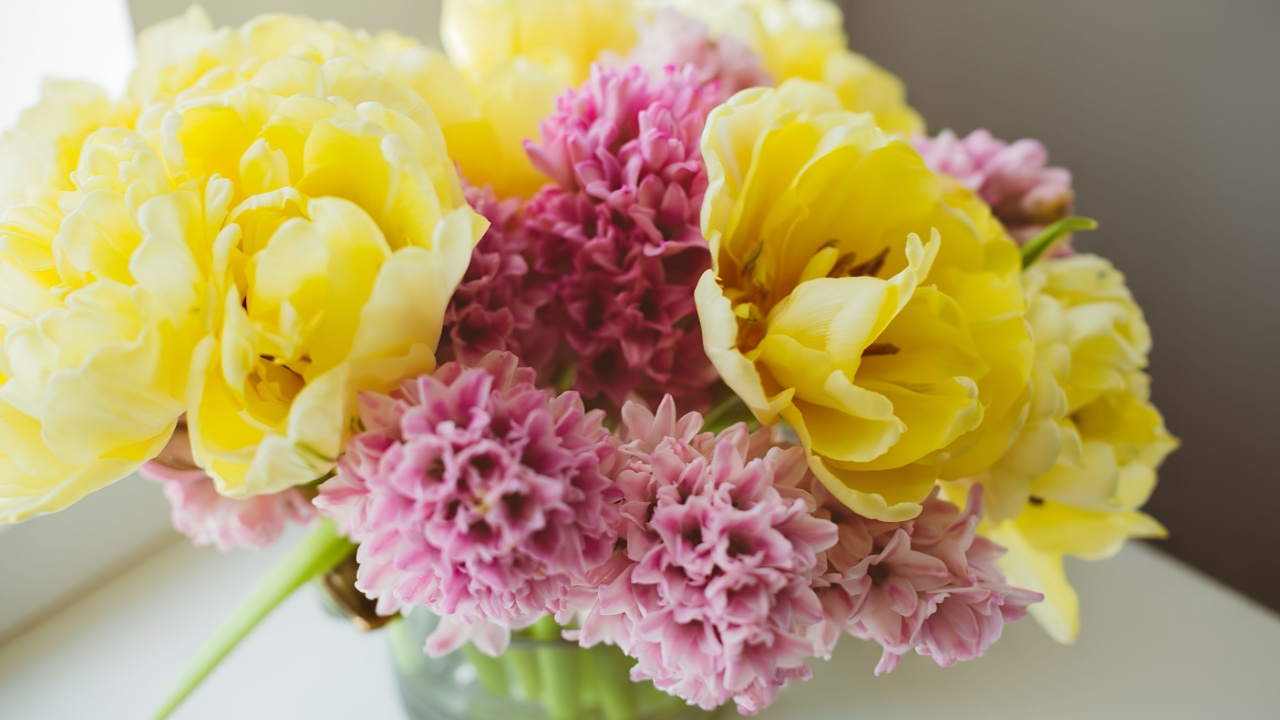
Create a lush, romantic, and fragrant garden with the combination of Double Late Tulips (often called Peony-flowered tulips) and classic Hyacinths. The full, ruffled blooms of tulips like ‘Angelique’ or ‘Mount Tacoma’ pair beautifully with the dense, fragrant spires of pink or purple hyacinths. This duo offers a feast for the senses with its rich textures and sweet perfume.
This combination is perfect for creating a cottage-garden feel. The hyacinths bloom in mid-spring, filling the air with their iconic scent. As they reach their peak, the late-blooming double tulips begin to open, ensuring a seamless transition of color and form. The similar heights create a full, dense look in borders or containers.
Quick Guide:
- Bloom Time: Mid to late spring.
- Light: Full sun.
- Planting: Plant hyacinth bulbs about 6 inches deep and tulip bulbs 6-8 inches deep. Plant them in groups to maximize their visual and aromatic impact.
- Next Steps: Hyacinths can become less vigorous over a few years. Be prepared to add new bulbs every few falls to keep your display looking full and vibrant.
4. Bold Red Tulips and Blue Muscari River
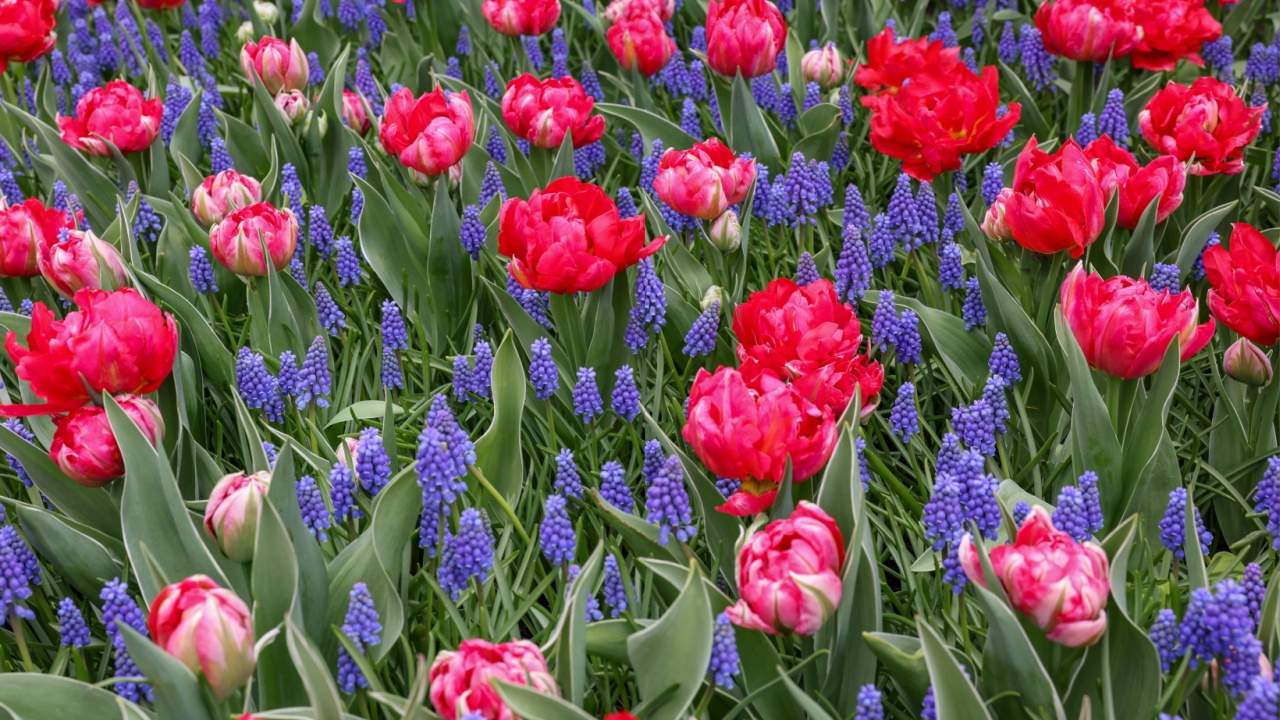
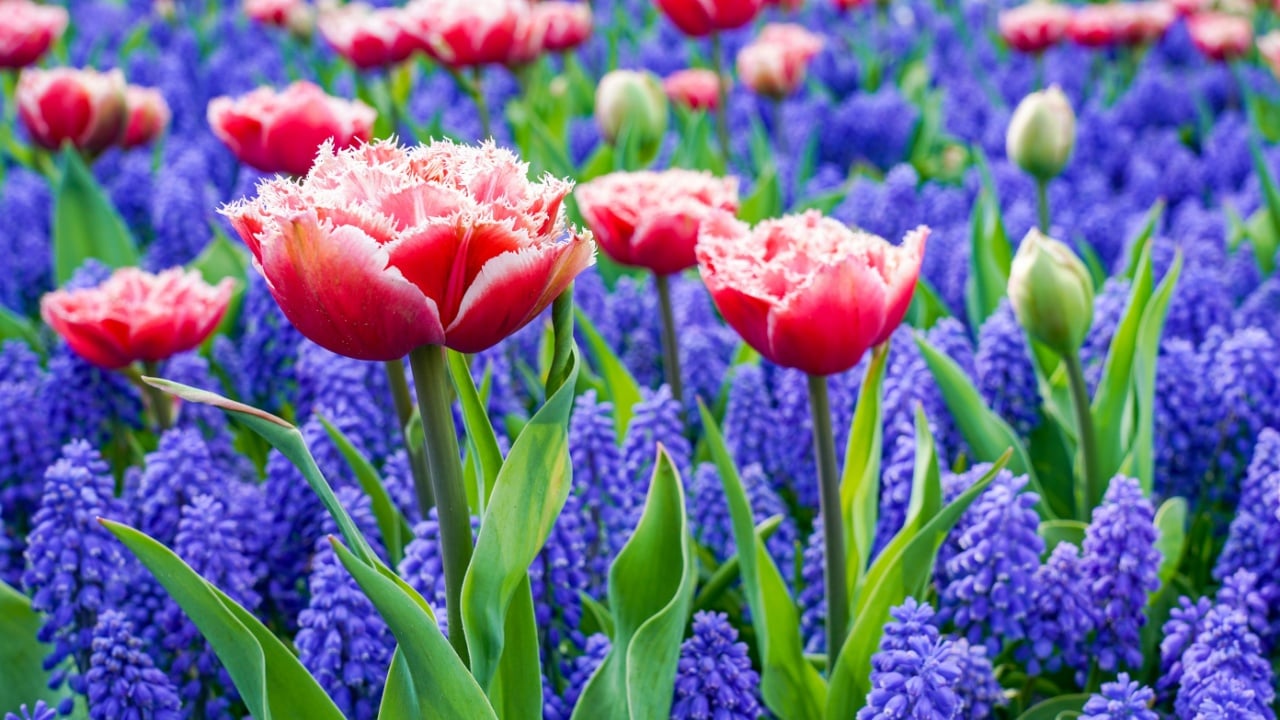
Make a powerful statement with the electric combination of brilliant red tulips and a river of blue Grape Hyacinth (Muscari). The cool, deep blue of the muscari provides the perfect canvas for the fiery red of classic tulips, like the ‘Red Oxford’ Darwin Hybrid. This creates a color-blocked look that is energetic and impossible to ignore.
This is an excellent option for creating formal-looking borders or eye-catching focal points. The low-growing muscari forms a dense mat of color that perfectly fills the space around the base of the taller tulips. Both enjoy similar growing conditions and bloom times, making them easy partners for a mid-spring show.
Quick Guide:
- Bloom Time: Mid-spring.
- Light: Full sun.
- Planting: For the “river” effect, plant a dense, winding swath of muscari bulbs (about 3 inches deep). Then, plant your tulip bulbs (6-8 inches deep) in clusters within or alongside the muscari.
- Next Steps: Remember to let the foliage of both plants die back completely to nourish the bulbs for the following season.
5. Architectural Alliums and Graceful White Tulips

Bridge the gap between spring and summer with this striking combination. The giant, spherical flower heads of Alliums like ‘Globemaster’ or ‘Purple Sensation’ create a whimsical, sculptural element that contrasts beautifully with the classic, cup-shaped elegance of white tulips. This pairing adds height, structure, and a touch of modern drama.
This is a fantastic way to extend your garden’s bloom season. Choose a mid to late-season tulip. As the tulips start their display, the alliums will be sending up their tall stalks, bursting into bloom just as the tulips begin to fade. Alliums are also deer and rodent-resistant, and their foliage dies back discreetly before the main flower show, keeping the garden tidy.
Quick Guide:
- Bloom Time: Late spring to early summer.
- Light: Full sun.
- Planting: Plant allium bulbs about 6-8 inches deep, and tulip bulbs at a similar depth. Give the large alliums some space to stand out.
- Next Steps: The dried seed heads of alliums can be left in the garden for continued structural interest well into the summer.
6. Sunny Crown Imperials and Ruffled Daffodils
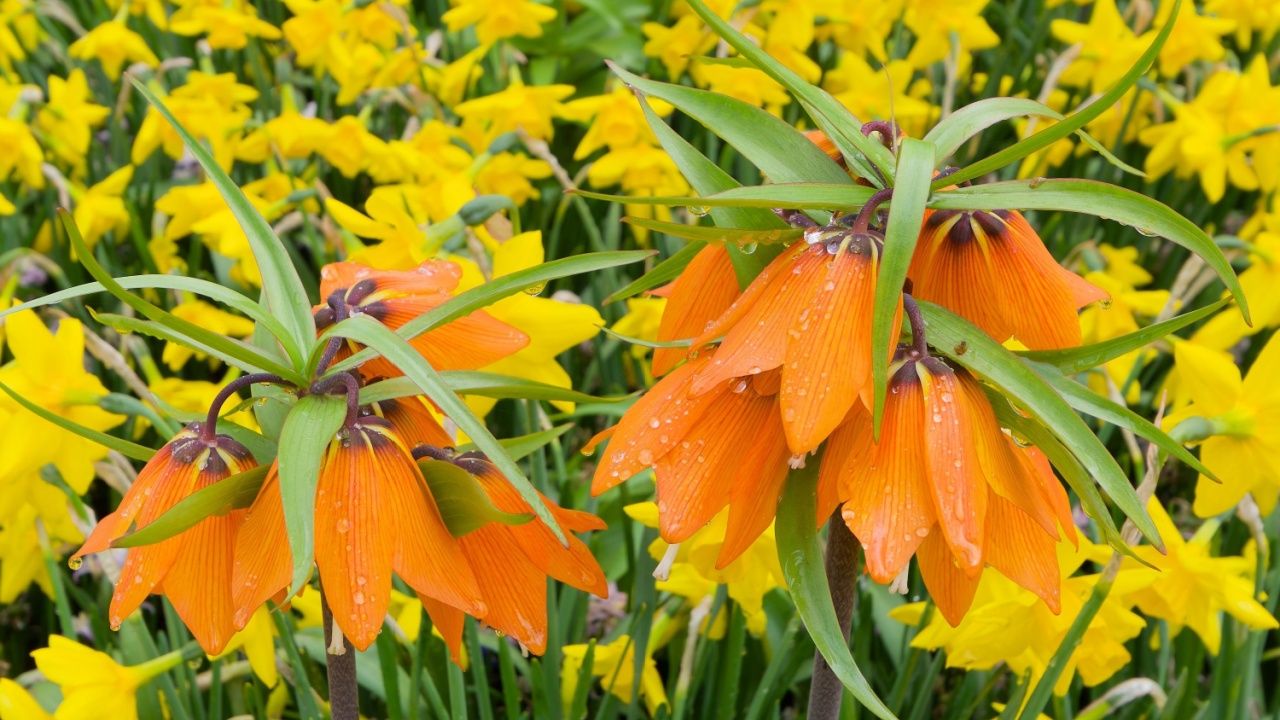
Elevate your garden with the unique and majestic Crown Imperial (Fritillaria imperialis). Their tall stalks topped with a ring of bell-shaped flowers and a tuft of spiky leaves create a truly tropical and impressive look. Pairing them with a sea of cheerful, ruffled double daffodils in shades of yellow and white creates a sunny and textural masterpiece.
This combination is all about creating a “wow” factor. The Crown Imperials add a vertical, exotic element that stands out from more traditional spring bulbs. They are also known for having a scent that deters squirrels and other rodents, offering some protection to neighboring bulbs. The double daffodils provide a soft, full base layer that complements the dramatic height of the fritillaria.
Quick Guide:
- Bloom Time: Mid-spring.
- Light: Full sun to light shade.
- Planting: Plant Crown Imperial bulbs on their side, about 6 inches deep, to prevent water from collecting in the hollow top and causing rot. Plant daffodils at a similar depth.
- Next Steps: Crown Imperials need well-drained soil to thrive. If you have heavy clay, amend the planting hole with sand or fine grit.
7. A Meadow of Blue Camassia and White Daffodils
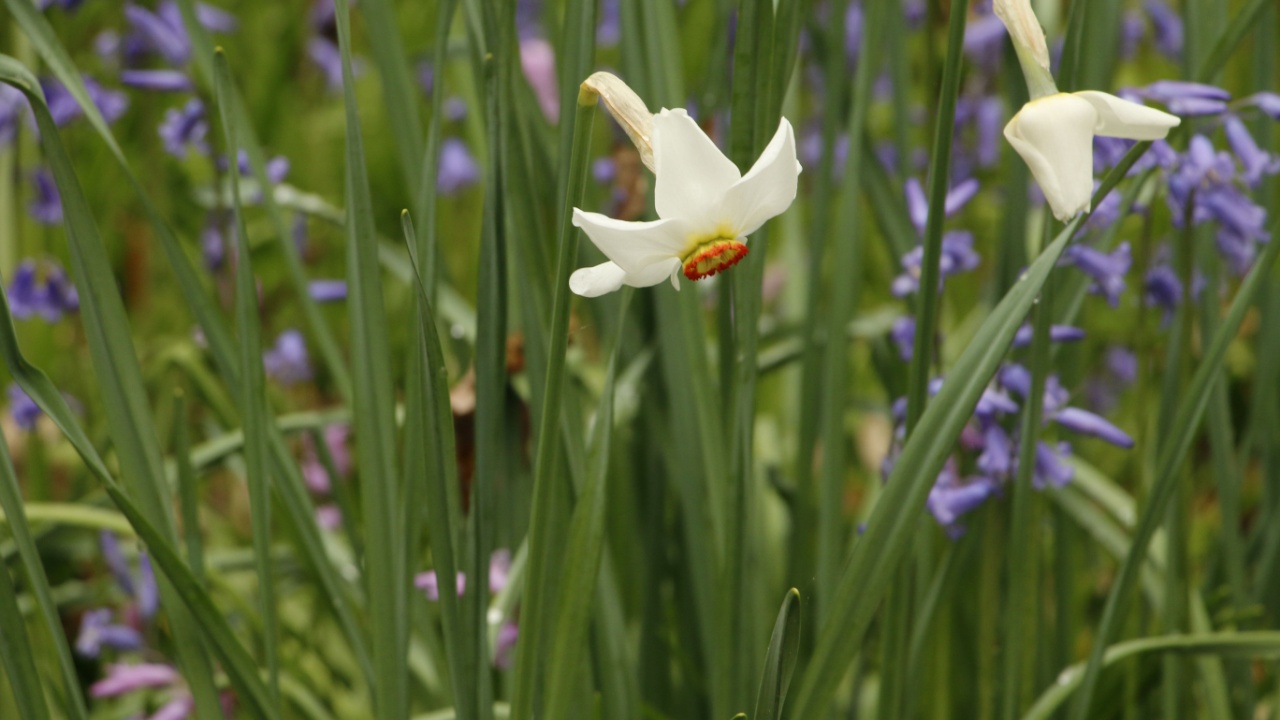
For a natural, wildflower meadow feel, combine the starry, spire-like blooms of Camassia with classic white daffodils. Camassia produces tall spikes of star-shaped blue flowers, creating a cool and calming effect. When woven through drifts of crisp white daffodils, the result is a delicate and serene late-spring display.
This is an excellent choice for naturalizing in a larger area or creating a low-maintenance border that gets more beautiful each year. The bloom times overlap perfectly; the daffodils will be in full glory as the camassia begins to open, extending the show. Both bulbs are reliable perennials that will happily spread over time.
Quick Guide:
- Bloom Time: Late spring.
- Light: Full sun to partial shade. Camassia is more tolerant of moist soils than many other bulbs.
- Planting: Plant both types of bulbs about 5-6 inches deep, scattering them for a random, meadow-like effect.
- Next Steps: This combination is perfect for planting around later-emerging perennials like hostas or daylilies, whose foliage will hide the fading bulb leaves.
8. Contrasting Orange Tulips and Blue Hyacinths
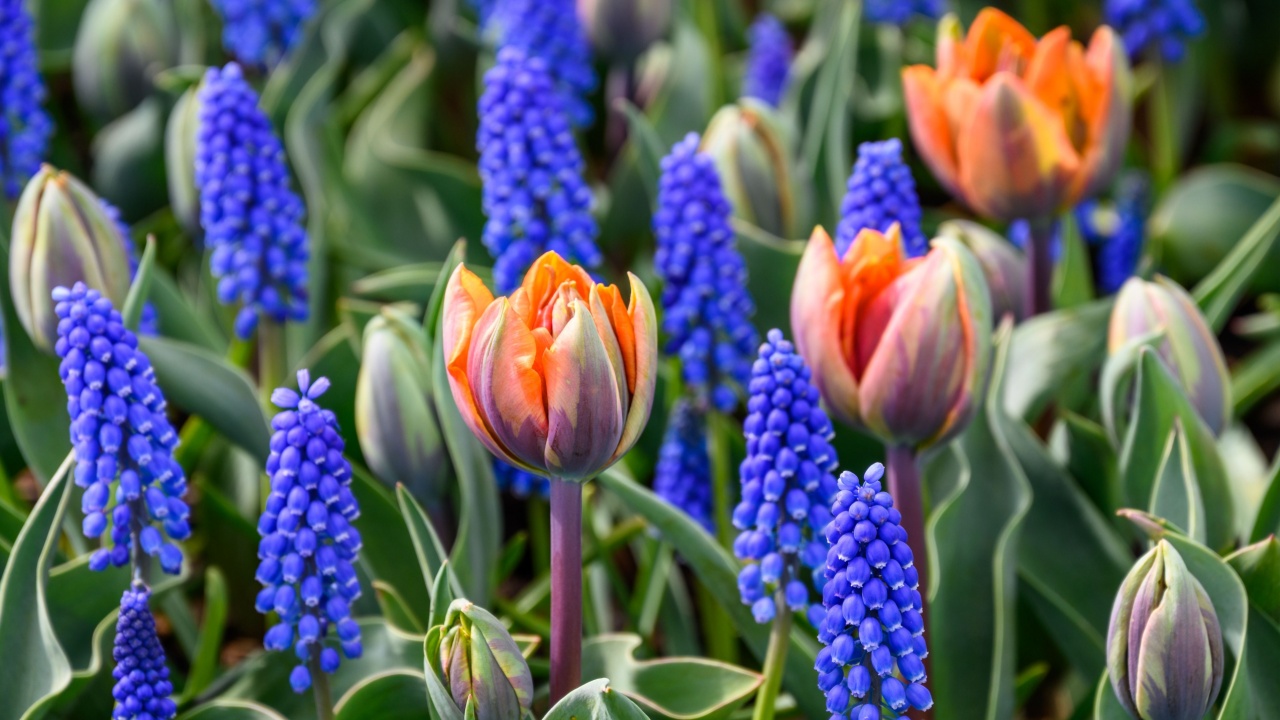
Create a dynamic and vibrant display by pairing the complementary colors of bold orange tulips and fragrant blue hyacinths. The warm, fiery energy of the orange tulips is perfectly balanced by the cool, calming tones of the blue hyacinths. This pairing provides a stunning contrast in both color and form, the tall, single stems of the tulips versus the dense, stocky flower spikes of the hyacinths.
This is a great option for gardeners who love strong, saturated colors. It works wonderfully in containers, window boxes, or as a striking border. The hyacinths will provide a wave of early to mid-spring fragrance and color, followed closely by the taller tulips, which will carry the display into the later part of the season.
Quick Guide:
- Bloom Time: Mid-spring.
- Light: Full sun.
- Planting: Plant hyacinths about 6 inches deep and tulips 6-8 inches deep. You can plant them in distinct blocks of color or mix them together for a more blended look.
- Next Steps: To get this look year after year, plan on adding a few new bulbs each fall, as both tulips and hyacinths can lose some of their vigor over time.
9. Harmonious Allium Layers in Purple and White
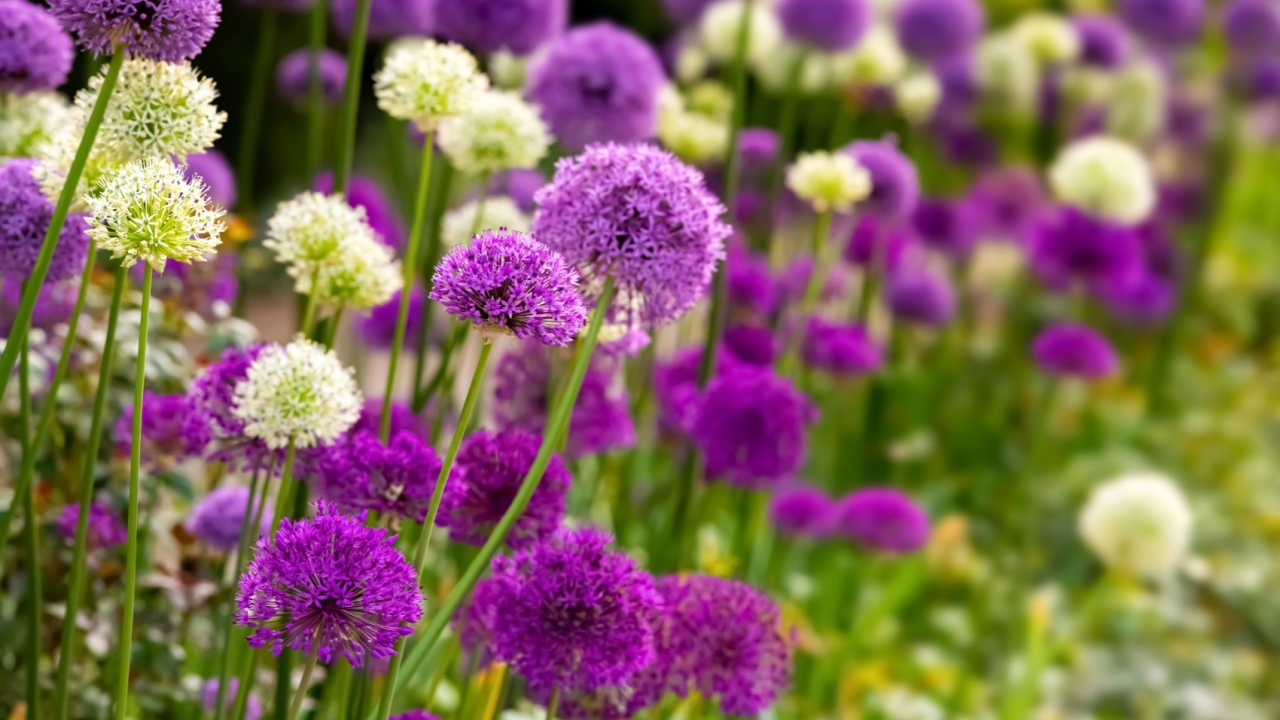
Instead of mixing species, create a sophisticated, multi-layered look using only alliums of different varieties, heights, and colors. Combine tall, deep purple giants like ‘Ambassador’ with medium-height white varieties like ‘Mount Everest’ and shorter, drumstick alliums (Allium sphaerocephalon). This creates a stunning visual rhythm and structure.
This combination is perfect for adding architectural interest that lasts. Alliums bloom late in the spring, bridging the floral gap into early summer. By layering different types, you create a long-lasting display of spherical blooms that seem to float at different levels throughout the garden bed.
Quick Guide:
- Bloom Time: Late spring to early summer.
- Light: Full sun.
- Planting: Plant the largest bulbs 8 inches deep, medium ones 6 inches deep, and the smallest ones 4 inches deep. Plant in large groups of 10 or more for the best effect.
- Next Steps: Alliums make fantastic cut flowers. Their dried seed heads are also beautiful in arrangements or left in the garden for winter interest.
10. A Tri-Color Trio: Tulips, Daffodils, and Muscari

For a foolproof, long-lasting spring show, you can’t go wrong with the classic trio of tulips, daffodils, and grape hyacinth (muscari). This combination allows you to layer bloom times, heights, and textures for a garden that is always in flower throughout the spring season. Choose early, mid, and late-season varieties of tulips to maximize the display.
This is the ultimate combination for a vibrant, full, and evolving spring border. The muscari and early daffodils will kick things off. Mid-season daffodils and tulips will continue the show, and late-season tulips will provide a final, grand flourish. It’s a reliable, colorful, and endlessly customizable recipe for spring success.
Quick Guide:
- Bloom Time: Early to late spring.
- Light: Full sun.
- Planting: Plant the bulbs in layers, a technique sometimes called “lasagna planting.” Place the largest, latest-blooming bulbs (tulips) at the bottom (8 inches deep), cover with soil, add the next layer (daffodils, 6 inches deep), cover with soil, and finish with the smallest, earliest bulbs (muscari, 3 inches deep) on top.
- Next Steps: When designing your trio, choose a color palette. You could go for a cool mix of purples, whites, and blues, or a warm mix of reds, oranges, and yellows.
Your Next Steps to a Beautiful Spring
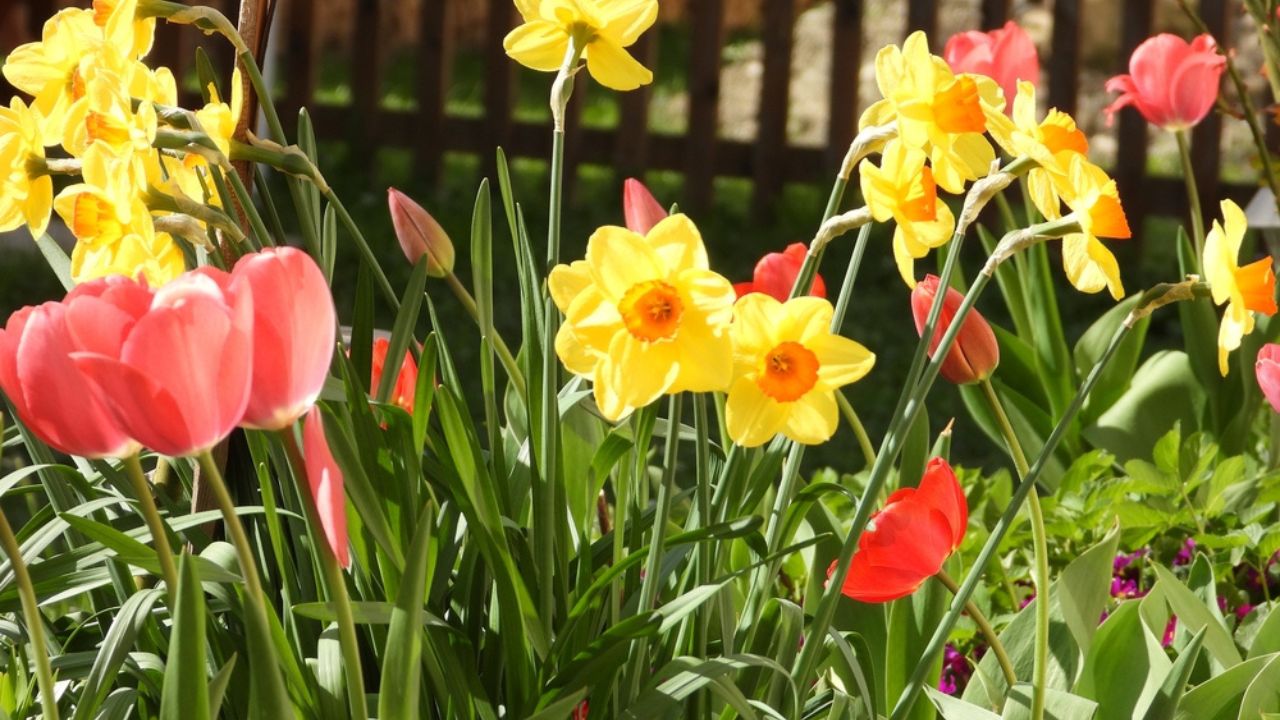
With these combinations in mind, your journey to a stunning spring garden has already begun. The next step is to take action this fall. Start by assessing your garden space, paying attention to sunlight and soil conditions. Sketch out a simple plan for your chosen combination, deciding where you want to create your colorful display.
Once you have a plan, head to your local garden center or browse online retailers to purchase your bulbs. Don’t wait too long, as the best varieties can sell out quickly. Planting bulbs is a simple and rewarding task, a small investment of time now that pays off with incredible beauty for years to come. Dig, drop, and you’re done. Then, all that’s left is to wait for spring to reveal the masterpiece you planted.