17 Invasive Plants That Aren’t Worth Buying, No Matter How Pretty They Are at the Store
When you walk through your local garden center, you’re met with rows of beautiful possibilities. It’s easy to assume that every plant offered for sale is a good choice for your yard. However, some of the most attractive and popular plants are also highly invasive, capable of escaping your garden and causing significant harm to local ecosystems.
These aggressive growers can outcompete native plants, disrupt wildlife habitats, and create long-term problems for you and your community.
Making informed choices is a powerful way to support a healthy environment. By understanding which plants pose a threat, you can cultivate a beautiful garden that works with nature, not against it.
This guide will walk you through 17 common invasive species you might find for sale, explaining the risks they carry and offering better alternatives for a thriving, responsible backyard.
1. English Ivy (Hedera helix)
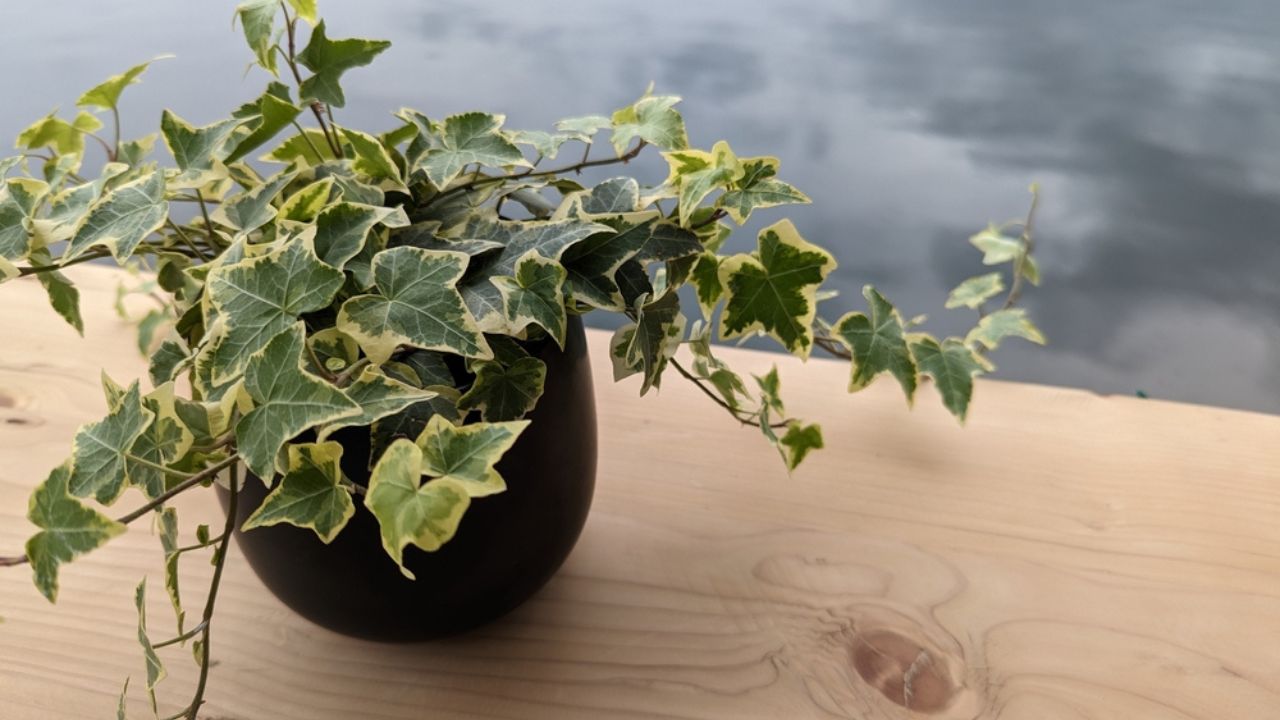
English ivy is often sold as a classic, elegant ground cover or climbing vine. Its ability to quickly cover walls, trellises, and bare ground makes it seem like an easy solution for many landscape challenges. It’s evergreen, low-maintenance, and thrives in a variety of conditions, which unfortunately is also what makes it so destructive.
This vigorous vine spreads relentlessly, forming dense mats across the forest floor that choke out native wildflowers and prevent new seedlings from growing. When it climbs trees, it blocks sunlight from reaching the host tree’s leaves, slowly starving it. The added weight also makes trees vulnerable to breaking during storms.
Why it’s invasive: Spreads aggressively through runners and seeds, creating a dense monoculture.
Impact: Smothers native ground cover, weakens and kills trees, and offers poor habitat for local wildlife.
Alternatives: Consider native vines like Virginia Creeper (Parthenocissus quinquefolia) or ground covers such as Wild Ginger (Asarum canadense).
2. Bamboo (Phyllostachys spp.)
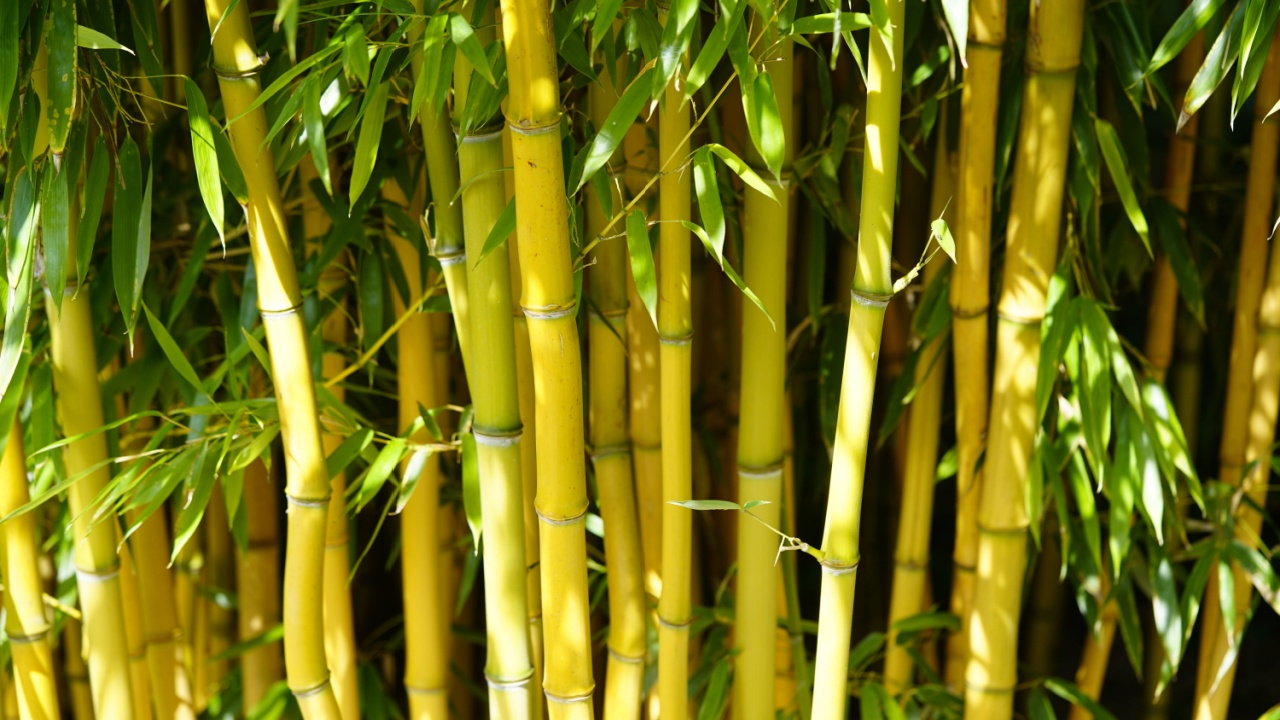
Bamboo can create a fast-growing, tropical-looking screen, making it a popular choice for privacy. However, “running” varieties of bamboo are notoriously aggressive. Their underground rhizomes can travel 20 feet or more from the parent plant, sending up new shoots in your lawn, your neighbor’s yard, and even through asphalt.
Once established, running bamboo is incredibly difficult to remove. The rhizomes form a dense, tough network just below the soil surface, and any small piece left behind can regrow. While clumping bamboos are less aggressive, running types are a maintenance nightmare waiting to happen.
Why it’s invasive: Spreads rapidly through extensive underground rhizomes that are nearly impossible to contain.
Impact: Overtakes garden beds and lawns, displaces all other plants, and can damage property foundations and pavement.
Alternatives: For a tall screen, plant Arborvitae (Thuja occidentalis) or a native clumping grass like Switchgrass (Panicum virgatum).
3. Chinese Wisteria (Wisteria sinensis)
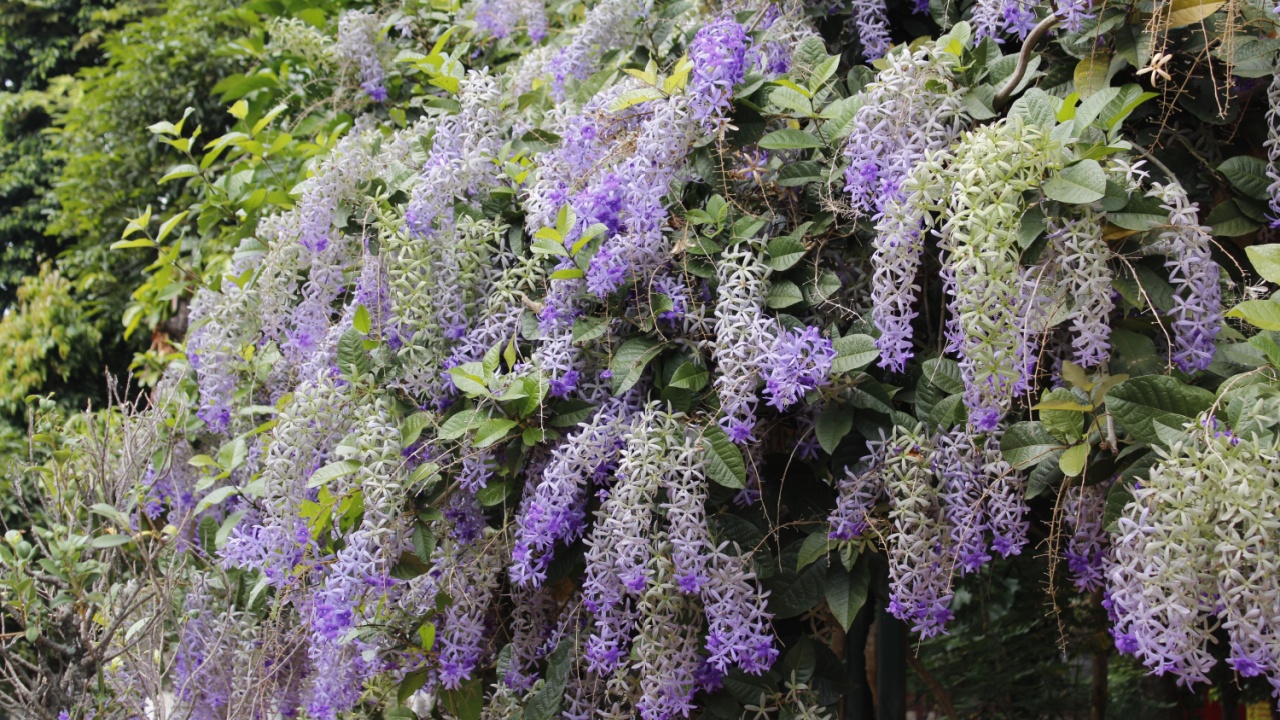
Famous for its stunning, fragrant curtains of purple flowers, Chinese wisteria is a breathtaking sight. Introduced as an ornamental vine in the early 1800s, it has since escaped cultivation and become a major problem in many parts of North America. Its powerful, woody vines can girdle and kill large, mature trees.
Wisteria grows with incredible speed and strength, twining its way up any support it can find. By killing off mature trees, it opens up the forest canopy, allowing its own seedlings to thrive in the new sunlight and further dominate the area.
Why it’s invasive: Aggressive vines strangle trees, and they spread through both vigorous runners and seeds.
Impact: Kills mature trees, displaces native vines and shrubs, and alters forest structure.
Alternatives: Plant the native American Wisteria (Wisteria frutescens), which is less aggressive and just as beautiful.
4. Japanese Barberry (Berberis thunbergii)
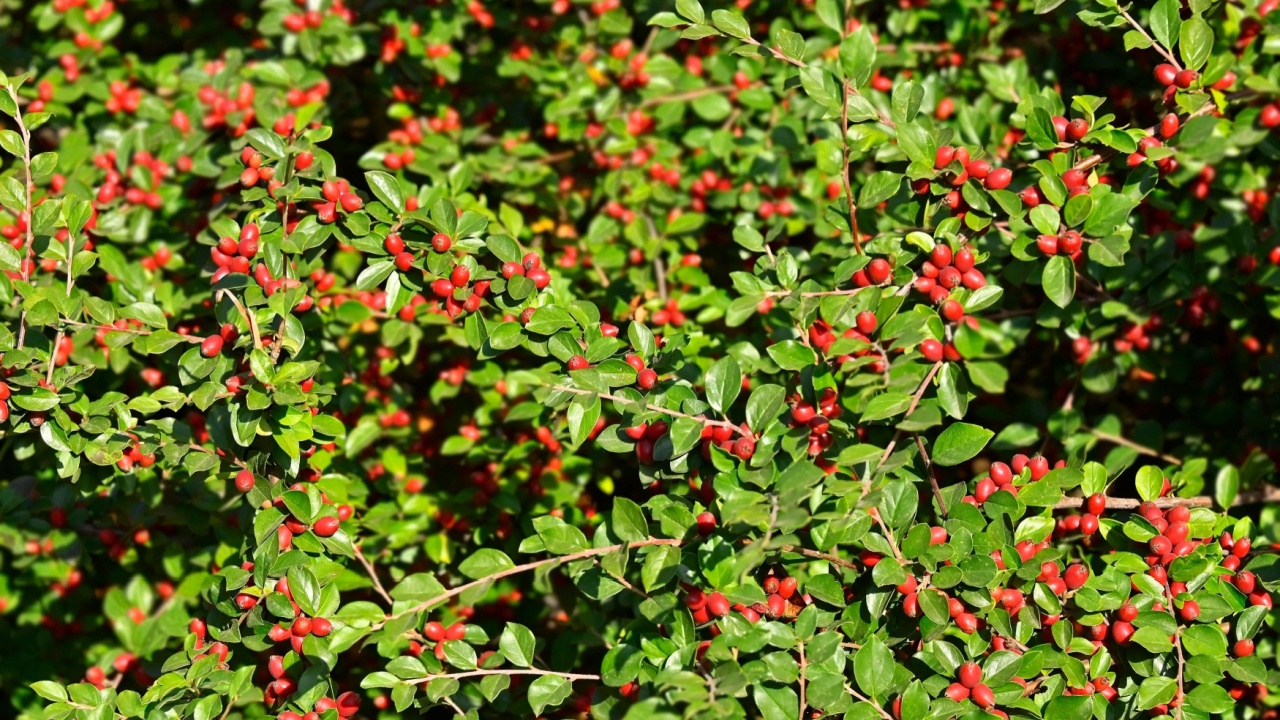
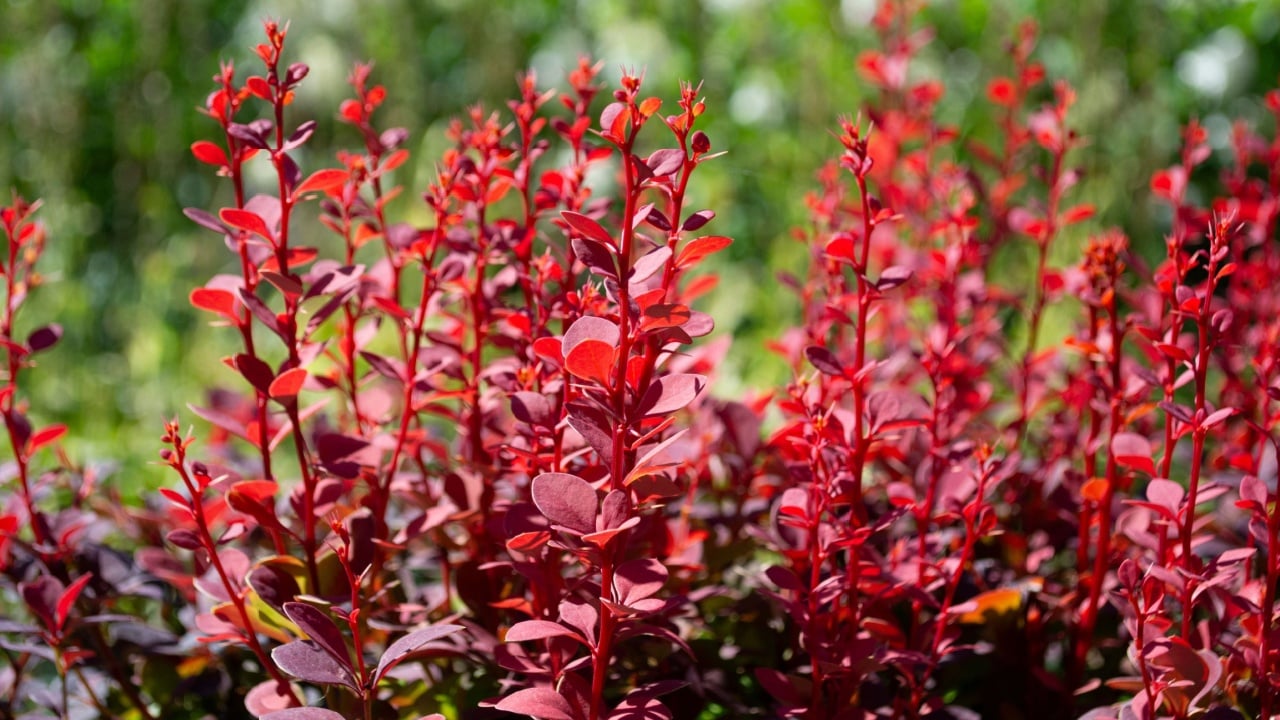
Japanese barberry is a common landscaping shrub prized for its deer resistance, drought tolerance, and colorful foliage that ranges from deep red to bright green. However, it easily escapes gardens and forms dense, thorny thickets in woodlands and pastures.
These thickets displace native plants that wildlife depend on for food and shelter. Research has also shown that barberry infestations can alter soil chemistry and create a humid microclimate ideal for ticks, potentially increasing the risk of Lyme disease.
Why it’s invasive: Forms dense stands that outcompete native flora. It is not browsed by deer, giving it a competitive advantage.
Impact: Reduces native plant diversity, alters soil pH, and may create favorable habitats for ticks.
Alternatives: Choose Ninebark (Physocarpus opulifolius) for interesting foliage or Winterberry (Ilex verticillata) for seasonal color.
5. Winged Burning Bush (Euonymus alatus)
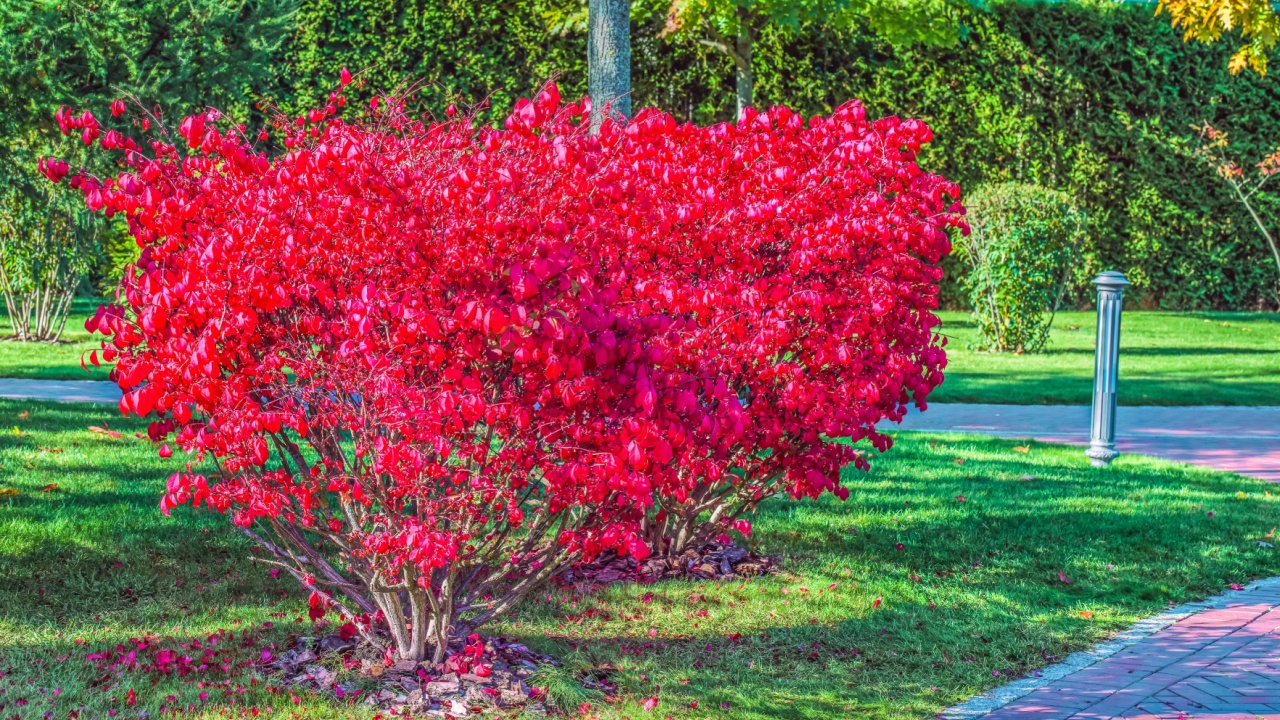
Known for its brilliant red foliage in the fall, the winged burning bush is a staple in many suburban landscapes. Unfortunately, birds eat its berries and distribute the seeds far and wide, allowing it to invade forests, fields, and coastal areas.
forms dense thickets that shade out native plants, preventing the growth of herbaceous species and young trees. While a non-invasive, compact variety exists, the original “winged” type is highly problematic. You can identify the invasive version by the corky “wings” on its stems.
Why it’s invasive: Seeds are widely dispersed by birds, allowing it to establish dense colonies in natural habitats.
Impact: Displaces native woody and herbaceous plants, creating a monoculture that offers little value to local ecosystems.
Alternatives: For stunning fall color, plant a native shrub like a Red Chokeberry (Aronia arbutifolia) or Highbush Blueberry (Vaccinium corymbosum).
6. Common Periwinkle (Vinca minor)
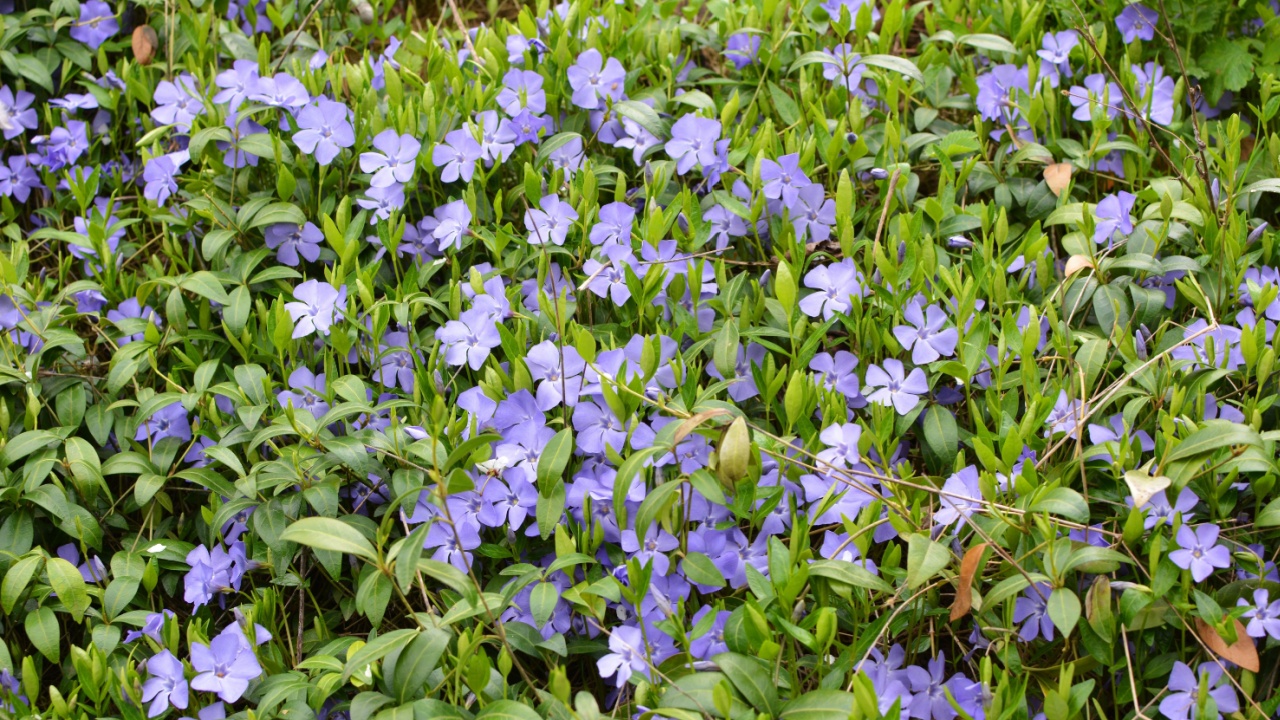
Also known as vinca or myrtle, this trailing plant is a popular ground cover for shady spots due to its glossy evergreen leaves and pretty purple-blue flowers. It grows so well, in fact, that it easily escapes garden boundaries and carpets forest floors.
Like English ivy, periwinkle forms extensive mats that smother native wildflowers and other low-growing plants. Its dense growth prevents sunlight from reaching the soil, inhibiting the germination of native seeds and disrupting the delicate forest ecosystem.
Why it’s invasive: Spreads vigorously via trailing stems that root wherever they touch the ground, forming impenetrable mats.
Impact: Displaces native herbaceous plants and disrupts forest floor ecosystems.
Alternatives: Try native ground covers like Foamflower (Tiarella cordifolia) or Bunchberry (Cornus canadensis) for shady areas.
7. Japanese Honeysuckle (Lonicera japonica)
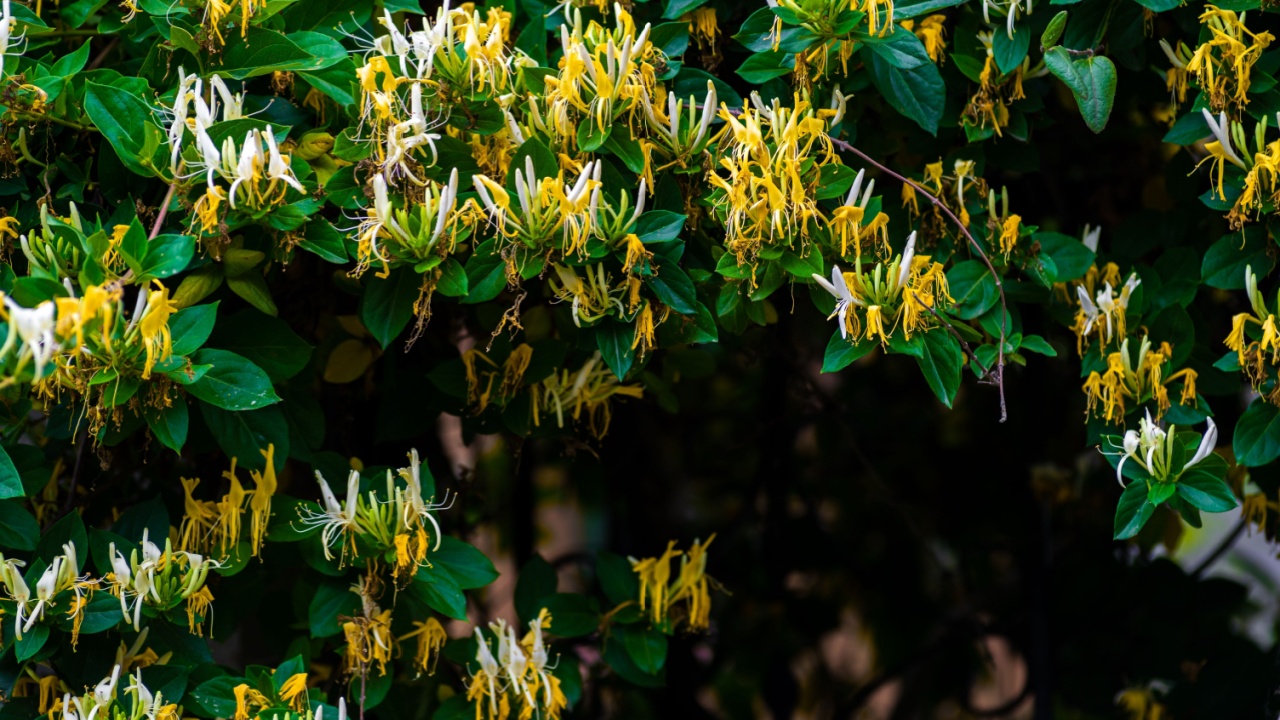
The sweet scent of Japanese honeysuckle is a familiar fragrance, but this vine is a destructive invader. It grows in a tangled mass, climbing over shrubs and young trees, smothering them under its weight and blocking access to sunlight.
Its vines can also girdle trunks and stems, cutting off the flow of water and nutrients. Because it is semi-evergreen, it gets a head start in the spring, leafing out before native plants and gaining a competitive advantage for resources.
Why it’s invasive: Grows in dense mats and climbs over other vegetation, killing plants by blocking sunlight and girdling trunks.
Impact: Kills shrubs and small trees, outcompetes native plants for light and nutrients, and has few natural enemies to control its spread.
Alternatives: Plant the native Trumpet Honeysuckle (Lonicera sempervirens), which attracts hummingbirds and is not invasive.
8. Kudzu (Pueraria montana)
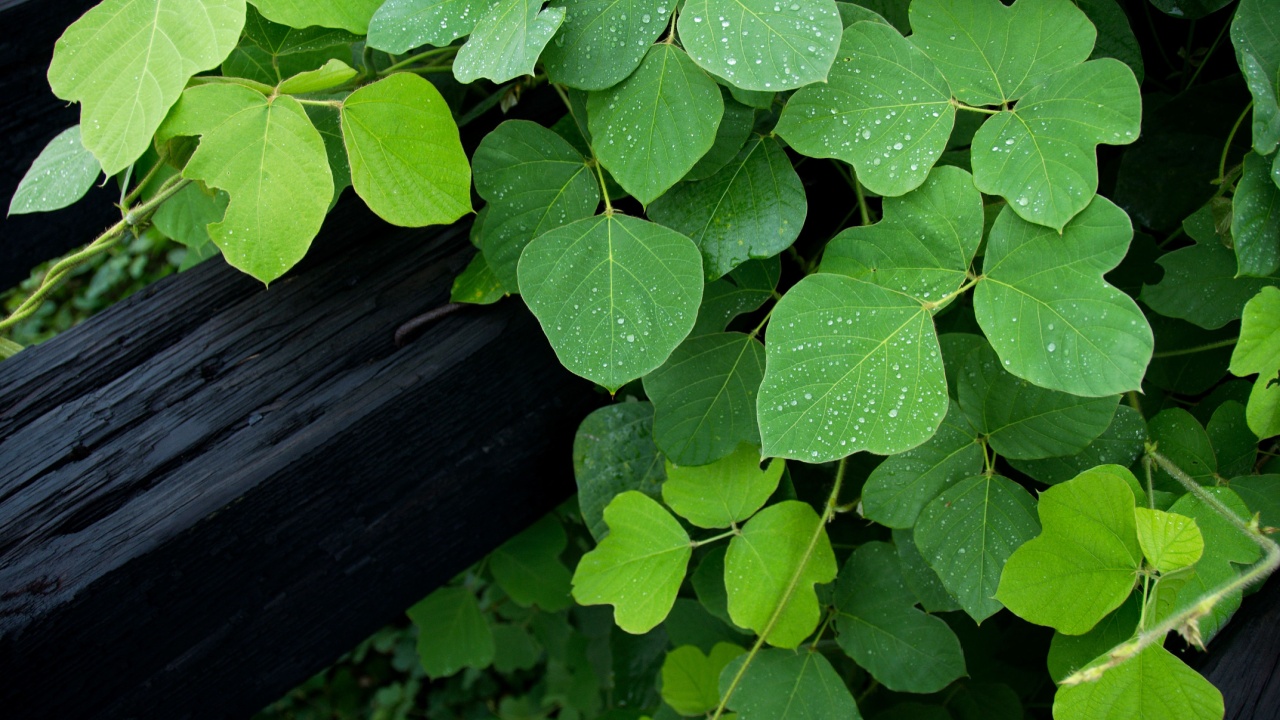
Known as “the vine that ate the South,” kudzu is one of the most infamous invasive plants in the United States. It can grow up to a foot per day, blanketing trees, buildings, and anything else in its path with a thick wall of leaves.
Kudzu kills other plants simply by smothering them and blocking all sunlight. Its immense weight can also break branches and topple entire trees. Despite its destructive nature, it is sometimes still sold by nurseries, though its reputation is so notorious that this is becoming less common.
Why it’s invasive: Extremely fast growth rate allows it to smother entire landscapes, including mature forests.
Impact: Kills trees and other vegetation by completely blocking sunlight, leading to total habitat destruction.
Alternatives: There is no suitable alternative that mimics kudzu’s growth, but for a fast-growing native vine, try Virginia Creeper (Parthenocissus quinquefolia).
9. Autumn Olive (Elaeagnus umbellata)
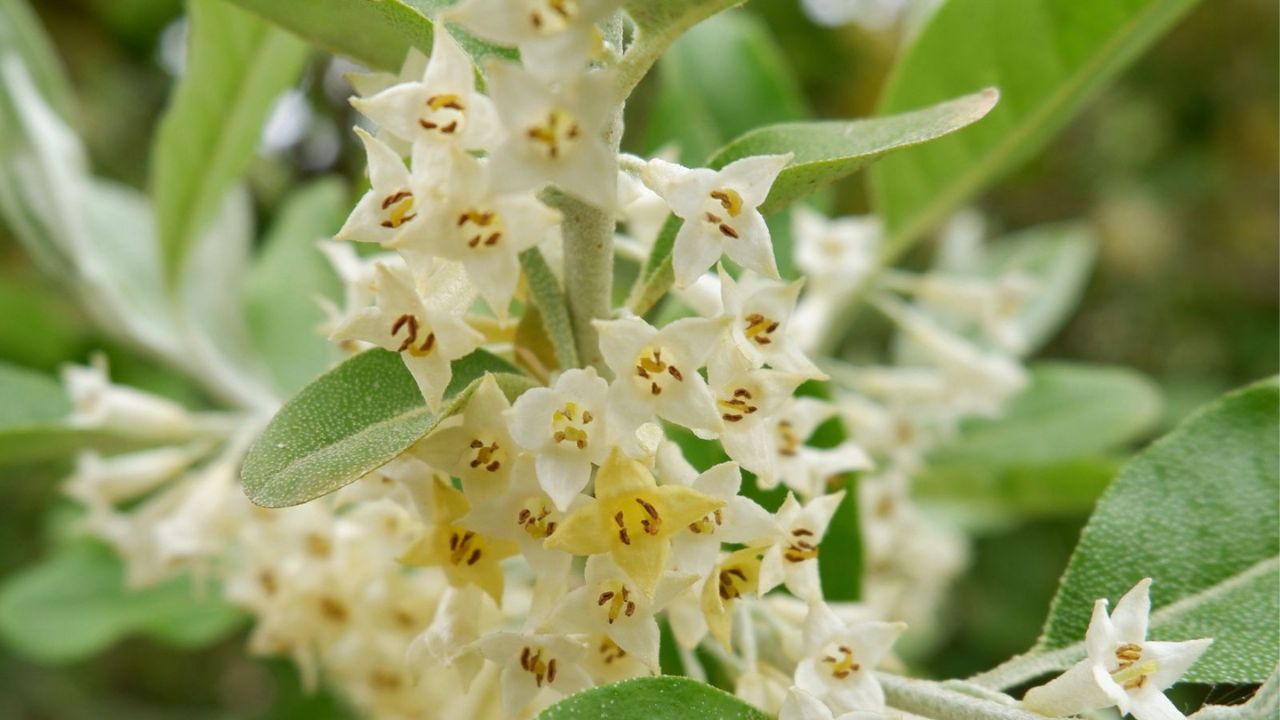
Autumn olive was once promoted for erosion control and wildlife habitat. We now know it is a highly aggressive invader. This large shrub produces a massive amount of seeds up to 200,000 per year, which are spread by birds.
It thrives in poor soils because its roots have nitrogen-fixing nodules, allowing it to outcompete native plants that require richer soil. It creates dense shade, interfering with the growth of sun-loving native species and disrupting natural succession.
Why it’s invasive: Prolific seed production and an ability to thrive in poor soil allow it to spread quickly and dominate habitats.
Impact: Outcompetes native plants, creates dense shade, and alters soil nutrient cycles.
Alternatives: Plant a native like Serviceberry (Amelanchier canadensis) or Elderberry (Sambucus canadensis), which also provide berries for wildlife.
10. Sacred Bamboo (Nandina domestica)
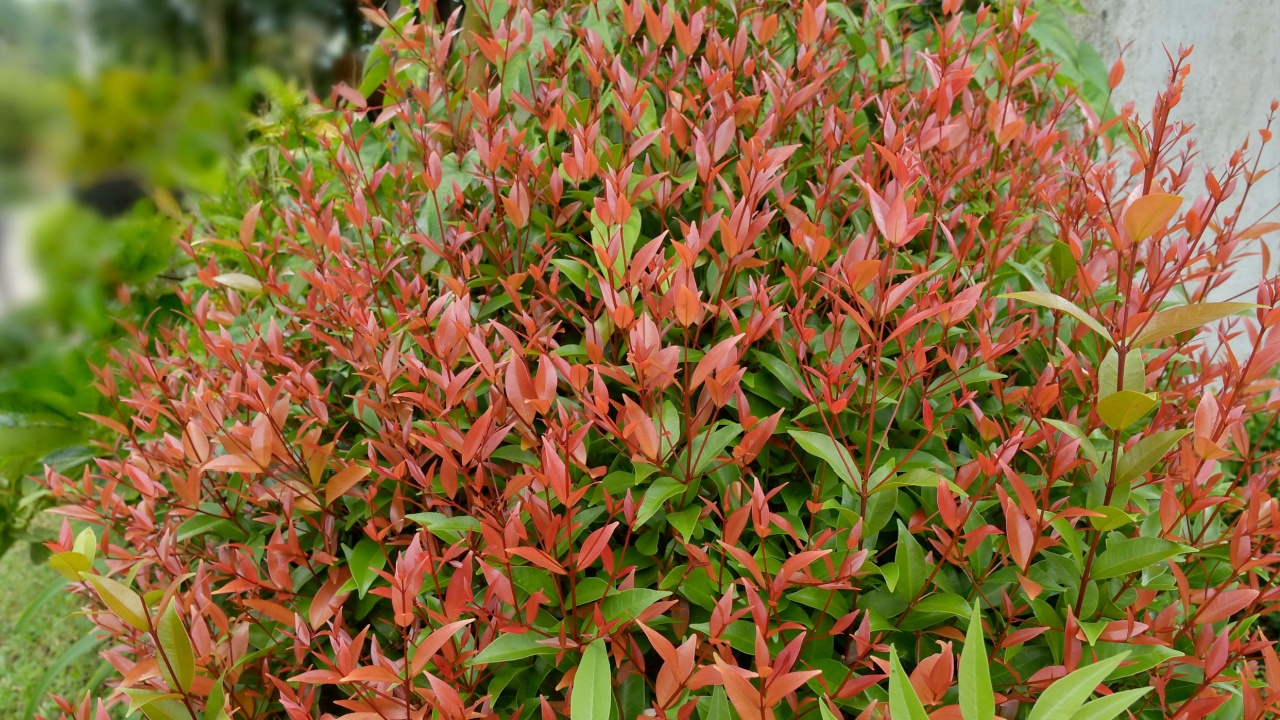
Despite its common name, sacred bamboo is not a bamboo at all but a member of the barberry family. It’s popular for its delicate, lacy foliage and bright red berries that persist through winter. However, it spreads via underground roots and seeds dispersed by birds.
Nandina can form dense colonies that displace native vegetation. Furthermore, its berries contain cyanide and can be toxic to birds, particularly Cedar Waxwings, if consumed in large quantities.
Why it’s invasive: Spreads through underground root sprouts and animal-dispersed seeds, forming dense groves.
Impact: Displaces native species, and its berries are toxic to some birds and grazing animals.
Alternatives: For fine-textured foliage and winter interest, try a native like Virginia Sweetspire (Itea virginica).
11. Callery Pear (Pyrus calleryana)
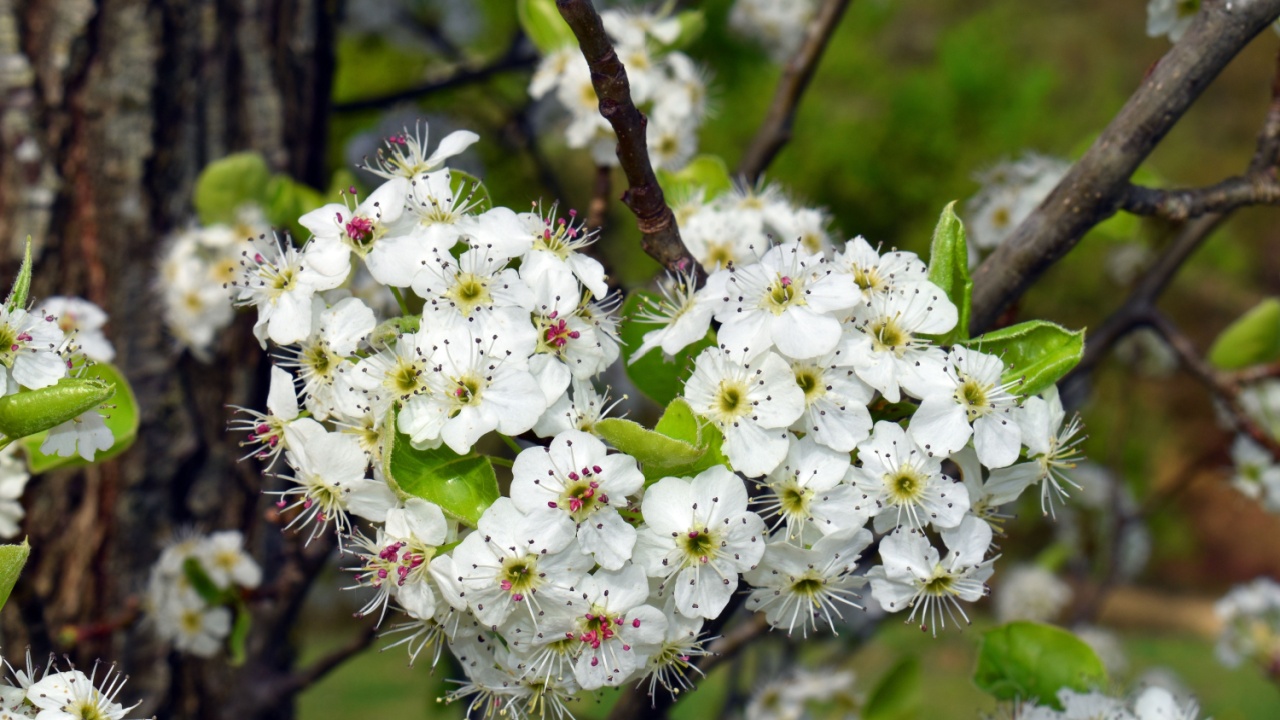
The Bradford pear, a cultivar of the Callery pear, was once a celebrated street tree for its uniform shape and profuse white spring blossoms. However, it has weak branch unions that cause it to split apart in storms. Worse, it readily cross-pollinates with other pear varieties, producing fertile seeds.
These seeds are spread by birds, leading to the growth of wild Callery pears that are thorny and form dense, impenetrable thickets along roadsides and in old fields. These thickets choke out native plants and trees.
Why it’s invasive: Cross-pollinates to produce viable seeds, which grow into thorny, aggressive trees that form dense stands.
Impact: Outcompetes native plants and trees, creating thorny thickets that are difficult to manage.
Alternatives: For a beautiful flowering tree, choose a native Dogwood (Cornus florida) or Redbud (Cercis canadensis).
12. Princess Tree (Paulownia tomentosa)
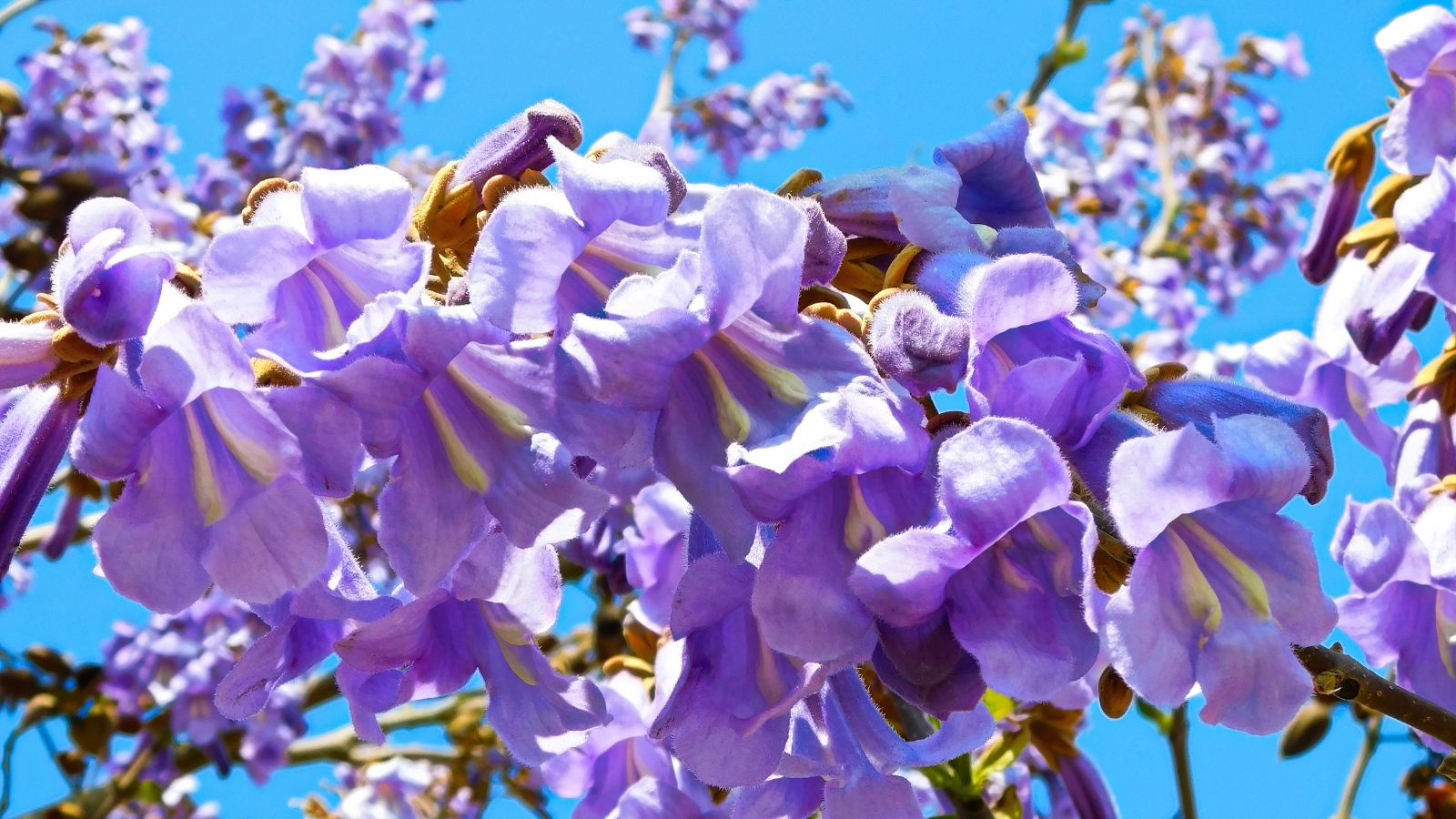
With its large, heart-shaped leaves and showy purple flowers, the princess tree is an eye-catching ornamental. However, it is an extremely aggressive and opportunistic invader that grows with astonishing speed, especially in disturbed areas.
A single tree can produce millions of seeds that are easily spread by wind and water. It is tolerant of pollution, poor soil, and even fire, as its roots can regenerate new stems after being burned. This makes it incredibly difficult to control once established.
Why it’s invasive: Grows rapidly and produces millions of lightweight seeds, allowing it to colonize disturbed areas quickly.
Impact: Outcompetes native species in forests, along streambanks, and on steep slopes.
Alternatives: The native Northern Catalpa (Catalpa speciosa) offers similarly large leaves and showy flowers without the invasive threat.
13. Winter Creeper (Euonymus fortunei)
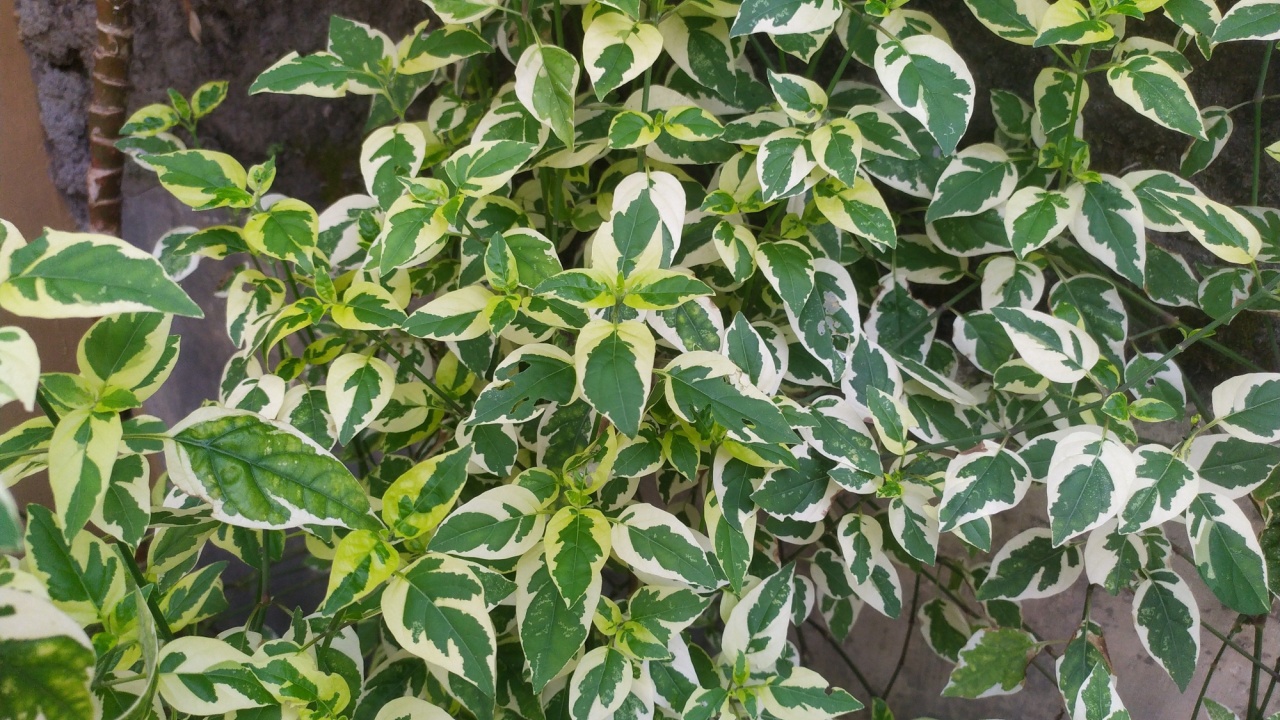
Winter creeper is an evergreen ground cover that is tolerant of a wide range of conditions. Like its cousin, the winged burning bush, it is highly invasive. It forms a dense carpet that smothers native plants and can climb and kill trees.
Its rapid growth and evergreen nature allow it to easily escape cultivation and spread into nearby forests, where it displaces native wildflowers and prevents the regeneration of trees and shrubs.
Why it’s invasive: Forms dense mats that deprive native species of space and sunlight, and it climbs and smothers trees.
Impact: Degrades forest habitats by eliminating native ground-level flora and harming mature trees.
Alternatives: Use Partridgeberry (Mitchella repens) or Pennsylvania Sedge (Carex pensylvanica) as a native ground cover.
14. Sweet Autumn Clematis (Clematis ternifolia)
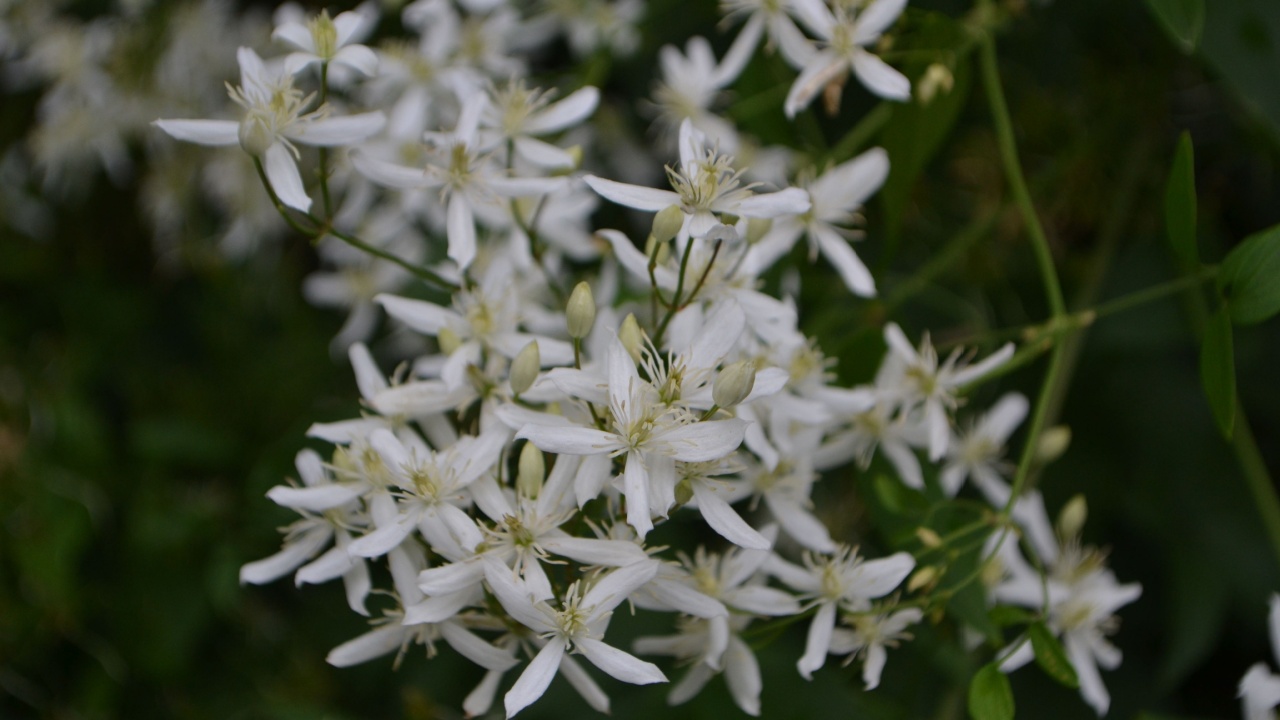
This vigorous vine is known for the cloud of fragrant white flowers it produces in late summer. It grows quickly, blanketing other vegetation from shrubs to small trees in a dense tangle of vines.
By blocking sunlight, it kills the plants it covers. It is often found invading forest edges, roadsides, and stream banks, where its abundant seeds allow it to spread and form new colonies.
Why it’s invasive: Grows vigorously over other plants, forming dense blankets that block sunlight and kill the vegetation underneath.
Impact: Smothers and kills native plants, shrubs, and small trees, particularly along forest edges.
Alternatives: Plant the native Virgin’s Bower (Clematis virginiana), which has similar flowers but is not aggressive.
15. Chinese Privet (Ligustrum sinense)
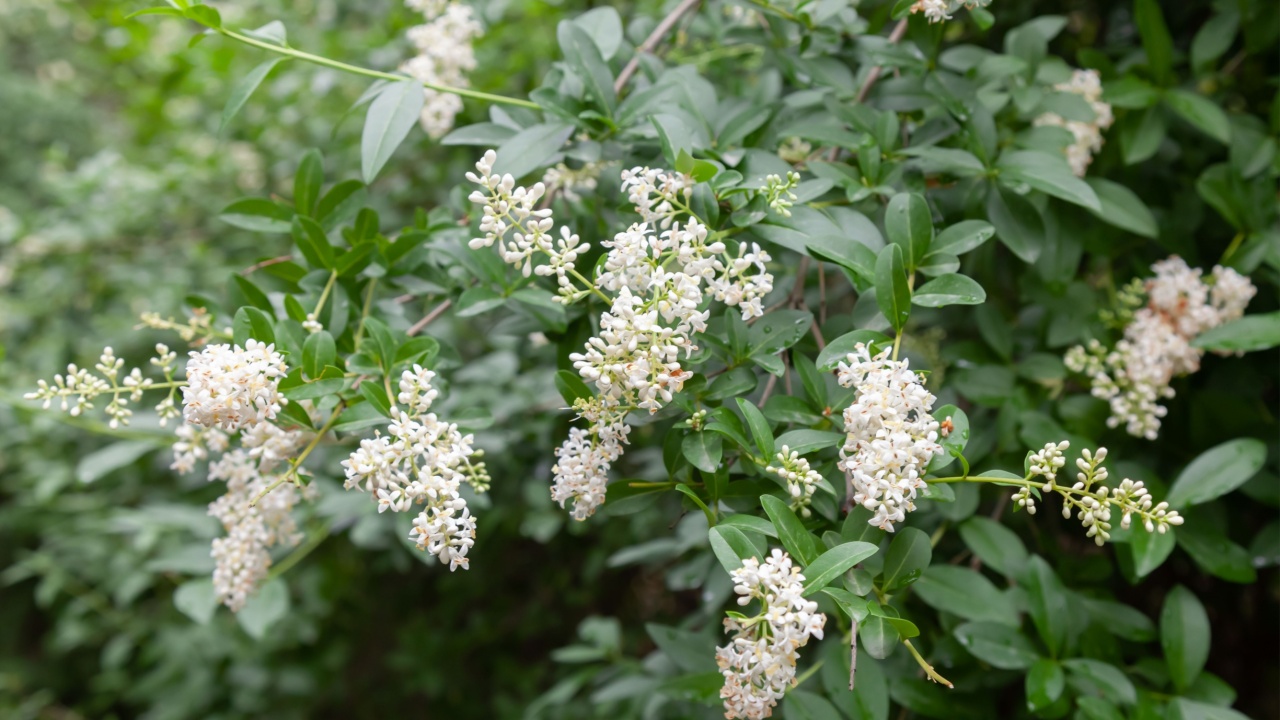
Privet hedges are common in landscaping, but Chinese privet is a particularly problematic species. It forms dense, impassable thickets that shade out almost all other plants, creating a “privet desert” on the forest floor where nothing else can grow.
The leaves contain chemicals that deter insects, meaning even native leaf-feeding insects won’t touch it. This disrupts the local food web, as the insects that native birds and other animals rely on have nothing to eat.
Why it’s invasive: Forms dense thickets that shade out all native shrubs and herbaceous plants on the forest floor.
Impact: Drastically reduces plant diversity and disrupts the local food web by being unpalatable to native insects.
Alternatives: For hedges, consider native options like Arrowwood Viburnum (Viburnum dentatum) or American Holly (Ilex opaca).
16. Garlic Mustard (Alliaria petiolata)
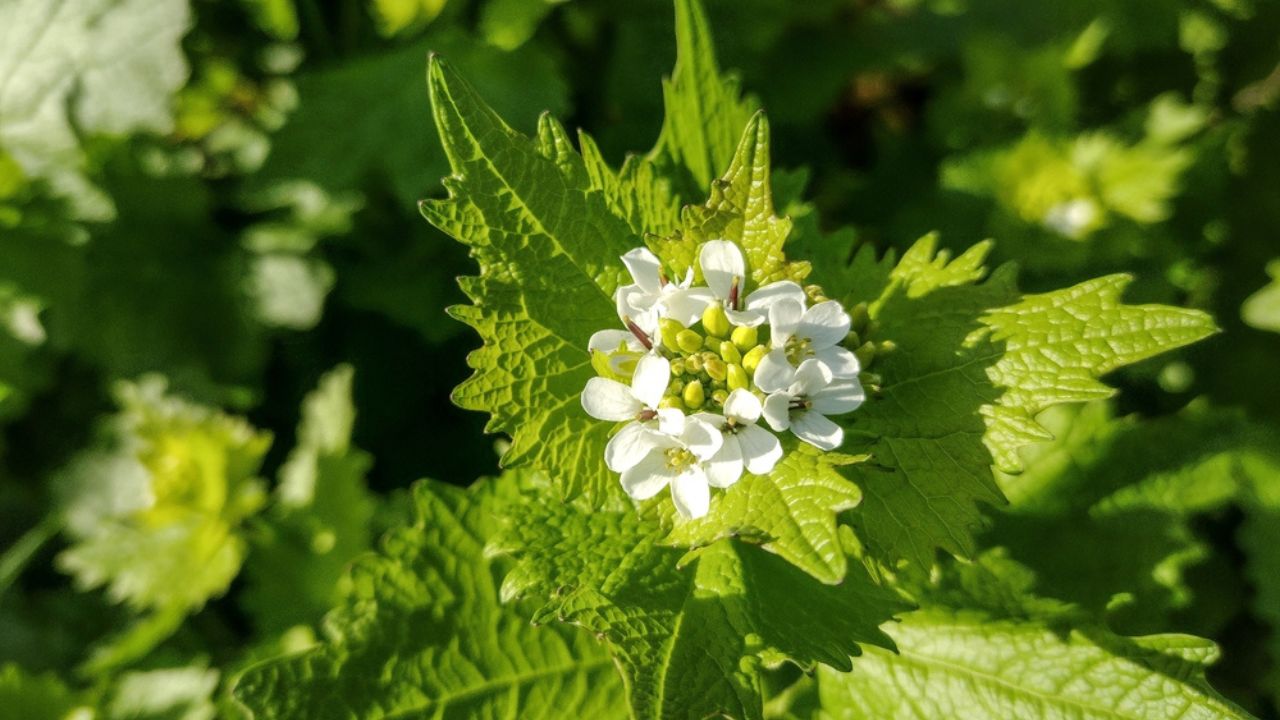
Garlic mustard is a biennial herb that may not seem as threatening as a large vine, but it is one of the most destructive forest invaders. In its second year, it produces flowers and thousands of seeds that can remain viable in the soil for years.
It spreads through forest understories, crowding out native wildflowers. More insidiously, its roots release chemicals into the soil that disrupt the beneficial fungi that native plants depend on for nutrient uptake, giving it a powerful advantage.
Why it’s invasive: Releases chemicals that harm soil fungi essential for native plants and produces a large number of long-lasting seeds.
Impact: Displaces native wildflowers, disrupts soil ecology, and hinders the growth of trees and other native plants.
Alternatives: For a low-growing plant with white flowers, choose Wild Geranium (Geranium maculatum) or Bloodroot (Sanguinaria canadensis).
17. Japanese Spirea (Spiraea japonica)

Japanese spirea is a popular landscaping shrub with attractive clusters of pink flowers. It can quickly take over disturbed areas like meadows and forest openings, forming dense stands that push out native herbs and shrubs.
The seeds remain viable in the soil for many years, making it difficult to control even after the parent plants are removed. This long-term seed bank ensures that the spirea can continue to re-sprout for years, making restoration of the native plant community a significant challenge.
Why it’s invasive: Spreads rapidly and forms dense stands that outcompete native plants. Its long-lasting seeds make it difficult to eradicate.
Impact: Displaces native herbs and shrubs in meadows and forest openings, hindering ecological restoration.
Alternatives: New Jersey Tea (Ceanothus americanus) or Steeplebush (Spiraea tomentosa) are excellent native alternatives that support pollinators.
Promoting a Healthy Garden

Avoiding invasive plants is one of the most impactful things you can do as a gardener. Now that you know what to look out for, you can make smarter choices for your backyard and community.
- Identify and Remove: If you suspect you have an invasive plant in your yard, contact your local extension office or native plant society for confirmation and advice on responsible removal. Different plants require different methods, from hand-pulling to more intensive approaches.
- Choose Native Plants: The best way to create a healthy, low-maintenance garden is to plant species native to your region. Native plants are adapted to your local climate, support pollinators and wildlife, and won’t harm surrounding ecosystems. Look for local nurseries that specialize in native plants.
- Spread the Word: Share what you’ve learned with friends, family, and neighbors. Many people unknowingly plant invasive species simply because they are sold at garden centers. A friendly conversation can help protect your local environment one backyard at a time.
By being a conscious gardener, you contribute to a more balanced and beautiful world, right outside your own back door.
Read more
15 Invasive Plants to Keep Out of the Yard This Season
Stop Buying These Plants at the Nursery— 12 Red Flags Experienced Gardeners Never Ignore