12 Orange Flowers That Attract Hummingbirds
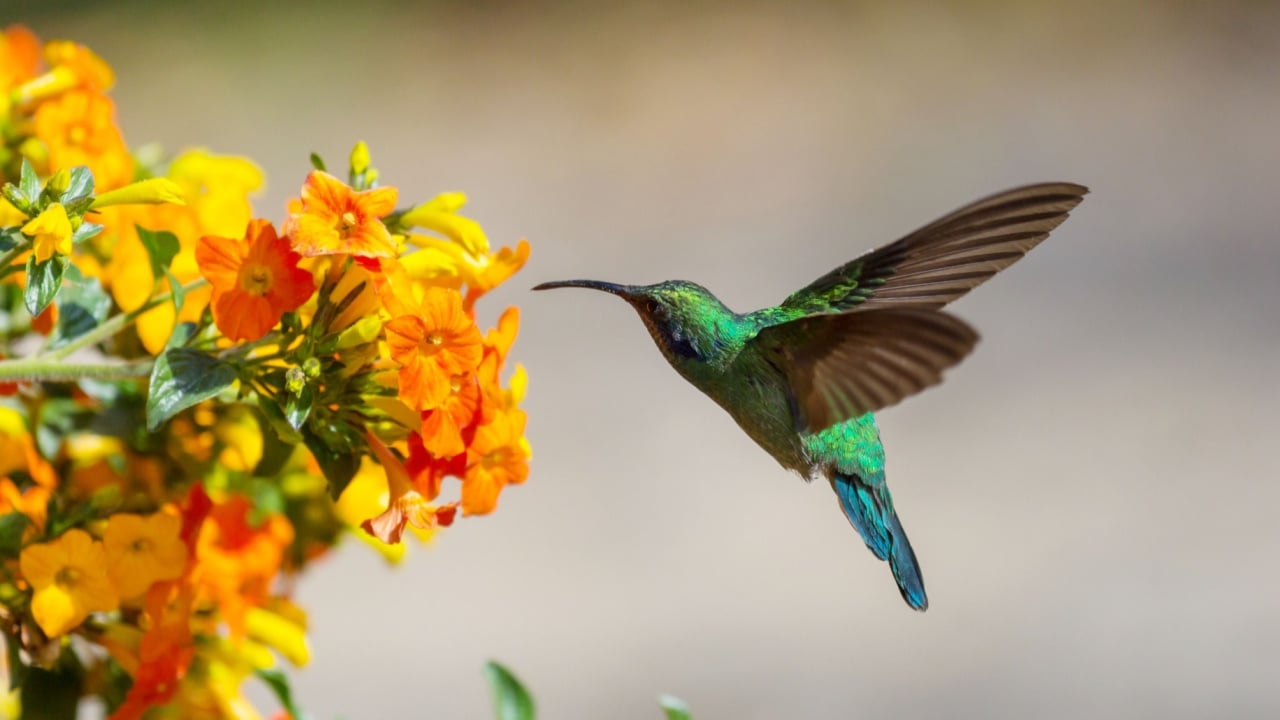
It’s a myth that red is the only color that truly captures a hummingbird’s attention. While they are certainly drawn to fiery red blossoms, gardeners who limit their palette to one color are missing out on a powerful secret weapon: orange.
This vibrant, warm hue is just as effective at attracting these tiny, energetic birds to your yard. Orange flowers, with their nectar-rich blooms, act like a glowing welcome sign, promising a delicious meal. Planting a variety of orange flowers can transform your garden into a bustling hub for hummingbirds.
These plants not only provide essential food but also add a stunning visual pop to your landscape, creating a lively and colorful sanctuary for both you and your feathered friends.
If you’re ready to create a garden that’s buzzing with activity from dawn until dusk, here are 12 beautiful orange flowers that hummingbirds simply can’t resist.
1. Trumpet Vine (Campsis radicans)

Trumpet vine is a classic choice for attracting hummingbirds, and for good reason. Its large, trumpet-shaped orange-red flowers are perfectly designed for a hummingbird’s long beak, offering easy access to a generous supply of nectar.
This vigorous, woody vine is a true powerhouse, capable of covering fences, arbors, and walls with lush foliage and a profusion of blooms all summer long.
This plant is an excellent choice if you have a large, sturdy structure that needs covering. However, be mindful of its aggressive growth habit. Trumpet vine can spread rapidly through underground runners and may require regular pruning to keep it in check. Despite its demanding nature, the reward of watching hummingbirds flock to its blossoms makes it a worthwhile addition for many gardeners.
Quick Care Guide:
- Sunlight: Full sun (6+ hours) for best blooming.
- Soil: Adaptable to various soil types but prefers well-drained soil.
- Water: Drought-tolerant once established. Water regularly during the first year.
- Hardiness Zones: 4-9.
- Pro Tip: Plant it away from your home’s foundation or other delicate structures, as its roots and clinging vines can be invasive.
2. Mexican Sunflower (Tithonia rotundifolia)

If you want to make a bold statement, the Mexican sunflower is your plant. It’s brilliant, daisy-like orange flowers sit atop tall, sturdy stems that can reach up to six feet.
These flowers act as bright landing pads for hummingbirds, who are drawn to the vibrant color and the easily accessible nectar in the central disk. Mexican sunflowers are incredibly easy to grow from seed and thrive in conditions that other plants might find challenging. They love heat and can tolerate poor, dry soil, making them a low-maintenance option for sunny garden spots.
They bloom continuously from mid-summer until the first frost, providing a long-lasting food source for hummingbirds and other pollinators like butterflies.
Quick Care Guide:
- Sunlight: Full sun.
- Soil: Average, well-drained soil. Tolerates poor soil.
- Water: Needs consistent moisture when young, but is drought-tolerant once mature.
- Hardiness Zones: Grown as an annual in most climates (perennial in zones 9-11).
- Pro Tip: Pinch back the young plants when they are about a foot tall to encourage bushier growth and more flowers.
3. Butterfly Weed (Asclepias tuberosa)
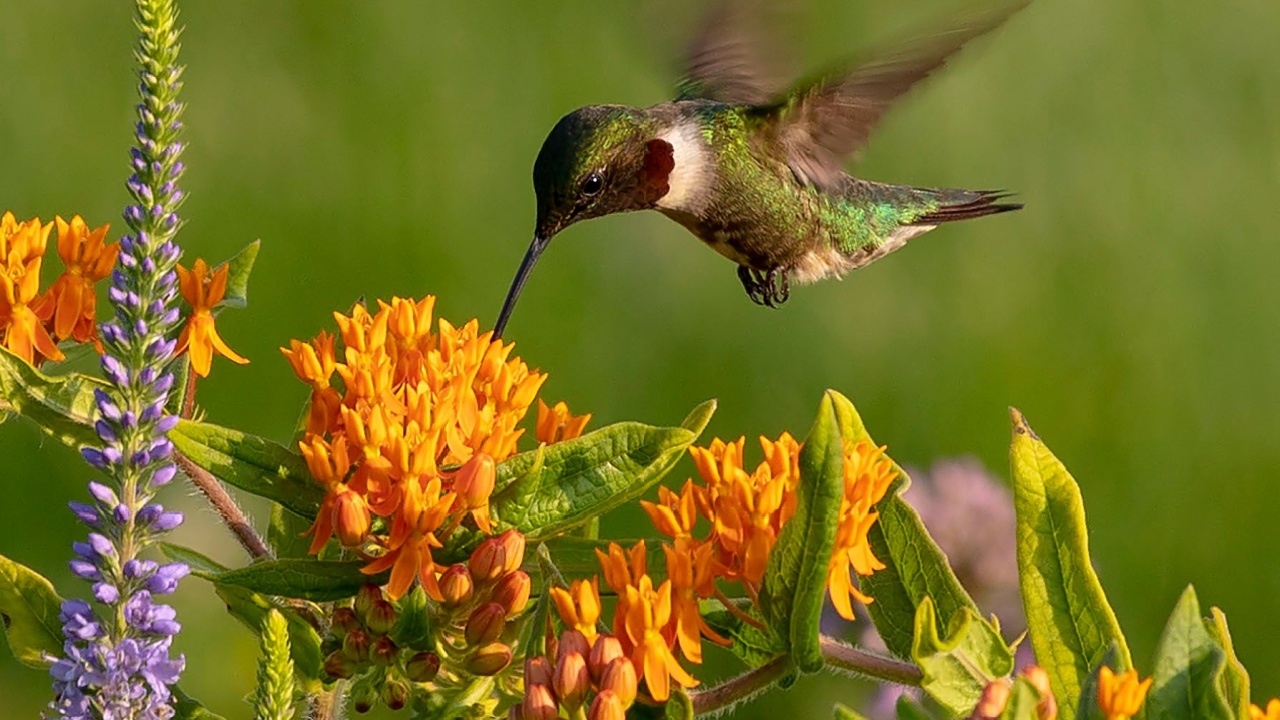
Don’t let the name fool you, Butterfly Weed is a favorite of hummingbirds, too. This native perennial produces dense clusters of brilliant orange flowers that are rich in nectar. As a species of milkweed, it also serves the crucial role of being a host plant for monarch butterfly caterpillars, making it a double-duty champion for your pollinator garden.
Butterfly Weed is exceptionally hardy and drought-tolerant once its deep taproot is established. It thrives in full sun and prefers well-drained, sandy soil. Its long bloom time, from early to late summer, ensures a reliable food source for hummingbirds throughout the hottest part of the year. Its vibrant color and ecological benefits make it an essential plant for any wildlife-friendly garden.
Quick Care Guide:
- Sunlight: Full sun is a must.
- Soil: Prefers sandy, well-drained soil. Dislikes being moved once established due to its taproot.
- Water: Low water needs; very drought-tolerant.
- Hardiness Zones: 3-9.
- Pro Tip: Start from plants rather than seeds if you’re impatient, as it can take a couple of years to flower when grown from seed.
4. Canna Lily (Canna generalis)
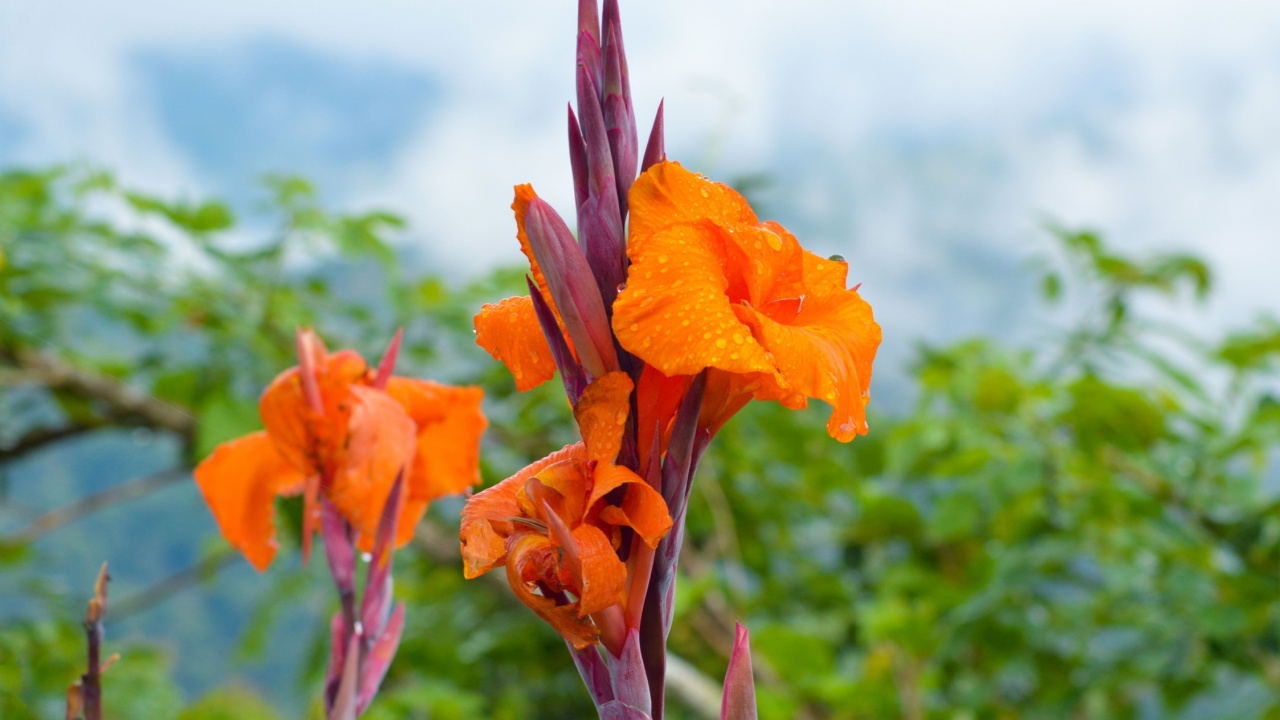
For a touch of the tropics, Canna Lilies are unbeatable. Their large, architectural leaves and tall spikes of showy orange flowers bring an exotic feel to any garden bed or container.
Hummingbirds are highly attracted to the brightly colored, nectar-filled blooms, which are held high on sturdy stalks, making them easy to spot and access.
Canna Lilies thrive in the heat of summer and prefer consistently moist soil and full sun. They bloom from early summer until frost, offering a long season of interest. While they are perennials in warmer climates, gardeners in colder zones can dig up the rhizomes in the fall and store them indoors over winter to replant the following spring.
Quick Care Guide:
- Sunlight: Full sun to light shade.
- Soil: Rich, moist, well-drained soil.
- Water: Needs regular watering, especially in hot weather. They can even grow in boggy conditions.
- Hardiness Zones: 7-10 (rhizomes can be lifted and stored in colder zones).
- Pro Tip: Deadhead spent flowers to encourage continuous blooming and maintain a tidy appearance.
5. Firecracker Plant (Russelia equisetiformis)
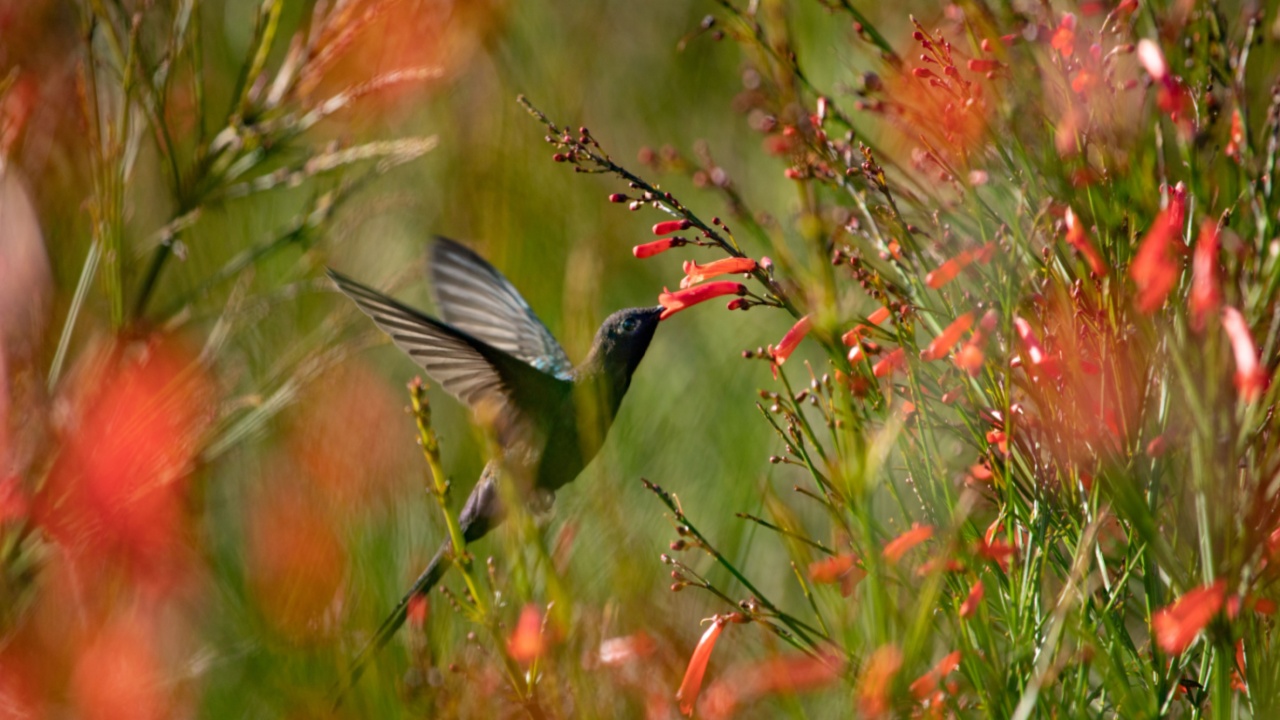
The Firecracker Plant lives up to its name with an explosive display of slender, tubular, fiery orange-red flowers that cascade down its arching, grass-like stems.
This unique shape makes it an irresistible target for hummingbirds, who can easily hover and dip their beaks into the numerous blooms. It has an incredibly long bloom period, often flowering nearly year-round in warmer climates.
This plant is perfect for hanging baskets, container arrangements, or spilling over retaining walls where its weeping form can be fully appreciated. It’s tough, drought-tolerant, and handles heat with ease. Its constant production of nectar-rich flowers makes it one of the most reliable plants for keeping hummingbirds happy.
Quick Care Guide:
- Sunlight: Full sun to partial shade.
- Soil: Average, well-drained soil.
- Water: Water regularly until established, then it becomes quite drought-tolerant.
- Hardiness Zones: 9-11 (often grown as an annual or houseplant elsewhere).
- Pro Tip: Prune it back in the spring to encourage fresh growth and a fuller shape.
6. Zinnia (Zinnia elegans)

Zinnias are the cheerful workhorses of the summer garden. They are incredibly easy to grow from seed, come in a vast array of shapes and sizes, and bloom their hearts out until the first frost.
The bright orange varieties, especially single-petal or semi-double types, are particularly attractive to hummingbirds because the nectar is easy to reach.
These annuals are perfect for filling in gaps in flower beds, creating a dedicated cutting garden, or planting in containers. They thrive in full sun and well-drained soil. The more you cut them for bouquets, the more they bloom, so you can enjoy their beauty both indoors and out while providing a continuous feast for your local hummingbirds.
Quick Care Guide:
- Sunlight: Full sun.
- Soil: Rich, well-drained soil.
- Water: Keep soil evenly moist but not waterlogged.
- Hardiness Zones: Annual in all zones.
- Pro Tip: To prevent powdery mildew, ensure good air circulation around the plants and try to water the soil at the base rather than the leaves.
7. Honeysuckle (Lonicera)
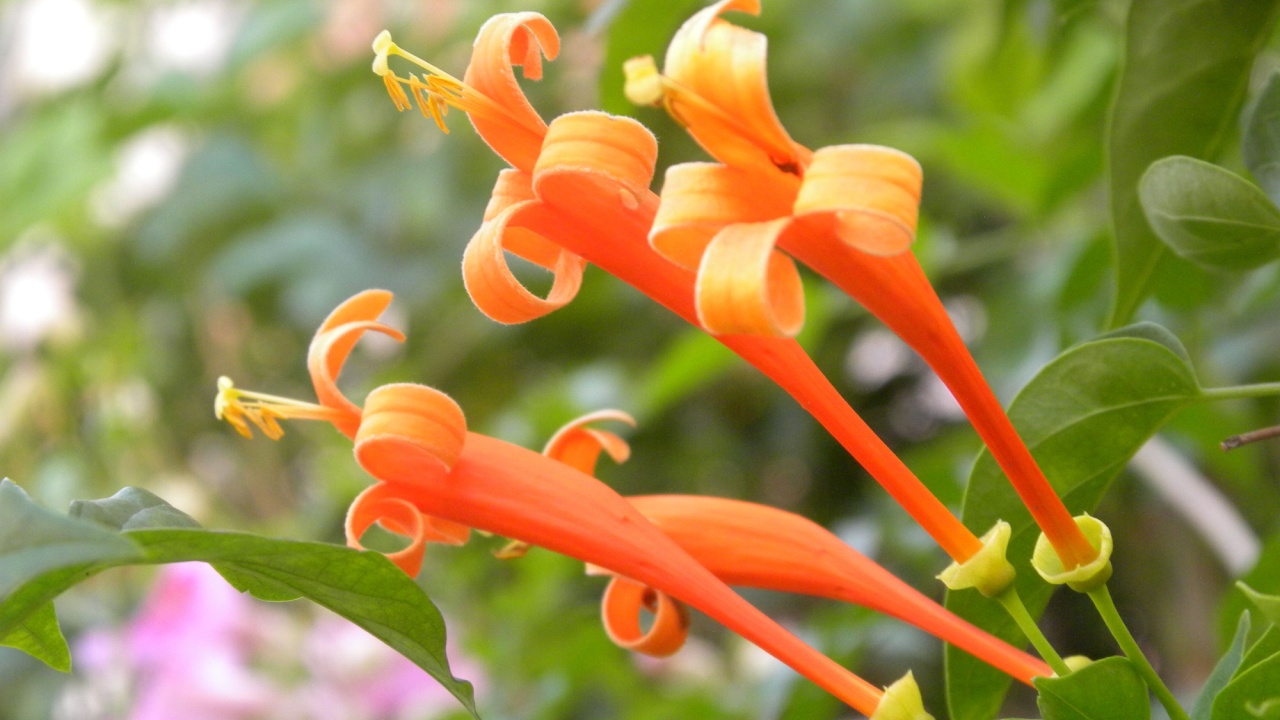
While many honeysuckles are known for their sweet fragrance, the native Trumpet Honeysuckle (Lonicera sempervirens) is a non-fragrant vine that is a visual and nutritional powerhouse for hummingbirds. Its clusters of slender, tube-shaped, orange-red flowers are a perfect match for a hummingbird’s beak.
Unlike some invasive honeysuckle species, this native variety is well-behaved and easy to manage. This climbing vine is ideal for covering a trellis, fence, or arbor.
It blooms most heavily in spring and will continue to produce flowers sporadically throughout the summer, especially if you deadhead the spent blooms. It also produces red berries in the fall that are a food source for other birds like robins and bluebirds.
Quick Care Guide:
- Sunlight: Full sun for the best flower production, but it will tolerate partial shade.
- Soil: Adaptable to most soil types but prefers well-drained soil.
- Water: Moderate water needs.
- Hardiness Zones: 4-9.
- Pro Tip: Choose native Lonicera sempervirens over the invasive Japanese Honeysuckle (Lonicera japonica) to support local ecosystems.
8. California Poppy (Eschscholzia californica)
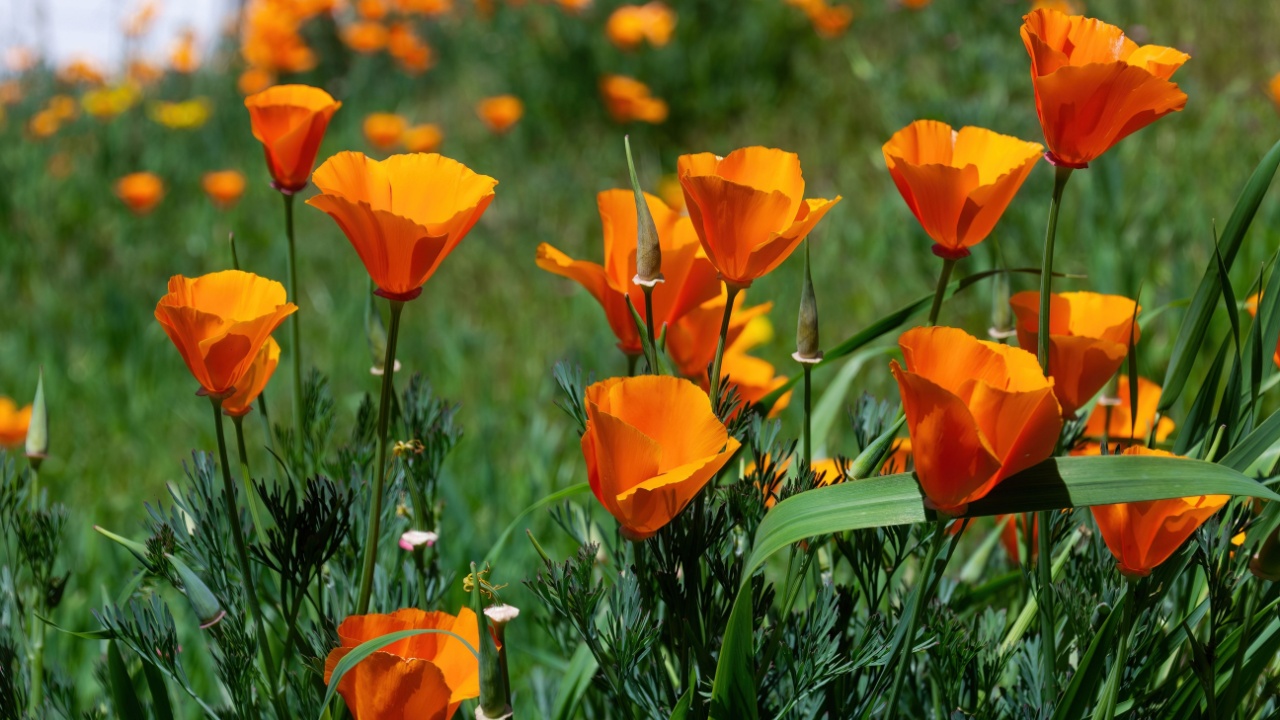
These delicate, silky-petaled flowers blanket hillsides in their native range, and they can do the same for the sunny, dry spots in your garden.
The brilliant orange of the California Poppy is like a beacon for hummingbirds. While each flower is short-lived, the plant produces them in such abundance that it provides a continuous display for weeks on end.
California Poppies are incredibly low-maintenance. They thrive in poor, sandy, or rocky soil and require very little water once established. They often self-seed, creating a natural, meadow-like effect year after year. The flowers close at night and on cloudy days, but they pop open with the sun to welcome hummingbirds and other pollinators.
Quick Care Guide:
- Sunlight: Full sun.
- Soil: Prefers poor, well-drained, sandy soil.
- Water: Very low water needs; drought-tolerant.
- Hardiness Zones: Often grown as an annual, but it is a perennial in zones 6-10.
- Pro Tip: Simply scatter seeds on the soil surface in fall or early spring. Do not cover with much soil, as they need light to germinate.
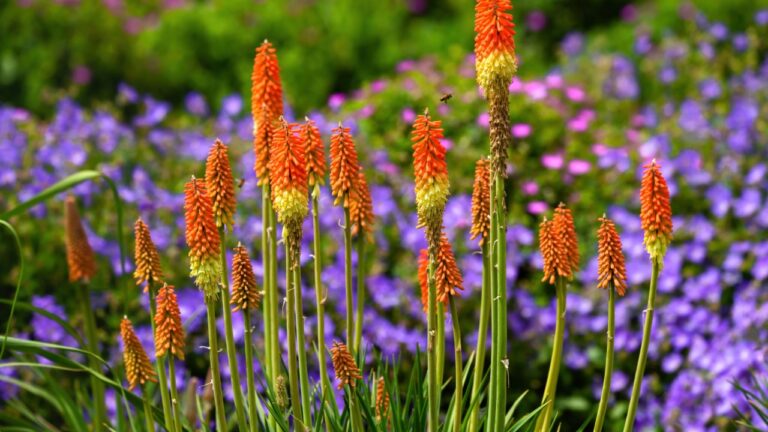
9. Red Hot Poker (Kniphofia)
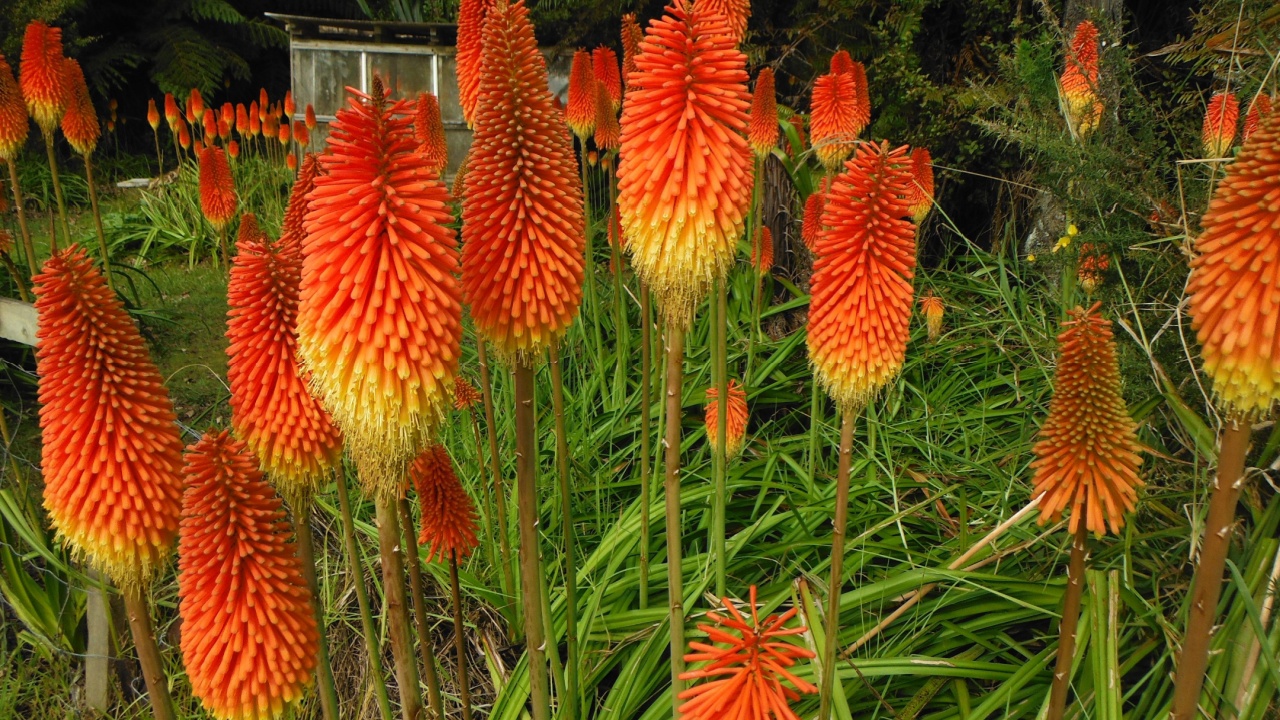
Also known as Torch Lily, this plant adds dramatic flair to the garden with its tall, striking spikes of flowers. The blooms typically start as a fiery red-orange at the top and fade to a yellow-orange at the base, creating an eye-catching bicolor effect.
The individual flowers are tubular and packed with nectar, making them a favorite stop for hummingbirds. Red Hot Poker is a clump-forming perennial that is drought-tolerant and loves the sun.
Its unique, architectural shape provides a strong vertical element in garden beds, contrasting beautifully with softer, mounded plants. There are many cultivars available, with bloom times ranging from early summer to fall.
Quick Care Guide:
- Sunlight: Full sun.
- Soil: Well-drained soil is essential to prevent crown rot.
- Water: Water regularly during its first season; drought-tolerant once established.
- Hardiness Zones: 5-9, depending on the cultivar.
- Pro Tip: In colder zones, apply a thick layer of mulch in late fall to protect the crown through winter.
10. Crocosmia
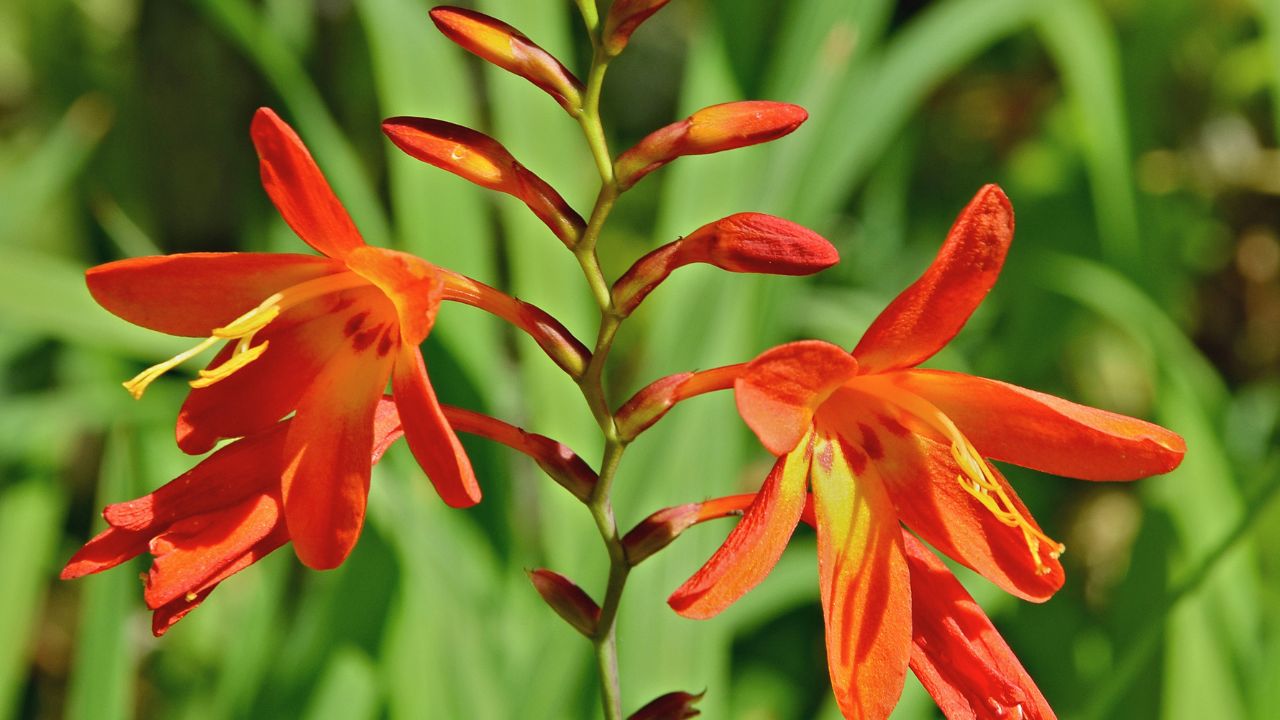
With its arching stems of fiery, funnel-shaped flowers, Crocosmia brings vibrant color and elegant movement to the summer garden. The intense orange or red-orange blooms are perfectly shaped for hummingbirds and appear in mid-to-late summer.
The sword-like foliage is also attractive, adding texture even when the plant is not in bloom. Crocosmia grows from small bulbs called corms and will multiply over time to form a substantial clump.
It performs best in full sun and well-drained soil. Its late-summer bloom time is particularly valuable, as it provides nectar when many other flowers are starting to fade.
Quick Care Guide:
- Sunlight: Full sun to light shade.
- Soil: Rich, well-drained soil.
- Water: Needs consistent moisture during the growing season.
- Hardiness Zones: 5-9.
- Pro Tip: Plant the corms in groups of 10 or more for the most dramatic visual impact. Divide the clumps every 3-4 years to reinvigorate them.
11. Daylily (Hemerocallis)
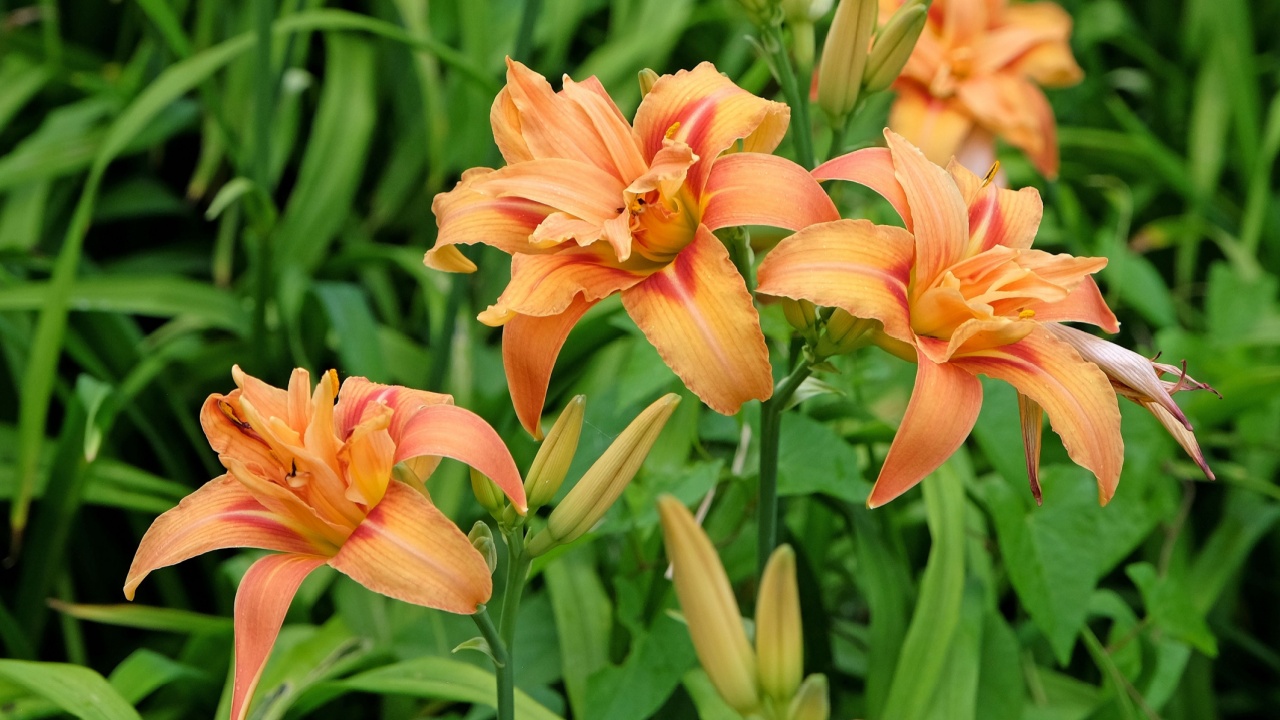
Daylilies are one of the most reliable and easy-to-grow perennials available, and orange varieties are hummingbird magnets. Each flower lasts for only one day, but a single plant produces a succession of blooms over several weeks.
The wide, open shape of many daylily flowers allows hummingbirds to easily access the nectar within. These adaptable plants tolerate a wide range of conditions, from full sun to partial shade, and are not picky about soil.
They are perfect for mass plantings, perennial borders, or controlling erosion on a slope. With thousands of cultivars available, you can find orange daylilies that bloom from early summer to fall.
Quick Care Guide:
- Sunlight: Full sun to partial shade.
- Soil: Adaptable but prefers fertile, well-drained soil.
- Water: Tolerant of both drought and moist conditions once established.
- Hardiness Zones: 3-9.
- Pro Tip: Look for “reblooming” varieties like ‘Stella de Oro’ (which is more golden-orange) or other orange rebloomers to get flowers throughout the summer.
12. Impatiens (Impatiens walleriana)
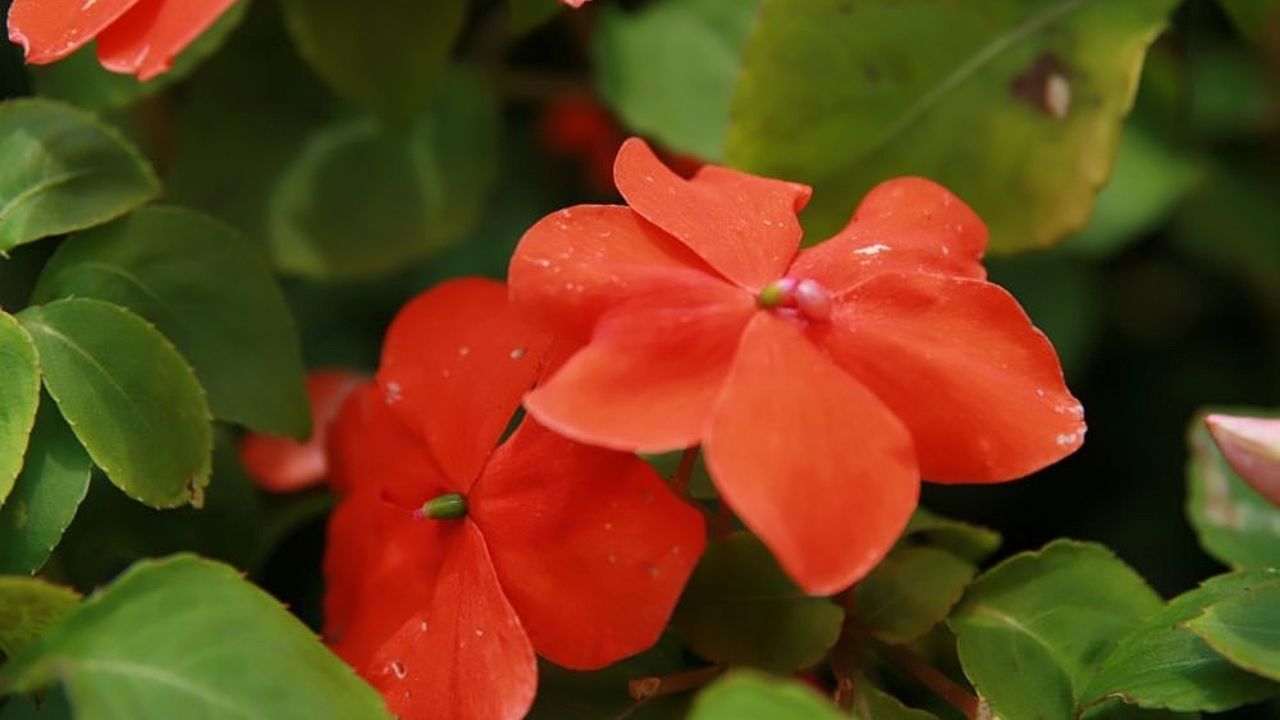
For the shady spots in your garden, it’s hard to beat the flowering power of Impatiens. While they come in many colors, the bright orange varieties provide a pop of color in low-light areas and are readily visited by hummingbirds.
Their simple, open flowers offer an easy-to-reach nectar source, making them a valuable addition to a shade garden designed for pollinators. Impatiens are tender annuals that need protection from the afternoon sun. They require consistently moist soil and will wilt dramatically if they dry out, but they bounce back quickly once watered.
They are perfect for shady borders, containers, and hanging baskets, providing continuous color from spring until the first frost.
Quick Care Guide:
- Sunlight: Partial to full shade. Avoid direct sun.
- Soil: Rich, moist, well-drained soil.
- Water: High water needs; keep the soil consistently moist.
- Hardiness Zones: Annual in all zones.
- Pro Tip: New Guinea Impatiens are a great alternative that offer similar orange blooms but have a higher tolerance for sun than standard Impatiens.
Adding to Your Hummingbird Haven
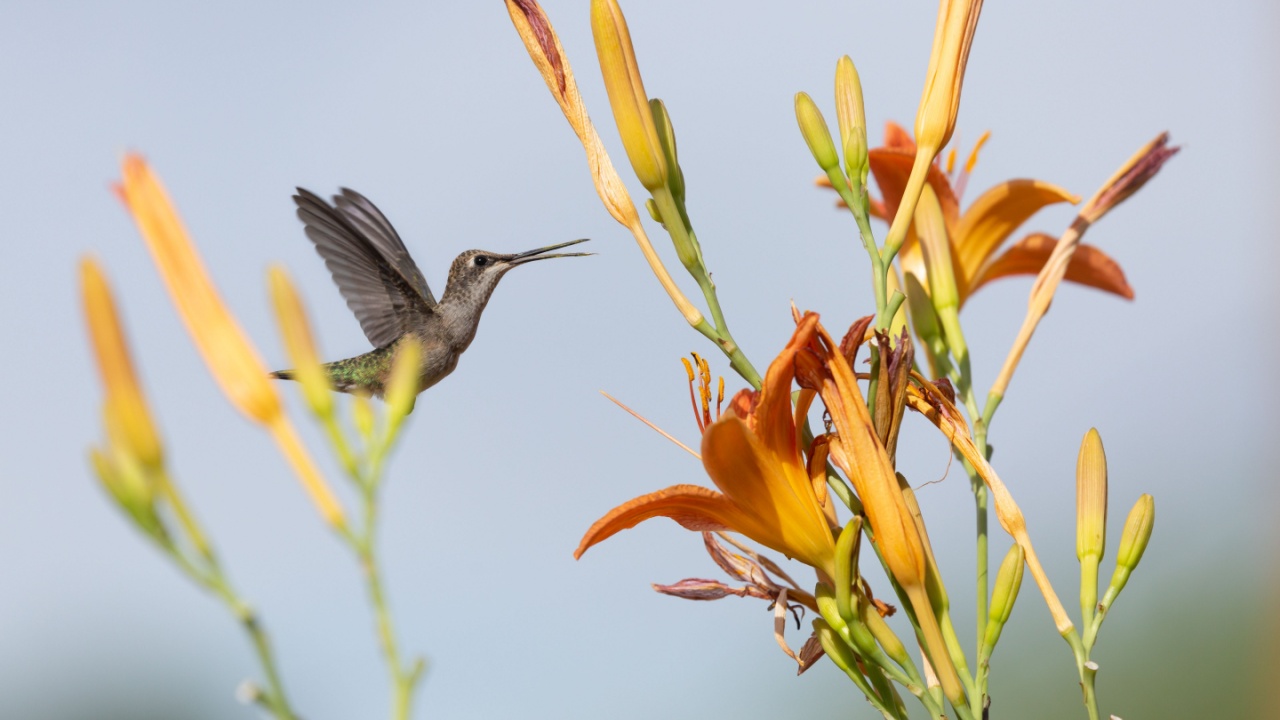
Now that you have a list of fantastic orange flowers, it’s time to start planning. Think about the different areas of your garden: sunny spots, shady corners, and places for climbers.
Try to plant a variety of flowers with different bloom times to create a continuous buffet for hummingbirds from spring through fall. In addition to flowers (especially tubular flowers), consider adding a water source, like a shallow birdbath with a mister or dripper, as hummingbirds love to play and clean themselves in moving water.
Finally, avoid using pesticides in your garden, as these chemicals can be harmful to the very birds you’re trying to attract. By creating a safe, vibrant, and nectar-rich environment, you’ll soon find your garden is the most popular spot on the block for these delightful winged jewels.
Read more:
Turn the Yard Into a Hummingbird Haven with These 15 Trees
16 Container Plants That Hummingbirds Love