
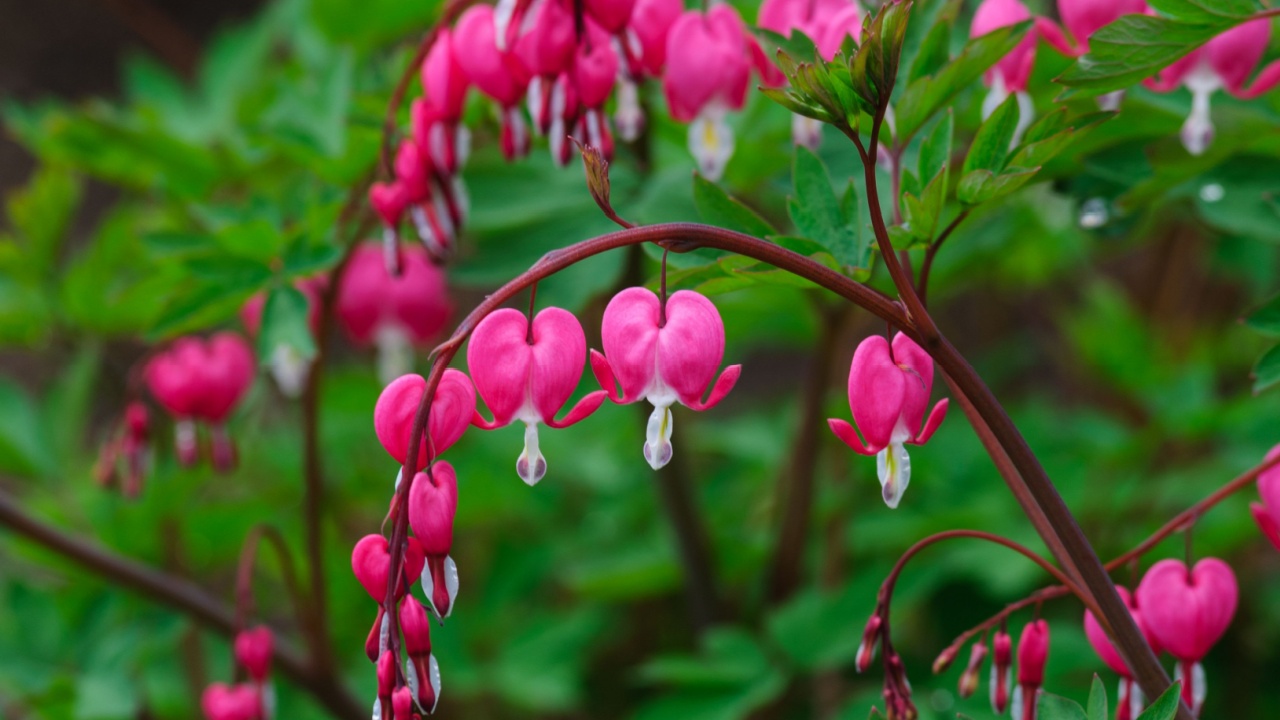
Bleeding Heart Plant Care Secrets You Should Know
Common bleeding hearts (Dicentra Formosa, Lamprocapnos spectabilis) are lovely little herbaceous perennial plants. Today I’ll share a few bleeding heart plant care secrets, so you can grow and enjoy these adorable heart-shaped flowers.
The botanical name Dicentra comes from the Greek dis, twice, and kentron, a spur. This alludes to the plant’s floral spurs.
Bleeding Hearts are winter-hardy perennials that bloom year after year. The distinctive heart-shaped flowers are pink, rose, or white.
Bleeding heart species
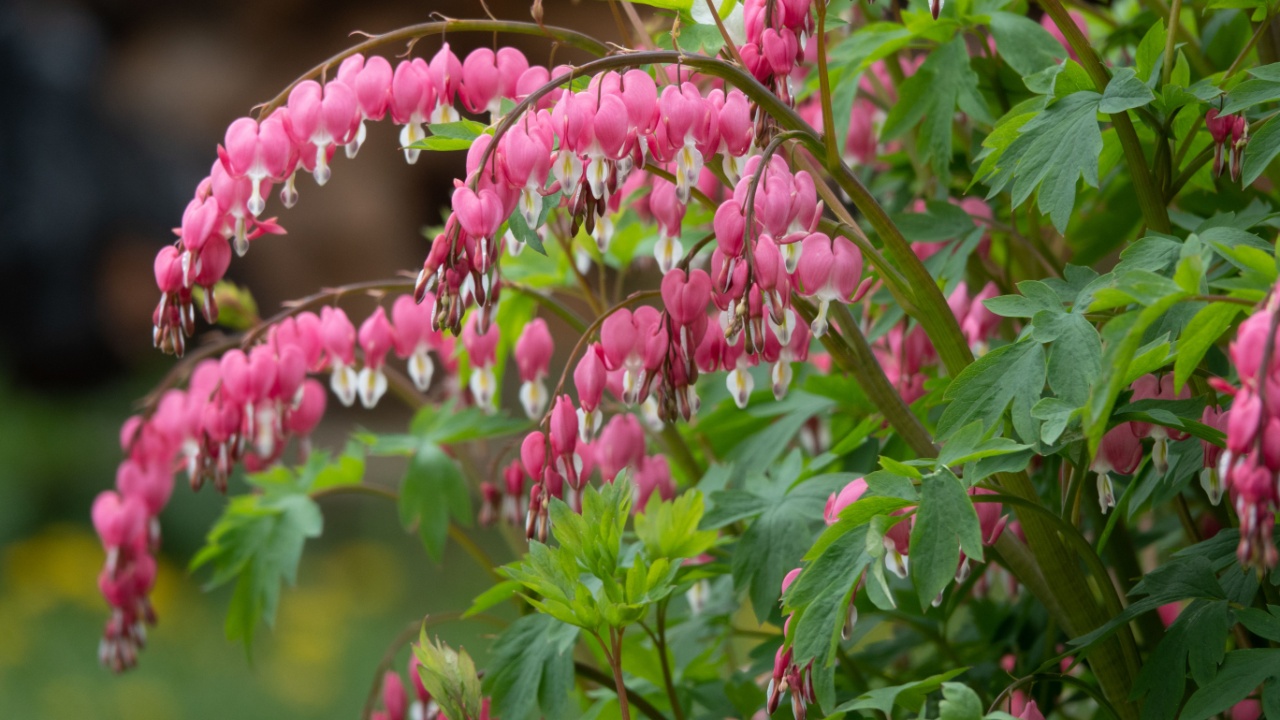
There are two popular species:
- Dicentra Formosa, the Western Bleeding Heart
- Dicentra Spectabilis, a more well-known, larger-flowered species from Japan.
Formosa is native to moist woodlands along the U.S. Pacific Coast. It reaches a height of about 16 inches with coarsely divided, rounded leaves. The red and pink flowers look like tiny hearts.
The larger D. Spectabilis can grow to two and a half feet and has red and white blooms. Both species are known as Bleeding Hearts.
Bleeding heart flower meaning
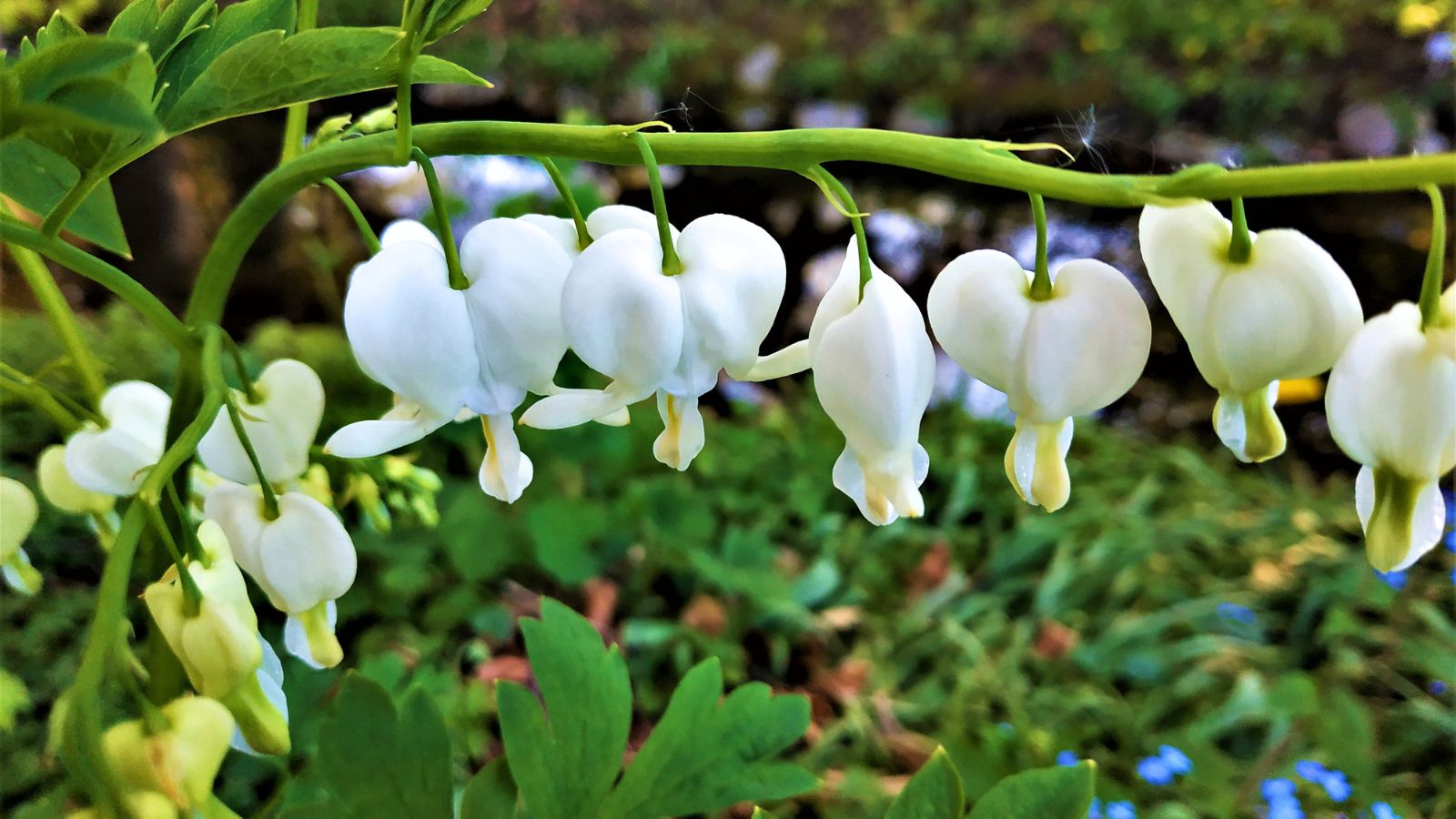
Like many other flowers, the bleeding heart flowers have a special meaning. The pink, heart-shaped flowers express romantic love, and the white flowers mean purity.
But that’s not all! The reason for the common name is obvious, but the heart-shaped petals hide an intriguing secret.
What could it be?
The stamens, anthers, and inner ring of petals form a shape underneath the outer petals, almost like a tiny doll in a white petticoat.
As easy to grow as it is interesting and beautiful, Bleeding Heart is an unequaled favorite of many home gardeners.
How to Care For Bleeding Heart Plants
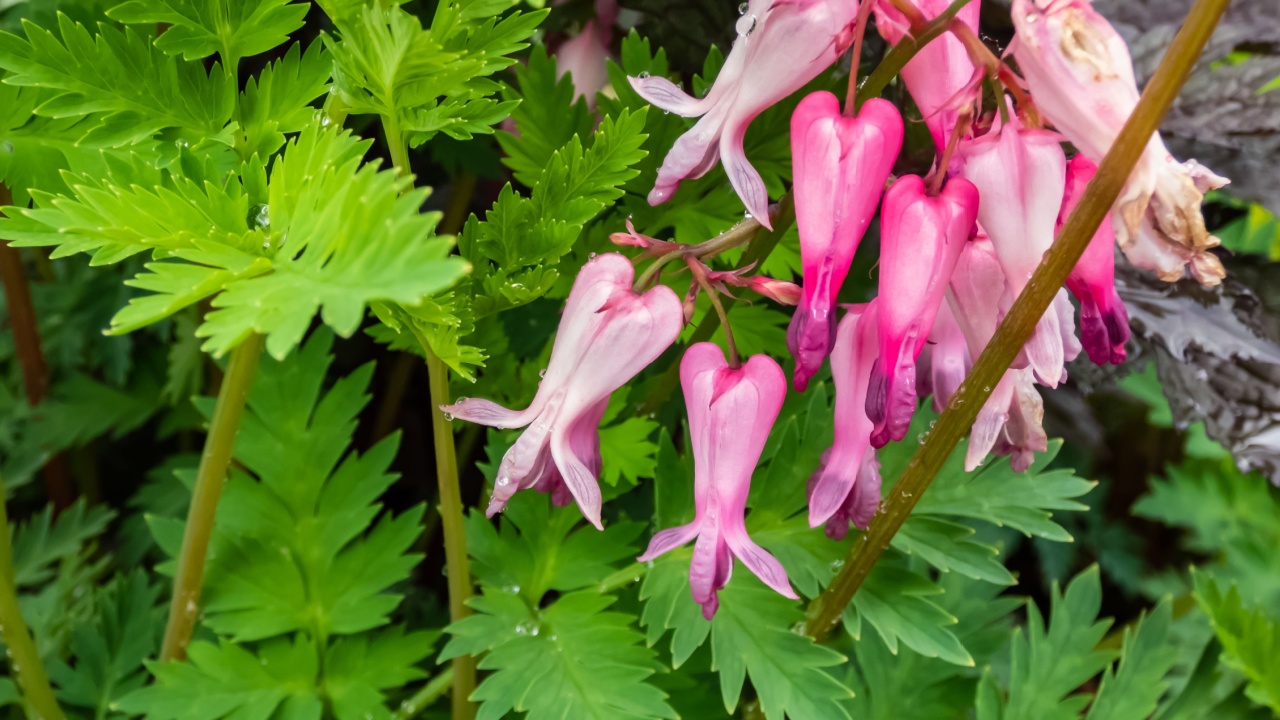
Bleeding hearts bloom all summer long
The first delicate sprouts appear above the ground in early spring, and by July, the plants should be in full bloom.
Provided with good, rich garden soil, bleeding hearts will thrive, especially if there is a little light shade to shield them from the harshest rays of the sun. Both varieties are winter hardy.
How to care for bleeding heart flowers
Bleeding heart reappears every year without fail, blooms every spring and summer, withers in the fall, and remains dormant until the following spring.
It needs no special care and can be used in a flower bed or in boxes or in containers.
Bleeding heart plants can bloom twice
You may be fortunate enough to bring bleeding heart into bloom twice.
As soon and the first crop of blooms begins to show signs of exhaustion, cut the entire plant back. Sprinkle a complete fertilizer on the surrounding soil, and wait.
If winter doesn’t arrive too early you should be able to enjoy a second flowering towards the end of fall.
Cut the stems back when flowering is over. Lift bleeding hearts and replant them every 3 to 4 years. Remove and discard the oldest part of the plant.
Forcing Bleeding Hearts
To force Bleeding Heats into early bloom, start in the fall. Being careful not to damage the roots, move the plants into large pots and place them in a frost-free room. In January, raise the temperature to 60°- 70°F. Blooms should appear within 6 weeks.
Indoor forced plants can be later planted out in the garden or kept indoors in a cool location.
How to propagate bleeding heart plant
Bleeding heart plants are easy to propagate. You can divide bleeding hearts in September/October.
Cuttings are also easy. The best time for taking cuttings is around May 1st. Carefully snap off new shoots and plant them in moist, coarse, porous soil. Cover with glass or plastic. The roots should be strong enough to survive transplanting after only one month.
You can also grow bleeding hearts from seeds, but it will take 6 weeks to three months to germinate. It’s so easy to divide and grow from cuttings that it’s almost not worth trying to grow it from seed.
How to transplant bleeding heart flowers
If your bleeding heart flowers are not doing well in their current location, and you’d like to move them, wait! Don’t move them in the middle of summer. Wait until late fall when they go dormant, or early spring before they come alive again. this will ensure your plants have the best chance to do well.
In the meantime, if they are in real distress, cut down any leaves that don’t look well and give the plant a bit of fertilizer.
What are good companion plants for bleeding hearts?
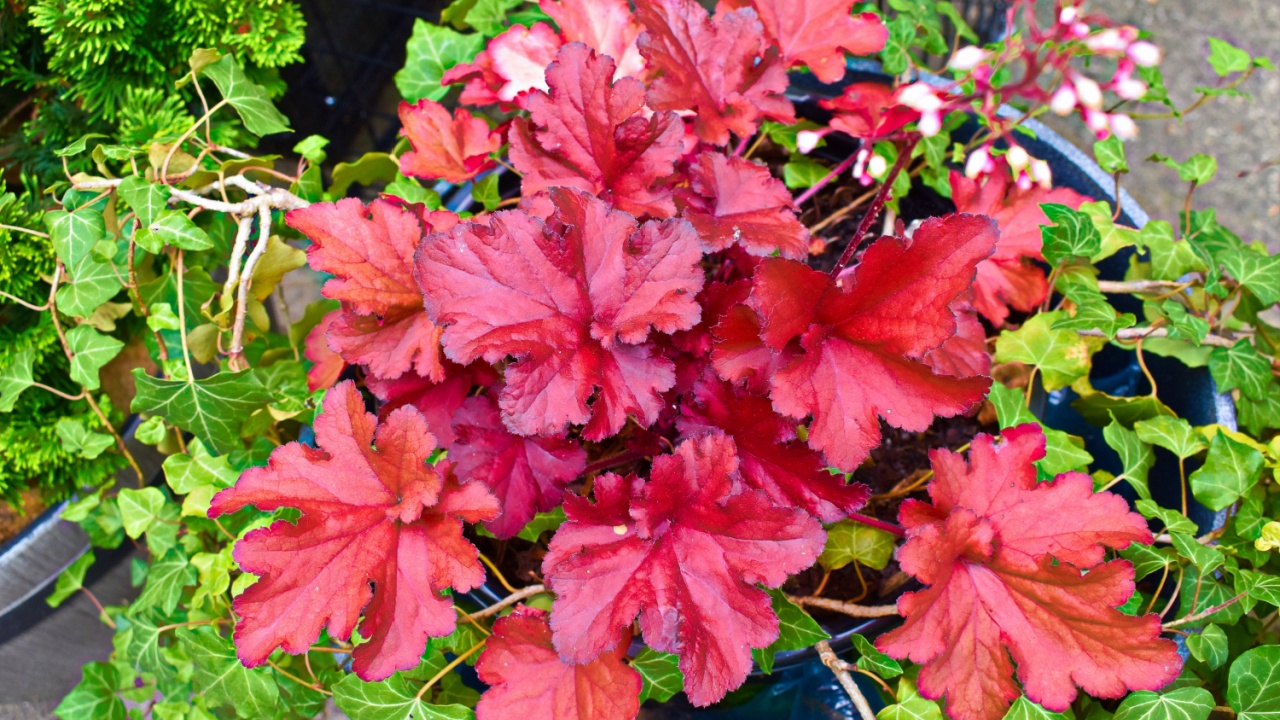
Bleeding flowers look gorgeous while in bloom, but they can be quite an eyesore once the heat of the summer arrives and the leaves start to yellow and die. Be prepared with some companion plants that can cover the plant stump once you cut it down (it’s safe to cut it down within a couple of inches of the ground once the leaves are dead).
Here are some of the best plants to pair with these beauties:
- astilbes
- ferns
- heuchera
- hostas
- lamium
- tulips
- Virginia bluebells
Attention! Bleeding heart plants are poisonous to both people and animals. So, if you have children and pets, you might want to skip growing this plant for now. Learn more about plants that are harmful to people or toxic plants for pets: you’ll be surprised to see some of your favorite flowers on those lists.
FAQ about the bleeding heart flower

Where should I plant bleeding hearts?
These adorable little flowers do best in partial shade, so plant them under a tree where it will get protection from the sun. If you have a woodland setting, they’ll be very happy there, protected from the heat of the summer.
Do bleeding hearts come back every year?
Yes, they are perennials and will faithfully come back year after year. Just make sure to cut the plants back after the foliage turns yellow or brown.
Can bleeding hearts grow in pots?
While it prefers a woodland garden, if you offer the right conditions (moist soil, some light shade, a bit of sun in the morning, etc.), these plants will do really well in containers.
Do hummingbirds like bleeding hearts?
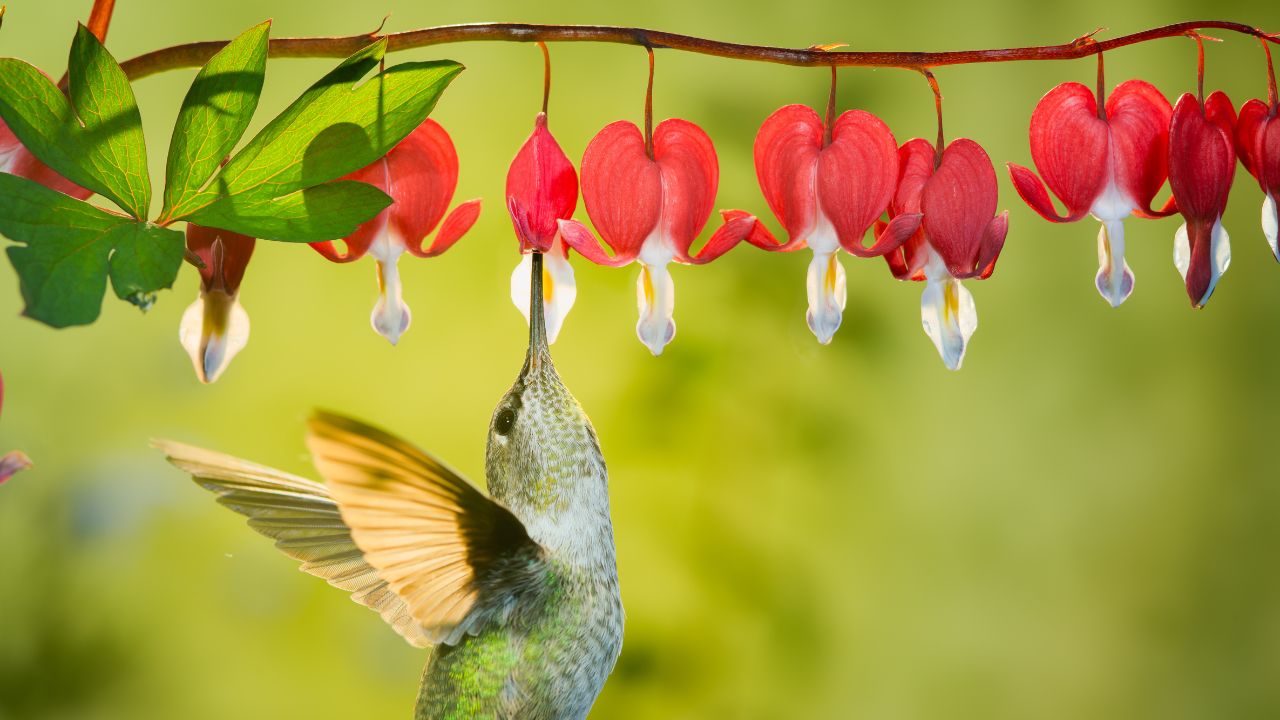
Yes, hummingbirds love bleeding heart flowers. Take a look at this cute one above, enjoying a sweet drink.
Will deer eat my bleeding heart plants?
Thankfully, bleeding heart flowers are deer-resistant, so they will leave them alone. What a relief!
Are bleeding hearts self-seeding?
Yes, just before the foliage begins to die, they’ll put out seed pods filled with shiny black seeds. As these fall to the ground, they’ll sprout during the hot summer days, and you’ll have new plants next year.
Bleeding Hearts Are a Great Addition
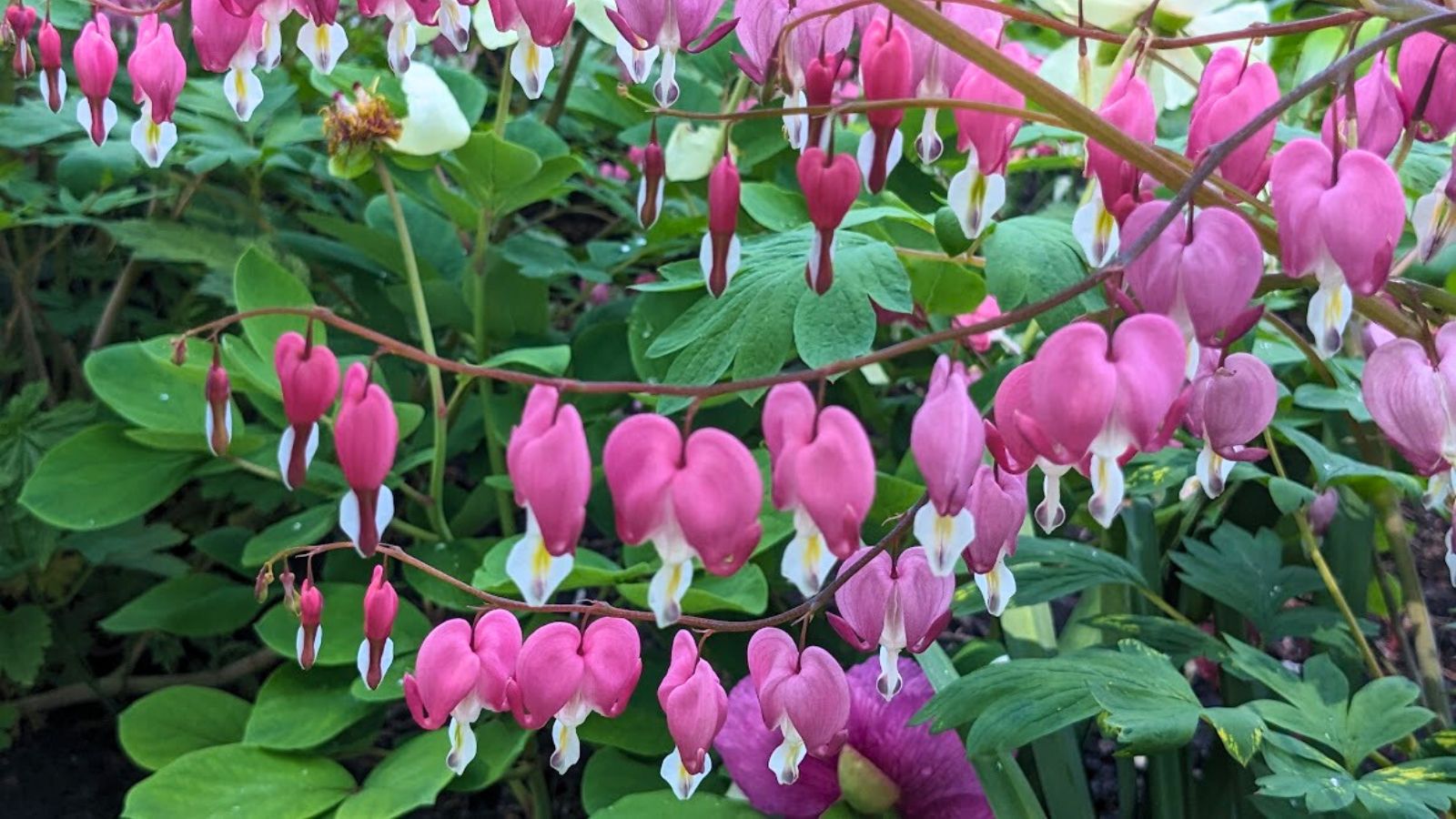
Bleeding heart plant care couldn’t be easier. Plant some (ask a neighbor or a friend to give you a couple of cuttings). Mix it up with some contrasting tulips (can you tell I love that combination?) and enjoy the show all summer long.



I have a large bleeding heart plant..but flowers are gone and noticing leaves are turning yellow..do I leave alsone or cut back?????
My plant too….it blooms early May and by the end of June they are finished and turn yellow like it were to be fall….am I doing something wrong…I cut it right back as it makes my flower bed look awful.
I have a bleeding heart and this year I took it And my rose and put them in pots cause they were all dying. And ever since then my bleeding heart has been getting so big and green. It hasn’t bloomed again. It’s just getting bigger. I’m wondering if I should bring in the house or put it in the shed with the roses.
I’d put it in the shed and take it back out in the spring.
My Bleeding Heart is big, the vines are all tangled they look dead, but I notice little green leaves coming up. Should I cut it back or see if it blooms. Been beautiful in past.
Yes, cut back to just above the green you see emerging.
I was given some roots and I had here in the house and they were doing really good then placed in a bigger pot and 2 days later they all wilted what did I do wrong
If you transplanted them twice in a short time the shock might have been too much for the plant!
I’ve had bleeding hearts in my garden for about 20 years! This spring my largest plant didn’t make it through winter, the smaller one did. We’ve had much colder winters than this past winter. How long do these plants live?
MY AUNT USED TO CAREFULLY TAKE THE FLOWERS APART AND SHOW ME THE 6 OR 7 PARTS OF THE DANCING LADY, ENDING WITH THE WHITE DANCING SLIPPER. SHE CAN’T REMEMBER THEM ANYMORE, AND I CAN’T FIND ANYONE THAT KNOWS. ANY HELP?
Patty, you can see it here: https://artofnaturalliving.com/finding-cinderella-in-a-bleeding-heart/
I have a bleeding heart that I planted between. stone wall and a hosta and it has grown to about two feet but crowded by hosta is this a problem and can I move it or should I leave it?
Jeanne, if it bothers you that it overtook your hosta, you can move it to another location that has the same characteristics. The best time to move is in late fall after the plant goes dormant, or in early spring before it shows signs of life. It also sounds like you could divide your bleeding heart if you wanted to multiply them. Thye usually need dividing every few years, and since you’d be digging it up., this would be a good time to do that as well.
My bleeding heart base is over 20 years old. It is a smallish pot plant which turns white first, then develops the red inner heart which becomes a frond. That dies down and the white petals turn pink. I have cut it down numerous times and it does flower more than once a year. A most unusual and beautiful plant and grows quickly and easily from a cutting. I water the plant every 5 or 6 days a week. Only ugly time is when leaves turn yellow and fall off and I have to wait a little while until I see little greenery start to appear on the stem and I know another year of beauty is on its way.