9 Signs Your Garden Plants Are Too Crowded
Every instinct you have about filling your garden bed is working against you.
That urge to squeeze in one more tomato, to tuck a few extra peppers into the corners, or to refuse to waste a single seedling feels like resourcefulness. It is actually the single most common reason home gardens underperform, and it is happening in backyards everywhere right now, during the exact weeks when the damage gets locked in for the entire season.
The problem has a name. Garden experts call it “emotional planting”: the guilt-driven refusal to throw away seedlings or leave soil bare. It’s understandable. You paid for those plants. The bed looks sparse. But when plants are crowded together, they don’t share resources politely. They compete for every drop of water, every ray of sunlight, every molecule of nitrogen in the soil, and the weakest ones lose. Diseases flourish in the humid, airless pockets between overcrowded leaves. Roots tangle and fight underground just as fiercely as the canopy does above. The result is a garden that looks full but produces a fraction of what it should.
Here is the number that should stop you cold: proper plant spacing can increase your harvest by 40%, according to Gardening Know How. That means a correctly spaced garden bed can produce hundreds of dollars more food from the same square footage, with the same soil, the same seeds, and the same watering schedule. The only thing that changes is how much room you give each plant to do its job.
The good news is that fixing this is genuinely simple, and now is exactly the right moment to do it. Whether you’re setting out transplants this weekend or thinning seedlings that went in a few weeks ago, the rules below will tell you exactly how much room each plant actually needs, and why you can stop feeling guilty about following them.
Why Crowded Plants Are Fighting Each Other to Death
Think of your garden bed as a kitchen table with a fixed number of seats. Crowd too many people around it and nobody eats well. The same principle governs every plant in your garden.
When plants are packed too closely, three things happen simultaneously: they block each other’s light, their roots compete for water and nutrients underground, and airflow between leaves drops to nearly zero.
Reduced airflow creates humid microclimates between leaves: exactly the warm, moist, still environment that fungal diseases like powdery mildew, blight, and root rot require to thrive. As the Garden Professors blog notes, crowded plants reduce air flow, which aids the development of diseases by increasing humidity in the plant’s microclimate, increasing drying times after rain or irrigation, and even allowing disease spores to more easily settle on the plants.
A tomato plant given a full 36 inches of space will produce dramatically more fruit than the same variety squeezed into 18 inches, and this holds even when both plants are well-watered and fertilized. A crowded tomato grows taller and thinner, straining toward light, putting its energy into survival rather than fruit production. Epic Gardening’s founder Kevin Espiritu documented this in a controlled experiment: Ignoring plant spacing led not just to smaller heads but to total crop loss in many plants. If your garden “always gets blight,” the culprit probably isn’t the variety, the weather, or your soil. It’s almost certainly spacing.
The Seed Packet Lie You’ve Been Falling For

Here is something nursery professionals know but rarely advertise: those spacing instructions on the back of your seed packet were not written for you.
They were written for commercial farmers growing in long, wide rows with walking paths between them, and in many cases, with clearance space for agricultural machinery. According to Gardenary founder Nicole Burke, seed packets often instruct home gardeners to “space three to four feet apart in three-foot rows,” which is guidance designed for someone with 40 or 60 feet of planting rows, not a 4×8 raised bed in a backyard. Garden Betty’s Linda Ly confirms this: for those of us who grow in raised beds, plant spacing looks a little differently than what the seed packets tell you.
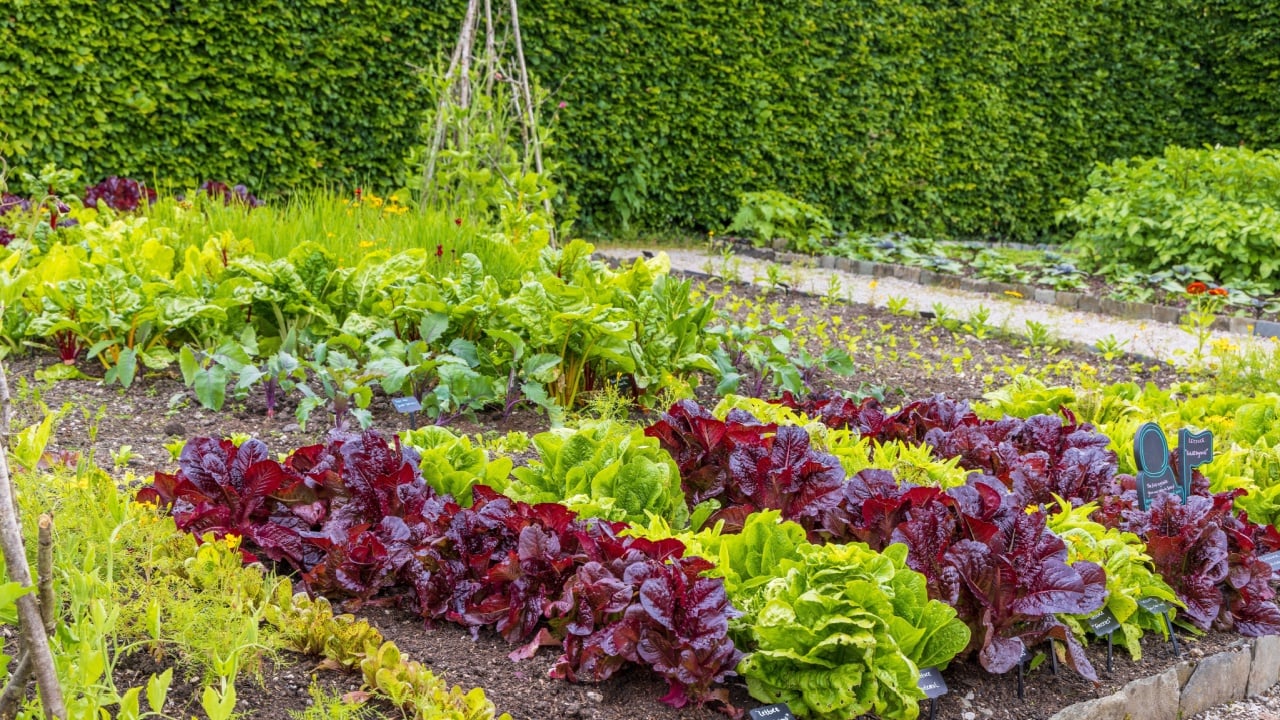
In a raised bed, there are no walking paths eating up real estate. You can reach the center from any side. This means you can use biointensive spacing, placing plants so their leaves just touch at maturity, without any of the negative effects that crowding causes in traditional row gardens. The seed packet’s row-spacing number is irrelevant in a raised bed. What matters is the spacing between plants, applied in every direction.
The 3-Level System That Makes Plant Spacing Simple

Gardenary’s 1-2-3 Method sorts every plant you’ll ever grow into one of three levels based on what you harvest from it, and each level has its own spacing logic.
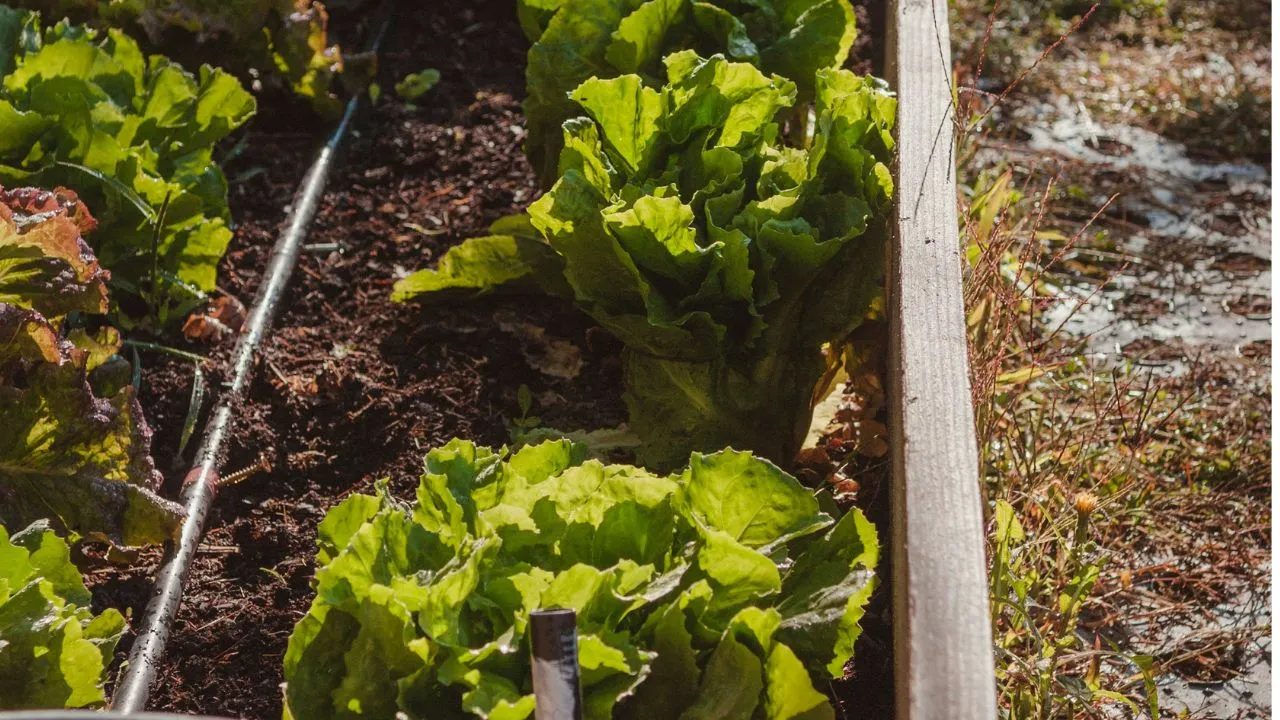
Level 1: Leafy plants (lettuce, spinach, kale, arugula, herbs) are shallow-rooted, tolerate partial shade, and need as little as 4 hours of indirect sunlight. These plants forgive intensive spacing better than any other category. Biointensive planting, or staggering them so leaves just touch neighbors at maturity, is not just acceptable here; it is actively beneficial. Their leaves shade the soil between plants, conserving moisture and blocking weeds. A personal favorite garden move: tuck lettuces directly behind tomato plants, where afternoon shade protects them from bolting in the summer heat.
Level 2: Root crops (carrots, beets, radishes, onions) are the category where a single inch of crowding matters most. These plants need at least 6 hours of direct sun and enough underground room to fill out properly. Crowd them, and you get stunted, twisted, misshapen roots that look nothing like the image on the seed packet. The fix is also the simplest: think ruthlessly and early. As Vegetable Academy notes, 20 well-spaced plants will produce more edible weight than 50 crowded ones that stay small and tough.
Level 3: Fruiting plants (tomatoes, peppers, squash, eggplant) are the most space-hungry category, and the one where breaking the plant spacing guidelines costs you the most. Never compromise on space for this group.
The Vegetables You Should Never, Ever Crowd
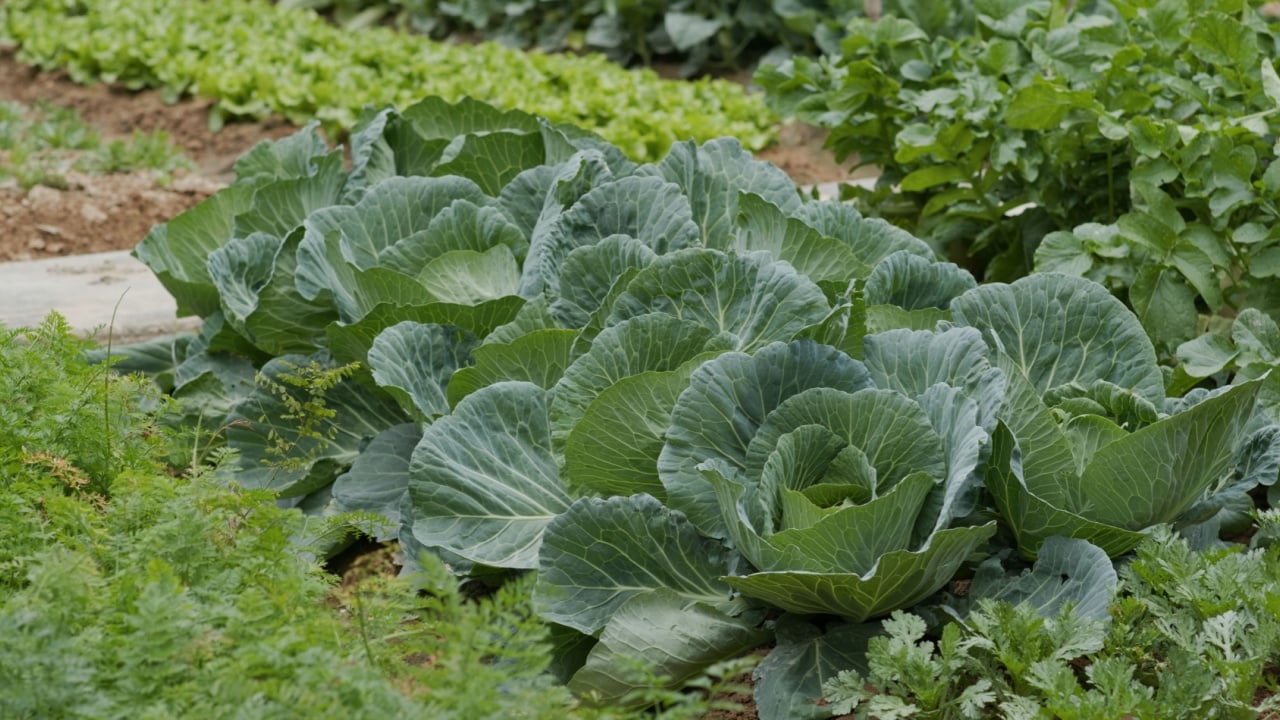
Tomatoes need a minimum of 24 inches between plants, and 36 inches is better in humid climates where airflow is critical to disease prevention. Broccoli, brussels sprouts, cabbage, and cauliflower require 12 full inches with one plant per square foot. Bush squash varieties need 9 square feet of space; vining squash varieties need at least 2 square feet of trellis-supported growing space, according to the Square Foot Gardening Foundation.
Most gardeners never hear this from their local nursery: experienced plant buyers evaluate a plant’s mature spread before they pick it up, not after. A hydrangea tagged to mature at 5 feet wide needs a 5-foot diameter circle of open space around it, even if it looks like a modest shrub today. The same logic applies to every fruiting vegetable in your garden.
If you are a gardener over 50 who has recently moved to raised beds after years of large in-ground gardens, this is the single adjustment that will transform your results. The beds are smaller, but the density temptation is just as strong — and the consequences are just as real.
The Plants That Actually Prefer Closer Neighbors
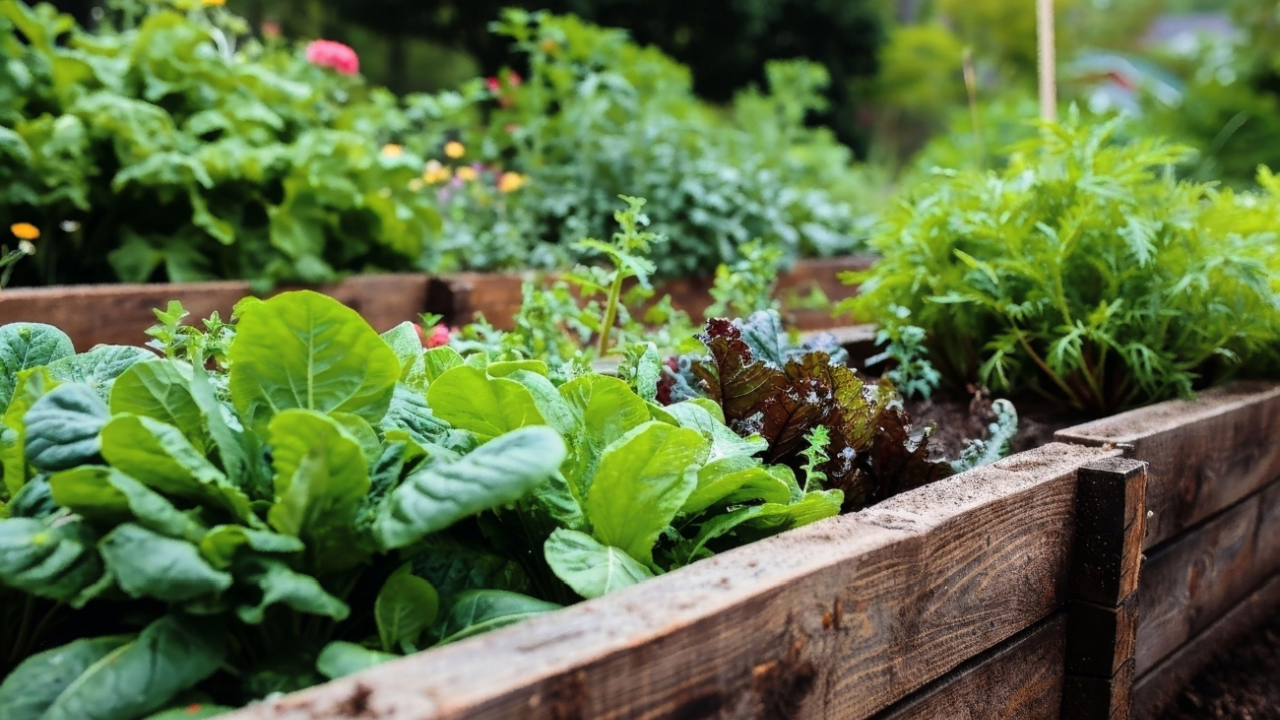
Not every plant suffers from a close neighbor. Leafy greens, shallow-rooted herbs, and fast-growing radishes handle intensive spacing without missing a beat. In fact, they benefit from it.
When lettuce, spinach, and arugula are spaced so their leaves touch at maturity, they form a living canopy over the soil. That canopy blocks sunlight from reaching weed seeds below, dramatically reducing the amount of weeding required. Moisture evaporates more slowly from shaded soil, meaning you water less. UC Marin Master Gardeners recommend grouping these plants with similar water and root-depth needs together in “hydrozones,” making irrigation more efficient and maintenance simpler.
Tuck shade-loving greens on the north side of taller fruiting plants. Your tomatoes and trellised beans act as a natural sun filter for the lettuce planted in their shadow. Both crops thrive. The garden functions as a system rather than a collection of competing individuals, and it costs almost nothing to set up this way.
Stop Filling Every Gap
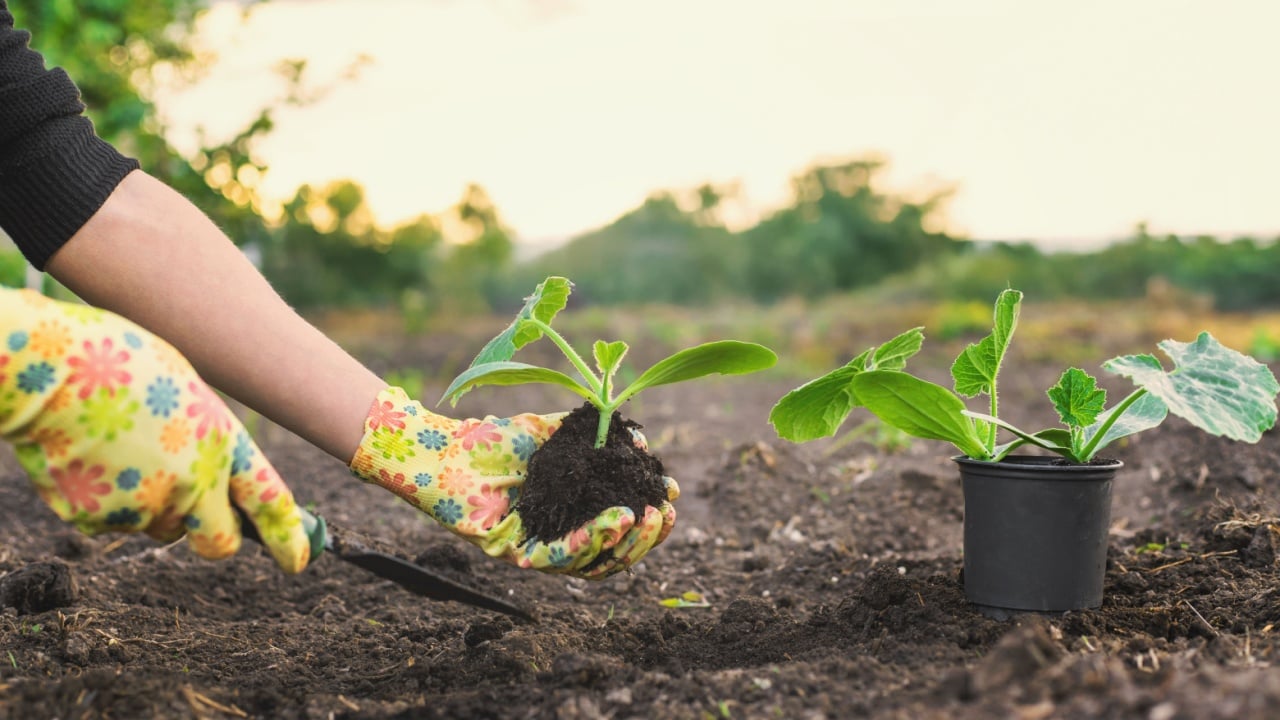
The hardest moment in properly spaced gardening is the first two weeks, when the bed looks sparse, and the instinct to fill it screams at you. Resist it.
Lay two to three inches of wood chip mulch or straw in the gaps between young plants. This suppresses weeds, locks in moisture, and makes the bed look intentional rather than abandoned. As plants grow into their space, the mulch disappears beneath a canopy of healthy foliage. No bare soil, no weed invasion, no panic.
The second tool is succession planting. As one section of your bed finishes producing, pull the spent plants, amend the soil lightly, and put in a new crop. Proper spacing makes this rotation possible because you know exactly how much room the next planting needs. Crowded, haphazard beds make succession planting nearly impossible; there is never a clean section to clear.
The Simplest Fix in Gardening
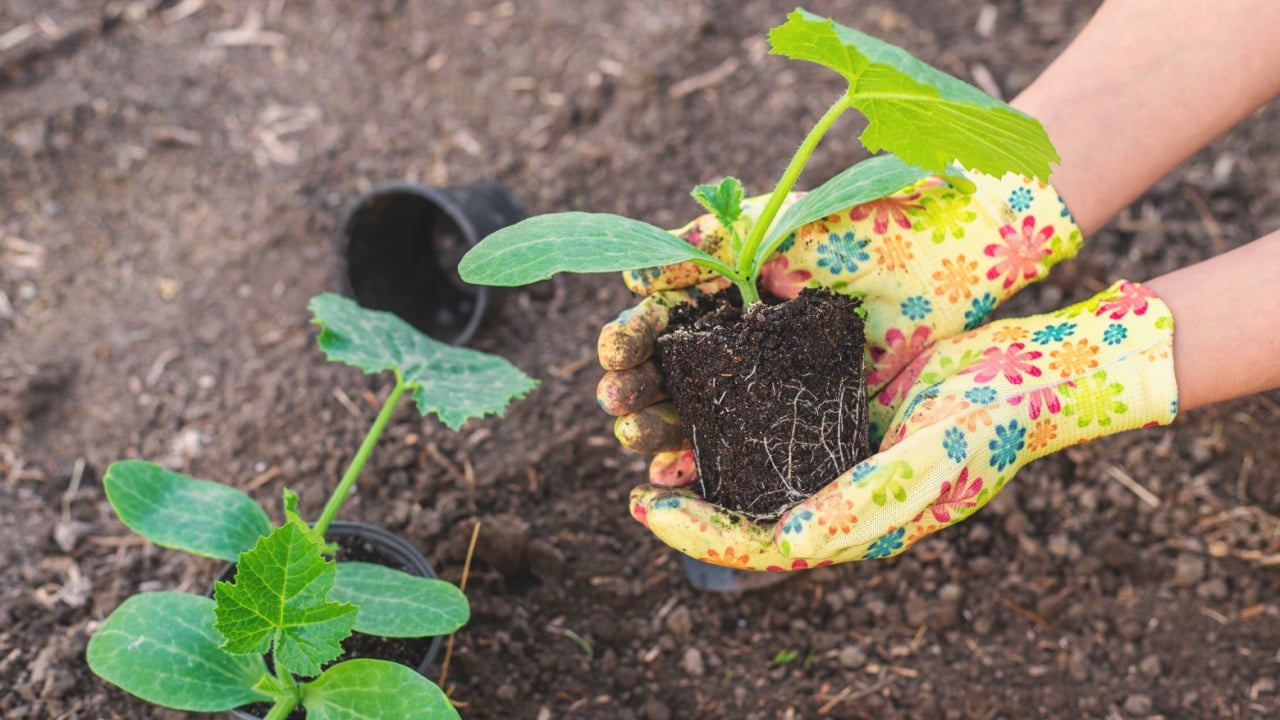
The villain in most underperforming gardens is not poor soil, insufficient water, or bad luck. It is the quiet, well-intentioned mistake of fitting in one more plant than the bed can support. Every garden that “always gets blight,” every tomato that “never really produces,” every root crop that comes up stunted and strange: the answer is almost always spacing.
Give your plants room this year. Follow the numbers on the label for the spread at maturity, not the seedling size in front of you. In a raised bed, apply that spacing in every direction and forget about row numbers designed for tractors. The beds that look a little bare in week two are the ones that overflow in July, August, and September. The difference between a garden that feeds you and one that frustrates you is often measured in inches.
Read More
Washing Your Lettuce Won’t Remove Cyclosporiasis, But Growing Your Own Will
Your Grandmother Stored These 8 Foods All Winter Without Canning a Single Jar