

Getting your space in order is easier when you follow a clear rhythm instead of simply shoving things into drawers. The approach popularized by Marie Kondo in the book, The Life-Changing Magic of Tidying Up, and shown to millions on her Netflix serie,s guides you to sort by category and keep only what matters most.
The tips below mix the organizing ideas and proven approaches from the KonMari world to keep your home feeling lighter
1. Clarify Your Ideal Space

Image Credit: Deposit Photos.
Before you start, picture how you want your home to feel and function. That vision keeps you motivated and makes decisions clearer as you go. Understanding your ideal space helps you avoid keeping items that don’t fit your life now. It also smooths the transition from decluttering to daily upkeep.
Fast-check list
- Write a brief description of your goal
- Place visual cues where you tidy
- Revisit your vision after the major categories
2. Tackle by Category, Not by Room

Image Credit: Deposit Photos.
Instead of tidying room by room, pull all items of a certain type together first. Clothing, books, papers, miscellaneous, and sentimental things should be handled in that sequence.
Sorting by category gives you a clear view of how much you own and stops misplaced items from being shuffled around without real progress. Starting with easier categories like clothes builds momentum before tougher ones like sentimental items.
Fast-check list
- Pull everything in one category into one place
- Lay items out so they’re easy to see
- Sort through them before moving on
3. Keep What Sparks Joy
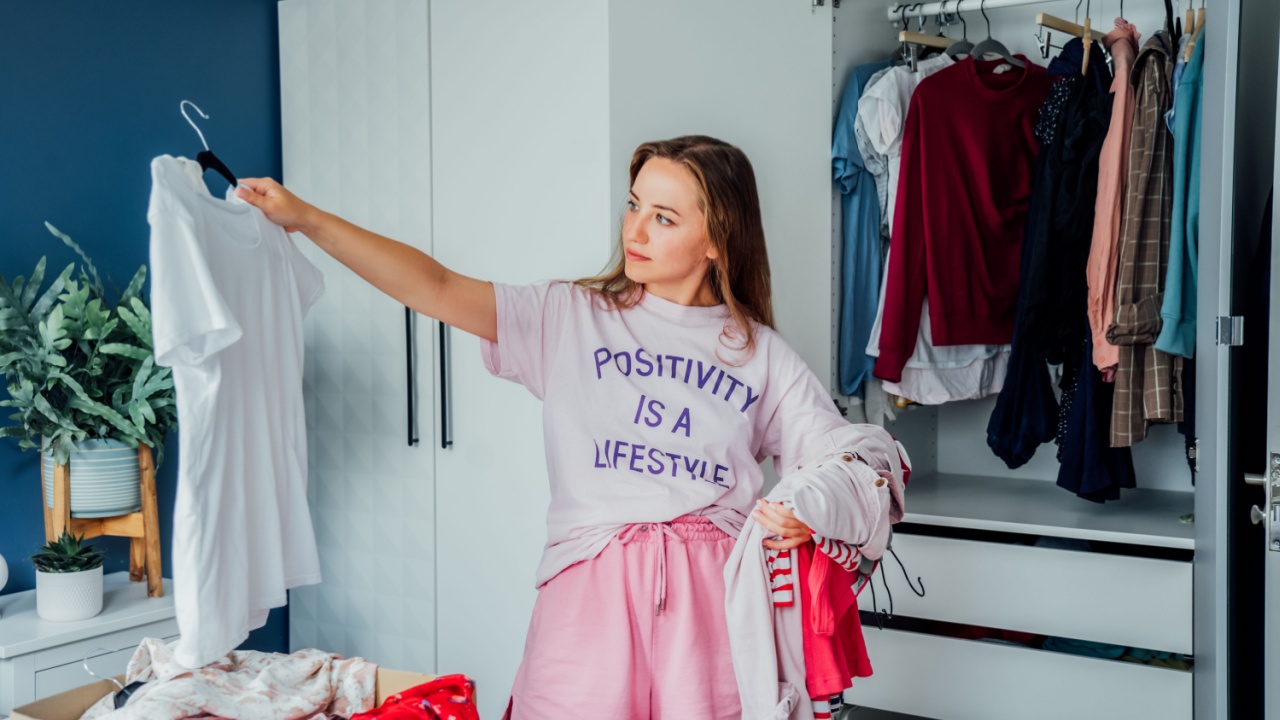
Image Credit: Shutterstock.
Pick up each item and decide if it sparks joy or serves a meaningful purpose. If it does not, that item leaves your home. This principle sharpens your instincts for what belongs in your space. It also cuts through indecision quickly, leaving only what matters to you.
Fast-check list
- Hold each piece and notice your reaction
- Friendlier items stay, others go
- Organize the keep pile in a dedicated zone
4. Give Every Item a Home
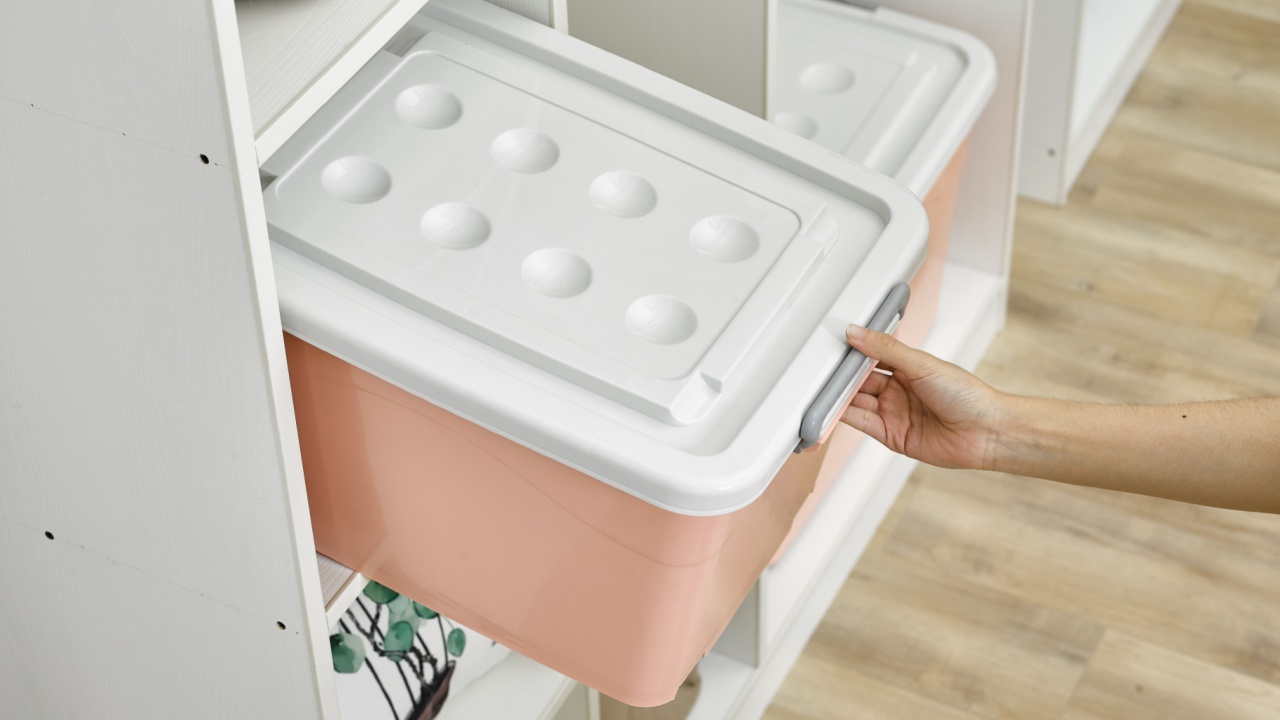
Image Credit: Shutterstock.
Once you’ve pared down, assign a specific place where each item belongs. That makes finding things easier and stops clutter from creeping back. When things have a “home,” it’s obvious where to put them after use. You’ll spend less time searching and more time living.
Fast-check list
- Use clear containers for small stuff
- Label shelves or bins
- Keep similar items together
5. Fold and Store Vertically

Image Credit: Shutterstock.
Marie Kondo’s folding technique keeps clothes standing upright so you see what you have at a glance. This strategy makes drawers easier to scan and reduces digging that leads to disorder. It also maximizes space in a drawer because items nest side by side.
Fast-check list
- Learn the simple rectangle fold
- Stand items up, don’t stack them
- Use drawer dividers if needed
6. Sort and Streamline Paperwork
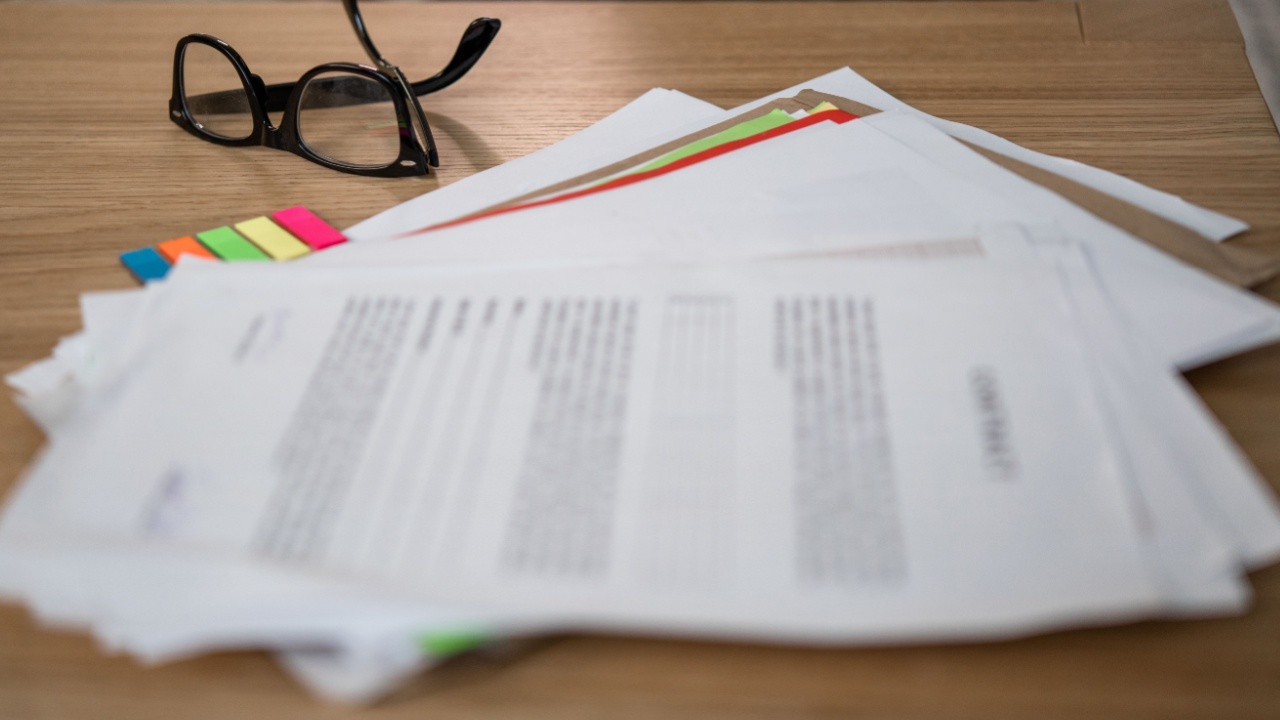
Image Credit: Shutterstock.
Paperwork can overwhelm shelves and desks quickly. Pull all paper into one spot and only keep what’s essential (current use, limited-term use, or long-term important). This approach stops piles from overflowing and helps you decide what to file, shred, or recycle. Fewer papers make day-to-day tasks less stressful.
Fast-check list
- Keep three simple categories
- Recycle old or irrelevant paperwork
- File essentials in clear folders
Bringing It All Together

Image Credit: Deposit Photos.
At the end of an organizing session, take a slow walk through the spaces you just worked on. Notice how items sit now, where there is breathing room, and where everything feels easy to reach.
Check each shelf and drawer against the life you want to live day to day, not an ideal version saved for later. This pause helps lock in the progress you made and makes future tidying feel lighter and more natural. When these habits settle in, order stops feeling like a project and starts feeling like the default.