20-Year-Old Plant’s First Bloom Will Also Be Its Death Bloom
A rare plant at London’s Kew Gardens is entering the dramatic final act of its life: a once-in-a-lifetime “death bloom” that will end with the plant itself dying.
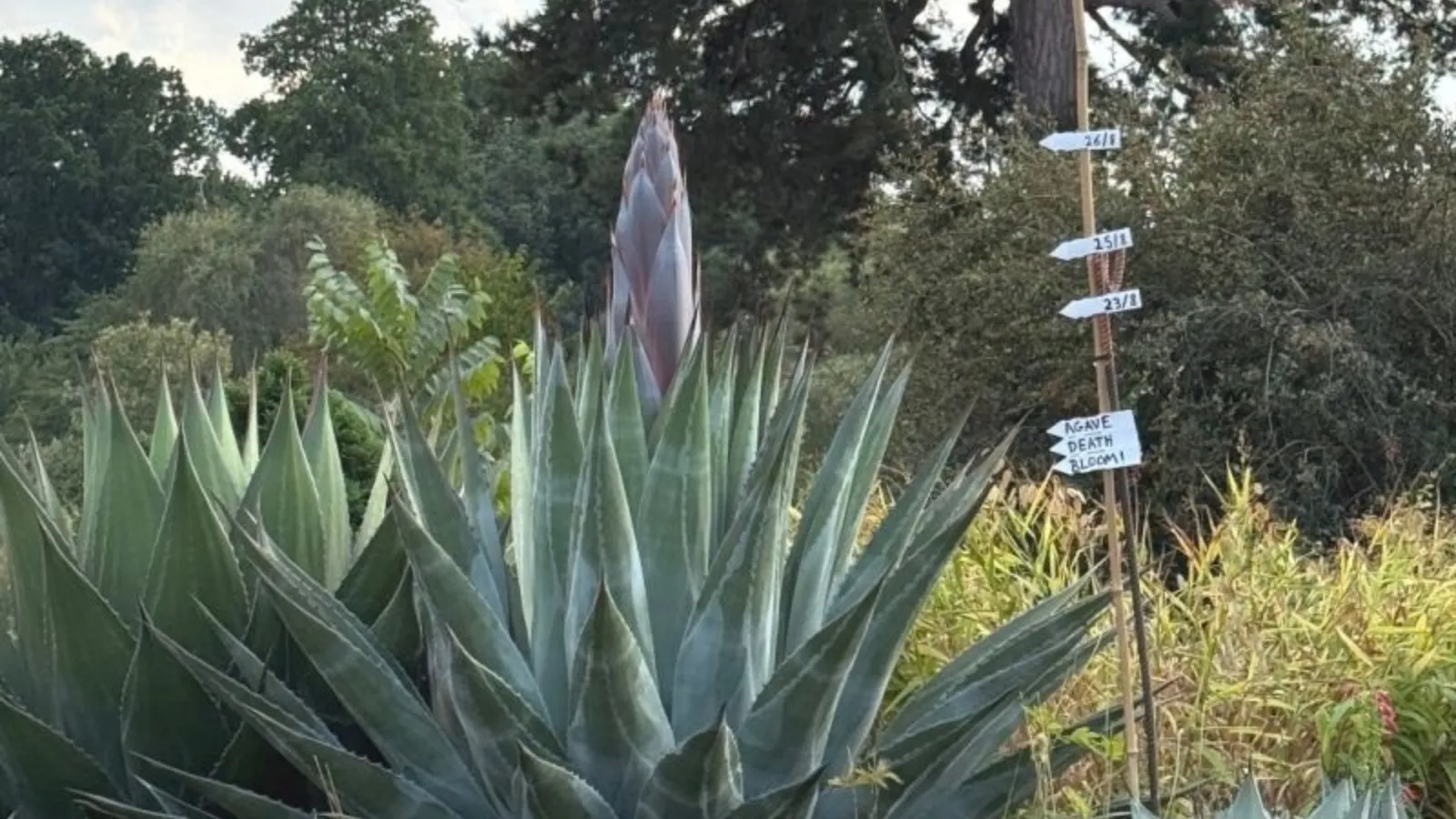
A mountain agave, Agave montana, has sent a towering flower stalk swaying skyward as it prepares for the only bloom it will ever produce. And after flowering and reproducing, the plant will die, all as part of a lifecycle called monocarpy.
Royal Botanic Gardens, Kew announced the impending “death bloom” on social media. The mountain agave was planted back in 2007; the garden theorizes that “the unusually hot summer has triggered to upcoming bloom.”
The growing stalk can currently be seen near the Davies Alpine House.
The plant itself is already about three meters tall; its rapidly developing flower stalk has recently been growing at an average of roughly 10 centimeters, or four inches, per day, according to Press Association reporting.
A Final Bloom Nearly 20 Years in the Making
Embedded media follows. Please allow a moment for it to load.
Mountain agave is native to northeastern Mexico. According to Kew’s official plant profile, the species grows in cool, wet, mountainous habitats and its characteristic tolerance towards cold conditions makes it unusually well-suited to growing outdoors in Britain.
Near the end of its life, the plant produces a blue-green flower spike that can ultimately reach four to five meters high. Clusters of yellow, tube-shaped flowers then form near the top, according to Kew, forming what is known as an inflorescence.
Kew botanical horticulturist Anna Lim described the emerging inflorescence as an “amazing botanical event” in comments reported by the Press Association. She said witnessing it could be a “once-in-a-lifetime botanical experience.”
The wait isn’t over just yet for this once-in-a-lifetime event—for plant and observer alike. Winter’s approach means the agave’s rapid growth is expected to taper and pause as the plant goes dormant; next spring should see the arrival of its characteristic yellow and pink flowers, according to ITV News. Once that flowering cycle is complete, the parent plant will die.
Record Heat May Have Triggered The Bloom
Kew believes this year’s extraordinary heat may have pushed the agave into flowering. The Met Office, observing weather records dating as far back as 1884, says summer 2026 was provisionally the UK’s hottest on record.
In comments reported by Press Association, Thomas Freeth, Kew’s head of collection management, called the event a “tell-tale sign of our rapidly changing climate.”
Before the agave blooms its first and last, Kew hopes to make the most of its only chance to reproduce. Lim said the garden is searching the agave-growing community for a suitable pollen donor so horticulturists can cross-pollinate it, according to Press Association.
Visitors, meanwhile, can already watch the enormous stalk journey through its unique lifecycle in Kew’s Rock Garden.