12 Flower Pairs That Create a Jaw-Dropping Pop of Color in the Yard
Most gardeners pick flowers they love and hope for the best. Garden designers pick by the color wheel, and the difference is visible from the street.
The good news? Color theory for gardens isn’t complicated. It boils down to one principle: colors that sit opposite each other on the color wheel create the most electric contrast. Purple next to yellow. Orange next to blue. That tension is what makes a passerby stop, back up, and look again. Once you understand that, every flower pairing decision gets easier.
But complementary pairs aren’t the only trick worth knowing. Analogous colors, the ones that sit next to each other on the wheel, do the opposite job: instead of tension, they create harmony. Think pink drifting into red, or blue easing into purple. These combinations read as calm and cohesive, the kind of planting that feels intentional even from a distance. And then there’s the neutral that makes everything else work harder: white and silver-foliaged plants act as a visual palate cleanser, giving the eye a place to rest between bolder colors so a bed doesn’t tip into chaos.
The trick is knowing which effect you’re after before you start plant shopping. Want a bed that stops traffic? Reach for complements. Want one that feels soothing and pulled-together? Stay analogous. Either way, once color becomes a deliberate choice instead of an afterthought, the whole garden starts to look like it was designed on purpose, because it was.
The Secret Every Designer Knows (That Most Gardeners Don’t)
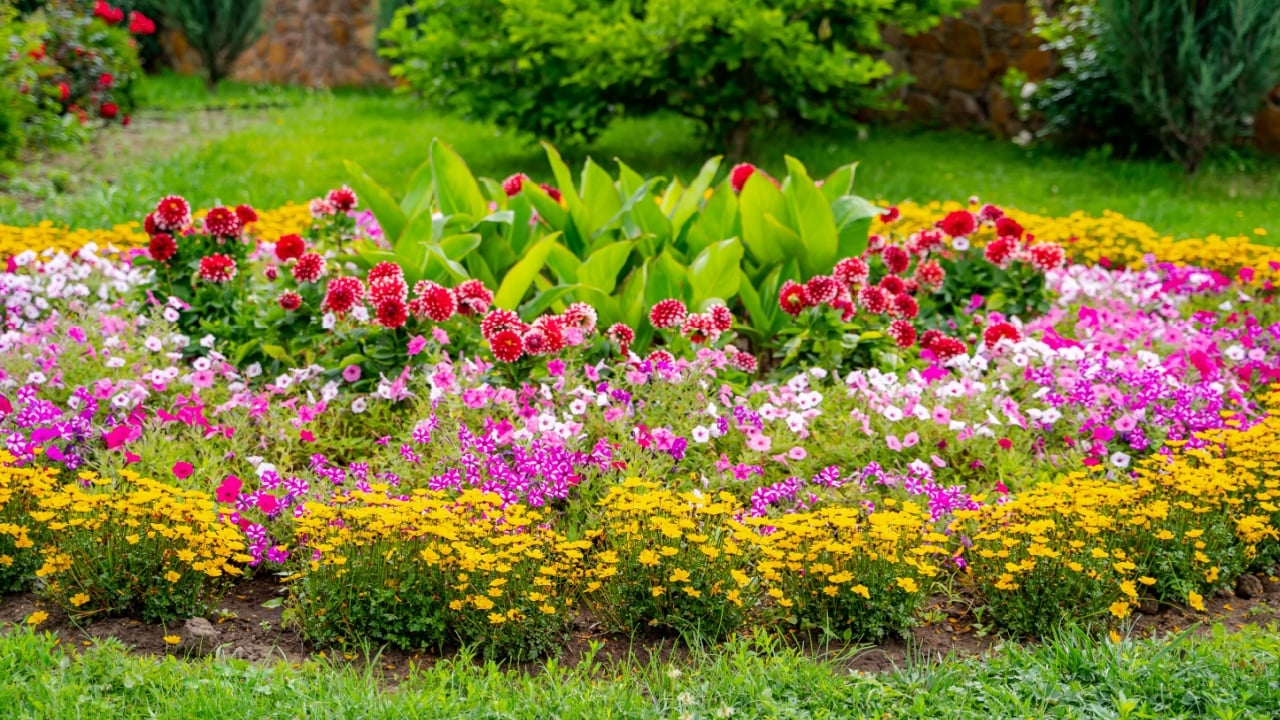
Color is the first thing people notice in a flower garden, and it’s also where most home gardeners go wrong. Warm colors like yellow, orange, and red bring energy and draw the eye from a distance, while cool colors like purple, violet, and blue create a soothing effect best appreciated up close. Neither is better, but what matters is the relationship between them.
The most visually powerful combinations are complementary: two colors sitting directly across from each other on the color wheel. The contrast is what creates the pop. Proven Winners ColorChoice puts it plainly: complementary colors directly face each other across the wheel, and pairing them produces the most eye-catching results in the garden.
When you’re standing in a nursery and wondering whether two plants go together, ask yourself: are these warm and cool? Are they pulling in opposite directions? If the answer is yes, you’re probably onto something good.
These 12 combinations are the ones that actually deliver, from classic cottage pairings that have worked for a hundred years to a few bold moves that might surprise you.
1. Purple Catmint + Yellow Yarrow
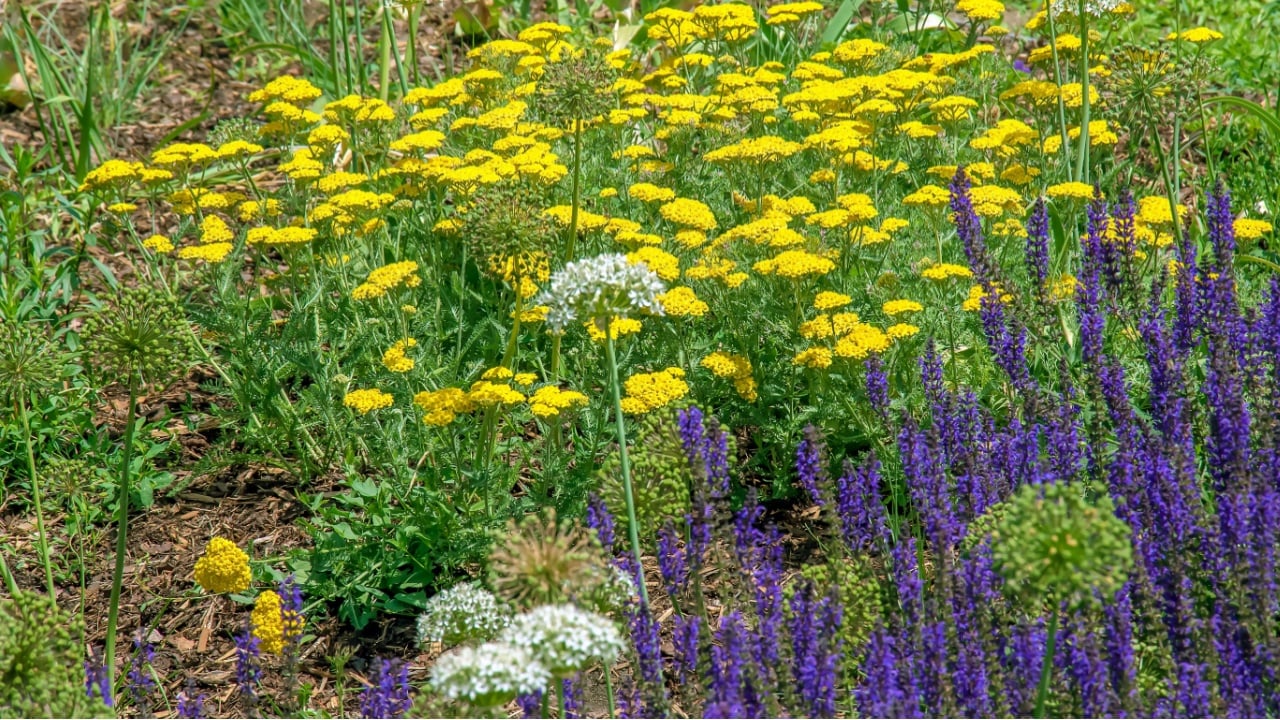
This is the complementary combination that designers reach for first, and for good reason. The feathery lavender-blue spikes of catmint and the flat, sunny heads of ‘Moonshine’ yarrow are as opposite as they come on the color wheel and the contrast is electric.
Pretty Purple Door recommends exactly this pairing, noting that yellow and purple really pop against each other with a wide range of easy-to-find plant choices. Both are drought-tolerant perennials that bloom through much of summer, making this combination as low-maintenance as it is striking.
2. Black-Eyed Susan + Purple Ageratum
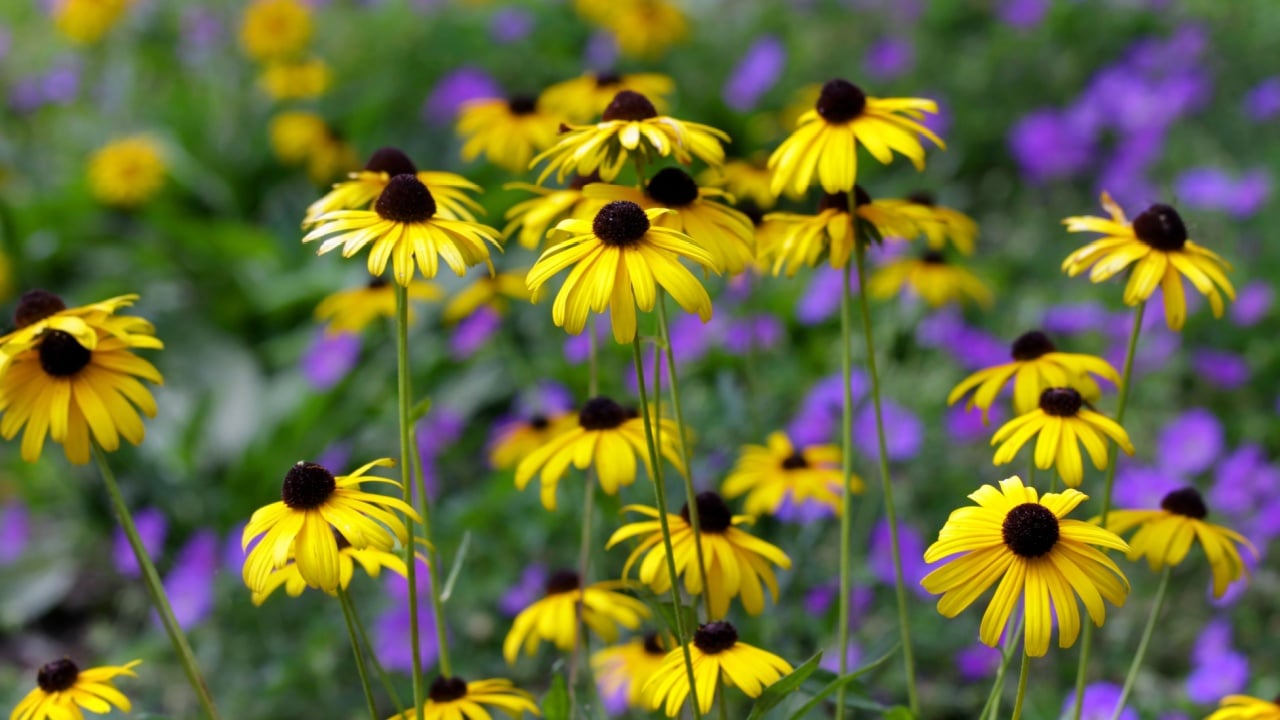
Better Homes and Gardens calls this duo a pollinator favorite, and the visual logic is equally sound: golden yellow petals with dark centers, set against dense clusters of dusty purple. The height difference gives the bed natural layering, with ageratum hugging the front and black-eyed Susans rising behind.
This pair peaks in the heat of late summer precisely when many other flowers are fading, which makes it even more valuable.
3. Orange Tulips + Blue Forget-Me-Nots
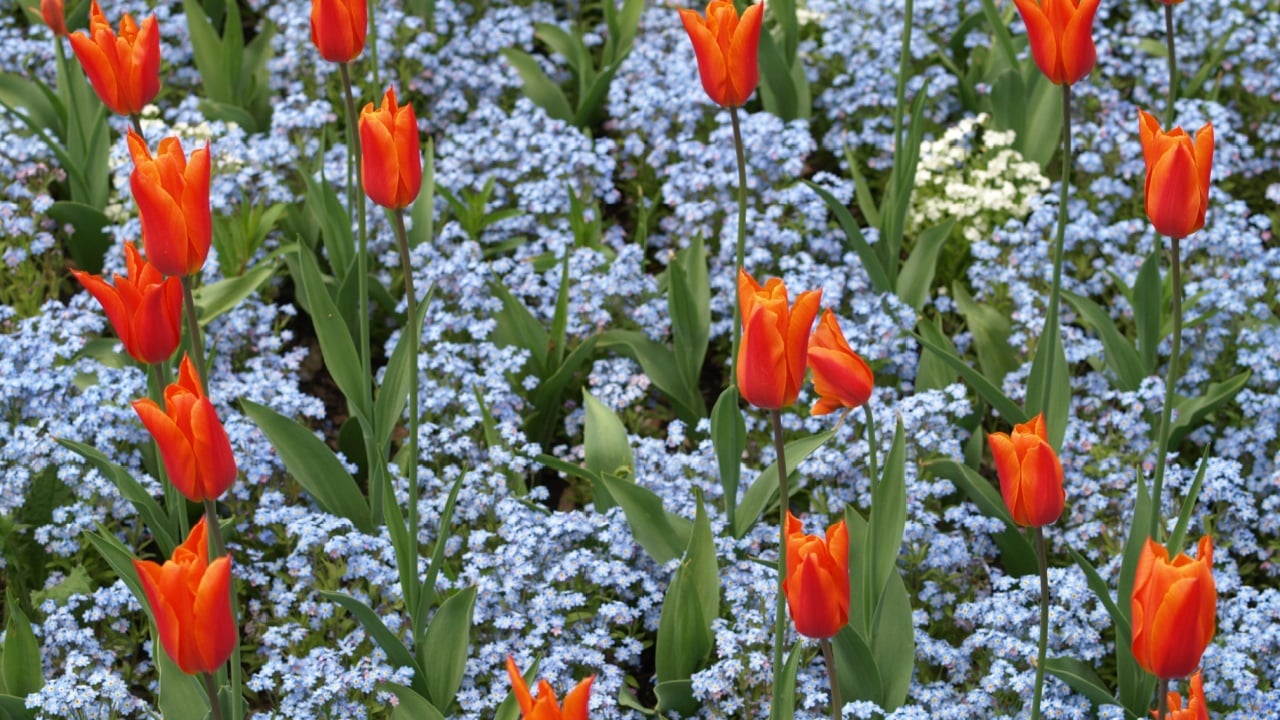
Orange and blue are the most underused complementary pairings in home gardens, which is a shame; the contrast is breathtaking. Pretty Purple Door recommends combining ‘Orange Emperor’ tulip with blue forget-me-nots for a high-impact spring display that reliably turns heads.
Plant the bulbs in fall and let the forget-me-nots fill in around them; they’ll bloom in sync, and the whole arrangement looks intentional with almost no effort.
4. Pink Shrub Rose + Siberian Iris
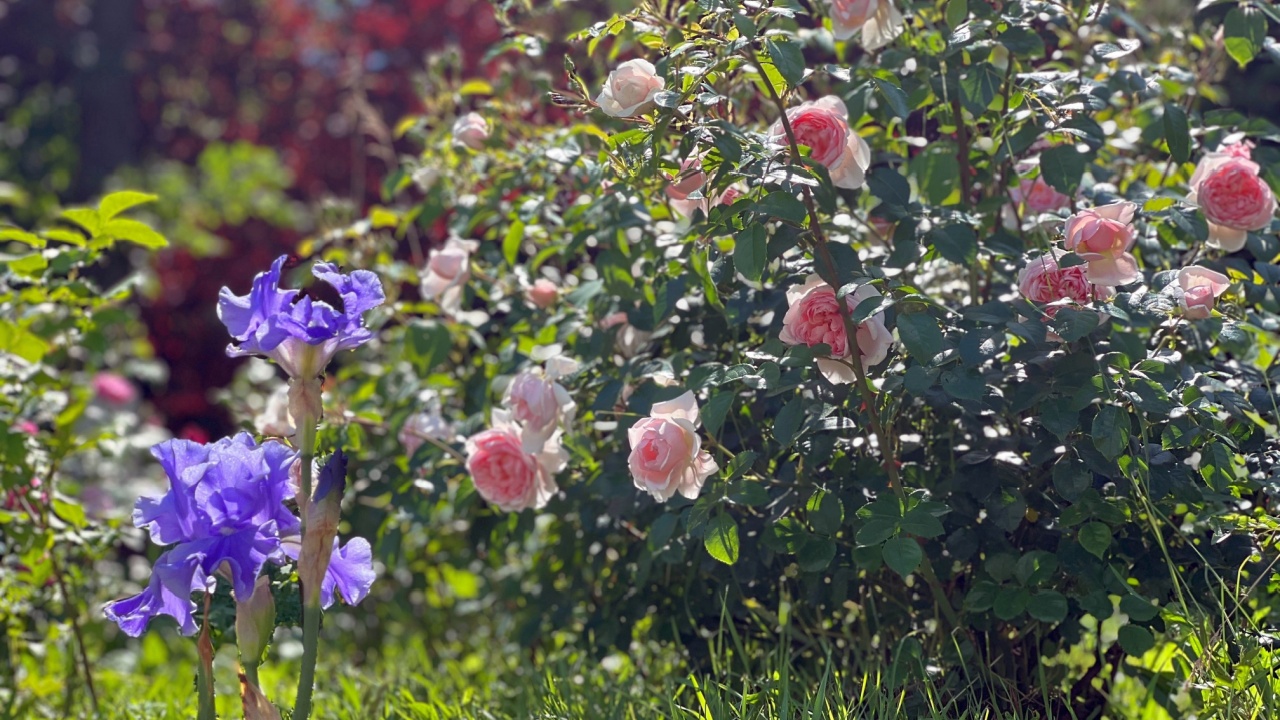
This combination works because of the contrast in both color and form. A bright pink shrub rose, full and rounded, set beside the upright, architectural blooms of a purplish-blue Siberian iris, creates tension that feels designed rather than accidental.
Better Homes and Gardens highlights this pairing for exactly that reason; the difference in foliage textures adds another layer of interest even when the blooms are between cycles.
5. Marigolds + Zinnias
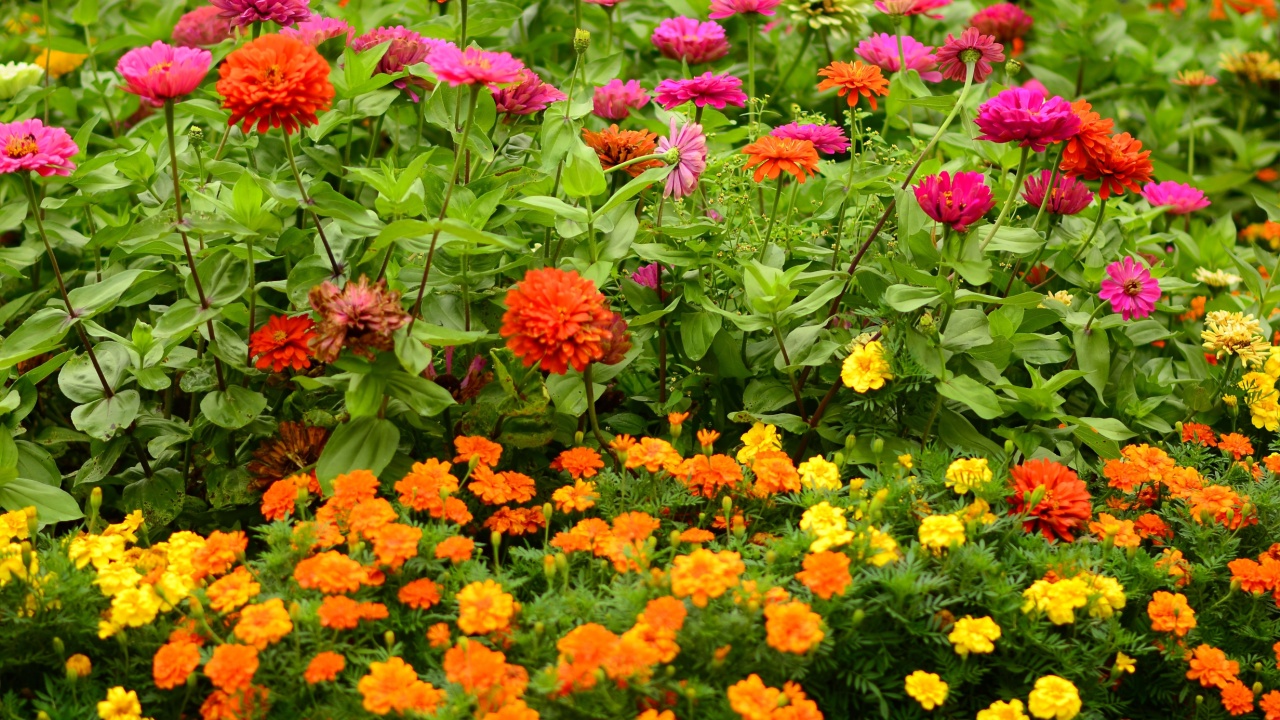
Some combinations earn their classic status by simply never failing. According to Better Homes and Gardens, marigolds and zinnias have been around for generations and still deserve a prominent spot in beds, borders, and containers.
Together in warm gold, orange, and red, they create an exuberant midsummer display that requires almost no planning. If you’ve never tried them together, this is the pairing to start with.
6. Peony + Catmint + Allium
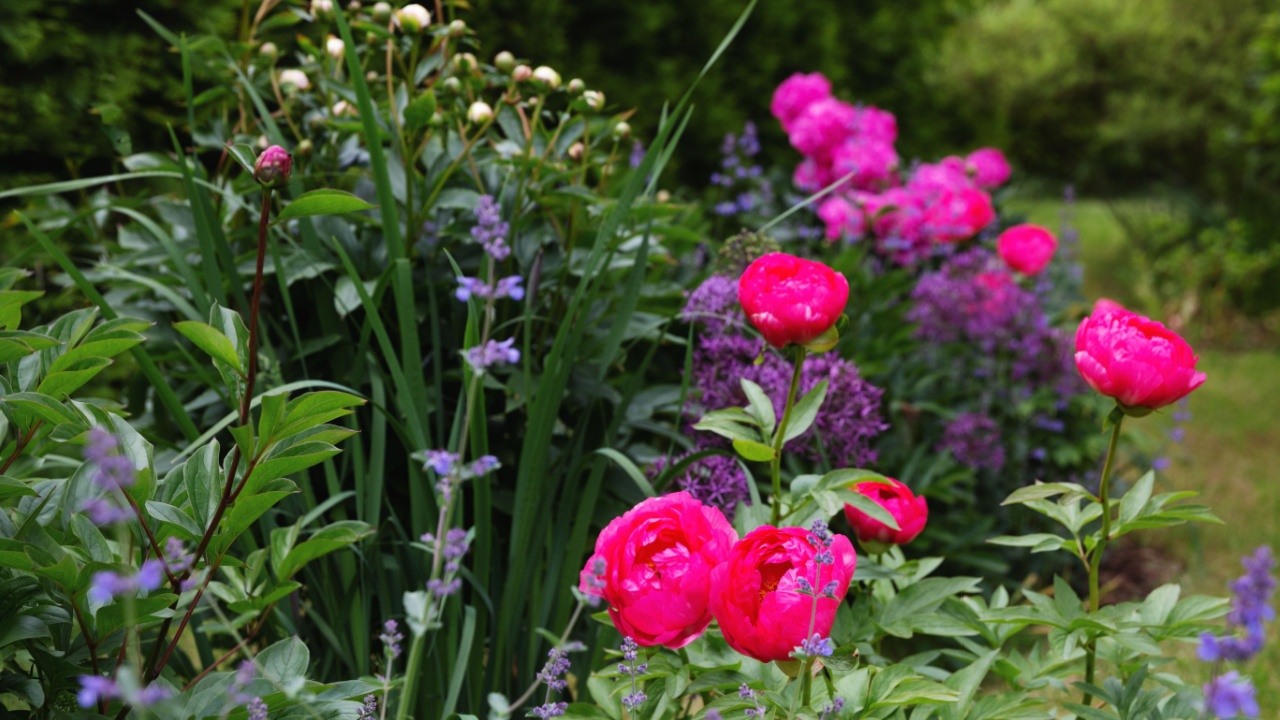
This late-spring threesome is one of the most beloved combinations in cottage garden design. Deep pink or red peonies, with the airy blue-purple haze of catmint at their feet and spherical allium rising above, create a layered scene that looks like a still painting.
Better Homes and Gardens describes this combination as a dazzling late-spring performance, and the height variation alone, of low catmint, mid-height peonies, and tall allium globes, makes it look professionally designed.
7. Daffodils + Chionodoxa
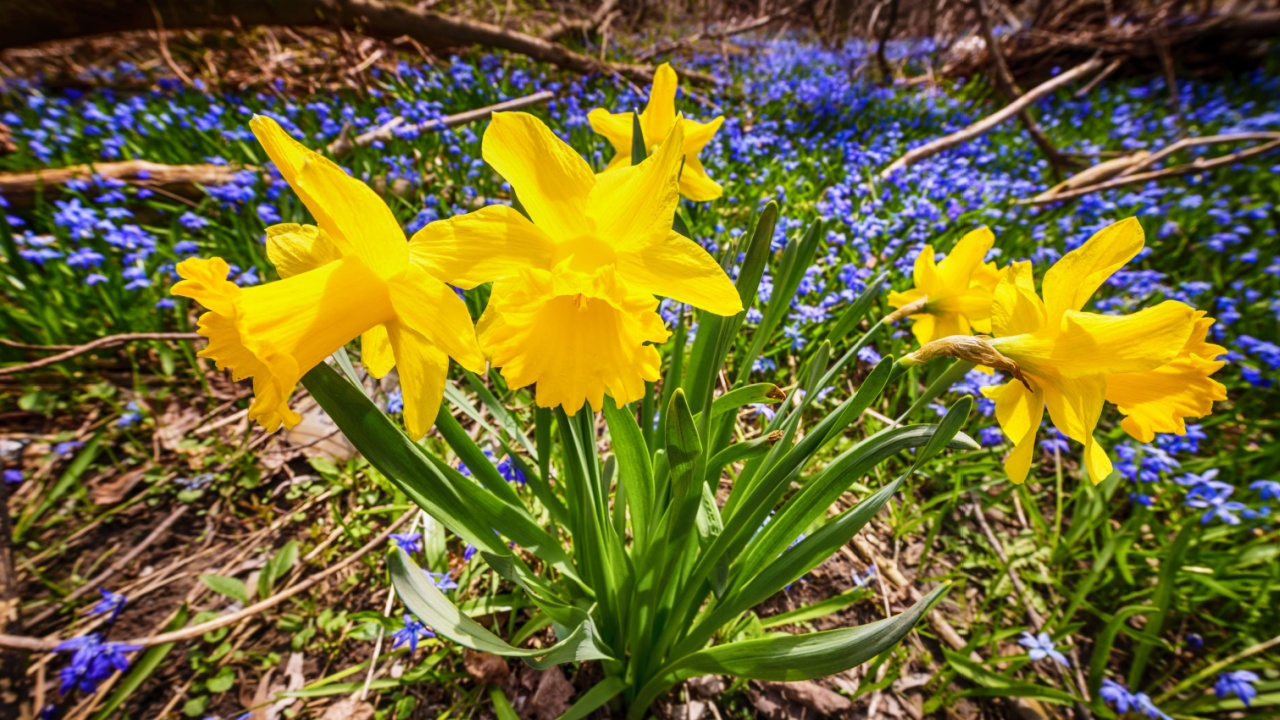
The earliest pop of color in the garden year doesn’t have to be just yellow. Pairing ‘Little Gem’ daffodils with the delicate blue stars of Chionodoxa (glory-of-the-snow) brings warm and cool tones together the moment winter starts to lift.
Both are easy to establish in fall, thrive in the same conditions, and create that cheerful yellow-and-blue contrast that feels like the garden’s first deep breath of spring.
8. Yellow Coneflower + Purple Clematis
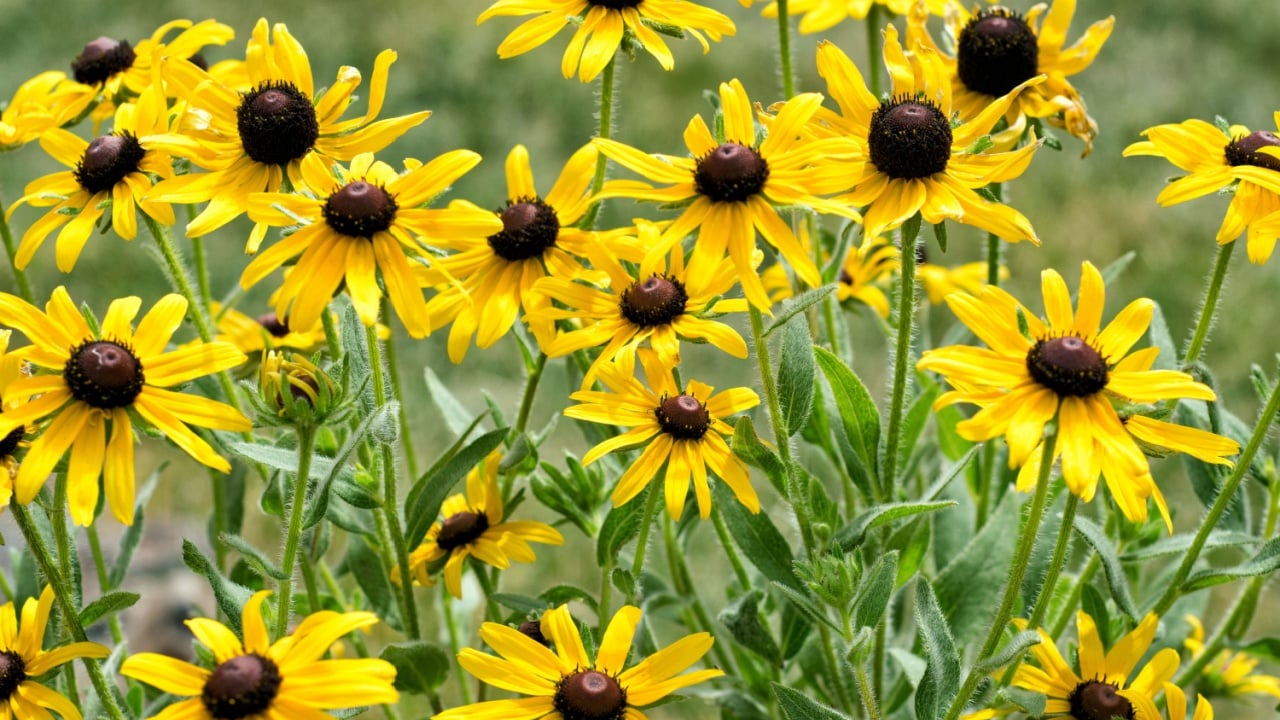
Most gardeners think in horizontal layers, missing one of the most dramatic color plays available: vertical contrast. A yellow coneflower at the base of a fence, with purple clematis climbing behind it, creates a natural color echo between ground level and eye level.
Better Homes and Gardens suggests exactly this arrangement to bring blank fence lines to life. It’s one of the simplest ways to add color depth to a flat border.
9. Astilbe + Hosta
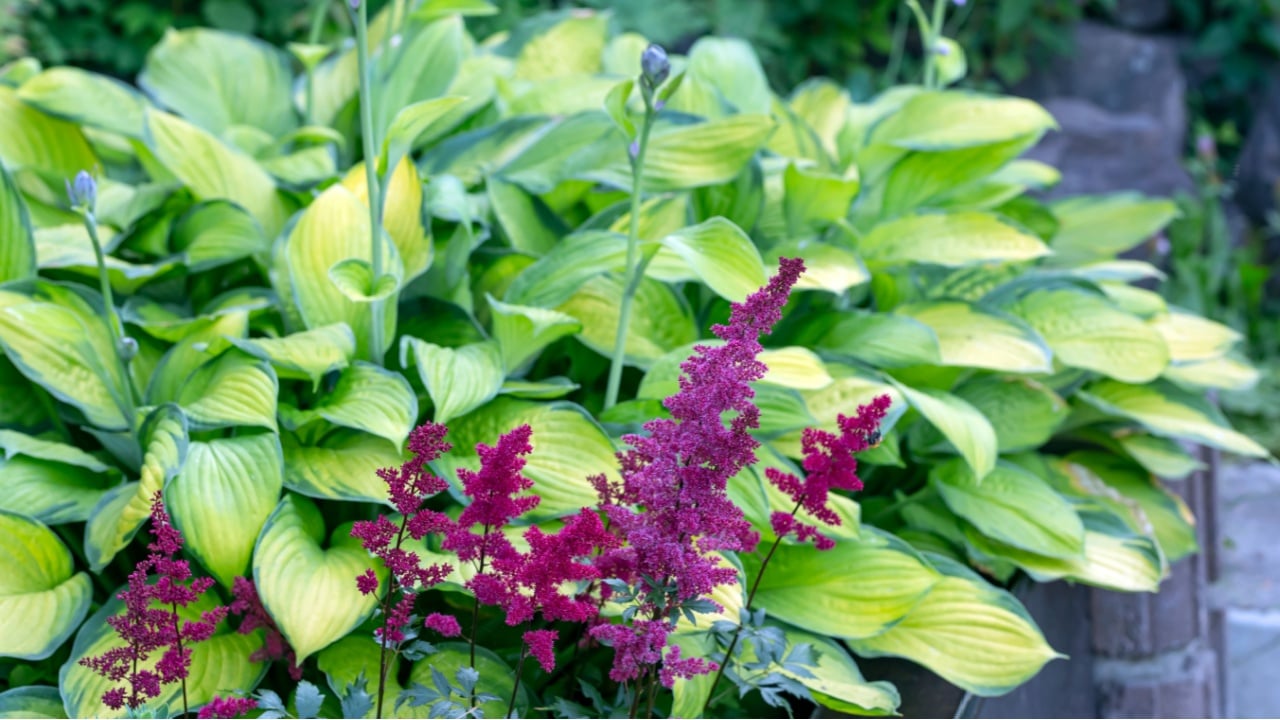
Shady yards are not a limitation. They’re an invitation to use this pair, which Better Homes and Gardens calls two of the very best shade-garden companions.
Astilbe’s feathery plumes in pink, red, white, or purple rise dramatically above the broad, textured leaves of hosta, and together they make a lush, layered scene in spots where most sun-loving color combinations simply can’t go. Mass-plant them for maximum effect.
10. Echinacea + Rudbeckia
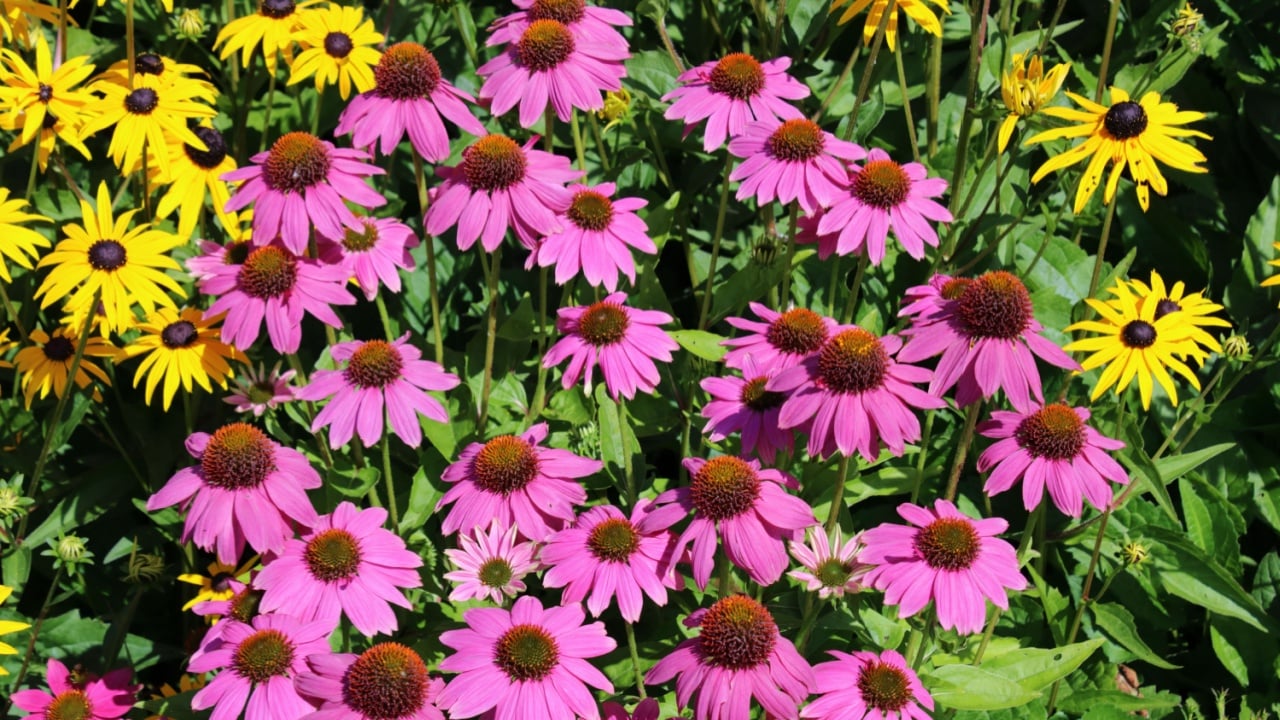
When the heat of August settles in, and half the garden looks exhausted, this pairing holds its own. Pink or magenta echinacea alongside golden rudbeckia is a textbook complementary combination that Gardening Know How cites as playful but harmonious in a garden setting.
Both are native-adjacent perennials, both attract pollinators, and both seed themselves into healthy colonies over time with minimal effort.
11. Delphinium + Orange Calendula
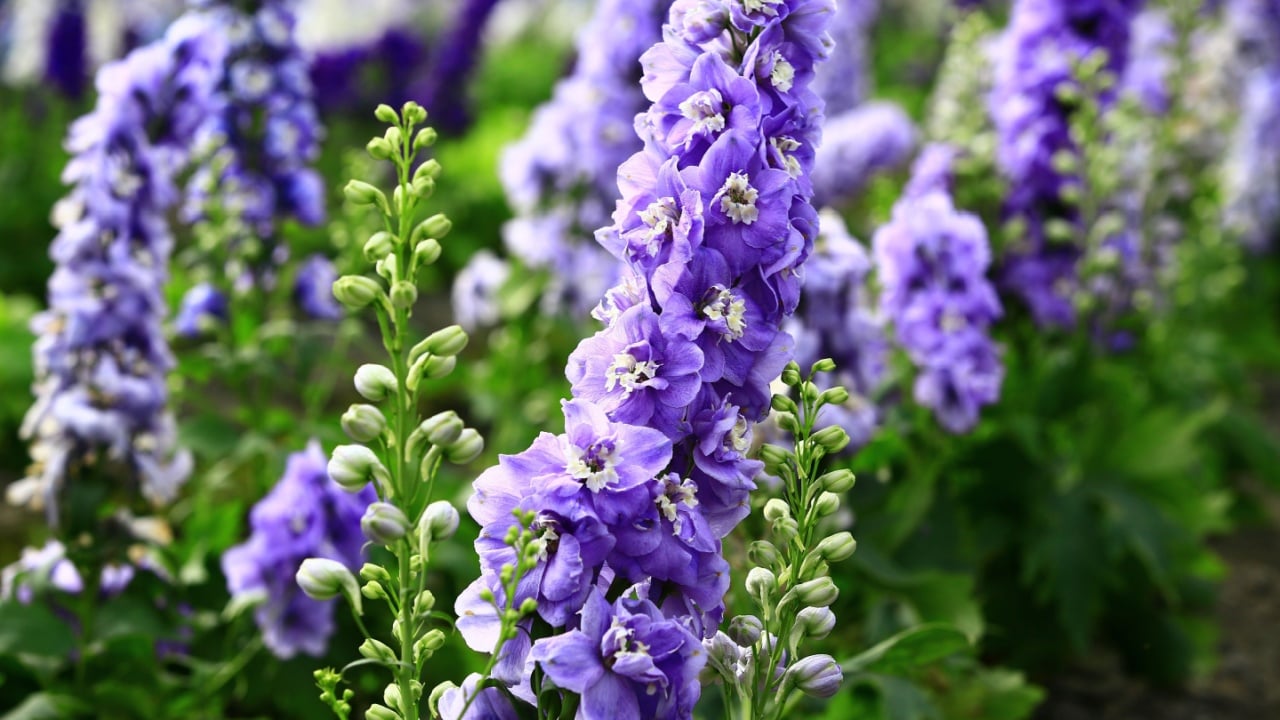
This is the combination most gardeners would never put on paper, and yet the cool electric blue of delphinium set against warm, saturated orange calendula is exactly the kind of visual contrast that makes a garden unforgettable.
Costa Farms notes that orange can be difficult to use precisely because it’s so intense, but paired with a true cool-spectrum blue, it transforms from overpowering to stunning. Consider this your permission to go bold.
12. White Shasta Daisy + Any Bold Color
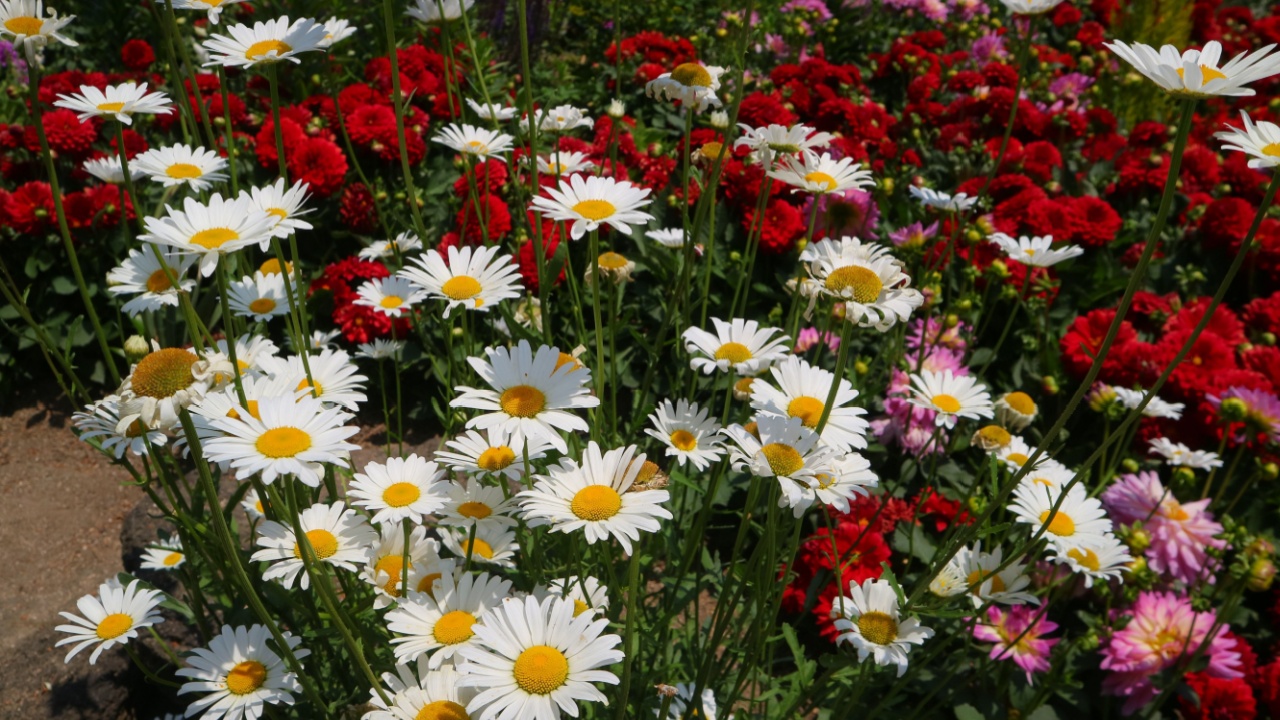
White flowers are the great equalizer. Gardeners.com points out that white amplifies and clarifies whatever color sits beside it. A mass of white Shasta daisies planted beside or between any bold-colored flowering plant whether hot pink salvia, rich purple agapanthus, or deep red roses creates an instant reset that keeps the eye moving and the composition breathing. If your garden feels too busy, add white before you start pulling anything out.
The One Design Rule That Changes Everything
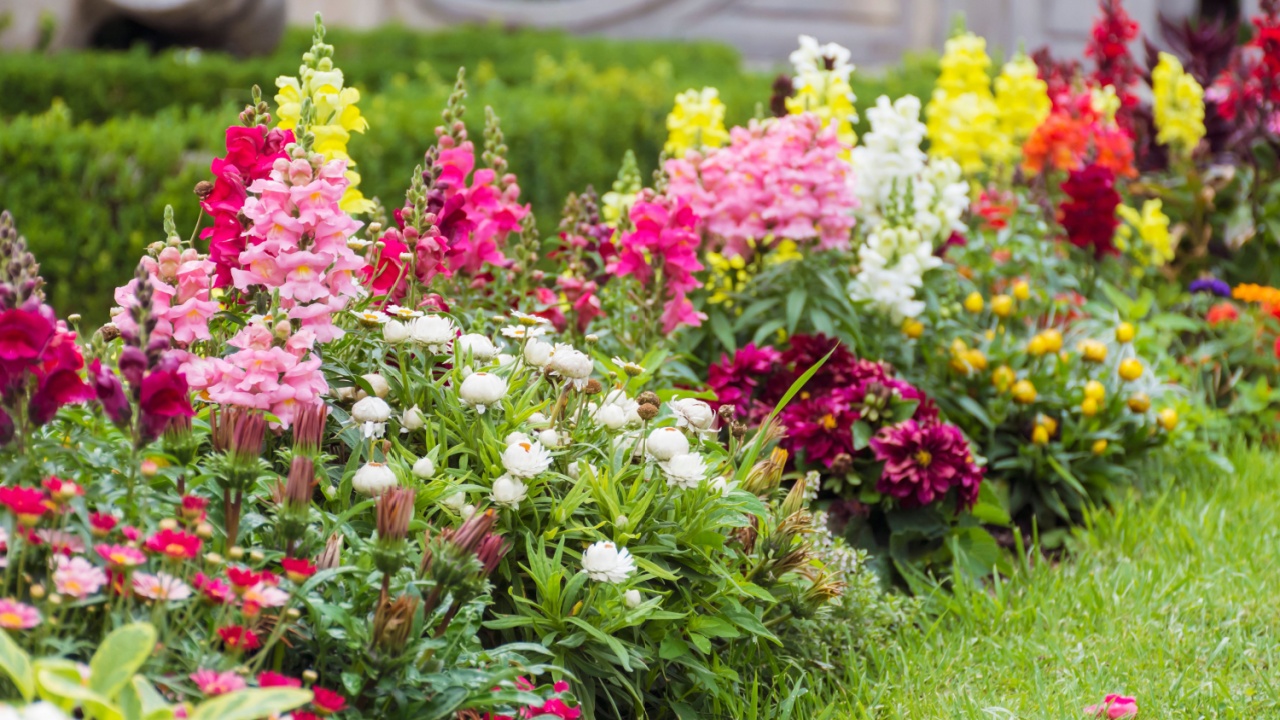
Knowing which colors work together is only half the equation. How you plant them matters just as much.
The single most impactful thing you can do is stop scattering. A single specimen of each plant dotted across a bed reads as noise, not design. As the garden design newsletter Floricult notes, when mixing two colors, plant them in unequal ratios: roughly two-thirds of the dominant color and one-third of the accent. That ratio gives the eye a place to settle and makes the accent color genuinely pop rather than compete. Costa Farms offers the same practical advice, recommending that gardeners create a focused color list before heading to the nursery rather than grabbing whatever looks good in the moment.
Foliage is the other underrated tool. Silver, chartreuse, and deep purple foliage plants, such as lamb’s ear, lady’s mantle, and heuchera, act as visual buffers between competing colors and keep even adventurous combinations from tipping into chaos.
Start Small, Then Commit
The easiest way to try any of these pairings without a full yard redesign is a single container. Designers consistently recommend containers as a low-stakes test lab precisely because what works at a small scale can be trusted at a large scale. Pretty Purple Door points out that a limited color palette makes the whole design easy on the eyes and even easier to plan. Start with one pair from this list; plant it in a pot on your front porch this spring; see what you love.
Annuals let you change your mind year to year. Perennials give you the bones. Plant the perennial pair you’re most excited about as the backbone of a bed, then fill in around them with annual companions until you’ve dialed in exactly the look you want.
Your yard doesn’t need a full redesign. It needs one great pairing. Pick one, plant it this spring, and let the rest follow.
Read More
Washing Your Lettuce Won’t Remove Cyclosporiasis, But Growing Your Own Will
Your Grandmother Stored These 8 Foods All Winter Without Canning a Single Jar