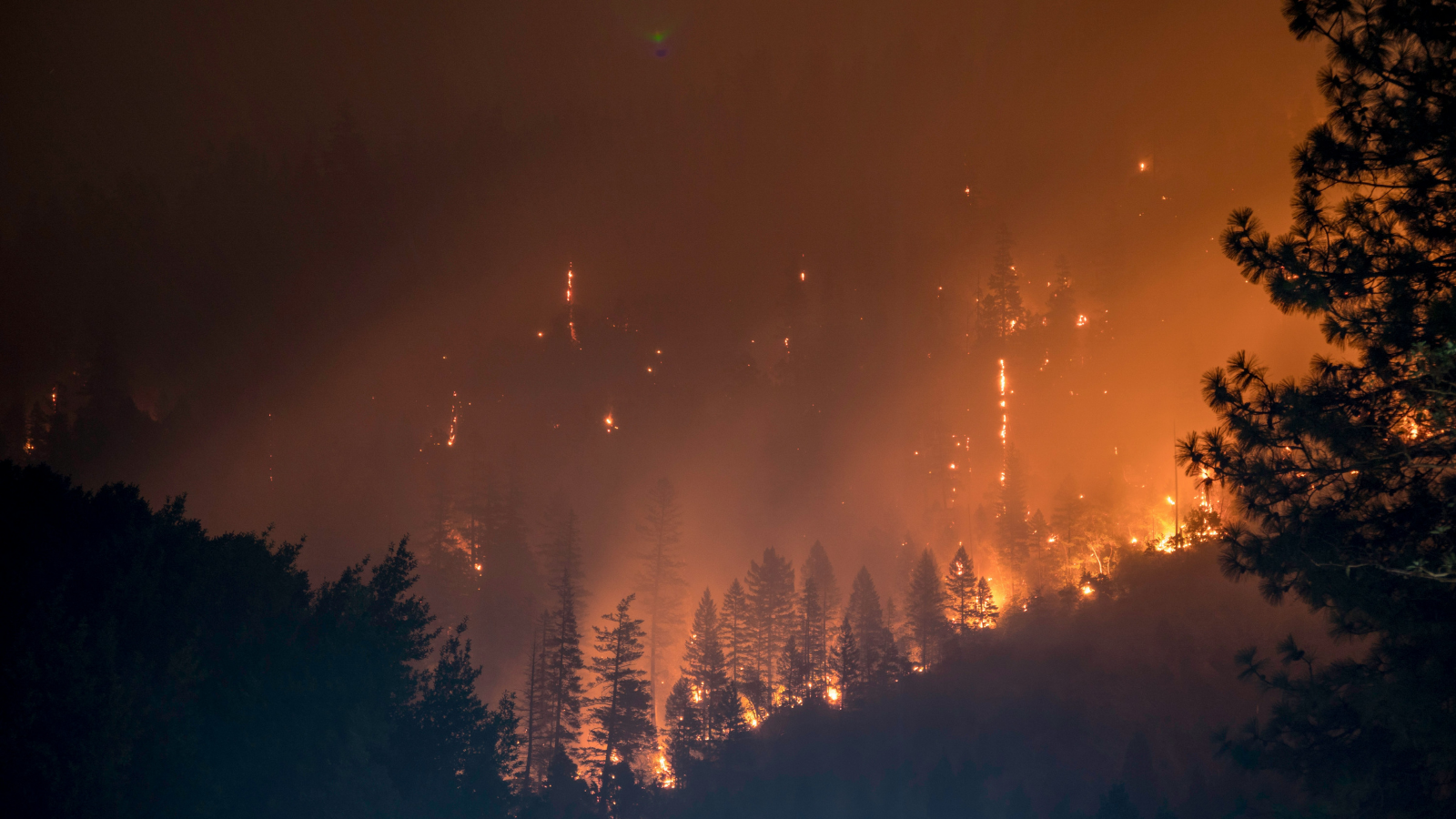
Wildfire Embers Can Travel More Than a Mile—This is How to Protect Your Home
When a wildfire erupts, its flames are not the only destructive concern homeowners need to watch out for.
Tiny embers—pieces of burning vegetation, debris, and the like—can be carried by the wind a mile or more ahead of the main fire, then land on roofs, decks, mulch, patio furniture, or other flammable material.
Texas A&M Forest Service writes that if enough embers amass in one place, they can smolder and start a whole new fire well away from the original flames.
Because of this ability to travel, firefighters urge homeowners to look beyond the trees and brush around their property. Sometimes the biggest vulnerability is a pile of dry leaves in a gutter, a cushion on the patio, or an opening that a glowing ember can slip right through.
Embers Can Find the Smallest Weak Spot
Embedded media follows. Please allow a moment for it to load.
Fire experts call a heavy shower of airborne burning debris an “ember wash.” Adam Turner with the Texas A&M Forest Service told NBC 5 Dallas-Fort Worth that embers are actually responsible for many home losses during wildfires and can travel long distances before landing.
The science is simple: the heat from a wildfire sends small burning fragments upward, where wind can carry the lighter pieces far away from the fire.
Often, those weak spots are completely ordinary parts of the home’s exterior. Embers can settle into dry leaves along gutters. They can collect beneath decks or enter attics and crawl spaces through vents. Texas A&M Forest Service notes that embers can even pass through larger vent screens, where they risk igniting the dry material inside.
Even landscaping can contribute to the problem. Mulch, shrubs, firewood, and other combustible material close to a home can catch from embers and bring flames directly to siding, windows, or decks.
Start With the 5 Feet Closest to Your Home
One of the most important areas to protect also happens to be one of the smallest…and obscure. Fire-safety experts recommend keeping the first 5 feet around a home as free of flammable material as possible. Texas A&M Forest Service calls the first 5 feet the “Immediate Zone” because it is particularly vulnerable to embers.
That can mean replacing wood mulch with gravel or other nonflammable material, moving firewood away from exterior walls, and removing anything stored beneath decks or porches, according to the National Fire Protection Association.
Homeowners are also urged to clear leaves and pine needles from roofs and gutters, trim branches away from their roof, and remove dead vegetation around the house.
Patio cushions, doormats, newspapers and other flammable items can also become fuel. If a wildfire is nearby, Texas A&M Forest Service recommends moving combustible outdoor furniture inside a home or garage when it is safe to do so.
Texas A&M Forest Service advises covering vents with metal screening no larger than 1/8 inch. Otherwise, they can grant embers a direct path into dry, enclosed spaces.
Homeowners should also inspect roofing for any gaps and keep flammable plants away from windows. NBC 5 Dallas-Fort Worth notes that vegetation burning close enough to a window can generate enough heat to break the glass and give fire yet another route inside.
None of these steps will make a house completely wildfire-proof. However, they represent vital measures that a homeowner can take to address the risk posed by these small but dangerous particles from a fire that’s miles away.