Vermont Man Wants to Fly to Work From His Backyard, but Neighbors Are Fighting Back
A quiet Vermont mountain community has spent nearly five years fighting over one homeowner’s unusual backyard project. What began as a plan for a private grass airstrip has turned into a costly legal dispute involving neighboring properties, scenic views, and the limits of what someone can do with their own land.
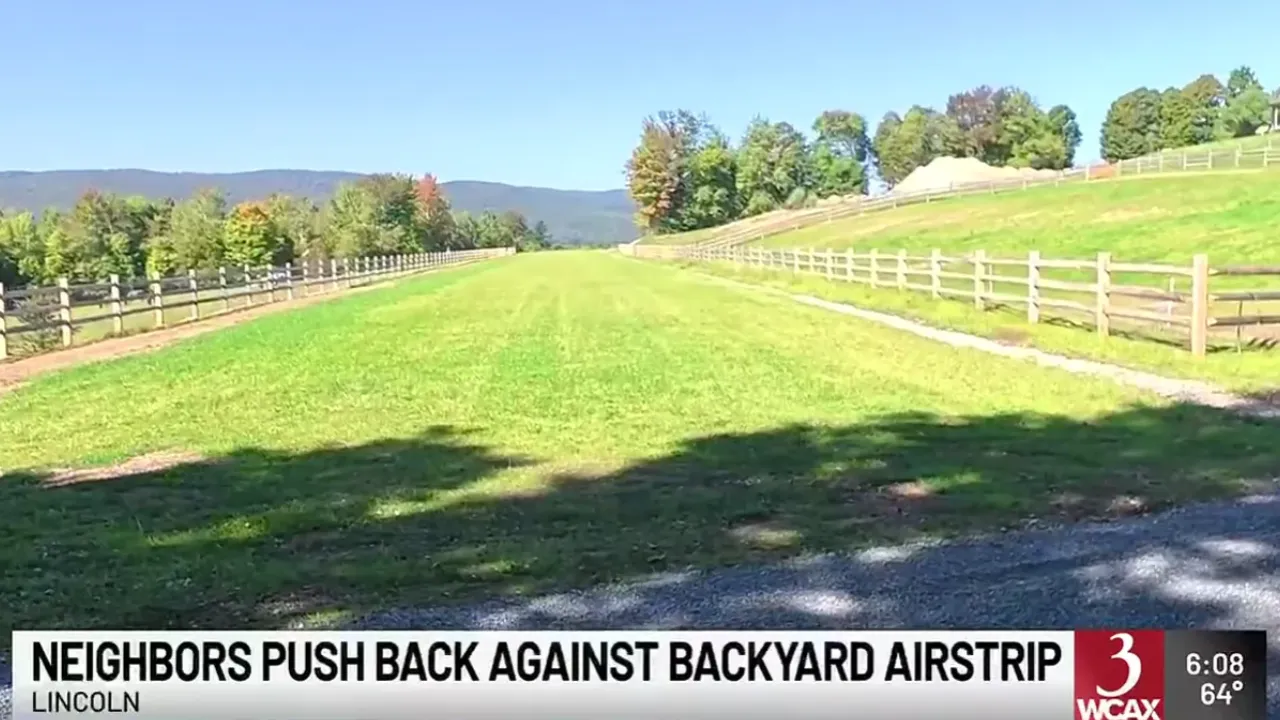
The disagreement centers on a 130-acre residential property in Lincoln, Vermont, owned by Kyle Clark, CEO of electric aircraft manufacturer Beta Technologies, and his wife, Katie. Clark wants to use a 900-foot landing strip to fly private aircraft, including for trips to work.
For nearby homeowners, the concern extends beyond having airplanes overhead. They worry about safety, wildlife, and the character of a rural neighborhood where open fields, wooded hillsides, and mountain views are part of everyday life.
The project has already received important court and regulatory approvals, but the opposition has continued. According to VTDigger, two neighbors filed an appeal with the Vermont Supreme Court on October 19, 2026, challenging the state’s decision to approve the landing area.
From Welcome to War
Embedded media follows; please allow a moment to load.
The Clarks purchased their Lincoln property in late 2021. Initially, the family received a friendly welcome. One neighbor brought a casserole, while another offered horses for the family’s children to ride, according to the Boston Globe’s investigation.
That relationship deteriorated when neighbors learned Clark wanted to establish a personal aircraft landing area on the property.
Among the most vocal opponents is Marilyn Ganahl, who owns a neighboring 105-acre horse farm and nature preserve. She has spent years fighting the proposal and estimates her legal expenses have reached approximately $300,000.
The dispute has become personal. The Globe reported that the Clarks issued no-trespass orders to 23 neighbors. During one visit to the area, opponents walking along a public road encountered property caretakers who said surveillance cameras had recorded them.
Both sides have accused the other of intimidation. What once involved welcoming gestures between neighbors has become a dispute over boundaries, privacy, and how people share a rural landscape.
What the Court Found
The disagreement eventually reached Vermont Superior Court after local zoning officials rejected the proposal.
In a 22-page decision issued May 28, 2025, Judge Thomas G. Walsh examined two possible versions of the airstrip.
One involved grading a 900-foot-long, 60-foot-wide section of grassland. The other would allow aircraft to use the existing meadow without grading.
The court found that the grass runway itself would have limited visibility from neighboring properties. Existing vegetation, surrounding forests, and the area’s topography would help conceal much of the development.
Airplanes taking off and landing presented a different problem. The judge determined that the activity would introduce an adverse visual change to the surrounding neighborhood, where such operations were not already occurring on the property.
However, the court concluded that allowing no more than two takeoffs and two landings daily on the graded runway would prevent an unduly adverse visual impact. The ungraded alternative was permitted without that daily restriction.
Who Controls the Sky?
A central issue in the case is the difference between controlling land development and regulating aircraft.
Municipal governments can establish zoning rules governing where certain land uses are permitted. But federal aviation law limits their ability to regulate aircraft noise, flight operations, and aviation safety.
That distinction shaped the court’s ruling. Although the judge considered how aircraft would affect the neighborhood’s appearance, aircraft noise and flight safety were excluded from the local zoning analysis.
The court also found no mapped important wildlife habitat or rare natural areas at the proposed runway site. Some mapped wildlife habitat exists beneath the proposed flight path, but regulating aircraft operations involves separate federal and state authority.
The result left some neighbors dissatisfied because several of their biggest concerns fell outside the issues the zoning court could decide.
Another Airstrip, Another Appeal
Clark has already secured another way to fly from home. According to the Globe, he purchased a $14 million property in Charlotte, Vermont, in January 2026, where an airstrip was already permitted.
Nevertheless, the Lincoln project has continued through the approval process. The Federal Aviation Administration issued a conditional determination in 2025, and the Vermont Transportation Board approved the landing area on October 8, 2026, subject to operating conditions.
Neighbors Ganahl and Sara Laird (as used in court documents) have challenged those decisions through state and federal appeals. Their concerns include whether the runway’s short length and the surrounding mountainous terrain have received adequate safety review.
Clark maintains that he has followed the required procedures and should be allowed to enjoy his private property. His opponents argue that the consequences of the project do not stop at his property line.
According to VTDigger’s October 21 reporting, the airstrip was not yet operational because Clark still needed a certificate of operation from the Vermont Transportation Board.
By November, the Globe reported that the runway had already been built, but additional administrative requirements remained before it could be used. Meanwhile, the state Supreme Court appeal and a separate federal challenge were still part of the dispute.