
When autumn arrives, many gardeners rush to fill their pots and beds with the familiar sight of chrysanthemums. While mums offer a reliable burst of seasonal color, a whole world of unique and beautiful fall flowers is waiting to transform your garden. Exploring these lesser-known options allows you to create a space that stands out with unexpected textures, shapes, and hues.
Choosing underrated fall bloomers adds a personal touch to your landscape design. These plants can offer everything from dramatic, dark blossoms to vibrant, eye-catching berries that persist long after the petals have fallen. This guide will introduce you to six fantastic alternatives to mums that will keep your garden interesting and colorful well into the cooler months.
1. Chocolate Cosmos
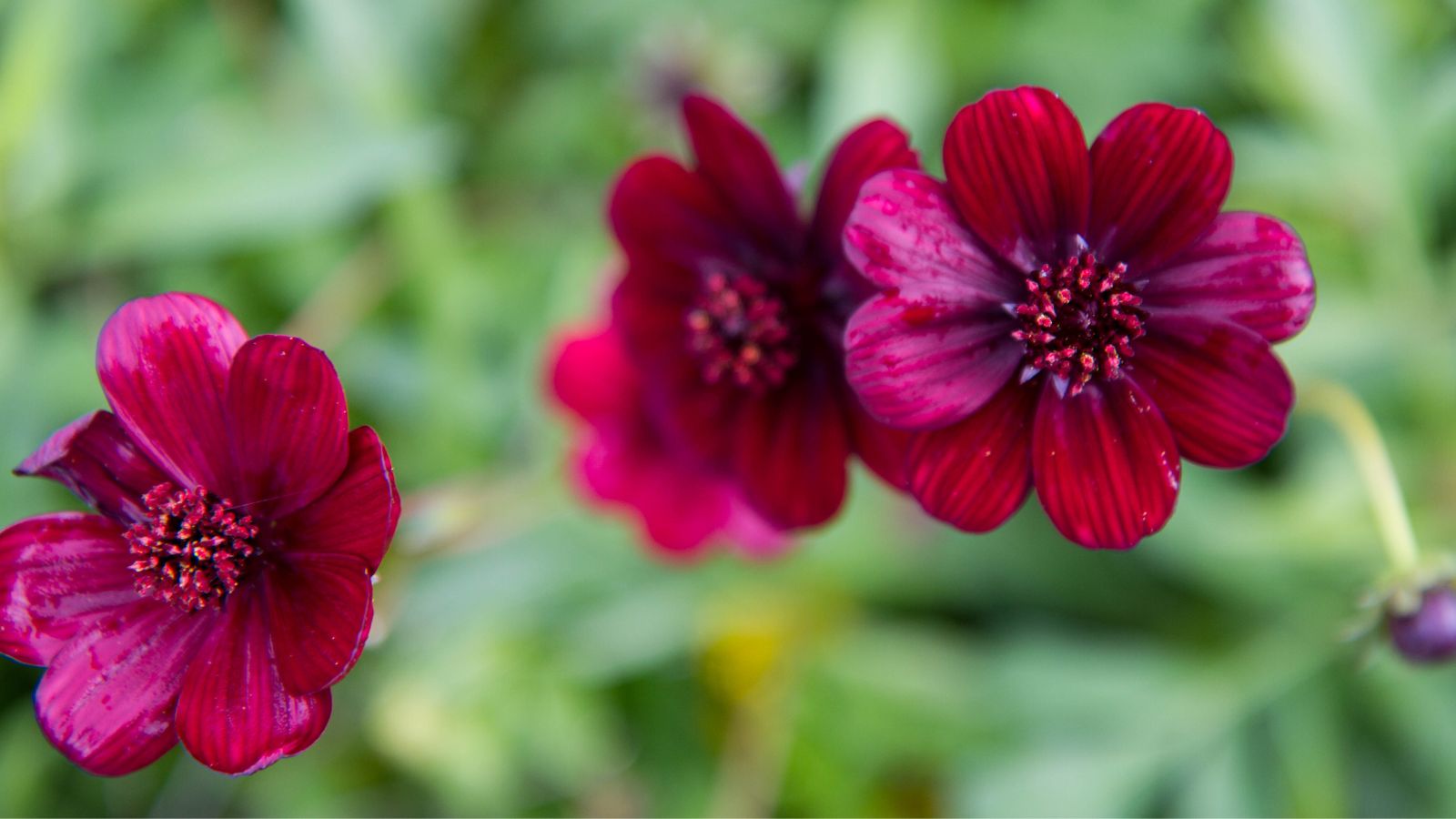
Image Credit: Depositphotos.com.
If you’re looking for a plant that delights multiple senses, chocolate cosmos (Cosmos atrosanguineus) is a must-have. Its velvety, deep maroon petals are stunning on their own, but the real surprise is its rich, chocolate-like scent that becomes more noticeable on warm, sunny afternoons. It provides a dramatic contrast to the bright oranges and yellows typical of fall, adding depth and sophistication to your garden.
This plant is a tender perennial, often grown as an annual in colder climates. It blooms from mid-summer through fall, often until the first frost. The dark, moody color pairs beautifully with silvery foliage like dusty miller or the bright green of ornamental grasses, making it a versatile choice for both garden beds and containers.
Quick Care Guide
- Light: Full sun (at least 6 hours per day).
- Soil: Well-draining soil. It is not overly fussy but dislikes waterlogged conditions.
- Water: Water regularly, but allow the soil to dry out slightly between waterings.
- Pro Tip: In zones colder than USDA Zone 7, you can dig up the tubers after the first frost and store them in a cool, dry place over winter to replant in the spring.
2. Japanese Anemone
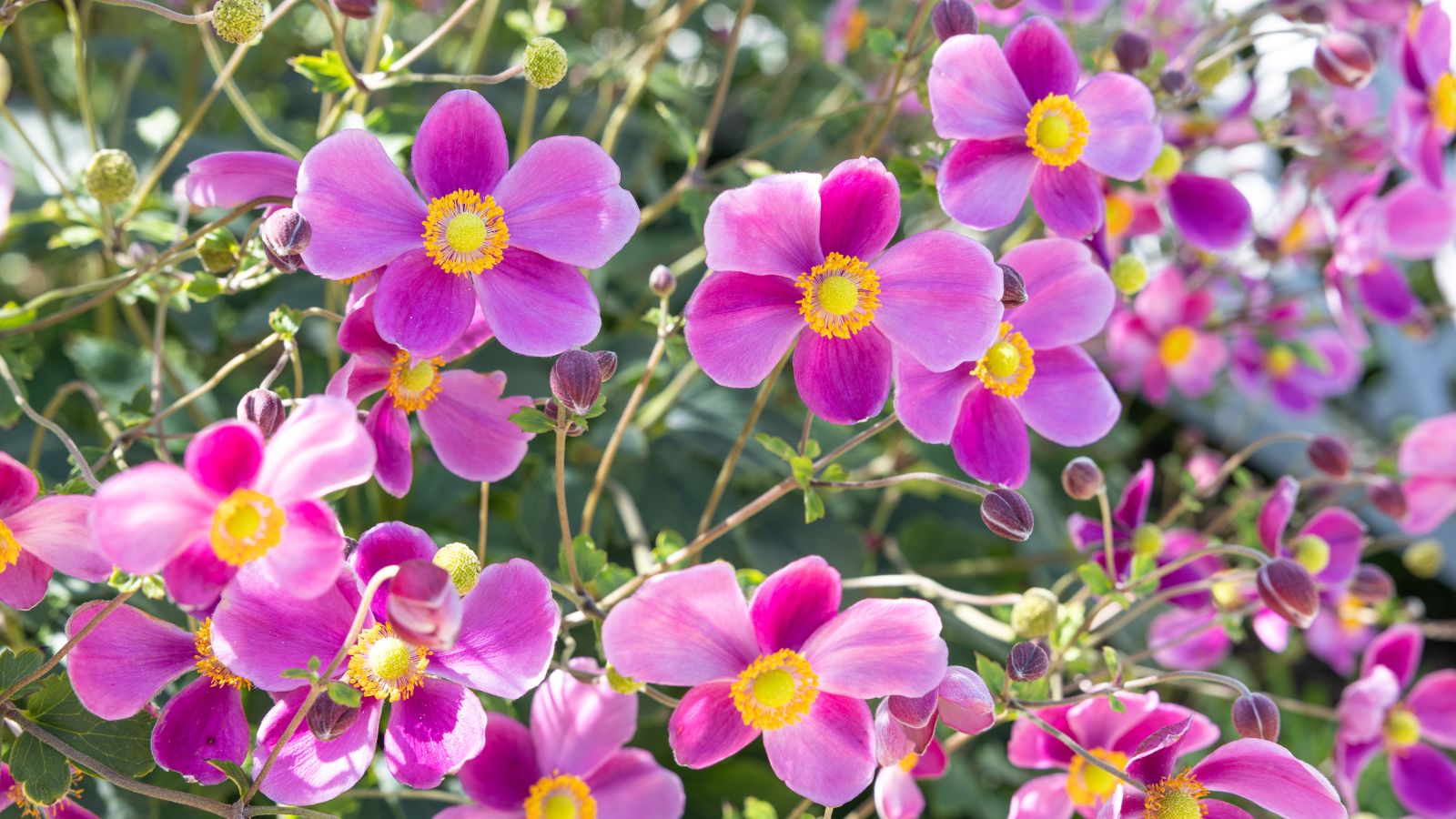
Image Credit: Depositphotos.com.
For a touch of elegance and grace, the Japanese anemone (Anemone hupehensis) is an exceptional choice. Standing tall on slender, wiry stems, its delicate, poppy-like flowers seem to dance in the autumn breeze. Available in shades of white and pink, these blooms brighten up shady corners of the garden and provide a soft, romantic feel. Japanese anemones are hardy perennials that spread to form beautiful colonies over time. They typically begin flowering in late summer and continue their display well into October. Their height, which can reach up to four feet, makes them an excellent background plant in a layered border. They thrive in spots where other fall plants might struggle, such as areas with partial shade.
Quick Care Guide
- Light: Partial shade is ideal, though they can tolerate full sun if the soil remains moist.
- Soil: Rich, moist, and well-draining soil.
- Water: Keep consistently moist, especially during dry spells.
- Pro Tip: These plants can spread, so give them room to grow or plant them in a contained area. They may be slow to establish, but they are well worth the wait.
3. Toad Lily

Image Credit: Shutterstock.
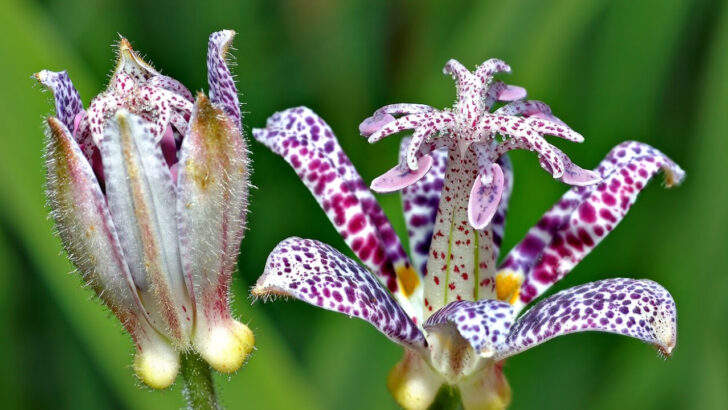
The Toad Lily (Tricyrtis hirta) is a true hidden gem for the fall garden, offering intricate, orchid-like flowers that demand a closer look. These small, star-shaped blossoms are typically white or pale lilac with heavy purple spotting, creating a unique, almost exotic appearance. They bloom late in the season, often when other plants are starting to fade, providing a final burst of fascinating detail. This shade-loving perennial is perfect for woodland gardens, shady borders, or under the canopy of larger trees. Its arching stems and interesting foliage add texture even before the flowers appear. Toad lilies are incredibly resilient and low-maintenance once established, making them a reliable performer year after year.
Quick Care Guide
- Light: Prefers partial to full shade. Direct sun can scorch the leaves.
- Soil: Moist, fertile, and well-draining soil with plenty of organic matter.
- Water: Requires consistent moisture. Do not let the soil dry out completely.
- Pro Tip: Plant them along a pathway or near a seating area where their detailed, speckled flowers can be fully appreciated up close.
4. American Beautyberry
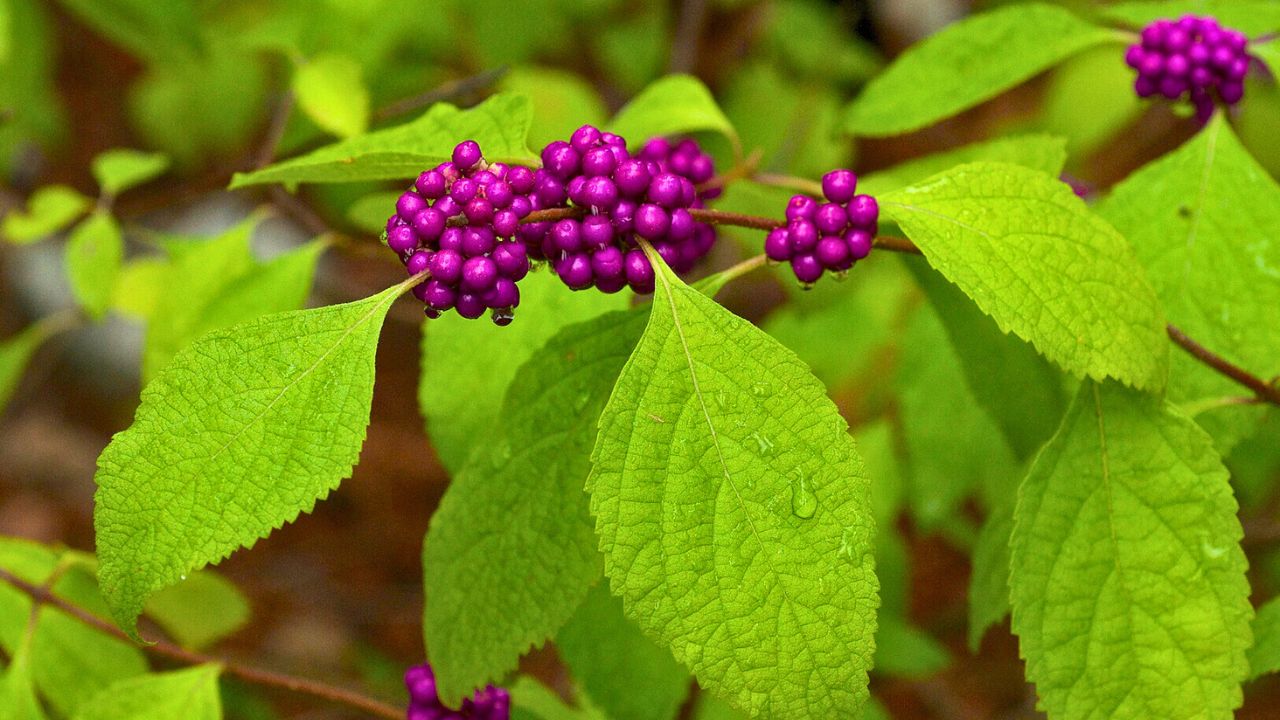
Image Credit: Eric Hunt (Own work)- CC BY-SA 3.0/Wiki Commons.
While not a flower, the American Beautyberry (Callicarpa americana) offers some of the most spectacular color in the fall landscape. This deciduous shrub produces small, lavender-pink flowers in the summer, but its main event is the clusters of vibrant, iridescent purple berries that appear in fall. These berries cling to the bare branches long after the leaves have dropped, providing stunning winter interest. The bright purple clusters create a show-stopping contrast against autumn foliage and the muted tones of winter. This native shrub is also a valuable food source for birds, attracting wildlife to your garden. It’s a low-maintenance plant that thrives in a variety of conditions and makes a huge impact with minimal effort.
Quick Care Guide
- Light: Full sun to partial shade. More sun produces a heavier crop of berries.
- Soil: Adaptable to most soil types, but prefers moist, well-draining soil.
- Water: Water regularly until established. It is fairly drought-tolerant once mature.
- Pro Tip: Prune the shrub back in late winter or early spring to encourage vigorous new growth and more abundant fruit production.
5. Hanging Amaranth
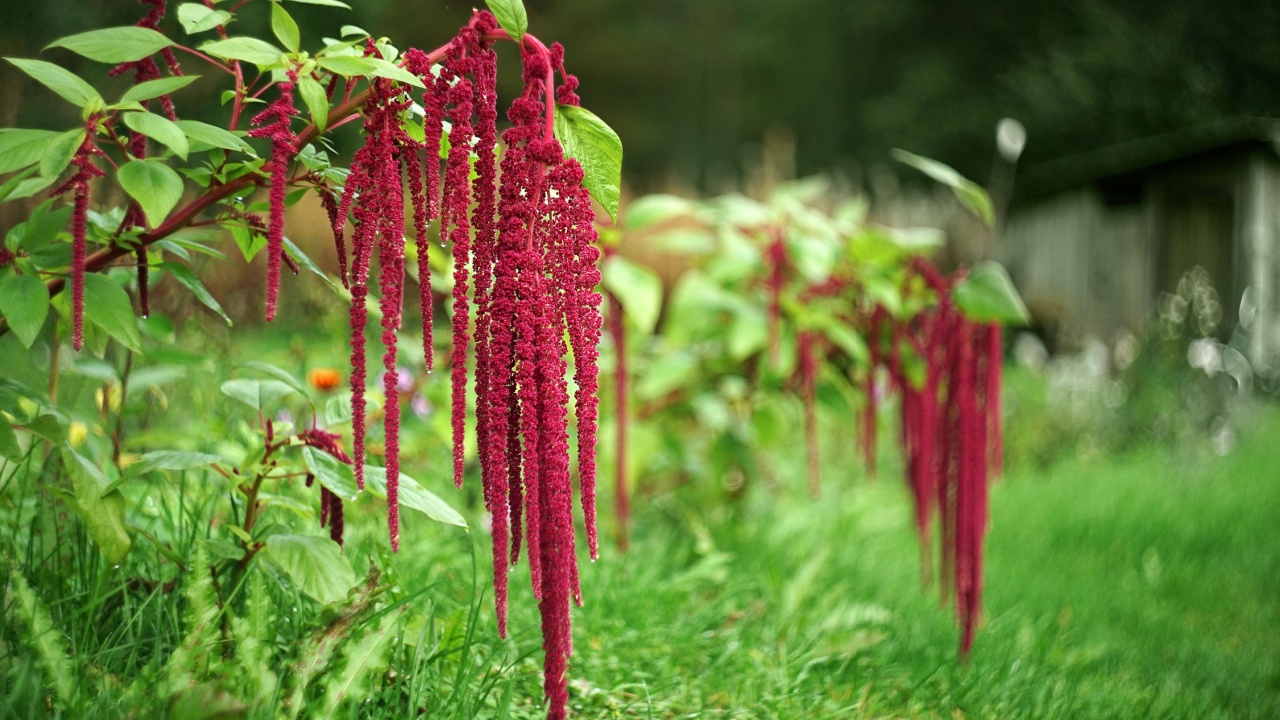
Image Credit: Shutterstock.
For dramatic texture and a cascading form, look no further than Hanging Amaranth (Amaranthus caudatus), also known as ‘Love-Lies-Bleeding’. This striking annual produces long, rope-like tassels of deep red or green flowers that spill over the edges of containers, walls, and raised beds. Its unique form adds a sense of movement and drama to any garden design. Hanging Amaranth is easy to grow from seed and performs well throughout the summer and into the fall. The tassels can grow several feet long, creating a stunning visual display. They also make excellent additions to fresh or dried floral arrangements, allowing you to bring their unique beauty indoors.
Quick Care Guide
- Light: Full sun for the best color and growth.
- Soil: Average, well-draining soil. It is quite tolerant of poor soil.
- Water: Needs regular watering but can withstand short periods of drought.
- Pro Tip: The plant can get top-heavy, so provide support with a stake if you are growing it in a windy location.
6. Baneberry
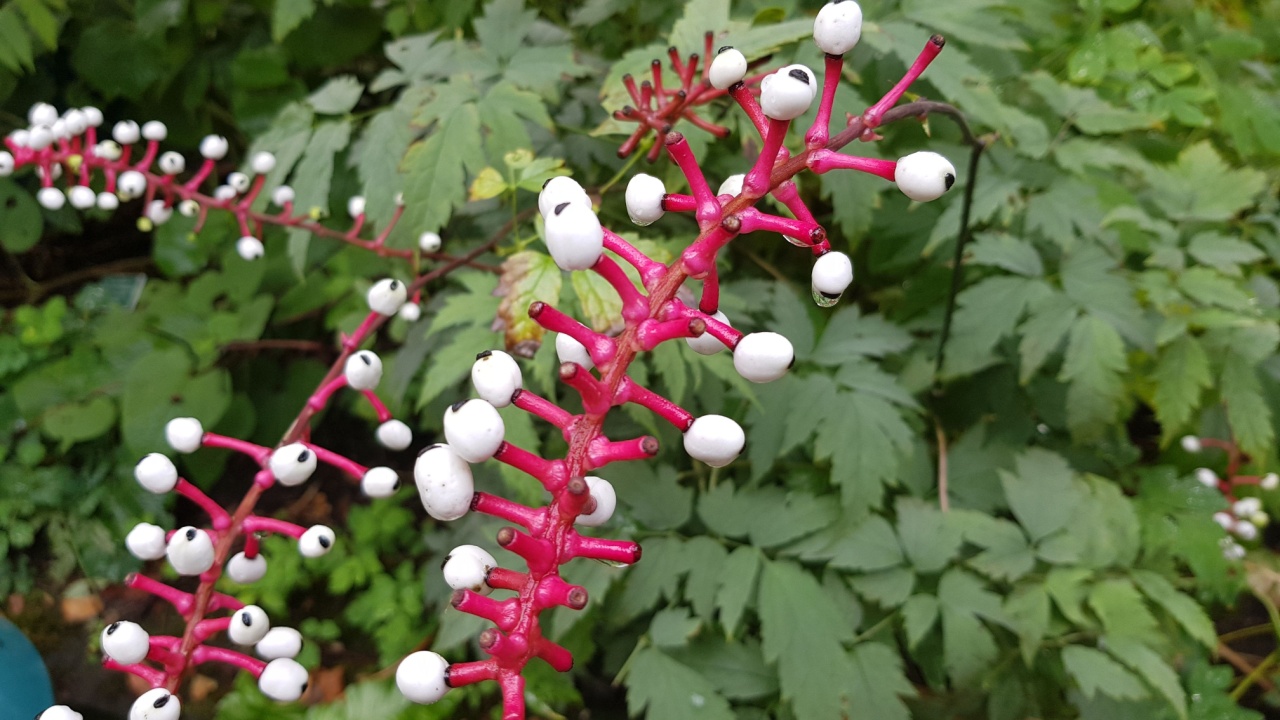
Image Credit: Shutterstock.
Baneberry (Actaea species) brings a bold and dramatic presence to the fall garden, particularly in shady areas. This perennial is prized for its deeply cut, fern-like foliage that forms a lush mound. In late summer, it sends up tall, elegant spikes of fragrant, bottlebrush-like white flowers that attract butterflies and other pollinators. Following the flowers, some species produce striking clusters of berries, either glossy red or bright white with a black dot (Doll’s Eyes). These berries provide a secondary point of interest in the fall. While the plant’s strong scent can be divisive, many modern cultivars offer a more pleasant fragrance. Its height and structure make it a great architectural element in a shade or woodland garden. Note: All parts of the plant, especially the berries, are toxic if ingested and should be kept away from children and pets.
Quick Care Guide
- Light: Thrives in partial to full shade.
- Soil: Prefers consistently moist, rich, and well-draining soil.
- Water: Keep the soil evenly moist, especially during hot weather.
- Pro Tip: Use baneberry as a background plant to add height and texture behind shorter, shade-loving perennials like hostas and ferns.
Cultivating a Mix of Blooms in Your Fall Garden
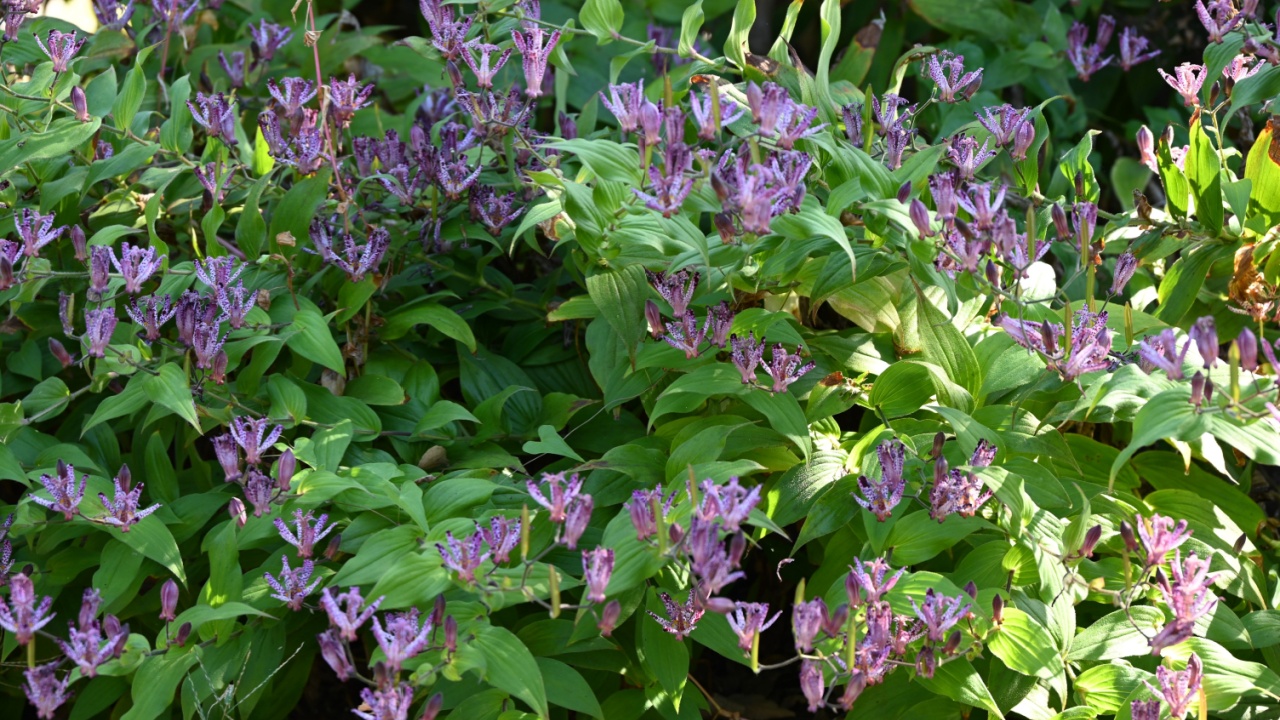
Image Credit: Shutterstock.
Ready to move beyond mums? Start by assessing your garden’s light conditions to choose the right plants from this list.
A shady corner could become a showcase for Toad Lilies and Japanese Anemones, while a sunny spot is perfect for Chocolate Cosmos or American Beautyberry. Consider planting these underrated gems alongside other fall favorites. Pair the dark blooms of Chocolate Cosmos with the bright plumes of ornamental grasses, or let the purple berries of the Beautyberry pop against the yellowing leaves of a nearby gingko tree. By mixing and matching, you can design a fall garden that is uniquely yours, full of color, texture, and life that lasts well into the colder seasons.