
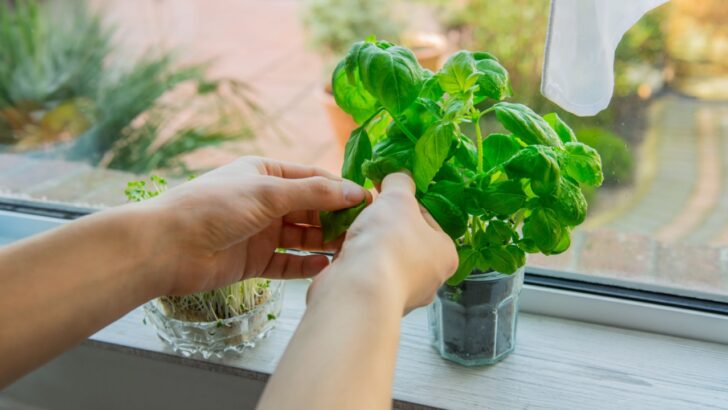
There is nothing quite like the smell of fresh basil. It instantly transports you to a warm Italian kitchen or a sunny summer garden. But what happens when the temperatures drop, or you don’t have outdoor space? You might think your days of homemade pesto are over, but growing basil indoors is entirely possible, and surprisingly rewarding.
With the proper setup, you can grow a flourishing herb garden on your windowsill and enjoy fresh, fragrant herbs all year long. Here’s everything you need to know to grow lush, flavorful basil indoors, from choosing the right variety to mastering the art of harvesting.
1. Choose the Right Variety for Indoors
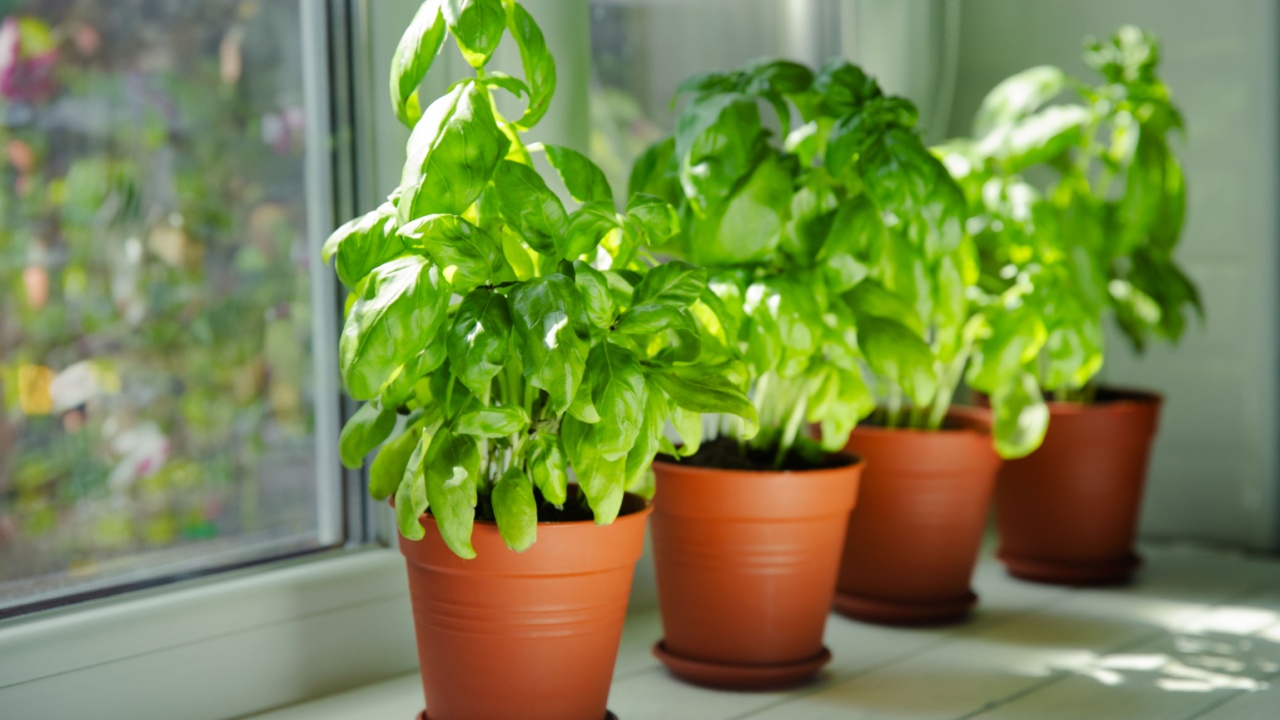
Image Credit: Shutterstock.
Not all basil is created equal, especially when it comes to indoor gardening. While you can technically grow any variety inside, some adapt much better to container life than others. If space is tight, look for compact or “bush” varieties.
- Genovese Basil: The classic choice for pesto lovers. It has large, fragrant leaves but can get tall, so it needs regular pruning.
- Greek or Globe Basil: These form adorable, tight mounds of tiny leaves. They are naturally compact and look beautiful in small pots.
- Spicy Globe Basil: Similar to Greek basil but with a little extra kick. Perfect for adding zest to salads.
- Lemon Basil: Offers a delightful citrusy twist, making it excellent for teas and fish dishes.
2. Pick the Perfect Pot
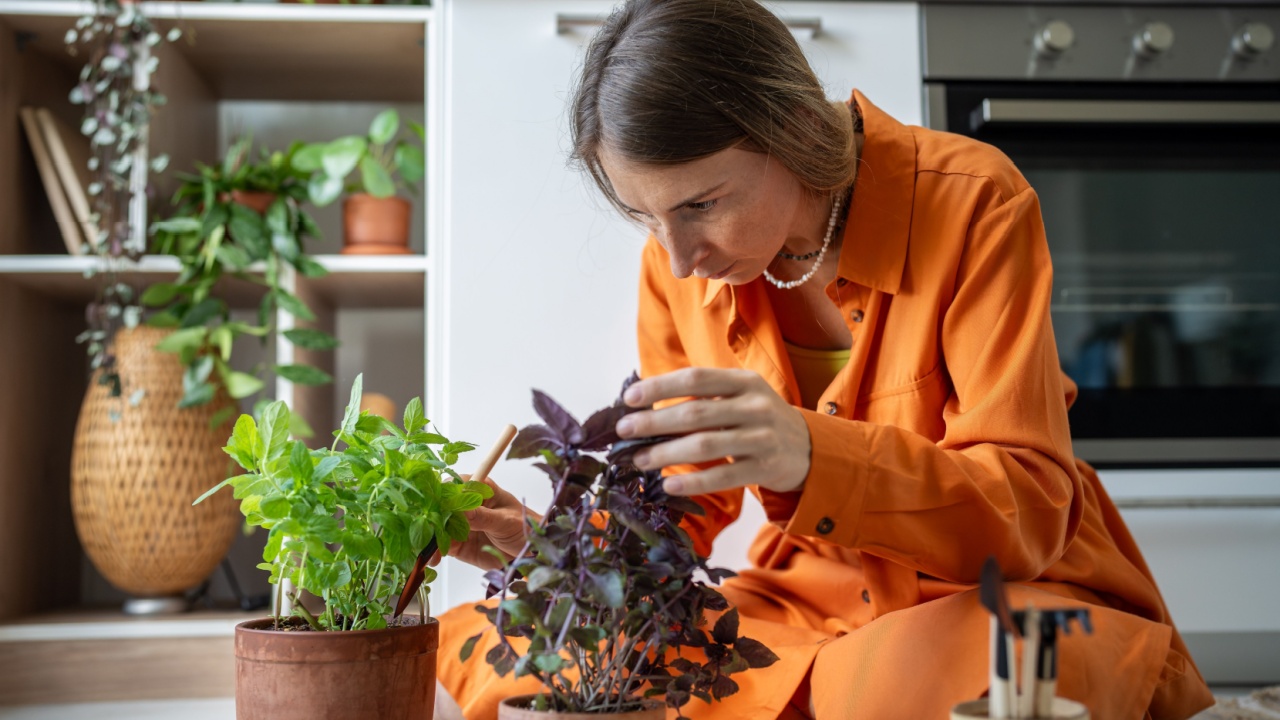
Image Credit: Shutterstock.
Basil has an energetic root system that needs room to breathe. Stuffing it into a tiny decorative pot is a recipe for stunted growth. You need a container that balances space with drainage.
- Size Matters: Go for a pot that is at least 8-10 inches deep and wide.
- Material: Terra cotta is excellent because it breathes, preventing soggy soil. However, plastic pots retain moisture better if your home is particularly dry.
- Drainage: This is non-negotiable. Ensure your pot has holes in the bottom.
3. Master the Soil Mix
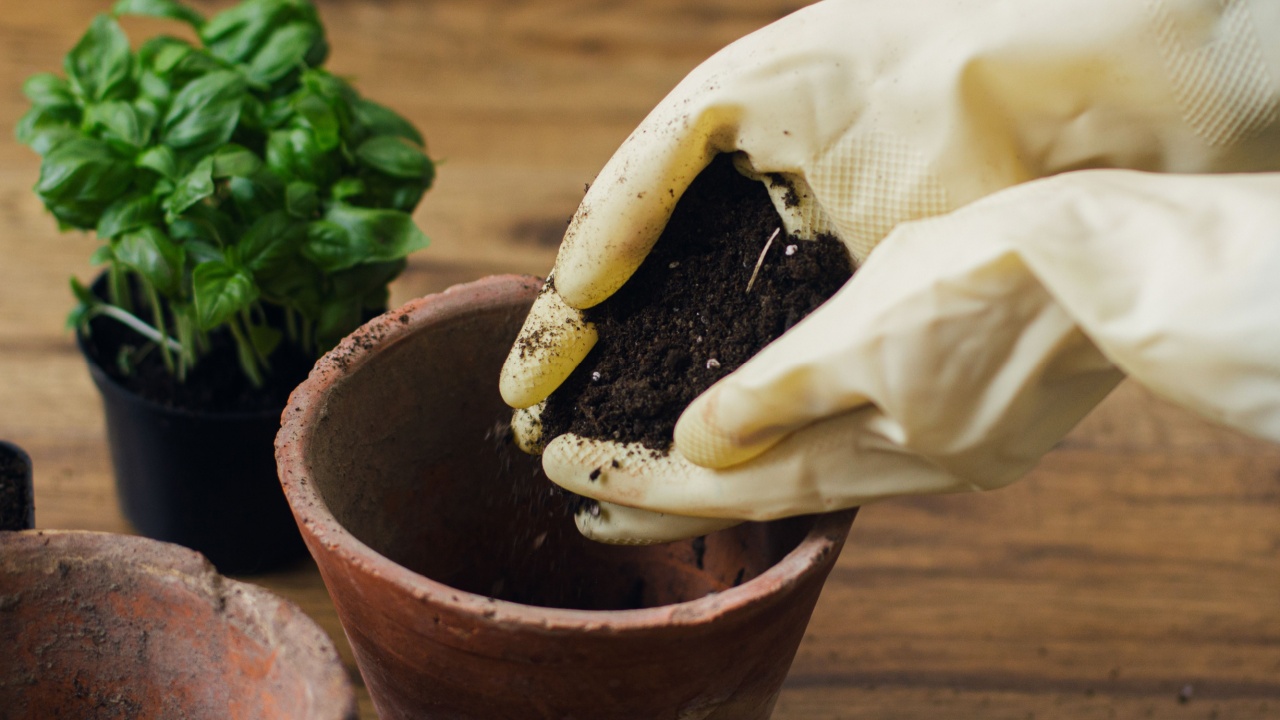
Image Credit: Shutterstock.
Garden soil is too heavy and dense for indoor containers. It compacts easily, suffocating roots and leading to rot. Your indoor basil needs a fluffy, nutrient-rich medium that holds moisture without becoming waterlogged.
A great DIY mix involves:
- 2 parts quality potting soil
- 1 part perlite (for aeration and drainage)
- 1 part compost or worm castings (for nutrition)
4. Chase the Light
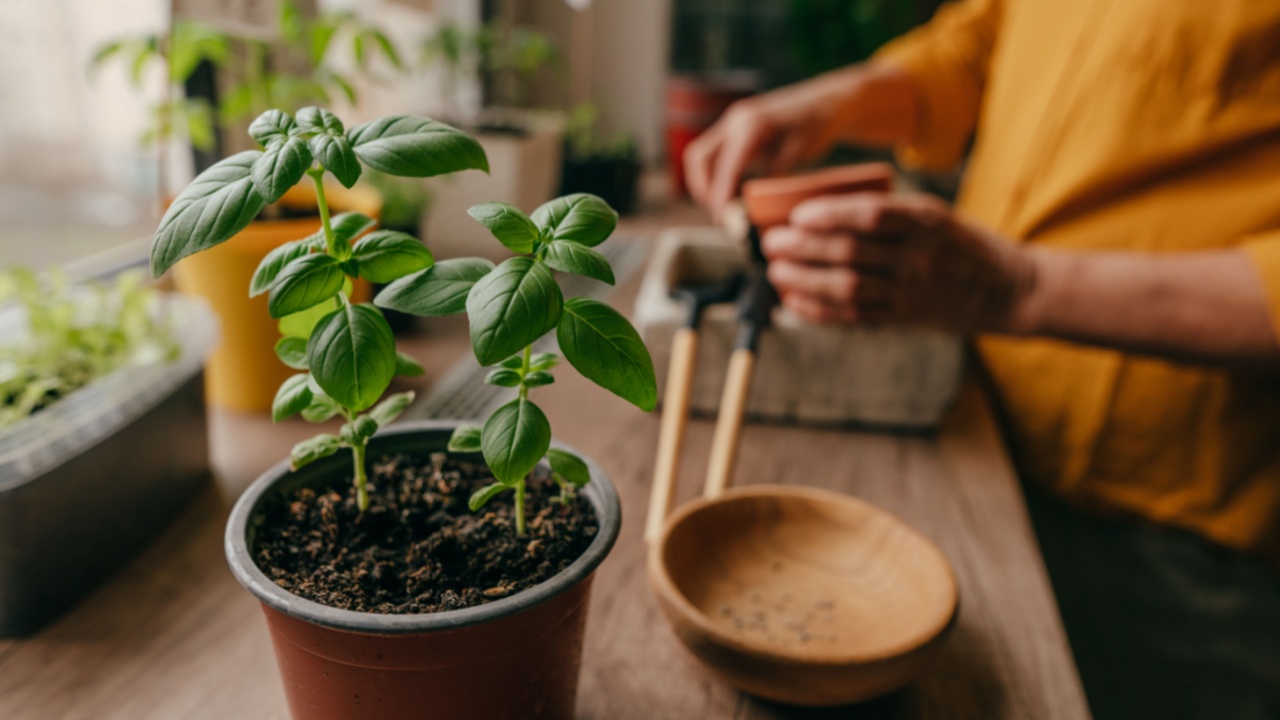
Image Credit: Shutterstock.
Light is the fuel for your basil’s flavor and growth. Without enough of it, your plant will become “leggy”, stretching desperately toward the window with pale, weak stems. Basil is a sun-worshipper and craves at least 6 hours of direct sunlight daily.
- South-Facing is Best: In the Northern Hemisphere, south-facing windows get the most consistent light.
- Rotate Regularly: Plants grow toward the light. Give your pot a quarter turn every few days to keep growth even and upright.
5. Water Wisely
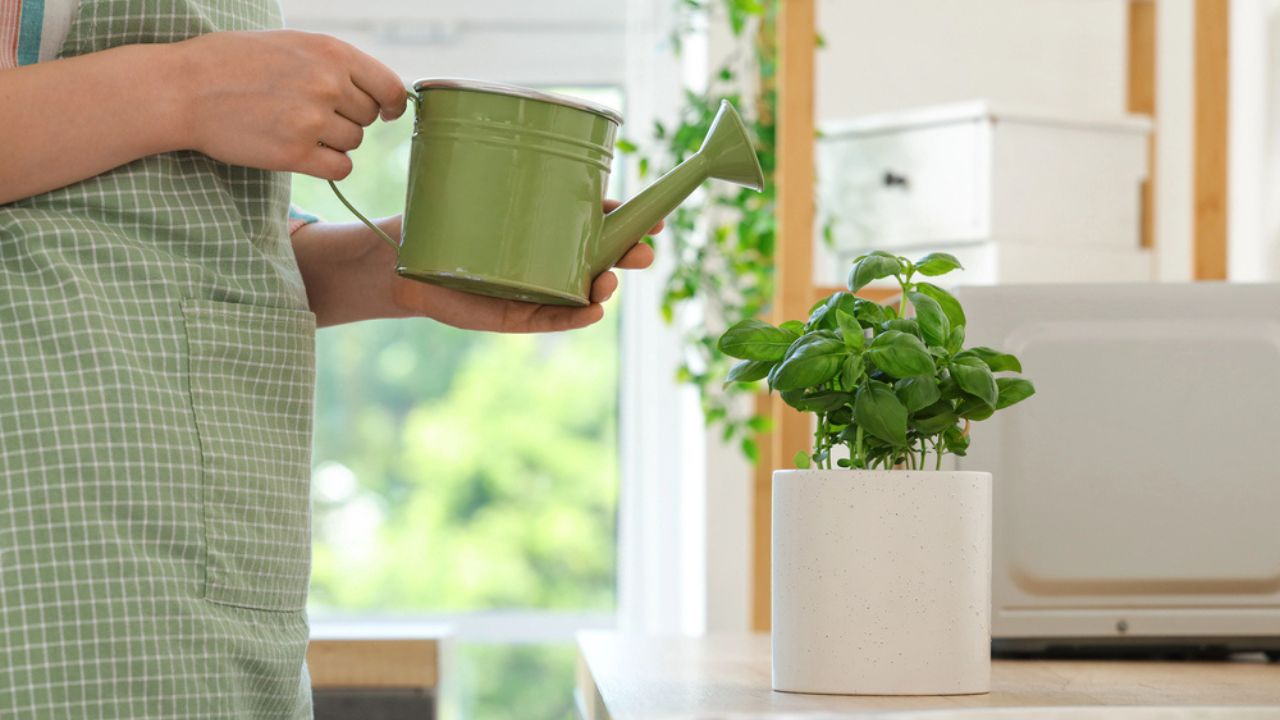
Image Credit: Deposit Photos.
Watering is where most indoor gardeners falter. Basil likes “consistent moisture,” which means the soil should feel like a wrung-out sponge, damp, but not dripping.
- The Finger Test: Stick your finger about an inch into the soil. If it feels dry, water thoroughly until it drains out the bottom. If it’s still damp, wait.
- Water the Soil, Not the Leaves: Wet leaves can invite fungal diseases. Use a watering can with a long spout to deliver water directly to the base of the plant.
6. Prune for Bushiness
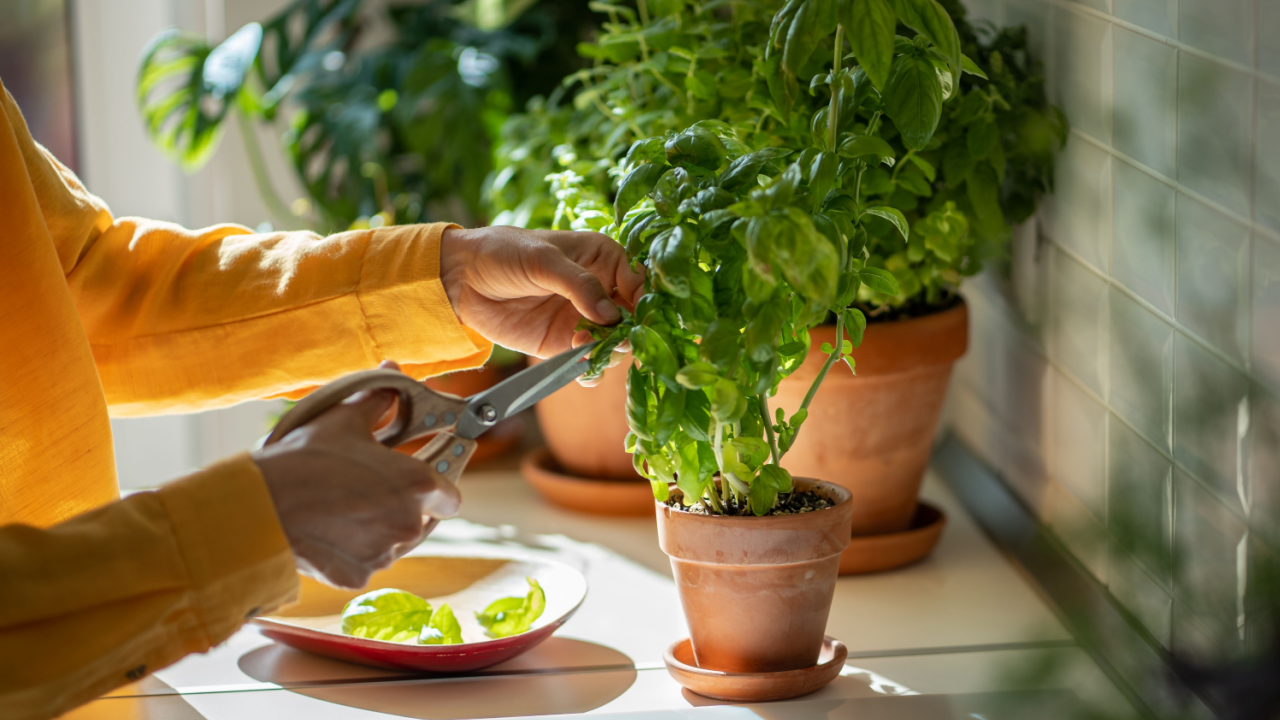
Image Credit: Shutterstock.
This is the secret sauce to a massive harvest. Many people are afraid to cut their plants, but basil loves a good haircut. Pruning encourages the plant to grow two new stems for every one you cut, resulting in a dense, bushy shape.
- The Rule of Thirds: Never remove more than one-third of the plant at a time.
- Where to Cut: Always snip the stem just above a “node” (the point where two leaves emerge from the stem). New growth will sprout from that node.
Start Your Indoor Garden Today
Image Credit: Shutterstock.
Growing basil indoors is a delightful way to keep your thumb green all year long. It brings life to your kitchen and flavor to your meals. By following these care tips, you will have a steady supply of aromatic leaves ready for your next pasta night.