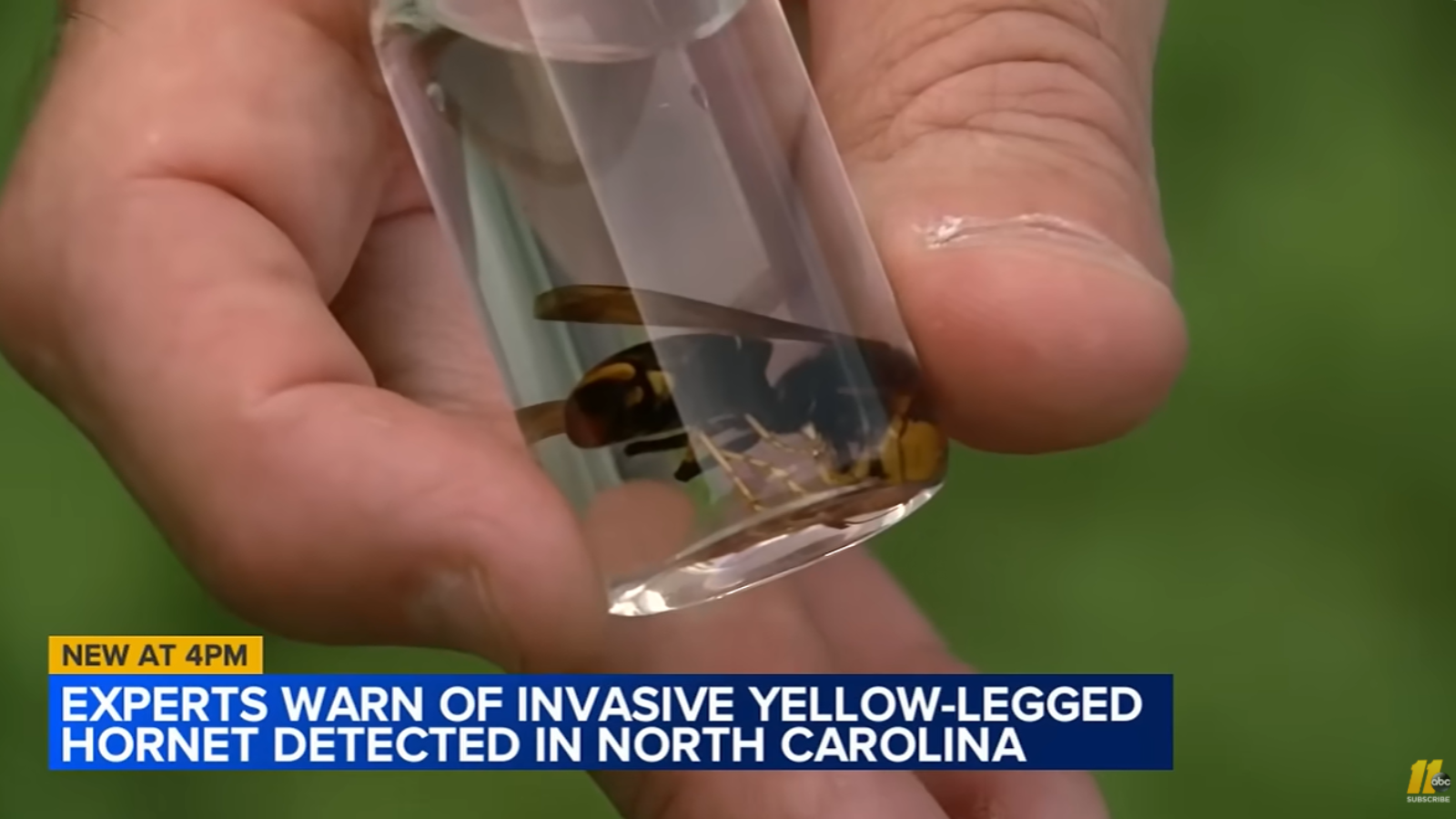
The Invasive Yellow-Legged Hornet is Now Found in North Carolina
This summer, North Carolina is bracing for more than an influx of tourists wanting to visit the state’s beautiful natural landscape. According to ABC11, state agriculture officials have confirmed that an invasive pest has been discovered in the Tar Heel State.
According to ABC11, the yellow-legged hornet was found in a home in Matthews, North Carolina. The bee-killing predator could devastate the local agricultural business, killing off the bees and pollinators needed to help the plants in the region thrive.
Unfortunately, this isn’t a one-off occurrence either. The yellow-legged hornet has been making its way up the coast after also being confirmed in Georgia and South Carolina in previous years. It seems like now the invasive pest is establishing colonies and expanding its range in the region.
Even worse, officials say that the predator is arriving at a time when the state’s bee populations are already struggling.
The Yellow-Legged Hornet Is Native to Asia
According to ABC11, the bee-killing insect was first detected in the U.S. back in 2023, when it was found in Savannah, Georgia. It only took a few months before the predator made its way a bit further north to South Carolina. “Since that time, it’s been expanding its range in the Lowcountry of South Carolina,” Greg Wiggins, biological control administrator with the N.C. Department of Agriculture and Consumer Services, told the publication.
This news has had local beekeepers on red alert, especially as the hornet seems poised to go after honeybee colonies, since these insects tend to live in groups that can be 50,000 bees strong. “This hornet can do this hawking behavior where they hover outside the entrance and pluck bees as they’re coming and going,” Buddha Bee Apiary’s Keith Saban told a reporter about the appeal of the honeybees, calling their setup a “huge buffet” for the predator.
What to Do If You See a Yellow-Legged Hornet
Knowing the potential damage these insects can do to the bee populations in North Carolina and the surrounding areas, it’s important to report these insects when you see them. ABC11 says North Carolina residents should report them to the N.C. Department of Agriculture and Consumer Services by filling out the online form.
Meanwhile in Georgia, the University of Georgia’s College of Agricultural & Environmental Sciences says residents in the state should take a photo of the insect (from a safe distance, of course) and then visit Georgia’s state agriculture department’s site to file a report.
This will help track the hornets so that officials can trace them back to their location for future detection and eradication efforts, hopefully putting a stop to these invasive insects before they do too much damage to our country’s bee populations.